Retrospecticus: The Vines

Bursting out of the early 2000s in an era that has since been dubbed the “Garage Rock Revival”, The Vines quickly established themselves as a high adrenaline band with a knack for grunge, 60s pop ballads, and an occasional foray into psychedelia. Though their popularity has waned in the states since 2004, this gang of rambunctious rock musicians is still a fan favorite in their native Australia. Let’s take a look at the body of work that got them there.


Highly Evolved (2002)
It was in the summer of 2001, that Sydney rock band The Vines (recently signed by Capitol Records) headed into Sound Factory studios to cut their debut album. Fronted by lead singer/guitarist Craig Nicholls, bassist Patrick Matthews and drummer David Oliffe (who left the band after only recording a few tracks) The Vines put together the heavy and melodic collection of alternative rock that makes up Highly Evolved.

Receiving mostly positive reviews, many described their unique sound as having the heaviness of Nirvana with the pop sensibilities of The Beatles. Of course they are no where near as good as those bands, but I understand the comparison to describe their sound.

Songs like the manic “Outtathaway!” and hit single “Get Free” display hints of 90s grunge while ballads as “Homesick” or “Mary Jane” wade in deeper pop waters. Throw in the island themed “Factory” and trippy “Sunshinin'” and you got an album that honors every rock genre. Though the flow of heavy to soft songs doesn’t always gel, it’s as respectable and fun a debut you could want from a blossoming rock band.

Favorite Tracks: “Homesick”, “Outtwathaway!”, “Mary Jane”


Winning Days (2004)
This time around, The Vines returned to the studio as a four piece. Here they are joined by fellow Aussies Ryan Griffiths on guitar/Kurt Cobain impersonator and Hamish Rosser (who looks like a lost Beach Boy) on drums. Working again with producer Rob Schnapf, The Vines turned out a more stylistically consistent record. Though Winning Days received lukewarm reviews, it is my favorite album by the group to date.

Leading off with the catchy single “Ride”, Winning Days never slows down cruising from angsty grunge pop song to another. Craig Nicholls song-writing and vocals are in the best place with this assortment of dark rockers and spacey Summer of Love  ballads. Schnapf’s producing is tight, but not restricting. Everyone on here does a stand up job.

Honestly, I’m not sure how this album got such a bad rap, I heard a lot of people complaining that a lot of these songs were written before Highly Evolved but I don’t see how that’s relevant. Maybe that’s to say they weren’t moving forward, but I disagree. Regardless of when these songs were written, there’s no denying they are more complex and mature than anything than Highly Evolved. Maybe they didn’t include because they weren’t ready for more complex songs?

Backlash aside, the album was successful. Though this wouldn’t prevent the resignation of founding member and bassist Patrick Matthews in mid 2004. Tired of Craig Nicholls bizarre stage antics–only heightened by his abuse of heavy drugs, mental issues–Matthews walked off stage in the middle of a show never to return again.

Favorite Tracks: “Amnesia”, “Ride”, “Winning Days”


Vision Valley (2006)
Recovering from Nicholl’s difficult personal issues after Winning Days, The Vines kept on trucking and recorded their third album. Nicholls cut back on his drug use, finding a more mellow state of mind and the now three man Vines’ went into the studio with producer Wayne Connolly.

It was at this time that The Vines switched to writing shorter, more immediate songs, often barely hitting two minutes. This new approach was a nice experiment, but overall Vision Valley lacked the creative spark of the previous two albums.

Songs like “Anysound” and “Don’t Listen to the Radio” are easy to enjoy, but  most of these songs feel watered down and the album’s length of 31 minutes for 13 songs makes it feel like a kind of blink-and-you’ll-miss-it experience. Not only this, but the maturity has been stripped back for songs like “Fuk Yeh” and “Futuretarded”. There’s definitely a couple gems, but they’re mostly lost in a sea of unrealized ideas. Not the worst album they could of made but this was definitely the turning point.

Favorite Tracks: “Don’t Listen to the Radio”, “Take Me Back”, “Vision Valley”


Melodia (2008)

With the addition of bassist Brad Heald, The Vines look to be in a better place on Melodia. I’m a little distressed by the brief running time of the album, but from what I’ve heard on their Myspace this could have the potential to grow on me. I’ve found a couple of the songs already stuck in my head so I’ll see how they hold up when I pick it up tomorrow.

Certainly a band that’s had its troubles with success and their outrageous front-man. I’m not sure if they’ll make a comeback over here anytime soon, certainly not through their live shows which Nancy and I can vouch for. Nonetheless, it’s a shame to see some of their wizardry in the studio go unappreciated. Either way, as long as they keep releasing albums as consistently as they do I’ll be listening.

Batweek: C.A.T.: Batman

Prince – Batman (1989)

For some reason Prince was asked by Warner Bros. to record an album’s worth of music for the 1989 Batman movie that would coincide with the movie’s release. The album is far from Prince’s best material, but it’s definitely not terrible or anything.

The main connection between this album and 1989’s Batman is that “Partyman” and “Trust” were used in the films. Also, many of the songs have sampled soundclips from the film Batman, especially “Batdance”, which was a number one hit as was this album, mostly because of the film’s huge success. Also, the album was reportedly recorded pretty quickly and some of the songs were just ones Prince had that were left over from earlier albums.

Most of the songs are in the same Pop-funk/R&B vein as a lot of the albums Prince had released over the course of the 80’s. And for that reason none of the songs are that memorable, but they’re still kinda fun to listen to. The only song that would say just isn’t that great of a song is “The Arms of Orion”, a cheesy ballad featuring Sheena Easton. So Prince proves on this album that he can still make solid music even when he’s not really trying as hard, but I really can’t recommend this album, especially if you haven’t checked out such classic Prince releases as Purple Rain or 1999.

Favorite Tracks: “Electric Chair”, “Vicki Waiting”, “Trust”

Batweek: Retrospecticus: Theatrical Batman

Since early childhood, one hero has always been my favorite. Sure, Superman, Wolverine and Spider-Man are all great, but for me, one always stood above them all. I am of course referring to the dark knight himself, Batman.

Batman made his first appearance in the late Thirties in Detective Comics #27. The story of the millionaire child turned vigilante proved to be so intriguing that he quickly transcended his pulp roots and became an American icon, one of the most well known comic book heroes in the world.

Many talented artists and storytellers have taken a turn writing for the Batman comics, and the character has also appeared in many other media, most notably several hit television programs and many movies. In honor of the highly anticipated new film, let’s take a look at every Batman film to grace the big screen. I’m gonna skip the two serials, because… come on, fuck that shit. I’ve got enough writing to do already.

Batman (1966)

The first Batman movie came out in the 1960s, based on the hit comedy show starring Adam West and Burt Ward. Like the show, everything here is over the top, tongue-in-cheek comedy. There’s a lot to laugh at here, all the way from “shark-repellent bat-spray” to the decent of the United Nations building at the end. The great cast, including Cesar Romero, Frank Gorshin, Lee Meriwether and Burgess Meredith, has a lot of fun with their roles. This movie is pure campy fun, which is why I enjoy it so much.

“Some days you just can’t get rid of a bomb.”

That said, if you’re one of those purists that think the TV show was a taint on the Batman name, I’ve got two things to tell you: (1) loosen up and (2) this will do nothing to win you over. This has all of the elements that people identify with the show and doesn’t take itself seriously at all. Only approach this if you want to, you know, have fun.

Batman (1989)

By the 1980s, the Batman character had developed into a much darker, more serious person. Comics from geniuses like Frank Miller had cast the character in a more serious light. Questions about whom the real Bruce Wayne was and why he keeps a bunch of kids in a cave kept popping up. So a more serious Bat-film was in order. Tim Burton was the man chosen for the job.

Burton cast Beetlejuice himself, Mr. Michael Keaton in the role of Bruce Wayne/Batman. The film would be a tremendous departure from the campy show and movie of the Sixties, with an outright bizarre Gotham city and plenty of loonies within it. Keaton proved to be a competent Batman and a great Bruce Wayne, but the man who stole the show was Jack Nicholson as the Joker. Nicholson’s Joker was as funny as he was dangerous, and one of his greatest performances over his incredible career.

The story is about Batman’s war with super criminal Joker. It is revealed that both had a hand in each others’ creation, and by the end of the film, they really just want to kill each other. While the extremely surreal presentation of the film is a real turnoff, it is notable for being the first real serious Batman film, and introducing that incredible Danny Elfman score.
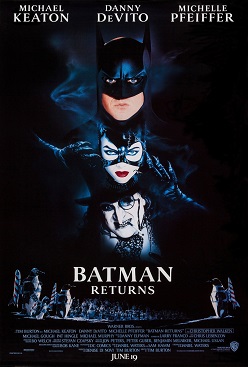
Batman Returns (1992)

Just a few years after the first Batman film, Burton and Keaton “returned” for another outing into the streets of Gotham. This film set the trend for live-action Batman films to follow, with Batman almost put into the background with the focus shifted onto the new villains. At least this time around, they were interesting.

Christopher Walken is Max Shreck, and evil businessman with a secret evil empire. Michelle Pfeiffer plays Selina Kyle, Shreck’s secretary who accidentally discovers one of his evil schemes and is killed for it. Except, instead of dying, a bunch of cats lick her and she becomes the Catwoman… yep. Catwoman is totally crazy, she commits crimes, fights criminals and also fights Batman.

Then there’s the centerpiece of this film, the Penguin, played by Danny DeVito. As a child, Oswald Cobblepot was abandoned by his parents, sent floating down a stream in a basket. Like Moses. The basket is found by sewer-dwelling penguins, which raise little Oswald as one of their own. Somehow, Oswald grows up, learns English, and assembles a gang of his own. It turns out he wants to be mayor now too.

Batman Returns is really action packed, but it’s just a little too crazy for me. It’s somewhat of a challenge for me to even watch it anymore. It’s worth seeing once, but that’s about it.

Batman: Mask of the Phantasm (1993)

During the legendary run of the immortal Batman animated series, an animated film managed to get a theatrical release. Using the great cast from the show, the groundbreaking animation and the great score, Batman: Mask of the Phantasm became the best theatrical Batman movie at the time, and right now is second only to Batman Begins in greatness.

This is the story of a mysterious figured, called the Phantasm, who is killing criminals and giving Batman a bum rap. At the same time the woman Bruce Wayne almost married before becoming a vigilante comes back into his life. Over the course of the film, we learn about their relationship, how Bruce invented the Batman character, and the identity of the Phantasm. Of course, Batman’s arch nemesis can’t resist making him look bad; the Joker gets in on the action. Mark Hamill reprises his iconic role from the show, giving a very memorable performance.

Phantasm is a very engrossing film and a real pleasure to watch. The story is great for adults and mind-blowing for adolescent boys. The vocal performances are very strong, and there’s really not much that doesn’t work here. The final fight scene is just incredible (there’s blood!) and the visual effects are pretty neat.

This is a must-see Batman film.

Batman Forever (1995)

I’ll try not to spend too much time on these next two movies, because they don’t deserve it. The Joel Schumacher films just aren’t very good. And this one, Batman Forever, is oddly enough the highest grossing Batman ever. Damn shame.

Anyway, Burton and Keaton must have felt they had taken Batman far enough with their two films, cause they skipped out on this third film. In their place are Joel Schumacher and Val Kilmer as Batman. The most notable thing about Kilmer is his nipples, which are so powerful they stick through Batman’s bulletproof chest piece.

Forever tried to restore the campy fun of early Batman while existing in the Burton world and the result was a real mess. The film opens with the story of Dick Grayson, the youngest in a family of acrobats that all wear Robin costumes. Two Face, as played by Tommy Lee Jones, gets all the Graysons killed except for young Dick, who is adopted by Bruce Wayne. Dick grows up to be Chris O’Donnell, the worst actor in film history, and is a rebellious jerk throughout the film.

Then there’s Jim Carrey. I mean the Riddler… No, I mean Jim Carrey. He doesn’t really make too much of an attempt to act in the role he’s given, instead relying on the antics that made Ace Ventura and Dumb & Dumber a hit. The film really focuses on the Riddler, because I guess everyone loves Jim Carrey. Two Face is in the background all the time, he doesn’t even get a back story. What a waste.

This movie is very below average.

Batman & Robin (1997)

Here it is. The lowest point a series can go. This film was so bad it killed the Batman franchise for almost a decade. As a child I loved it, and as a man-child, I loathe it. This is Batman & Robin.

Val Kilmer was too big to be Batman again, so George Clooney got his chance to wear the cowl. He’s clearly embarrassed about this movie nowadays, but can you blame him? Who wouldn’t want to be Batman in a movie? Even now, knowing what I know about Batman & Robin, I’d still love to star in it. Plus, Clooney made for a great Bruce Wayne.

So this mess picks up with Batman and Robin now a full-time team, with angst over how strict Batman is. Robin’s a douche though, he needs to just shut the fuck up and take Batman’s goddamn orders. Unfortunately, the movie instead brings in another annoying sidekick, Batgirl, too make things more stupid. She’s played by Alicia Silverstone, who, like Chris O’Donnell, has since disappeared from the limelight.

Again, we get a trio of villains. Of course everyone’s favorite is Arnold Schwarzenegger as Mr. Freeze, the confused and reluctant villain. Uma Thurman’s Poison Ivy is another woman “killed” by her boss but comes back as a seductive psychopath, as deadly as she is beautiful. Except it doesn’t really work. Then there’s Bane, played by a guy named Jeep. Can’t really fuck Bane up.

B&R is filled with horrible, cheesy scenes. I really just can’t stand it at all. I hate Robin in this movie. I hate so much of this movie, actually. Pretend it never happened, the world would be better if it didn’t.

This film just sucks.

Batman Begins (2005)

And then, all was right again with the universe. In 2005 director Christopher Nolan brought Batman back to the big screen, and for the first time got things exactly right. Batman Begins is heavily influenced by comics like Year One and The Man Who Falls, and is, right now, the best live action incarnation of the Dark Knight ever.

Christian Bale, an actor that really throws himself into his role, is Bruce Wayne in this movie. The focus here is on the formative moments of Batman’s early career, his parents’ murder, his training, the creation of Batman and his first super villains. The focus is all on Batman, which is what makes so much work.

We have a very strong supporting cast too. Michael Caine plays Alfred, the first man to play the role other than Michael Gough, and gives a slightly different take on the character. Gary Oldman is an outstanding Gordon, who has not made commissioner yet. Morgan Freeman does his thing as Luscious Fox, and I can’t complain about Katie Holme’s mostly superfluous Rachel Dawes.

Then there are the great villains. Ken Watanabe, Liam Neeson, Cillian Murphy, Tom Wilkinson and Rutger Hauer all show up as opponents of justice, and they each do great work in their roles. We get just enough development for Ra’s al Ghul and the Scarecrow as we need, without losing the focus on our hero Batman.

Batman Begins is one of my favorite films ever. The new, realistic and practical approach to the franchise was exactly what I had always been looking for. As John pointed out, about the only thing it’s missing is that iconic Danny Elfman score. This is a great film.

This brings us to now, mere days before the release of The Dark Knight, the direct follow up to Batman Begins. The trailers look outstanding, and the early reviews have been very positive. I mean just look at that poster! Couple all this with all the hype surrounding Heath Ledger’s last completed performances and this is clearly going to be the movie of the summer.

Here at Cat Fancy, we’re all big Batman fans, so none of us can wait to go see it. In honor of the film, we’re calling this week Batweek and from now all posts will be Batman themed, culminating in a Dark Knight review. I hope you’re all as exciting as we are!

(Yes, this means I’ll wait until next week to do any E3 posts, no matter how much Rock Band stuff is revealed.)

C.A.T: Sea Change

Dear readers, I apologize for our lack of updates over the past few days. Please forgive us for our impromptu vacation, as we’re back and ready to write once again.

Beck – Sea Change (2002)

In honor of the release of Beck’s latest album today, I present you with the first Beck CAT Instead of focusing on Odelay, an album that is synonymous with the Beck name, I thought I would focus on Sea Change, an album that challenges Odelay for the #1 spot in most critical circles.

Beck allegedly wrote this album after the breakup with a longtime girlfriend, and it really shows. This is the follow up to Midnite Ventures, another great Beck album that is the home to that song that came with Windows Media Player, “Beautiful Way.” Sea Change is an exceptionally woeful, soft album, in great contrast to most of his work both before and after this release.

The title comes from Shakespeare’s The Tempest, and refers to a profound transformation. Despite being a breakup album, Beck is not bitter here. He doesn’t really rap or rock out or do much of what made his early work so special. Instead, we get intricate compositions with Beck’s surprisingly soulful singing at the forefront. Beck utilizes a large string section, along with keyboard and his guitar, to create a unique and unforgettable sound. The result is a very pleasing album perfect for a lonely evening, or something like that.

It’s hard to single out any one track on this album, they all go together very well. Rolling Stone called this album Beck’s Blood on the Tracks, his magnum opus. That may very well be the case, as the brilliance of this classic is undeniable. It’s not exactly what people expect a Beck album to sound like, it stands very alone is his library. Whether you consider yourself a fan of his or not, the haunting sounds of Sea Change need to hit your ears at least once.

Favorite Tracks: “Lost Cause,” “Sunday Sun”

C.A.T.: Music From Big Pink

The Band – Music From Big Pink (1968)

Today marks the 40th anniversary of The Band’s landmark debut Music From Big Pink, and it still sounds just as good as ever. With it’s roots rock sound, Music From Big Pink was the first album to point the way to more rootsy, laid-back feeling albums such as Workingman’s Dead by The Grateful Dead and Beggar’s Banquet by The Rolling Stones. The Band’s sound on this album also inspired Eric Clapton to quit Cream and pursue a similar sound.

In early 1968, The Band moved to a pink house in Woodstock, NY (hence the album’s name) with Bob Dylan after serving as his backing band to record “Big Pink” as well as accompanying Dylan’s The Basement Tapes album. With this album, The Band were looking to break away from just being Dylan’s backup band. However, his influence can certainly be felt by the fact that he helped write three of the songs on the album as well as painted the cover art.

There’s a very American sound to songs like “We Can Talk” or the cover of the country standard “Long Black Veil”, which of course is pretty ironic seeing as though 4 out of the 5 members of The Band were Canadian. Much of Music From Big Pink evokes images of the American Frontier or traditional family values. Songs such as “To Kingsom Come” and “Caledonia Mission” have a very distinctive fusion of blues, country, and soul as do most of the songs. However, the song “Chest Fever” sticks out for having a bit more trippy sound as well as for showcasing Garth Hudson’s impressive organ playing and Robbie Robertson’s guitar playing.

For being a bunch of guys who had really just been backing instumentalists for their whole careers it’s comendable how little they show off as musicians on this albums, because they all appear to be very talented musicians. Also, another staple of the album is drummer Levon Helm’s beautifully soulful vocals, as well as just as impressive lead vocal contributions from pianist Richard Manuel, and bassist Rick Danko. The three of them have a very rough sounding way of harmonizing that is both distinct and mesmerizing. The blending of their voices is quite noticeable in what is probably The Band’s most famous song, and one of my favorite songs of all time, “The Weight”.

Music from Big Pink is simply one of those albums that was important because it was completely different from anything that was coming out of rock and roll during 1968, at the height of psychedelia. The Band would continue to pursue the sound established on Music from Big Pink with the delicious slice of 19th century Americana that is their self-titled sophomore album, but as far as I’m concerned, Music From Big Pink was The Band at the height of their powers.

Favorite Tracks: “The Weight”, “Tears of Rage”, “To Kingdom Come”

C.A.T: Doolittle


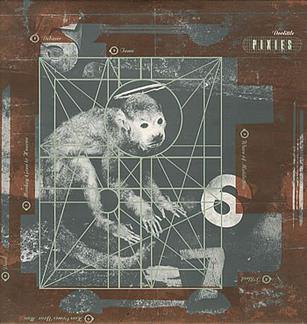
Doolittle – Pixies (1989)
After recently playing through this album on Rock Band, it seems quite appropriate to do this week’s CAT on the Pixies crowning achievement, the cult alternative rock classic Doolittle. Filled with dark and offbeat numbers with no two songs sounding alike, Pixies renovated a sound that was quite unlike anything else of the time or today. Fueled by the intensity and ingenuity of Black Francis (or Frank Black or whatever you want to call him) Doolittle presents a more polished sound than it’s predecessor (Surfer Rosa) while utilizing Black’s trademark dark humor presented lyrically and musically.

Though Black is the creative force behind this legendary alternative group, you can’t deny the contributions of the other members on this album. The distorted unique riffs of Joey Santiago, the precision and versatility of drummer David Lovering and the pounding bass/spacey backup vocals of Kim Deal. Pixies show a strong sense of camaraderie here giving the album a very personal feeling. To go over this album track by track would be a very interesting process as every song seems to have it’s kind of unique charm. “Debaser” and “Wave of Mutilation” are heavy latin inspired rock classics while the 60s sounding “Here Comes Your Man” and the memorable “Monkey Gone to Heaven” present a softer side to the group. Songs like “Tame” even started the technique of using soft spoken verses followed by howling and heavy distortion on the chorus (a technique later employed by legendary rockers Nirvana) Top it of with some off-the-wall zaniness and inventive singing styles and you’ve got a classic album. Doolittle is a staple of alternative music and just as influential then as it is today.

Favorite Tracks: “Debaser”, “Here Comes Your Man”, “Hey”

I’d like to continue discussing this with you but it appears I have to leave for Seaside, Oregon right now. I’ll be back this friday, Otteni out…

C.A.T: Computer World

Kraftwerk – Computer World (1981)

Kraftwerk may not sound as revolutionary now as they did 30 years ago, but the influence of this German band is still evident in the most popular bands of today. Popular and inspirational acts such as David Bowie, Michael Jackson, Elton John, all of electronic music, they all cite Kraftwerk as an influence.

While most fans debate whether Autobahn or Trans-Europe Express was the greatest album they released, the focus of this week’s CAT is Computer World, because of it’s ties to artist of the week Coldplay.

Just listen to the song “Computer Love.” Sounds a little familiar, don’t it? That’s right, that’s that riff from Coldplay’s “Talk.” Holy shit. And I thought it didn’t get any lower than Usher using Garageband loops I used late last year. Well, it doesn’t. Coldplay got permission for the usage of that riff.

Aside from the easy to like “Computer Love,” Computer World has six other tracks, which is business as usual for them. We get several catchy electronic songs that all go on a little longer than a typical song.

The tracks are exactly what you imagine when Kraftwerk is brought up. Catchy repetition, vocoders and computer-talking. The band deals with the rising importance of computers in our society, or the society of 1981. These guys knew what they were doing.

Kraftwerk experimented with some funky sounds, which went on to influence early hip hop. There work with “sequencing and electronic percussion are particularly innovative.” So, while not the most awesome album these Goliaths made, it’s still one of the greats. Unless you’re afraid of music from computers, check this shit out. It’s a link back to a very specific time.

Favorite Track: “Computer Love”