
Criterion Month Day 16: Fist of Fury

Fist of Fury (1972)

I knew I wanted to watch something from Criterion’s Bruce Lee collection, His Greatest Hits, this year, so I picked Fist of Fury based on its name alone. It turns out that haphazard approach was even more reckless than I thought, since exactly which movie Fist of Fury is depends on who you ask. It turns out the first two movies Bruce Lee starred in were brought over to the our shores at the same time and that led to some accidental shenanigans. His first movie, The Big Boss, was meant to be retitled “The Chinese Connection” to capitalize on the popularity of The French Connection. Somehow that movie got switched with this one, meaning Fist of Fury was released as “The Chinese Connection” and, since I guess no one liked the title The Big Boss, that movie became Fist of Fury. This mess wasn’t cleaned up until 2005, so for a long time I could’ve been watching a totally different movie tonight. But I’m glad the original title was restored, because this is a movie about a very, very furious man and his powerful fists.


Continue reading

Criterion Month Day 15: The Emigrants

The Emigrants (1971)

My initial interest in watching 1971’s The Emigrants — other than it being a somewhat forgotten Best Picture nominee — was that it’s about “my people”. Namely, Swedes who emigrated to Minnesota in the 1800s in hopes of a better life. So it was a little hard not to think of my ancestors and where I came from while watching this movie, and how much they struggled to create a more opportunistic life. And yet, this feels like a very universally American story, since no matter what area of the globe your ancestors came from, it captures in such detail both the optimism and the harsh realities of packing up and moving your family to the other side of the world. Continue reading

Criterion Month Day 14: Le cercle rouge

Le cercle rouge (1970)

Siddhartha Gautama, the Buddha, drew a circle with a piece of red chalk and said: “When men, even unknowingly, are to meet one day, whatever may befall each, whatever the diverging paths, on the said day, they will inevitably come together in the red circle.”

Jean-Pierre Melville made up that Buddha which quote opens his Le cercle rouge and I am feeling it. My red circle with this film is a wide one, reaching way back to the first time I heard about it on an episode of Filmspotting from 2008 (to give you a better sense of time, it was the one where Adam and Matty reviewed Pineapple Express). That was part of their Classic Heist marathon, which I am still woefully ignorant of, but in theory very interested in consuming. Don’t believe me? That’s fair, but it motivated two draft picks in the very first Criterion Month. Those were Rififi, which directly inspired Le cercle rouge, and another Jean-Pierre Melville film, Le Samouraï. And it keeps going: Le Samouraï was indirectly remade in a couple more of my later picks, The Killer and Ghost Dog: The Way of the Samurai. So this really does feel like a homecoming.

Continue reading

Criterion Month Day 13: The Umbrellas of Cherbourg

The Umbrellas of Cherbourg (1964)

The Umbrellas of Cherbourg is a French musical from 1964 that takes a fairly mundane story and elevates it massively with its incredible style. I don’t think I’m exaggerating when I say it is one of the most colorful movies I have ever seen. A stark contrast from the (mostly) black and white of Agnès Varda’s Cléo from 5 to 7, this film, directed by her husband Jacques Demy, makes every single frame vibrant beyond reason. Similarly, the filmmakers made the audacious choice to have the story be entirely sung-through while keeping lyrics as realistic dialogue. So people sing things like what a mechanic did to fix a car. By dialing everything but the story up to 11, The Umbrellas of Cherbourg shows that the difference between everyday events and drama is just your point of view.

Continue reading

Criterion Month Day 12: The Leopard

The Leopard (1963)

One of the many trends I’ve noticed as we do Criterion Month each year is that not only have these months deepened my knowledge of film history, but it has also done the same for the history of some of the countries whose films we’ve covered. More specifically, there have been a number of period pieces I’ve had to review that have covered turbulent eras in their country of origin that I previously had little knowledge of. I’m thinking of the clashing between leftists and fascists of ’60s Greece in Z, the pre-economic boom, post-World War II years of Taiwan in A Brighter Summer Day, and the Algerian rebellion against the French government covered in The Battle of Algiers. Well, you can now add The Leopard to that list, a film that depicts a period in Italian history known as the Risorgimento, which saw the unification of different smaller states that would eventually make up what we now know as Italy. Continue reading

Criterion Month Day 11: Cléo from 5 to 7

Cléo from 5 to 7 (1962)

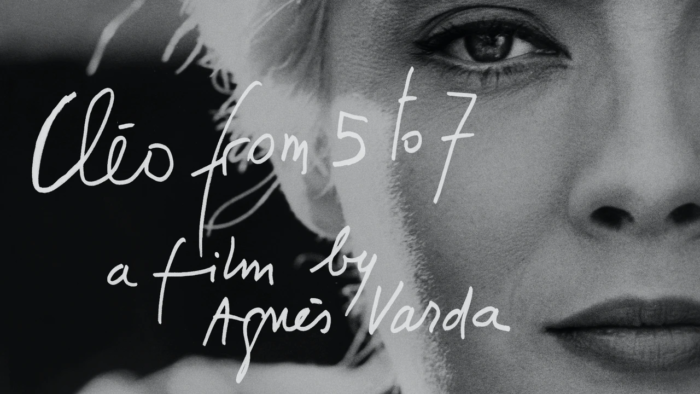
Back when I drafted Hiroshima mon amour, I remember joking about how pretentious the French New Wave’s left bank group must have been, given their reputation for considering right bank directors like François Truffaut, and Jean-Luc Godard “too commercial.” But now that I’ve seen movies from a couple left bank directors (and read Colin’s many reviews) I’m realizing I actually had it backwards. I think the left bank was poking fun at the right bank for taking cinema too seriously. It’s less that one side was more intellectual than the other, and more that the left bank filmmakers were willing to play looser and get more experimental. So in the case of a movie like Agnès Varda’s Cléo from 5 to 7, we get a film that seriously tackles existentialism and feminism, but isn’t afraid to get goofy with it sometimes.

Continue reading

Criterion Month Day 10: The Housemaid

The Housemaid (1960)

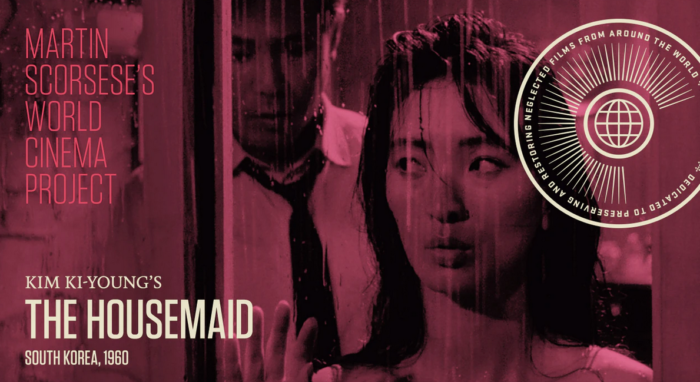
I’d never heard of The Housemaid before I chose it for Criterion Month. For some reason, i’s hard for me to believe that were Korean movies before the 2000s. Korean Cinema had such a boom with the rise of directors like Bong Joon-ho, Park Chan-wook, and Kim Jee-woon ( to name a few) that its overshadowed a lot of pre-21st Century Korean cinema. Yet if it wasn’t for films like The Housemaid, that 2000s boom may not have been possible. In fact, Bong Joon-ho even said The Housemaid was a big influence on Parasite.

Continue reading