Retrospecticus: Martin Scorsese

I was kind of going back and forth on whether it was worth it to commit to such an ambitious post. But with Shutter Island coming out this weekend, I figured I probably won’t get as good a chance to pay tribute to one of my favorite filmmakers and perhaps the world’s greatest living director, Martin Scorsese.
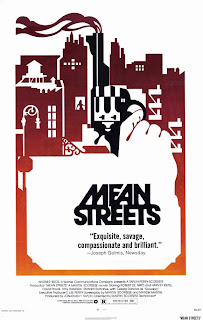
Mean Streets (1973)

I’ve only seen about half of Scorsese’s first film Who’s That Knocking At My Door and haven’t seen Boxcar Bertha, but this is undoubtedly Scorsese’s first important film and the one that established him as a cinematic force to be reckoned with. In Mean Streets, you can see all of Scorsese’s signature touches: the rapid fire editing, the violence, the themes of Catholic guilt, the rock soundtrack, and Scorsese’s already astounding visual prowess. The film paired Scorsese once again with Harvey Keitel (who starred in Scorsese’s first film) and marked the director’s first collaboration with Robert DeNiro, who gives just one of the many great performances he would give during the ’70s. There’s a certain looseness to the film as a lot of it has this improvised feel and there really isn’t a whole lot of plot to speak of. But Scorsese seems like he’s never been too concerned with story, and Mean Streets is a prime example of his ability to just completely immerse you in this fast-paced, dangerous life style.

Alice Doesn’t Live Here Anymore (1974)

This film’s a little bit of an anomaly in Scorsese’s early career, but already shows him exhibiting a certain amount of versatility as a director. It seems like despite the rise of the feminist movement in America in the 1970s, there’s only a handful of films of that era that reflect this changing of ideals, and this is certainly one of the best examples as Ellen Burstyn stars as a widow trying to pursue her dream of becoming a singer while dealing with the baggage of being a single mother. The film’s ending kind of underpins the film’s feminist message, but it’s filled with some great performances and helped break Scorsese further into the mainstream while helping Burstyn win an Oscar for her performance.

Taxi Driver (1976)

I don’t think I could ever say that Taxi Driver is one of my favorite films due it’s bleak subject matter, but it’s a film that I’m absolutely fascinated by every time I see it. It’s just an absolutely perfect collaboration between screenwriter Paul Schrader, Scorsese, and Robert DeNiro in one of his most brilliant performances. Taxi Driver paints one of the most haunting and masterful portrayals of alienation by giving us one of the cinema’s most iconic anti-heroes, the seriously disturbed Travis Bickle. And the film is first and foremost a unrelentingly dark character study, but also stands as a document of what a truly nightmarish place New York City had become during the ’70s. I’m having a hard time thinking of anything that hasn’t already been said about this film, but it’s in my opinion one of the best films to come out of the ’70s and if you haven’t seen it you should, I’m talking to you Seeeaan.

New York, New York (1977)

Coming off of the success of Taxi Driver, with New York, New York, Scorcese set out for something a little more ambitious, and this is one of the few times Scorsese’s ambitions have gotten the best of him. Though New York, New York isn’t without it’s merits, I can’t help but look at it as a noble failure. The film tries to pay homage to the MGM musicals of the 40’s and 50’s with it’s colorful set design, but Scorsese fuses this with his darker character-driven tendencies, and these two clashing styles really can’t help but make the film feel a little uneven. Liza Minnelli gives quite a good performance, but DeNiro’s performance just seems a little out of place in a film like this. Still, even in a slight misfire like this film, Scorsese’s visual playfulness is still intact, plus you gotta love the film’s famous title song.

Last Waltz (1978)

I wasn’t really sure whether to include any of the documentaries Scorsese directed, but it’s hard to deny that The Last Waltz ranks among the best rock films ever made, so I figured it was worth including. For those that don’t know, The Last Waltz documented the final performance of The Band before they decided to go their separate ways and brought together some of the biggest names in rock for this final performance. What makes this film stand out, besides it’s inclusion of so many great artists is the way Scorsese’s cameramen capture the concert in such a thorough and intimate way. I think this was actually the first Scorsese film I ever saw, and I’m kind of having a hard time remembering a lot about it, but I can’t remember any other time that I was as impressed with a concert film, and I’ve seen quite a few.

Raging Bull (1980)

After the box-office failure of New York, New York, Scorsese supposedly sunk deeper and deeper into cocaine addiction, and it was Bobby DeNiro who convinced Scorsese to take on this story of boxer Jake LaMotta. I think I’ve heard that Scorsese believed Raging Bull would be his last film, so in turn set out to make it the best film he could possibly make. Well, I think Scorsese achieved that goal and then some, as Raging Bull is probably the most mesmerizing film Scorsese has ever made, and truly an American classic. The boxing scenes in this movie are among the most frightening and visually stunning depictions of the sport ever put to film, and the more dramatic scenes are handled with the intensity of a truly magnificent director. However, much of the films brilliance has to be owed to Robert DeNiro who throws himself completely into a character that’s hard to like, but even harder to take your eyes off.


The King of Comedy (1982)

This is one of Scorsese’s films that I’d kind of like to see again. I remember being rubbed the wrong way a little bit by The King of Comedy, as I kind of felt uncomfortable about the tone of the movie. It’s almost hard to watch some of the scenes in The King Of Comedy as DeNiro plays another borderline psychotic who is obsessed with a talk show host whom he basically stalks throughout the whole movie. Jerry Lewis gives a very good performance as the aforementioned talk-show host and I think Scorsese has said that this film contains his favorite performance of DeNiro’s, and I can kind of see why, but he’s still more or less doing a variation on Travis Bickle. It seems like the rest of the 80’s were filled with films that were interesting, but not among Scorsese’s best work, and though some would say this film’s better than that, I can’t help but feel like this is a minor work.

After Hours (1985)

Definitely not one of Scorsese more well-known films, but one that I’m still fond of. After Hours shows Scorsese exploring somewhat lighter material after the dark character studies The King of Comedy and Raging Bull, with a story chronicling one crazy night in the life of Paul Hackett, played not by Robert DeNiro, but Griffin Dunne of all people. It’s a modest little film, but one that still shows Scorsese’s ability to still pull off smaller, more independent features in a decade ruled by box-office spectacle.

The Color of Money (1986)

I’m pretty sure I’ve read that Scorsese has said that he did this sequel to the 1961 film The Hustler just so he could get funding for The Last Temptation of Christ. But from watching the film you probably wouldn’t be able to tell, as it show’s Scorsese innate ability turn out quality work, even when it’s one of his more mainstream ventures. It’s also entertaining as hell to see the great Paul Newman reprise the role of Fast Eddie Felson, and seeing him facing of with Tom Cruise makes for an interesting dynamic. And though it’s far from Newman’s best performance, it helped him win his long-overdue Best Actor Oscar.
The Last Temptation of Christ (1988)
I actually wasn’t able to get around to seeing this one before completing this post, sorry. I guess I just have a hard time committing to watching controversial Jesus movies, which also explains why I still haven’t seen The Passion of The Christ either. I really didn’t want to postpone this post any longer from being finished, I hope you’ll forgive me.

GoodFellas (1990)

After a series of somewhat mixed results during the eighties (or at least by Scorsese’s standards), GoodFellas saw Scorsese returning to the excellence he had shown earlier in his career. GoodFellas is undoubtedly one of my favorite films of all time, and one of the few films I can watch over and over again and not get tired of. For me, GoodFellas captures the mafia lifestyle in a way that really no film has managed to do. But GoodFellas also steers clear of glamourizing the mafia, as Henry Hill’s downfall is just as compelling to watch as his rise to the top. This is quite simply a story Scorsese was born to make, by utilizing his signature fast-paced visual style as well as his penchant for troubled, violent Italian-Americans, GoodFellas is nothing short of a classic.

Cape Fear (1991)

Coming right off the heels of GoodFellas, you could say Cape Fear might have been somewhat of a letdown, but I’d say it’s still a first-rate thriller by any measure. I haven’t seen the 1962 original film, but you can see that the film pays homage to the thrillers of that time as it has a very Hitchcock-ian feel to it. At the center of this incarnation of Cape Fear is Robert DeNiro’s interpretation of Max Cady, and though you could say DeNiro goes a little over the top with his performance, he’s still undeniably fun to watch, and the always reliable Nick Nolte and Jessica Lange are quite good as well. You could say that this is an example of Scorsese’s more mainstream, and therefore less personal projects, but I think it’s still a very entertaining thriller even if it doesn’t rank among the director’s most interesting work.

The Age of Innocence (1993)

This is another Scorsese film I’d kind of like to see again, because the first time through I couldn’t help but find this movie a little boring. I guess I just have a hard time getting into the whole 19th century upper-class costume drama thing, although I still found it to be an interesting venture for Scorsese as he’s definitely going out of his comfort zone here. Daniel Day-Lewis gives what might be his most restrained performance, but as far as I remember Michelle Pfeiffer gives the real stand-out performance as the two of them as well as Winona Ryder are stuck in a forbidden love triangle. Though I really couldn’t find myself getting engaged in this story, I still found the film to have not only some nice set design, but also an undeniable visual flair to it, but I guess that’s something you can always count on Scorsese for.

Casino (1995)

When this movie first came out, it seemed to get a kind of mixed response due it’s similarities to 1990’s GoodFellas. Though there are a number of things it has in common with that earlier film, it’s still a very good film by any standard and another example of Scorsese’s mastery of the crime genre. Scorsese does a great job of capturing all of the glitz and glamour of the Vegas lifestyle while giving us this fascinating account of Ace Rothstein’s rise to the top of a Vegas empire. This would mark the last collaboration between Scorsese and Robert DeNiro, but there’s always hope that they’ll do one last great movie together someday.

Kundun (1997)

Another example of Scorsese taking on material that you wouldn’t think he’d be most suited for. I’d say Scorsese does with this material about as much as he can, but to be honest I couldn’t help but feel like the Dalai Lama just isn’t a charasmatic enough figure to deserve a biopic chronicling his life. However, it seems like Scorsese and cinematographer Roger Deakins manage to avoid this somewhat by shooting the film in a way that’s visually stunning, but I still can’t say Kundun ranks among Scorsese’s most memorable work.

Bringing Out The Dead (1999)

This is probably most notable for it being the first collaboration between Scorsese and screenwriter Paul Schrader since 1976’s Taxi Driver. You can definitely see some similarities between Bringing Out The Dead and Taxi Driver, as Nicholas Cage plays an ambulance who’s slowly becoming dissatisfied with his nocturnal lifestyle. However, Bringing Out The Dead‘s filled with a much more kinetic energy, as well as some great supporting performances from the likes of John Goodman, Ving Rhames, and Tom Sizemore. This has got to be one of Scorsese’s more underrated films, as it’s a very good film whether you take it on it’s own terms or as kind of a companion piece to Taxi Driver.

Gangs Of New York (2002)

By the early 00’s, it seems Scorsese was bent on getting that Oscar that had never been given to him for any of his past achievements. What Gangs of New York does very well is immerses you in a somewhat overlooked period in American history, when the streets of New York where overrun with looting and violence. A great deal of the film’s praise has to be owed to the incredible set design that creates this living, breathing world that seems taylor-made for Scorsese’s sensibilities. And at the center of the film is Daniel Day-Lewis, providing a deliciously villainous role as he’s paired against Leonardo DiCaprio in what would mark Scorsese’s first but certainly not last pairing with the actor. I guess the one thing that keeps this from being a great Scorsese film is the fact that when you get down to it, Gangs of New York is a simple revenge tale, and Scorsese doesn’t quite seem able to make this story seem more complex than that.

The Aviator (2004)
This film once again saw Scorsese turning to Leonardo DiCaprio as his leading man in this riveting biopic about the earlier years of Howard Hughes. And after a somewhat underwhelming turn in Gangs of New York, DiCaprio truly shows that he’s the real deal with this astounding performance that might be his best yet. Another great performance comes from Cate Blanchett, who proves just what a talented actress she is by being able to breath life into one of the most recognizable and beloved of all Hollywood starlets, Katherine Hepburn. And besides that, The Aviator shows another example of Scorsese’s ability to take a troubled and complex figure and bring you into his world, although this certainly qualifies as lighter material when you compare it to the likes of Raging Bull or Taxi Driver.

No Direction Home (2005)

I know this wasn’t given a theatrical release or anything, but I figured it deserved to be included as it probably ranks among my favorite documentaries of all time. And this isn’t a film that I’m fond of simply for the fact that it’s about Bob Dylan, one of my favorite musical artists ever, it’s just simply a great documentary. We get a fascinating look in to how Bob Dylan came from humble beginnings in Minnesota to becoming the “voice of generation” only to become the target of vitriol and disgust by his own fans after “going electric”. By telling the story of Bob Dylan, No Direction Home also manages to paint a detailed picture of Greenwich Village’s early sixties folk scene as well as the changes that were starting to happen in America during the first half of that turbulent decade.

The Departed (2006)

When Scorsese returns to the crime genre, and in this case the mafia, good things happen. But this is just as much a cop movie as it is about the Irish mafia, and Scorsese manages to give us a crime epic that’s brutal, intense, funny, and a testament to Scorsese’s ability to knock you on your ass when he gets a hold of a story of this sort. DiCaprio is quite good in another demanding role, and I feel like this might of been the movie where Matt Damon turned into Hollywood’s most reliable “everyman”, and of course it’s always fun to see Jack Nicholson chew up the scenery in a role like this. It might not be Scorsese’s best film, but I think it’s a film that rightfully earned Scorsese that Oscar that he’d had his eyes on for all those years.
Shine A Light (2007)
Didn’t really feel like writing about this one again, but if you really care what I think about it there’s always this.
Shutter Island (2010)
Not sure how soon I’ll get around to reviewing this considering I’m pretty exhausted from writing this Retrospecticus. If any else wants to review it, feel free.

Retrospecticus: Star Trek

This post has been sitting around, incomplete, for a few days now. So, instead of letting it go to waste any longer, I rushed through it and posted it now. Enjoy!


Space, the final frontier. Throughout history, only one franchise has managed to united the geeks and nerds of the world. Over 10 films and half a dozen television shows, Star Trek has had a lasting influence on society and multiple generations.

The new movie is out today and I’m quite excited to go see it. Lots of people are. In preparation for this new film, let’s take a look at everything that had led up to this latest release. That’s right, everything.

Star Trek: The Original Series (1966-1969)

The Original Series, or “TOS” aired from 1966-1969. There were 79 episodes produced before it was cancelled after its third season. While the show was not too successful when it first aired, it picked up a cult following in reruns, a following so massive that it started holding conventions celebrating the relatively short-lived show. In 2006, CBS remastered the show in high definition with brand new CGI; it looks awesome.

TOS follows the adventures of James T. Kirk, Spock, Leonard “Bones” McCoy, and the rest of the crew of the starship USS Enterprise, NCC-1701. Their’s is a mission of exploration and scientific curiosity. What makes the show so great, as my dad likes to point out, is that despite being set in the far flung future, this show focuses on relatable, human problems. That, and some really fun futuristic science helped make this show so memorable, and I heartily recommend everyone check it out.

Star Trek: The Animated Series (1973-1974)
(Haven’t Seen It)
TAS, the Animated Series, aired from 1973-1974. It continued the story of the original Enterprise crew, but since it was animated, it allowed for more exotic storylines.

Series creator Gene Roddenberry declared that the show was not cannon, but several parts of it, like the holodeck, have made it into latter series.

Star Trek: Phase II (1978)
(Never Aired)
This attempt to start a new Star Trek live action show never made it to the airwaves. It would have featured the original cast on a new mission, except for Leonard Nimoy. In his place, there was a new vulcan written in, Xon, with the hopes that Nimoy would later guest star. Before the series was even able to take off, Star Wars happened, and it was decided to recommission the pilot into the first Star Trek motion picture.

Star Trek: The Motion Picture (1979)

In 1979 the first Star Trek movie was released. It was the epic tale of a monstrous cloud, the V’ger, and the Enterprise’s attempt to stop it from destroying the earth. Kirk, now an Admiral, and the rest of the crew find their way back aboard the Enterprise in an attempt to stop this alien threat, usurping power from the Enterprise’s current crew.

The first film in the franchise definitely got too caught up with itself. “Ooh, look at me, I’m a movie, I have a big budget.” There are lots of long, slow moving shots and it seems that the whole movie was designed as a visual spectacle rather than an exciting story. Overall, this movie is fun, but not that great. I just read on Wikipedia that some fans call this The Slow Motion Picutre, that’s hilarious.

Star Trek II: The Wrath of Kahn (1982)

I think everyone knew that the first movie dropped the ball, because these guys were not messing around when it came to its sequel. When Chekov and Clark Terrell of the USS Reliant beam down to Ceti Alpha V, they stumble across the superman Kahn. Kirk had previously marooned Kahn on the planet 15 years ago, since then Kahn’s followers and wife had died. Kahn embarks on a mission of revenge. What follows is the best Trek has to offer.

Seriously, if you don’t like Wrath of Kahn, what’s your problem? It’s one of the best sci fi films I’ve ever seen. With so many memorable scenes and dialogue, this movie is just a lot of fun. It ends with the most famous scene in all of Star Trek, the death of Spock. That’s a hell of a thing. I really cannot praise this film enough, it is exactly what I want out of a Trek movie.

Star Trek III: The Search for Spock (1984)

This is where the thing about odd numbered movies sucking got started. After the events of Wrath of Kahn, it was decided that the movies would follow a story arc, one that would continue until the sixth motion picture. In this feature, the distraught crew of the Enterprise learn that Spock’s essence is within McCoy, and that neither of them will be able to rest until they can bring Spock’s remains to Vulcan. So they hijack the Enterprise and go back to the Genesis planet, only to find hostile klingons.

Since he is hardly in the film, Nimoy took over as the director this time, a job he would continue in the next movie. While not terrible, there’s not too much going on here, except for Christopher Lloyd as a Klingon commander. This story is really just a means to get Spock back, instead of another grand adventure. That said, since these movies lead into each other, you will want to see this movie so that you can fully appreciate the fourth one. Plus, you want Spock to be OK, don’t you?

Star Trek IV: The Voyage Home (1986)

This movie is pretty zany, but pretty entertaining too. After the events Search for Spock, the exiled crew, along with the new Spock, decide they have to return to earth. But on the way back they intercept an alien signal that sounds like humpback whales. With humpback whales extinct and the earth in danger, the crew decide to slingshot around the sun to go back in time. Their plan: To steal a whale and travel back to the future to save the earth.

Yep. Time travel to the 20th Century was always great on the original series, and that doesn’t change when they finally do it in a movie. The Voyage Home was both a commercial and critical success, and it deserves to be. For the emphasis is put squarely on the actors here, and they more than rise to the challenge. This is my second favorite Trek movie.

Star Trek: The Next Generation (1987-1994)

So it turns out people still liked Star Trek, even in the 1980s. In 1987, a new series was commissioned, set 70 years after the exploits of Kirk, Bones, and Spock. This new show was called Star Trek: The Next Generation.

TNG was set aboard the Enterprise-D and featured a diverse crew from multiple species. There was its captain, Jean-Luc Picard, his first officer, William Riker, the android Data, the Klingon Worf, the blind Geordi La Forge and more. This show would introduce several key races and conflicts for the universe, as well as create some of the most memorable characters in the franchise.

The series was one of the most successful Star Trek shows, responsible for the series’ resurgence in the 1990s on TV. It also won several awards.

Star Trek V: The Final Frontier (1989)

What a piece of crap.

Seriously.

This movie starts out with Kirk and Spock having a good time at Yosemite before decending into the schemes of Spock’s evil brother Sybock.

This was the one that Shatner decided to direct. I guess he decided that the franchise needed a comedy, because that’s the closest thing we get here.

It’s kind of campy fun, but I won’t go as far as to actually recommend this to anyone. It’s just a mess.

Star Trek VI: The Undiscovered Country (1991)

This movie is supposed to be much less of a piece of crap. Sadly, I haven’t watched it since I was much younger, and I didn’t want to hold up this post any further by limited attempts to watch it. Especially after sitting through The Final Frontier.

I guess the story is about Klingons and the Federation finally making piece, which definitely makes sense, since they are good guys by the time you get to the latter TV shows. If any of you get a chance to see this movie, comment about it so that other readers can get a piece of your knowlege.

Everything that I’ve read suggests that this film was somewhat a return to form, and that it is overall an acceptable entry into the series.

Star Trek: Deep Space Nine (1993-1999)

DS9 started airing 1993, a year before TNG‘s conclusion. It was the story of Deep Space Nine, a Federation outpost near the planet Bajor and a wormhole that provides immediate access to the gamma quadrant. This heavily contested area is the target of the antagonistic cardassians, which eventually results in the first war seen in the Star Trek universe, between the Federation and the Dominion.

At the head of the cast is Avery Brooks as Captain Sisko, who sadly does not take up his signature bald, bearded look until halfway through the show. It also features the shapeshifting Odo, the passionate Kira, the immortal Dax and two former TNG crew members, Chief O’Brien and Worf. Everyone is familiar with Quark, I assume.

Unlike all the other shows, DS9 was all about plot archs and character development, making the show much more compelling and geniunely interesting than I thought it would be. Infact, I think I like this show more than any other, despite having grown up in a strict TOS household. Give it a shot.

Star Trek Generations (1994)

As TNG was coming to a close in 1994 and the OS cast was getting old, it was time for them to finally pass the torch to the next group of movie heroes. Sadly, Leonard Nimoy and DeForrest Kelley did not appear in the film, so that torch was left in the capable hands of William Shatner.

The retired Captain Kirk’s last adventure sees him hurdled into the deep future, where it is up to him and the crew of the Enterprise-D to stop Malcolm McDowell, as the evil Dr. Soran, from messing shit up. Kirk is always a fighter, never giving up even at the bitter end, but if you ask me, this film makes it perfectly clear that Picard is the superior captain. Kirk is just a lot luckier.

This movie may not be that great, but the symbolism of it pushes it over the top. If you want to see how Captain Kirk gives his final performance, you need to see this movie.

Star Trek: Voyager (1995-2001)

Lady Captain Janeway takes the reigns in this series. Voyager marked a return to tradition for the Star Trek franchise, with the empahsis back on exploration and science. When the new ship the USS Voyager is thrown 70,000 lightyears across the galaxy, its young crew embarks on its greatest mission: to return home.

This multi-year journey would be marked by difficulty, specifically from the newest threat to galactic piece, the Borg, who seem pretty damn hard to stop. The episodes I’ve seen of Voyager seemed pretty bland, not necessarly bad, but not that interesting either. I’m sure plenty of people like it, I just have a hard time wanting to see it.

Star Trek: First Contact (1996)

Those Borg bastards! In this movie they go back in time to stop the Federation from being founded by preventing the first meeting between humans and vulcans.

Thankfully, we’ve got the Enterprise-D and those guys to come save the day.

This film is the first in a series of movies with the Next Generation guys at the forefront. Like those movies, its action-packed, but not too great. It’s just OK. Just OK.

Actually, this is probably my favorite TNG movie. Not only does it have a couple great scenes, it is pretty much the climax of the Borg conflict, which is pretty sweet.

Star Trek: Insurrection (1998)

This movie is based around a planet where people are immortal due to some strange anomaly. This wackness has strange regenerative powers, like allowing Geordi to see. But then this Federation Admiral is being a dick and its up to Picard to stop him.

I hardly even remember what goes on for most of this movie.

This is the least interesting of TNG movies. It’s like an episode of the show, with little consequence to the overall arc for these characters.

Riker doesn’t even have a beard.

The movie’s not bad, but there’s little to gain from watching it.

Enterprise (2001-2005)
(Haven’t Seen It)
Later retitled Star Trek: Enterprise this show put Scott Bakula in the captain’s chair of the first starship Enterprise as humanity made its first steps into space diplomacy. Since humanity discovered warp drives and founded the Federation, they have started becoming the organization we all know and love from the other shows.

I think we all watched the first episode of this show, then lost interest. Which is a shame, because I guess much later on, like by the third season, this was looking alright. Oh well, this still ended up being the first show to get canceled since the original. Better luck next time.

Star Trek: Nemesis (2002)

This movie is kind of fucked up. The main enemy is a Picard clone. There’s an evil Data. It’s the final adventure of TNG crew. And it’s action packed.

Totally action packed.

Yeah, once again this movie is not very interesting. But I think the action is more fun this time around. That’s based on what limited memory I have from seeing this movie in theaters.

What’s more important is that this was the last movie in the franchise, and with the conclusion of Enterprise three years later, for the first time in a long time, we had to Trek.

Not for four whole years.

Star Trek (2009)
With that guy from Heroes! Seriously though, more on this in a second.

Retrospecticus: Bruce Springsteen

Well here it is, the most epic retrospective of an artist’s discography yet.  I kept most of reviews of these albums fairly brief, and I didn’t attempt to listen to all of the Boss’s live albums, although him and E Street Band do give fantastic live performances.  I’m sorry I wasn’t able to get this up by monday, but give me a break this this thing is pretty huge, besides I didn’t want to take away from Nancy’s glorious post.  Anyways let’s get on with this look back at a very impressive discography from one of rock n’ roll’s most prolific talents.

Greetings From Asbury Park, N.J. (1973) 

New Jersey’s own Bruce Springsteen first made his mark with his debut, Greetings from Asbury Park, N.J.  The album’s sales were modest, but it established his unique abilities as a songwriter and drew many comparisons by rock critics as the “new Dylan”.  This was probably due to some of the songs have a bit of a more folk-rock sound to them as well as The Boss’s unique lyrical sensibilities that evoke fantastic imagery.  But the album also features plenty of songs with that certain anthemic quality that Bruce would later pursue such as “Growin’ Up” and “For You”, as well as his original version of “Blinded By the Light” which Manfred Mann would turn into a #1 hit.  At this point what would become the E Street Band certainly infused the songs with a great exuberance, even if they weren’t yet made up of what would become the classic E Street line-up.  

Favorite Tracks: “Growin’ Up”, “Spirit in the Night”, “It’s Hard To Be A Saint In The City”


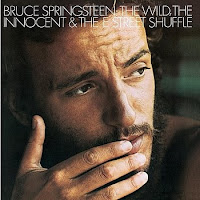
The Wild, The Innocent, and The E Street Shuffle (1973)

Recorded and released the same year as his debut, The Wild, The Innocent, and the E Street Shuffle already shows The Boss finding his groove as a songwriter and  an artist.  He builds on the same sound he established with the first album, but the songs are definitely longer (4 of the 7 tracks are over 7 minutes long), but also at the same time much tighter instrumentally.  There’s some great intstrumental interplay between the musician’s and you can really hear the E Street Band start to gel as an outfit.  You can also hear Springsteen starting to grow lyrically as his songs are chocked full of distinct characters and vivid images of the New Jersey boardwalk.  Songs like “Kitty’s Back” and “Rosalita” are among the most thrilling songs of the Boss’s discography, and this albums still remains one of his best.

Favorite Tracks: “The E Street Shuffle”, “Kitty’s Back”, “Rosalita (Come Out Tonight)”


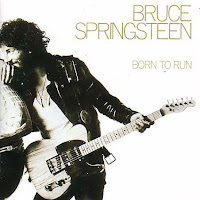
Born To Run (1975) 

The Boss’s third album was without a doubt the most ambitious album of his then young career and is quite simply one of the greatest rock n’ roll albums ever recorded.  From the opening piano bars of “Thunder Road”, you know you’re in for a special ride and Born To Run simply never lets up.  However, the road to the completion of Born To Run was not an easy one, it took over 14 months to record and nearly drove Springsteen and his record company to bankruptcy.  The production of the album is definitely a lot more lush than his first to albums, Springsteen has said that he was going for a Phil Spector-like “Wall of Sound” approach, and he definitely achieves it.  


Another big contribution to the sound of the album is the addition of drummer Max Weinberg, who adds a much more precise style of drumming, and pianist Roy Bittan who’s piano work is among the hallmarks of the album.  Also with the addition of guitarist/vocalist and future Sopranos star Steven Van Zandt, the classic E Street line-up was complete.  Also, songs like “She’s The One”, the title track, and especially “Jungleland” feature many of the Clarence Clemens’ best sax solos.  The song “Born to Run” is simply one of my favorite songs of all time, there aren’t many songs that are so epic and so brimming with hope.  The song as well as the album finally brought Springsteen some mainstream success and helped to establish him a national fanbase.


Favorite Tracks: “Thunder Road”, “Born To Run”, “Jungleland”

Darkness On The Edge Of Town (1978) 

Coming three years after The Boss’s breakthrough Born to Run, it seems that he had already distanced himself considerably from that album’s youthful optimism.  The songs still have the same energetic treatment from the E Street band, but there’s a slightly darker tone to Darkness on the Edge of Town.  Also, instead of Springsteen’s lyrics about teenage New Jersey life, many of them are unglamorous odes to the working man.  This album marked a clear turning point from The Boss’s early sound into the next decade, and I don’t really feel any need to write anything more considering I already wrote a CAT for this album.

Favorite Tracks: “Badlands”, “Candy’s Room”, “The Promised Land”

The River (1980) 

The only double album in Bruce Springsteen’s catalog, The River is composed of a number of songs that The Boss had written during earlier parts of his career as well as newer material.  One distinct feature of the The River is the contrast of almost frivolously upbeat songs such as “Cherry Darling” and “Crush On You” as well much more solemn, personal songs like “Independence Day” and “Drive All Night”.  The River was also notable for featuring The Boss’s first top ten single, “Hungry Heart”.  Most of the songs sound like Bruce and the E Street Band are just having a good time banging out these catchy pop numbers, and although most of the songs aren’t quite at the level of the past Springsteen outings up to this point, I think the fact that the album contains so many solid songs is what makes the album work.  And although I’d say the album’s lenghty duration does make it a little less appealing, I don’t think it would be nearly as good as a condensed single album.


Favorite Tracks: “Jackson Cage”, “Hungry Heart”, “I’m A Rocker”


Nebraska (1982) 

Though even at this point, Bruce Springsteen had shown the ability to take his music in a number of different directions, nothing was nearly as huge of a departure as the somber folk sound of Nebraska.  Demos for the album were initially recorded by Springsteen at his home on a 4-track cassette recorder with nothing more than guitar, harmonica, and Springsteen’s voice.  The same songs were then recorded with the E Street Band before being scrapped after it was decided that they didn’t capture the haunting nature of the demos, and the demos where ultimately released as the album.  


The sparse but effective sound to the album makes for one of Springsteen’s most memorable albums, even if the songs have a fairly bleak tone to them.  There are plenty of songs that explore working class themes such as the title track or “Highway Patrolman”, although this time around they seem to evoke images of the Midwest rather than Springsteen’s native New Jersey.  The Boss would pursue a similar bare, acoustic folk sound with The Ghost of Tom Joad and Devils And Dust, but neither of them quite capture The Boss’s more introspective side quite as brilliantly as Nebraska.


Favorite Tracks: “Atlantic City”, “Johnny 99”,  “State Trooper”


Born In The U.S.A. (1984) 

At this point Bruce Springsteen had acheived quite a bit of success with a couple of hit singles, but Born In The U.S.A. was the album that transformed him into a bona fide superstar.  The album is by far the best selling album of Springsteen’s career and contained an unbelievable seven top 10 singles.  The album shows Springsteen continuing to explore songs about “the working man”, although they have a much more optimistic and energetic feel to them than his previous album thanks to the reliable power of the E Street Band.  


A main aspect that can be attributed to the album’s success is the more pop-friendly sound to the album, with many of the songs containing some memorable use of synthesizers, especially on the hit singles “Born in the U.S.A.” and “Dancing in the Dark”.  However, there’s still many guitar driven songs such as “Cover Me” and “I’m Going Down”, even though guitarist Steven Van Zandt would leave the E Street Band after the recording of Born in the U.S.A. to be subsequently replaced by Nils Lofgren.  Born In The U.S.A. was certainly one of The Boss’s breakthrough albums and an album that defined the pop/rock sound of the early ’80s.


Favorite Tracks: “Downbound Train”, “No Surrender”, “Dancing In The Dark”


Tunnel Of Love (1987) 

After the overwhelming success of Born In The U.S.A. and the massive tour that followed it, Tunnel Of Love shows The Boss scaling back a bit.  Most of the songs feature meditations on love in the face of success with a bit of a regretful tone to them.  Synthesizers and acoustic guitars are definitely at the forefront of the album which make for one of Springsteen’s most polished sounding albums.  Some of the album does sound a little bit dated at times due a very ’80s sound, but the quality of introspective songs like “Walk Like A Man” and “Brilliant Disguise” make Tunnel of Love an enjoyable and somewhat underrated entry in Bruce Springsteen’s catalogue.


Favorite Songs: “Tougher Than The Rest”, “Tunnel Of Love”, “Brilliant Disguise”


Human Touch (1992) 

Lucky Town (1992) 

A few years after officially disbanding the E Street Band 1989, Bruce Springsteen released the albums Human Touch and Lucky Town on the same day.  Both of them have a similarly pop-oriented sound and are among The Boss’s most optimistic material.  The Boss would feature songs with less serious subject matter on many of his prior albums, but these two albums seem to be entirely consisting of mostly pretty poppy, upbeat songs.  I’d say this sound works to a certain extent on Lucky Town

because it has a handful of undeniably catchy songs like “Better Days” or “Leap of Faith”, but Human Touch just seems kind of bland in comparison to every album 

Springsteen had released up to this point.  For me, the ’90s seemed kind of like a time in which Springsteen didn’t quite have that same spark that he had in the earlier years with the E Street Band, although he would achieve another impressive accomplishment with his Best Original Song Oscar win for “Streets of Philadelphia” in 1994.


Favorite Tracks: “Better Days”, “Local Hero”, “Human Touch”

The Ghost of Tom Joad (1995) 

With The Ghost of Tom Joad, Bruce returned to somewhat familiar territory that definitely bears a similar sound to 1982’s Nebraska.  Much like Nebraska, The Ghost of Tom Joad features for the most part just Springsteen’s voice and acoustic guitar playing, although there are a few songs that feature some sparse keyboard work and percussion.  The lyrical content is among The Boss’s most politically driven, which make for some occasionally interesting songs, but a lot of them seem a little forgettable.  The Ghost of Tom Joad is definetely one of The Boss’s most personal albums as well as having a somewhat charmingly intimate sound , but for me fails to match the haunting intensity of his earlier acoustic folk effort, Nebraska.


Favorite Tracks: “The Ghost of Tom Joad”, “Highway 25”, “Dry Lightning”


The Rising (2002) 

Coming seven years after his last album, The Rising reunited Bruce Springsteen with the E Street Band while marking a major comeback for The Boss.  Much of the album was inspired by the terrorist attacks of 9/11, and The Rising features many songs that feature messages of hope and healing.  There’s a good mix of more downbeat mournful songs such as “Nothing Man” and “My City of Ruins” as well as  songs that have a more upbeat hopeful nature to them such as “Lonesome Day” and the title track.  One aspect that added another layer to the E Street sound is the inclusion of violinist Soozie Tyrell.  Also, thanks to producer Brendan O’Brien who has also produced each subsequent album by Bruce Springsteen gives a more modern sound to some of Springsteen’s most exciting work as a songwriter in years.  It seems like ever since the release of this album, there’s been a constant flow of creativity from Springsteen seeing as though he’s been incredibly active as far as recording.  Really the only complaint I have about this album is that at a running time of 72 minutes it’s a bit long, and I could do without a couple of tracks but for the most part it shows The Boss and the E Street Band in prime form.


Favorite Tracks: “Lonesome Day”, “Couning On A Miracle”, “Sally’s Place”


Devils & Dust (2005) 

Comprised mainly of older songs Sprinsteen had written that go back as far as ten years, Devils and Dust shows The Boss returning to the more stripped down acoustic folk sound of Nebraska and The Ghost of Tom Joad.  However, this time around the songs are considerably more melodic and not nearly as bleak.  Devils And Dust also has a bit more lush sound than those records because of the contributions from several musicians that Springsteen has worked with over the years.  The lyrical content is definitely pretty diverse, featuring songs such as the title track, a commentary on the Iraq War, “Reno”, about an encounter with a prostitute, and “All I’m Thinking About”, a simple love song featuring a falsetto vocal performance.  Devils and Dust is another charming addition The Boss’s more intimate acoustic material, even if it has a somewhat conventional sound to it. 


Favorite Tracks: “Devils and Dust”, “Long Time Comin'”, “Leah”


We Shall Overcome: The Seeger Sessions (2006) 

Definitely one of the most unique sounding albums in Bruce Springsteen’s catalogue, We Shall Overcome is comprised entirely of songs written or made famous by folk legend Pete Seeger.  Springsteen is backed by The Seeger Sessions Band which comprised mostly of lesser known musicians that Springsteen had met through E Street violinist Soozie Terrell as well former collaboraters such as Max Weinberg 7 members, Mark Pender and Richie “La Bamba” Rosenberg.  The mix of lots of bouncy strings and brass combined with other acoustic instruments and Seeger’s songs give the album a very lighthearted and enjoyable sound, and make for another great addition to the slew of quality work The Boss has been putting out this decade.


Favorite Tracks: “Old Dan Tucker”, “John Henry”, “Pay Me My Money Down”


Magic (2007) 

Releasing an album for the third year in a row, Bruce Springsteen shows him and the E Street Band continuing to explore a similar sound as on 2002’s The Rising while also recalling the vigor of some of his earliest records.  The leadoff track “Radio Nowhere” is among The Boss’s most electrifying rockers in years and for the first time in years, “Livin’ in the Future” provides Clarence Clemons with a chance to really shine.  Producer Brendan O’brian once again gives the album a very lush pop/rock sound that are complemented excellently by some of Springsteen’s catchiest numbers such as “Girls In Their Summer Clothes” and “I’ll Work For Your Love”.  Magic is just another testament to Bruce and the E Street Band’s knack for turning out great records each time they get together to record an album.


Listening to all these albums has definitely gotten me quite a bit more excited than I would have normally been for a new Bruce Springsteen album.  But seeing as though all of Springsteen’s recent albums have been pretty great, I’m more than looking forward to hearing his latest album, Working On A Dream.  The title track has a similar feel to the songs on Magic, and I wouldn’t be surprised if the rest of the album has a similar sound considering some of the songs were recorded around the same time as that album.  Sadly, It’ll be the first E Street outing not to feature the recently deceased keyboard/organ player Danny Federici who’s been with the band ever since Springsteen’s second album.  I’m glad to see that “The Wrestler” made on to the album as a bonus track, and I’m also excited to see Bruce and The E Street Band play the Super Bowl the Sunday.  And of course you’ll be seeing a review of Working On A Dream form me in the near future.

Retrospecticus: Oasis

I’m pretty excited to go pick up Oasis’ latest album tomorrow, so in honor of their latest release I figured it was time for retrospective of the Oasis discography, or as we like to call them here at Cat Fancy “Retrospecticus” let’s begin.


Definitely Maybe (1993)

Signed to Creation Records in 1993 this young quintet started the recording of their debut album with some initial difficulty. Working with producer Dave Bachelor, Oasis just couldn’t capture the heaviness of their live sound and soon enough fired Bachelor. Taking the tapes to Tim Abbott to salvage the already recorded tunes, Oasis still struggled to find their sound in the studio. Time passed eventually leading Oasis to re-record the tracks, this time working with producer Mark Coyle. So It was decided the best technique would be to record all the instruments simultaneously, then magic happend. From then on the tapes were sent off to be polished by engineer/producer Owen Morris, stripped of some extra guitar overdubs and eventually remolded. Finally becoming that hard hitting sound that the band was looking for all along.

It was some journey to get this album to perfection but in the end I’d say it was totally worth it. Combining Beatlesesque pop with huge guitars and heavy rhythms, Definitely Maybe would prove to be an instant classic and would pave the way for the blossoming “Brit Pop” genre of music. The dynamic of Liam’s English swagger, obviously inspired by Lennon and Noel’s talent for penning great tunes would become the perfect stepping stone for this band’s fresh new sound and a grand contribution to rock music.

There’s just too many great songs on this album to list and it’s definitely one of my favorite’s of the 90s, Oasis were fresh and in firing form on this balls to the walls British Rock infused record and were ready to take on the scene of the decade of the extreme.

Favorite Tracks: “Live Forever”, “Supersonic”, “Married With Children”


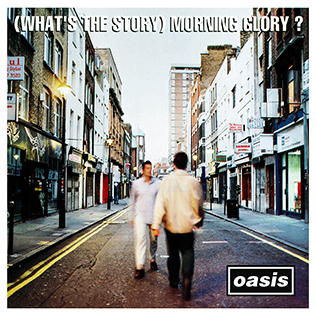
(What’s The Story) Morning Glory? (1995)

Now I already wrote a review for this album a while back on this blog so I’m gonna make this brief. “(What’s The Story) Morning Glory?” is pretty much the best album these guys have ever put together. With track after of top notch single material and heavy guitars this is a classic staple of 90s music. This was also when Oasis was probably at their peak popularity and an exciting time in music, if you haven’t heard this album than I highly recommend it.

Favorite Tracks: “Don’t Look Back in Anger”, “She’s Electric”, “Wonderwall”


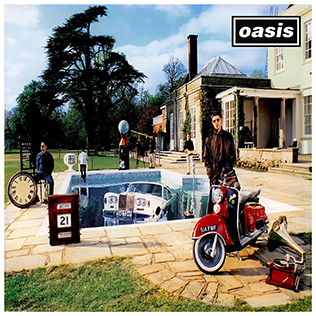
Be Here Now (1997)

After the major success of their previous two albums, Oasis were now riding a huge wave of success. While the band was certainly big on the music scene, the Gallagher brothers had themselves become popular if not controversial celebrities within the media often caught publicly fighting, but of course that would never tear these two apart and soon enough they were ready to start work on their most ambitious album yet.

Heading into Abbey Road in October of 1996, after Noel had recently gone through a stage of writer’s block. Noel had a vision on making an ablum of epic proportions basically deciding to throw the whole kitchen sink into this one. There’s mellotrons, strings, sitar, psychedelic guitars and even slide guitar played by who else but Johnny Depp. The sound here truly is epic but unlike most of the critics who initially praised the album, I was never too big on this record.

Now the compositions here a fairly good, perhaps not Oasis’ most catchy or memorable tunes but the melodies and progressions are pleasant. The main problem here is every song is so god damn freaking long. With most songs well above 5 minutes this 71 minute album is just too tiring to enjoy on the same level as previous Oasis works. I mean most of the songs make their point in about 3 minutes but then just keep going and going. I just find it boring after awhile and I really think this could of been better if Oasis had simply cut back a little.

I’ve never really been sure about what Oasis personally though about this album, but on their 2006 greatest hits compilation “Stop the Clocks” there isn’t a single song from “Be Here Now”… Hmmm, very interesting…

Favorite Tracks: “D’You Know What I Mean?”, “Stand by Me”, “All Around the World”


The Masterplan (1998)

Although a B-sides I compilation I think “The Masterplan” is worth touching on. There’s some really swell numbers on here including; “Acquiesce”, “Talk Tonight”, “Half the World Away”, the moody ballad “The Masterplan”, and an excellent live cover of The Beatles “I Am the Walrus” I’m not sure why these songs didn’t make it on any albums, but I guess that’s the beauty of a compilation disc.

Favorite Tracks: “Acquiesce”, “Half the World Away”, “The Masterplan”


Standing on the Shoulder of Giants (2000)

In 1999 a Oasis faced a difficult transitional period, with the departure of founding bassist Paul McGuigan and rhythm guitarist Paul Arthurs. Noel, Liam, drummer Alan White and a collection of other studio musicians would make up the body of work for “Standing on the Shoulder of Giants” probably Oasis’ most experimental album to date.

With two key members leaving the group during the recording process, “Standing on the Shoulder of Giants” would not only require lead member Noel Gallagher to fill out the extra guitars and bass work but also push the band to try out some more experimental techniques including; drum loops, mellotron, electric sitar, flute and other unique tricks in the studio.

Looking at this album as a whole it’s neat to see Oasis try out such a psychedelic approach to their new songs but I can’t help but feel this album is somewhat of a bore in spots. I love all the bizarre sounds and textures, not to mention Mark Stent’s producing, but I think they should of set the bar a little higher regarding the quality of the songs. “Go Let it Out” is easily the best song on the album with it’s stadium sounding drums and single friendly melody followed by the Zeppelin inspired/partially instrumental “Fuckin’ in the Bushes”. As for the rest their just typical generic rock wrapped in a trippy package. There’s lots of moments where I find myself really into some of the little grooves here and there but also segments where I’m just tired.

Over time I’ve found this not to be a bad album necessarily but definitely not one of this band’s more impressive efforts. I understand that it was a strange period for the band and I appreciate their attempts to stay fresh, they just needed to work out a few more of the kinks.

Favorite Tracks: “Go Let it Out”, “Fuckin’ in the Bushes”, “Gas Panic!”


Heathen Chemistry (2002)

It was in 2000 that Oasis became whole again (Though this would be Alan White’s last album with the band). After a few setbacks on their last album Oasis recruited Andy Bell, formerly off the Brit Pop band Ride on bass and Gem Archer of Heavy Stereo on rhythm guitar (Both members already having played on the Oasis live album “Familiar to Millions”). Filling in a much needed void in Oasis’ lineup both Bell and Archer would not only bring talented musicianship but as well contribute many ideas to the sound and song writing of Oasis.

Recorded in 2001-2002, Heathen Chemistry was an attempt at getting “back-to-basics” with the strength of the songs being top priority over effects or fancy production. it was definitely a step in the right direction for this band and for the most part was received warmly by fans and critics. Heathen Chemistry was a nice change of pace from the more elaborate Oasis albums that had recently proceeded it and pretty strong regarding the quality of songs.

Liam has definitely improved as a songwriter penning his first Oasis single titled “Songbird” a simple yet sweet acoustic number that’s easily one of the best on the album. Noel’s found a good rockin’ niche here while still managing to whip up another brooding ballad with “Stop Crying Your Heart Out”. There’s some other nice highlights throughout and this album and overall it’s a pretty respectable entry into the Oasis catalog. Aside from the last track having a 20 something minute bonus track that I often skip, it’s good listening and reminds me of why I love these guys.

Favorite Tracks: “The Hindu Times”, “Songbird”, “Stop Crying Your Heart


Don’t Believe the Truth (2005)

Not long after Heathen Chemistry Oasis were already laying down demos and sessions for what would prove to be their most collaborative album yet. For not only would we see compositions from Noel but multiple songs penned by Liam, Andy and Gem rounded off by the fantastic Keith Moon inspired drumming of Zak Starkey.

Now though Oasis’ star status had waned over here in the states I think it’s safe to say that this album was Oasis in top form. I mean sure they were great in the past with former members Paul McGuigan and that bald guy Paul Arthurs but it’s not like thise guys ever made that much of an impression on most listeners. The addition of Andy and Gem on the other hand really seemed to make the band a more collaborative group. Not only do Gem and Andy both play more than their respective instruments on this album but as well write some really great tunes. Archer’s a “A Bell Will Ring” and “Love Like a Bomb”, co-written with Liam are beautiful guitar infused alternative rock while Andy Bell has success with “Keep the Dream Alive” and especially with the opening track “Turn Up the Sun” which immediately grabs you with it’s dreamlike picking that heads right into pure rock heaviness. Liam’s song-writing, while perhaps a little more basic, has found a good middle ground. “Guess God Thinks I’m Abel” is an enlightening acoustic number and “The Meaning Soul” is your basic fist pumping rock number.

Everyone has a lot of great ideas on this album, but you can never count out Noel, who shows he’s still the master of the rock in this band. “Lyla” is your typical catchy Oasis single, “Mucky Fingers” is an energetic riff driven rocker, “Part of the Queue” is a more morose yet intriguing acoustic song, “The Importance of Being Idle” is a retro Kinks sounding tune and “Let There Be Love” is of course a beautiful sweeping ballad. Quite a collection of songs overall and a very satisfying record.

The reception for Don’t Believe the Truth was for the most part pretty positive even if there wasn’t a whole lot of strong promotion behind it. I think this album will always have a place in my heart as the Oasis album that made me a fan, it wasn’t long after that I attended one of their shows and here I am now giving you an Oasis retrospective, it’s funny how things work out.

Favorite Tracks: “Lyla”, “The Importance of Being Idle”, “Let There be Love”


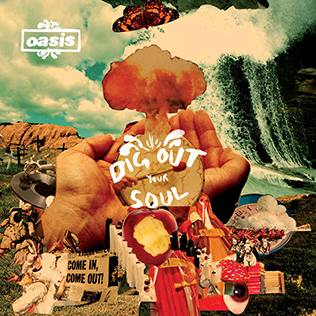
Dig Out Your Soul (2008)
I’ve probably heard most of this album since it was added to Myspace, but I still wait to review it later this week. Based off what I have heard and from Oasis’ show at WaMu last August, it looks like yet another satisfying rock/pop record from the bad boys of Brit Pop. Zak Starkey’s drums sound Zeppelinesque and Oasis has really put together a heavy collection of powerful grooves and melodic pop. A lot of critics are calling it Oasis’ best album since “What’s the Story” so it’ll be very exciting to sit down and groove to the whole album in the comfort of my own home, can’t wait.

Retrospecticus: The Vines

Bursting out of the early 2000s in an era that has since been dubbed the “Garage Rock Revival”, The Vines quickly established themselves as a high adrenaline band with a knack for grunge, 60s pop ballads, and an occasional foray into psychedelia. Though their popularity has waned in the states since 2004, this gang of rambunctious rock musicians is still a fan favorite in their native Australia. Let’s take a look at the body of work that got them there.


Highly Evolved (2002)
It was in the summer of 2001, that Sydney rock band The Vines (recently signed by Capitol Records) headed into Sound Factory studios to cut their debut album. Fronted by lead singer/guitarist Craig Nicholls, bassist Patrick Matthews and drummer David Oliffe (who left the band after only recording a few tracks) The Vines put together the heavy and melodic collection of alternative rock that makes up Highly Evolved.

Receiving mostly positive reviews, many described their unique sound as having the heaviness of Nirvana with the pop sensibilities of The Beatles. Of course they are no where near as good as those bands, but I understand the comparison to describe their sound.

Songs like the manic “Outtathaway!” and hit single “Get Free” display hints of 90s grunge while ballads as “Homesick” or “Mary Jane” wade in deeper pop waters. Throw in the island themed “Factory” and trippy “Sunshinin'” and you got an album that honors every rock genre. Though the flow of heavy to soft songs doesn’t always gel, it’s as respectable and fun a debut you could want from a blossoming rock band.

Favorite Tracks: “Homesick”, “Outtwathaway!”, “Mary Jane”


Winning Days (2004)
This time around, The Vines returned to the studio as a four piece. Here they are joined by fellow Aussies Ryan Griffiths on guitar/Kurt Cobain impersonator and Hamish Rosser (who looks like a lost Beach Boy) on drums. Working again with producer Rob Schnapf, The Vines turned out a more stylistically consistent record. Though Winning Days received lukewarm reviews, it is my favorite album by the group to date.

Leading off with the catchy single “Ride”, Winning Days never slows down cruising from angsty grunge pop song to another. Craig Nicholls song-writing and vocals are in the best place with this assortment of dark rockers and spacey Summer of Love  ballads. Schnapf’s producing is tight, but not restricting. Everyone on here does a stand up job.

Honestly, I’m not sure how this album got such a bad rap, I heard a lot of people complaining that a lot of these songs were written before Highly Evolved but I don’t see how that’s relevant. Maybe that’s to say they weren’t moving forward, but I disagree. Regardless of when these songs were written, there’s no denying they are more complex and mature than anything than Highly Evolved. Maybe they didn’t include because they weren’t ready for more complex songs?

Backlash aside, the album was successful. Though this wouldn’t prevent the resignation of founding member and bassist Patrick Matthews in mid 2004. Tired of Craig Nicholls bizarre stage antics–only heightened by his abuse of heavy drugs, mental issues–Matthews walked off stage in the middle of a show never to return again.

Favorite Tracks: “Amnesia”, “Ride”, “Winning Days”


Vision Valley (2006)
Recovering from Nicholl’s difficult personal issues after Winning Days, The Vines kept on trucking and recorded their third album. Nicholls cut back on his drug use, finding a more mellow state of mind and the now three man Vines’ went into the studio with producer Wayne Connolly.

It was at this time that The Vines switched to writing shorter, more immediate songs, often barely hitting two minutes. This new approach was a nice experiment, but overall Vision Valley lacked the creative spark of the previous two albums.

Songs like “Anysound” and “Don’t Listen to the Radio” are easy to enjoy, but  most of these songs feel watered down and the album’s length of 31 minutes for 13 songs makes it feel like a kind of blink-and-you’ll-miss-it experience. Not only this, but the maturity has been stripped back for songs like “Fuk Yeh” and “Futuretarded”. There’s definitely a couple gems, but they’re mostly lost in a sea of unrealized ideas. Not the worst album they could of made but this was definitely the turning point.

Favorite Tracks: “Don’t Listen to the Radio”, “Take Me Back”, “Vision Valley”


Melodia (2008)

With the addition of bassist Brad Heald, The Vines look to be in a better place on Melodia. I’m a little distressed by the brief running time of the album, but from what I’ve heard on their Myspace this could have the potential to grow on me. I’ve found a couple of the songs already stuck in my head so I’ll see how they hold up when I pick it up tomorrow.

Certainly a band that’s had its troubles with success and their outrageous front-man. I’m not sure if they’ll make a comeback over here anytime soon, certainly not through their live shows which Nancy and I can vouch for. Nonetheless, it’s a shame to see some of their wizardry in the studio go unappreciated. Either way, as long as they keep releasing albums as consistently as they do I’ll be listening.

Batweek: Retrospecticus: Theatrical Batman

Since early childhood, one hero has always been my favorite. Sure, Superman, Wolverine and Spider-Man are all great, but for me, one always stood above them all. I am of course referring to the dark knight himself, Batman.

Batman made his first appearance in the late Thirties in Detective Comics #27. The story of the millionaire child turned vigilante proved to be so intriguing that he quickly transcended his pulp roots and became an American icon, one of the most well known comic book heroes in the world.

Many talented artists and storytellers have taken a turn writing for the Batman comics, and the character has also appeared in many other media, most notably several hit television programs and many movies. In honor of the highly anticipated new film, let’s take a look at every Batman film to grace the big screen. I’m gonna skip the two serials, because… come on, fuck that shit. I’ve got enough writing to do already.

Batman (1966)

The first Batman movie came out in the 1960s, based on the hit comedy show starring Adam West and Burt Ward. Like the show, everything here is over the top, tongue-in-cheek comedy. There’s a lot to laugh at here, all the way from “shark-repellent bat-spray” to the decent of the United Nations building at the end. The great cast, including Cesar Romero, Frank Gorshin, Lee Meriwether and Burgess Meredith, has a lot of fun with their roles. This movie is pure campy fun, which is why I enjoy it so much.

“Some days you just can’t get rid of a bomb.”

That said, if you’re one of those purists that think the TV show was a taint on the Batman name, I’ve got two things to tell you: (1) loosen up and (2) this will do nothing to win you over. This has all of the elements that people identify with the show and doesn’t take itself seriously at all. Only approach this if you want to, you know, have fun.

Batman (1989)

By the 1980s, the Batman character had developed into a much darker, more serious person. Comics from geniuses like Frank Miller had cast the character in a more serious light. Questions about whom the real Bruce Wayne was and why he keeps a bunch of kids in a cave kept popping up. So a more serious Bat-film was in order. Tim Burton was the man chosen for the job.

Burton cast Beetlejuice himself, Mr. Michael Keaton in the role of Bruce Wayne/Batman. The film would be a tremendous departure from the campy show and movie of the Sixties, with an outright bizarre Gotham city and plenty of loonies within it. Keaton proved to be a competent Batman and a great Bruce Wayne, but the man who stole the show was Jack Nicholson as the Joker. Nicholson’s Joker was as funny as he was dangerous, and one of his greatest performances over his incredible career.

The story is about Batman’s war with super criminal Joker. It is revealed that both had a hand in each others’ creation, and by the end of the film, they really just want to kill each other. While the extremely surreal presentation of the film is a real turnoff, it is notable for being the first real serious Batman film, and introducing that incredible Danny Elfman score.

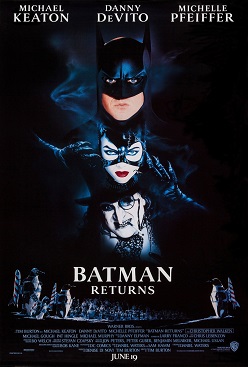
Batman Returns (1992)

Just a few years after the first Batman film, Burton and Keaton “returned” for another outing into the streets of Gotham. This film set the trend for live-action Batman films to follow, with Batman almost put into the background with the focus shifted onto the new villains. At least this time around, they were interesting.

Christopher Walken is Max Shreck, and evil businessman with a secret evil empire. Michelle Pfeiffer plays Selina Kyle, Shreck’s secretary who accidentally discovers one of his evil schemes and is killed for it. Except, instead of dying, a bunch of cats lick her and she becomes the Catwoman… yep. Catwoman is totally crazy, she commits crimes, fights criminals and also fights Batman.

Then there’s the centerpiece of this film, the Penguin, played by Danny DeVito. As a child, Oswald Cobblepot was abandoned by his parents, sent floating down a stream in a basket. Like Moses. The basket is found by sewer-dwelling penguins, which raise little Oswald as one of their own. Somehow, Oswald grows up, learns English, and assembles a gang of his own. It turns out he wants to be mayor now too.

Batman Returns is really action packed, but it’s just a little too crazy for me. It’s somewhat of a challenge for me to even watch it anymore. It’s worth seeing once, but that’s about it.

Batman: Mask of the Phantasm (1993)

During the legendary run of the immortal Batman animated series, an animated film managed to get a theatrical release. Using the great cast from the show, the groundbreaking animation and the great score, Batman: Mask of the Phantasm became the best theatrical Batman movie at the time, and right now is second only to Batman Begins in greatness.

This is the story of a mysterious figured, called the Phantasm, who is killing criminals and giving Batman a bum rap. At the same time the woman Bruce Wayne almost married before becoming a vigilante comes back into his life. Over the course of the film, we learn about their relationship, how Bruce invented the Batman character, and the identity of the Phantasm. Of course, Batman’s arch nemesis can’t resist making him look bad; the Joker gets in on the action. Mark Hamill reprises his iconic role from the show, giving a very memorable performance.

Phantasm is a very engrossing film and a real pleasure to watch. The story is great for adults and mind-blowing for adolescent boys. The vocal performances are very strong, and there’s really not much that doesn’t work here. The final fight scene is just incredible (there’s blood!) and the visual effects are pretty neat.

This is a must-see Batman film.

Batman Forever (1995)

I’ll try not to spend too much time on these next two movies, because they don’t deserve it. The Joel Schumacher films just aren’t very good. And this one, Batman Forever, is oddly enough the highest grossing Batman ever. Damn shame.

Anyway, Burton and Keaton must have felt they had taken Batman far enough with their two films, cause they skipped out on this third film. In their place are Joel Schumacher and Val Kilmer as Batman. The most notable thing about Kilmer is his nipples, which are so powerful they stick through Batman’s bulletproof chest piece.

Forever tried to restore the campy fun of early Batman while existing in the Burton world and the result was a real mess. The film opens with the story of Dick Grayson, the youngest in a family of acrobats that all wear Robin costumes. Two Face, as played by Tommy Lee Jones, gets all the Graysons killed except for young Dick, who is adopted by Bruce Wayne. Dick grows up to be Chris O’Donnell, the worst actor in film history, and is a rebellious jerk throughout the film.

Then there’s Jim Carrey. I mean the Riddler… No, I mean Jim Carrey. He doesn’t really make too much of an attempt to act in the role he’s given, instead relying on the antics that made Ace Ventura and Dumb & Dumber a hit. The film really focuses on the Riddler, because I guess everyone loves Jim Carrey. Two Face is in the background all the time, he doesn’t even get a back story. What a waste.

This movie is very below average.

Batman & Robin (1997)

Here it is. The lowest point a series can go. This film was so bad it killed the Batman franchise for almost a decade. As a child I loved it, and as a man-child, I loathe it. This is Batman & Robin.

Val Kilmer was too big to be Batman again, so George Clooney got his chance to wear the cowl. He’s clearly embarrassed about this movie nowadays, but can you blame him? Who wouldn’t want to be Batman in a movie? Even now, knowing what I know about Batman & Robin, I’d still love to star in it. Plus, Clooney made for a great Bruce Wayne.

So this mess picks up with Batman and Robin now a full-time team, with angst over how strict Batman is. Robin’s a douche though, he needs to just shut the fuck up and take Batman’s goddamn orders. Unfortunately, the movie instead brings in another annoying sidekick, Batgirl, too make things more stupid. She’s played by Alicia Silverstone, who, like Chris O’Donnell, has since disappeared from the limelight.

Again, we get a trio of villains. Of course everyone’s favorite is Arnold Schwarzenegger as Mr. Freeze, the confused and reluctant villain. Uma Thurman’s Poison Ivy is another woman “killed” by her boss but comes back as a seductive psychopath, as deadly as she is beautiful. Except it doesn’t really work. Then there’s Bane, played by a guy named Jeep. Can’t really fuck Bane up.

B&R is filled with horrible, cheesy scenes. I really just can’t stand it at all. I hate Robin in this movie. I hate so much of this movie, actually. Pretend it never happened, the world would be better if it didn’t.

This film just sucks.

Batman Begins (2005)

And then, all was right again with the universe. In 2005 director Christopher Nolan brought Batman back to the big screen, and for the first time got things exactly right. Batman Begins is heavily influenced by comics like Year One and The Man Who Falls, and is, right now, the best live action incarnation of the Dark Knight ever.

Christian Bale, an actor that really throws himself into his role, is Bruce Wayne in this movie. The focus here is on the formative moments of Batman’s early career, his parents’ murder, his training, the creation of Batman and his first super villains. The focus is all on Batman, which is what makes so much work.

We have a very strong supporting cast too. Michael Caine plays Alfred, the first man to play the role other than Michael Gough, and gives a slightly different take on the character. Gary Oldman is an outstanding Gordon, who has not made commissioner yet. Morgan Freeman does his thing as Luscious Fox, and I can’t complain about Katie Holme’s mostly superfluous Rachel Dawes.

Then there are the great villains. Ken Watanabe, Liam Neeson, Cillian Murphy, Tom Wilkinson and Rutger Hauer all show up as opponents of justice, and they each do great work in their roles. We get just enough development for Ra’s al Ghul and the Scarecrow as we need, without losing the focus on our hero Batman.

Batman Begins is one of my favorite films ever. The new, realistic and practical approach to the franchise was exactly what I had always been looking for. As John pointed out, about the only thing it’s missing is that iconic Danny Elfman score. This is a great film.

This brings us to now, mere days before the release of The Dark Knight, the direct follow up to Batman Begins. The trailers look outstanding, and the early reviews have been very positive. I mean just look at that poster! Couple all this with all the hype surrounding Heath Ledger’s last completed performances and this is clearly going to be the movie of the summer.

Here at Cat Fancy, we’re all big Batman fans, so none of us can wait to go see it. In honor of the film, we’re calling this week Batweek and from now all posts will be Batman themed, culminating in a Dark Knight review. I hope you’re all as exciting as we are!

(Yes, this means I’ll wait until next week to do any E3 posts, no matter how much Rock Band stuff is revealed.)

Retrospecticus: Coldplay

Here we go again. Unlike Weezer and My Morning Jacket, Coldplay only has three albums to their name, with the fourth release due out tomorrow. So I guess I’ll try to spend a little more time with each album that John and Colin did, even though that will probably be really boring. Enough set-up, let’s take a look back at the career of these pioneers of wuss rock:

Parachutes (2000)

When asked about Parachutes, Coldplay front man Chris Martin said, “We know that’s terrible music.” While it seems that both the band and many of its fans dismiss this album, I maintain that it is a very solid and enjoyable release, probably the one I listen to the most from these English rockers.

Coldplay’s debut album was as laid back as it comes. Certainly inspired by similar alt-rock bands like Radiohead, the greatest weakness of Parachutes is that it doesn’t really have that distinct Coldplay charm that is so prevalent in later releases. However, this does not take away from the simple pleasure that these songs invoke.

The album spawned four successful singles: “Shiver,” “Trouble,” “Yellow,” and my favorite, “Don’t Panic.” The rest of the tracks are equally mellow and enjoyable. You still hear the songs occasionally on T.V. and in movies. At least in Zach Braff movies. Maybe that’s the key; maybe this music is for the people that have, at some point, seen something with Zach Braff.

But don’t let that discourage you. If you like Coldplay’s later stuff, or even an album like The Bends, this is worth a shot. If you remember my CAT on this, you may have noticed that the score is lower (if only I did it after we stopped scoring those). This is because I realize a lot of people won’t be able to get into this album. If you’re one of the lucky few who can, well, good on ya.

Favorite Tracks: “Don’t Panic,” “Sparks,” “Everything’s Not Lost”

A Rush of Blood to the Head (2002)

In just two short years, Coldplay went from semi-derivative alt-rock to something very much their own.

A Rush of Blood to the Head birthed the most popular Coldplay song to date, a little piano-driven number called “Clocks.” While it certainly has been over-played, it’s easy to see just why it was so popular.

This album delivers a juicy variety of music, from the poppy “In My Place” to the epic “Politik,” which opens the album. Utilizing more instrument, especially the piano, the band clearly used this album to show their wide musical range.

The only criticism of this album I’ve ever heard is that same that I hear of Parachutes, that it is too mellow. Maybe you have to be in a mood for this kind of music, but I must be in that mood a hell of a lot of the time. Almost every track here is really fantastic, I don’t know how else to put it.

A Rush of Blood to the Head birthed four successful singles (the music video for “The Scientist” is especially memorable). It made both Rolling Stones’ 500 Greatest Albums list and The Rock and Roll Hall of Fame’s “Definitive 200 Albums of All Time.”

A truly spectacular album that is a worthy addition to any collection.

Favorite Tracks: “In My Place,” “Clocks,” “The Scientist,” “Warning Sign”

X&Y (2005)

After the gargantuan success of their first two albums, Coldplay was one of the biggest bands in the world. Their third album, X&Y, was released three years after A Rush of Blood to the Head, and was a smashing success.

X&Y was apparently influenced both by electronic music and the “ups and downs of everyday life.” What that basically means is that this time around, synthesizers were the name of the game.

The lead single was “Speed of Sound,” a track that definitely evokes a lot of the hit “Clocks.” But, you know, more electronic. Despite what the jerks at Rolling Stone say, it’s still awesome. Sure, the band doesn’t really break as much new ground with this album, but it has a fantastic sound and a ton of catchy tunes.

X&Y was a smash success worldwide, debuting at number one in 22 countries; including, for the first time, the United States. It spawned six successful singles, such as the popular “Fix You” and “The Hardest Part.” There is a lot to love here.

Now for some trivia. The cover? It’s supposed to be “X&Y” written in Baudot code, which is something used in telegraphs. But they messed it up and it actually says either “X9Y” or “X96.” Also, the hidden track, “Til Kingdom Come,” was originally going to be song by Johnny Cash, but unfortunately he passed away before getting to record it. Finally, the “BWP” the album is dedicated to is Gwyneth Paltrow’s dad, who also passed away before the album was finished.

This album clearly draws a lot from Coldplay’s influences, such as U2 and David Bowie, while introducing their own flair. The result was another great album from the British quartet.

Favorite Tracks: “White Shadows,” “Fix You,” “A Message”

I have left out their EPs and their live album, which is unfortunate but realistically you probably already stopped reading a while ago. This brings us to Viva La Vida or Death and All His Friends, which is coming out in just a few hours. It’s already out in many places around the world, and the reception has been pretty good. But more on that later this week…