Retrospecticus: Coldplay

Here we go again. Unlike Weezer and My Morning Jacket, Coldplay only has three albums to their name, with the fourth release due out tomorrow. So I guess I’ll try to spend a little more time with each album that John and Colin did, even though that will probably be really boring. Enough set-up, let’s take a look back at the career of these pioneers of wuss rock:
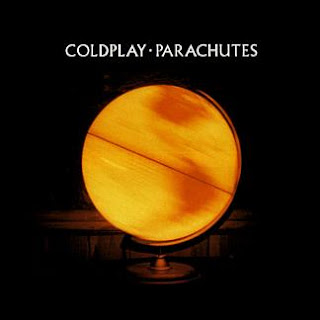
Parachutes (2000)

When asked about Parachutes, Coldplay front man Chris Martin said, “We know that’s terrible music.” While it seems that both the band and many of its fans dismiss this album, I maintain that it is a very solid and enjoyable release, probably the one I listen to the most from these English rockers.

Coldplay’s debut album was as laid back as it comes. Certainly inspired by similar alt-rock bands like Radiohead, the greatest weakness of Parachutes is that it doesn’t really have that distinct Coldplay charm that is so prevalent in later releases. However, this does not take away from the simple pleasure that these songs invoke.

The album spawned four successful singles: “Shiver,” “Trouble,” “Yellow,” and my favorite, “Don’t Panic.” The rest of the tracks are equally mellow and enjoyable. You still hear the songs occasionally on T.V. and in movies. At least in Zach Braff movies. Maybe that’s the key; maybe this music is for the people that have, at some point, seen something with Zach Braff.

But don’t let that discourage you. If you like Coldplay’s later stuff, or even an album like The Bends, this is worth a shot. If you remember my CAT on this, you may have noticed that the score is lower (if only I did it after we stopped scoring those). This is because I realize a lot of people won’t be able to get into this album. If you’re one of the lucky few who can, well, good on ya.

Favorite Tracks: “Don’t Panic,” “Sparks,” “Everything’s Not Lost”

A Rush of Blood to the Head (2002)

In just two short years, Coldplay went from semi-derivative alt-rock to something very much their own.

A Rush of Blood to the Head birthed the most popular Coldplay song to date, a little piano-driven number called “Clocks.” While it certainly has been over-played, it’s easy to see just why it was so popular.

This album delivers a juicy variety of music, from the poppy “In My Place” to the epic “Politik,” which opens the album. Utilizing more instrument, especially the piano, the band clearly used this album to show their wide musical range.

The only criticism of this album I’ve ever heard is that same that I hear of Parachutes, that it is too mellow. Maybe you have to be in a mood for this kind of music, but I must be in that mood a hell of a lot of the time. Almost every track here is really fantastic, I don’t know how else to put it.

A Rush of Blood to the Head birthed four successful singles (the music video for “The Scientist” is especially memorable). It made both Rolling Stones’ 500 Greatest Albums list and The Rock and Roll Hall of Fame’s “Definitive 200 Albums of All Time.”

A truly spectacular album that is a worthy addition to any collection.

Favorite Tracks: “In My Place,” “Clocks,” “The Scientist,” “Warning Sign”

X&Y (2005)

After the gargantuan success of their first two albums, Coldplay was one of the biggest bands in the world. Their third album, X&Y, was released three years after A Rush of Blood to the Head, and was a smashing success.

X&Y was apparently influenced both by electronic music and the “ups and downs of everyday life.” What that basically means is that this time around, synthesizers were the name of the game.

The lead single was “Speed of Sound,” a track that definitely evokes a lot of the hit “Clocks.” But, you know, more electronic. Despite what the jerks at Rolling Stone say, it’s still awesome. Sure, the band doesn’t really break as much new ground with this album, but it has a fantastic sound and a ton of catchy tunes.

X&Y was a smash success worldwide, debuting at number one in 22 countries; including, for the first time, the United States. It spawned six successful singles, such as the popular “Fix You” and “The Hardest Part.” There is a lot to love here.

Now for some trivia. The cover? It’s supposed to be “X&Y” written in Baudot code, which is something used in telegraphs. But they messed it up and it actually says either “X9Y” or “X96.” Also, the hidden track, “Til Kingdom Come,” was originally going to be song by Johnny Cash, but unfortunately he passed away before getting to record it. Finally, the “BWP” the album is dedicated to is Gwyneth Paltrow’s dad, who also passed away before the album was finished.

This album clearly draws a lot from Coldplay’s influences, such as U2 and David Bowie, while introducing their own flair. The result was another great album from the British quartet.

Favorite Tracks: “White Shadows,” “Fix You,” “A Message”

I have left out their EPs and their live album, which is unfortunate but realistically you probably already stopped reading a while ago. This brings us to Viva La Vida or Death and All His Friends, which is coming out in just a few hours. It’s already out in many places around the world, and the reception has been pretty good. But more on that later this week…

Retrospecticus: My Morning Jacket

Seeing as though My Morning Jacket have seemed to just be getting better and better ever since their debut album, I’m very excited for their new album Evil Urges, which drops this Tuesday. Now here’s a look back at their discography so far.

The Tennessee Fire (1999)
My Morning Jacket’s debut does a pretty good job of establishing what would define MMJ’s early sound: Alt-Country/Southern Rock complemented by Jim James’s mesmerizing voice drenched in reverb. It definitely has a much more subdued sound, with a good dose of acoustic guitars being prominent on The Tennessee Fire. James’s songs are simple but enjoyable on this album, even if they don’t have the amount of energy that would come to define their more recent work. It’s ultimately a solid debut, but you certainly wouldn’t think of My Morning Jacket as anything particularly special after listening to this album.
Favorite Tracks: Heartbreakin’ Man, Evelyn Is Not Real, I Think I’m Going to Hell

At Dawn (2001)

My Morning Jacket’s sophomore effort finds them building on the sound of their first album with a much more lush and expansive sound. It definitely has more of a feel of being a band recording than just a Jim James solo effort, which is essentially what the first MMJ album is. However, it’s still James’s voice and songwriting that drives the record. At Dawn has a number of my favorite MMJ tracks from their earlier years, and the album really shows Jim James starting to grow as a songwriter. However, at 74 minutes I would say it’s a lot longer than it needs to be, which is a problem for me on all three of MMJ’s first three albums, and there’s at least 2 or 3 songs on At Dawn that I could’ve done without. It’s nice to see that they’ve begun to keep their albums at under an hour long on Z and Evil Urges.
Favorite Tracks: Low Down, X-Mas Curtain, Just Because I Do

It Still Moves (2003)

My Morning Jacket’s third album shows them taking on a less dissonant, more polished sound. Also, with songs like “Dancefloors” and “One Big Holiday”, it rocks a lot more than their previous efforts. I think this probably would have do at least partly with the addition of drummer Patrick Hallahan, whose Bonham-like drumming gives a kick to MMJ’s sound that wasn’t present on their previous albums. It also shows them taking on more of a jam band mentality with longer cuts like “I Will Sing You Songs” and “Steam Engine”. The more straightforward classic rock sound of It Still Moves probably makes it MMJ’s most accessible album, however at time this makes the album feel a little bland. It Still Moves shows that My Morning Jacket still weren’t ready to tamper too much with their signature sound, but Jim James shows that his abilities as a songwriter just continue to blossom.
Favorite Tracks: Dancefloors, One Big Holiday, Run Thru

Z (2005)

Z saw My Morning Jacket taking their already likeable sound in many different directions in what is without a doubt their best album to date. They almost sound like an entirely different band on this album and in some aspects they are, guitarist Carl Broemel and keyboard player Bo Koster were added to the band after two members quit prior to the recording of Z. Also, Z’s unique sound can also be attributed to the presence of accomplished producer John Leckie (Jim James produced MMJ’s first three albums). There’s more of a heavy alternative rock sound to songs like “What a Wonderful Man” and “Anytime”. They also mix in Prog-Rock on “Wordless Chorus” and “Dondante”, and then there’s “Off The Record”, which sounds like reggae crossed with the Hawaii Five-O theme song. Z seems as if it’s only the beginning of My Morning Jacket’s exploration of their new sound, so I’m very excited to see what this band will do in the future.
Favorite Tracks: What a Wonderful Man, Off the Record, Anytime

Okonokos (2006)

Over the years, My Morning Jacket’s reputation as a live band has continued to grow, and Okonokos, their first live album, does a pretty good job of showcasing the band’s live sound. The album was recorded on their Z tour, and all of the songs off of Z are just as good live as they are on the album. However, what really makes this album interesting is hearing many of their earlier songs like “One Big Holiday” or “Lowdown” blown up to gigantic arena-rock size proportions. The band really sounds tight throughout the whole performance, although I guess the only minor problem is that a lot of the band’s earlier songs that are performed aren’t quite at the level as My Morning Jacket’s more recent material.
Favorite Tracks: One Big Holiday, Lay Low, Mahgeetah
Evil Urges (2008)

I’ve already listened to most of their new album, seeing as though they posted every song off of it on their myspace. They definitely continue to explore many new sounds on it, especially on my favorite track on the album so far, “Highly Suspicious”. It’ll definitely take me a few more listens to really absorb it, so I’ll probably have a review of Evil Urges by the end of the week.

C.A.T.: Darkness on the Edge of Town

Bruce Springsteen – Darkness on the Edge of Town (1978)

Yesterday marked the 30th anniversary of the release of Bruce Spingsteen’s 1978 follow-up to his breakthrough album, Born to Run. And though I wouldn’t say it’s quite as good as that masterpiece, it’s still one of The Boss’s very best albums.

Darkness on the Edge of Town came after a lengthy legal battle with his former manager, and subsequently kept Springsteen and the E Street Band out of the studio for over two years. This probably had something to do with the less-hopeful, beaten-down content of the songs on Darkness on the Edge of Town as compared to his first three albums. Themes of dissapointment and regret are explored on songs like “Racing in the Street” and “Factory”. However, songs like the “Badlands” and “The Promised Land”, still have that Born to Run feel of being about reaching for something greater.

Still, even with the Boss’s somewhat darker approach to songwriting, the E Street Band’s playing is just as powerful as ever. There’s definitely a bit more of an emphasis on Bruce’s and Steven Van Zandt’s guitars on this album, whereas Born to Run seemed to rely more on Roy Bittan’s piano work. And topping all this off with Max Weinberg’s commanding drum work, and Clarence Clemens always memorable saxaphone solos, the E Street Band was a very tight sounding unit at this point. This probably had to do with the fact that they had been touring relentlessly for the past two years up until recording this album, and they had already been playing the songs from Darkness of the Edge of Town live for some time.

So all in all, Darkness on the Edge of Town is a more than worthy follow up to Born to Run. It’s pretty amazing that The Boss was on such a roll back then, having this album come out after Born to Run and the suberb The Wild, The Innocent, and the E Street Shuffle, with the haunting Nebraska and hugely successful Born in the U.S.A. still to come.

Favorite Tracks: “Badlands”, “Candy’s Room”, “Prove It All Night”

Retrospecticus: Weezer

It’s been 14 years since Weezer’s breakthrough debut album and here we are now just a day away from the release of their sixth studio album Weezer (The Red Album). Thus in honor of this I decided to put together a retrospective or “Retrospecticus: if you will (because it sounds funny) of these Alternative rock trailblazer’s albums thus far.


Weezer – Weezer (The Blue Album) (1994)

Rising out of the L.A. club scene in the early nineties Weezer was only together for a few years by the time their demo tape had caught the attention of a major record label. So in the summer of 1993 they headed into the studio with Ric Ocasek producing and set out to make the 90s Rock classic that is Weezer (The Blue Album). By combining a unique quirkiness with clever pop hooks and a heavy rock guitar edge, Weezer created an incredibly unique sound for the time. In an era dominated mostly by grunge, Weezer managed to breakthrough with catchy numbers like “Buddy Holly” or the offbeat “Undone (The Sweater Song)” and mark their territory in the 90s rock scene. Simply put this was a perfect start for these geek-chic rockers and a good sign of things to come.

Favorite Tracks: “Buddy Holly”, “Surf Wax America”, “The World Has Turned and Left Me Here”


Weezer – Pinkerton (1996)

Soon after the success of The Blue Album front-man Rivers Cuomo began working on material for what would most likely be Weezer’s next album Songs from the Black Hole but unfortunately this never quite took off, so Weezer started the production of a different album. Featuring a handful of songs written even before Weezer’ first album, along with a few new one’s and a couple originally slated for Songs from the Black Hole,Weezer made their brilliant follow up Pinkerton. Reflecting a more personal side of Rivers Cuomo song-writing and an even heavier sound for Weezer, Pinkerton was a more straightforward rock album. Though their quirkiness remained primarily on the album’s most popular track “El Scorcho”. Though this album struggled to find success with its less commercial sound it’s caught on over the years and become a staple of 90s rock. Personally I’m torn between this and The Blue Album as my favorite Weezer album but I suppose when a band can do that for you it should be considered a good thing.

Favorite Tracks: “The Good Life”, “Getchoo”, “Pink Triangle”


Weezer – Weezer (The Green Album) (2001)

Many moons had passed between the commercial failure of Weezer’s misunderstood Pinkerton and their return to success with another self-titled album Weezer (The Green Album) A lot had happened in this 7 year hiatus including the departure of former bassist Matt Sharp, River Cuomo’s continuing isolation and other members various side projects. Luckily by 2000 (After an offer to play together at a festival in Japan) Weezer was again inspired to make music. WIth the recruitment of new bassist Mikey Welsh, Weezer went through over a hundred demos until winding it down to ten and headed back into the studio reuniting with producer Ric Ocasek. The result was a tight and heavy 28 minutes of classic Weezer Pop/Rock. With popular singles such as the risque “Hash Pipe” and the laid back “Island in the Sun”, Weezer was back on top and with quite a punch.

Favorite Tracks: “Hash Pipe”, “Photograph”, “Island in the Sun”


Weezer – Maladroit (2002)

Following up the success of Weezer (The Green Album) was yet another commercial success for Weezer with their 2002 album Maladroit (This being the first album with new bassist Scott Shriner). Weezer went about production this time around with fans having opportunity to choose which tracks to include on the new album (Being given a selection of 30 or so online). Unfortunately I am sorry to say that at this point I have to disagree with the popular opinion. This being that I can’t find the same liking for 2002’s Maladroit as so many others do. I find that though there is still some fun tunes like “Dope Nose” or the Costelloesque number “Keep Fishin”, a majority of these songs are lacking the creative flair and ingenuity of previous Weezer works. I mean when a band has to resort to having their fans help them put together an album, you have to question if they are a little burned out musically. I mean that’s a pretty gimmicky stunt, I’d say they should have waited a little longer to start work on another album, because if you ask me, Weezer just sounds like any other mainstream rock band on this album. I suppose as long as a majority of fans liked it, it was a good move for them but it certainly left me cold.

Favorite Tracks: “Dope Nose”, “Keep Fishin”, “Burndt Jamb”


Weezer – Make Believe (2005)

A few years passed and Weezer once again (after sifting through various demos) were ready to make an album. Teaming up this time with notable producer Rick Rubin, Weezer made yet again another popular Rock/Pop album entitled Make Believe. Another more mainstream record boosted by the success of it’s lead off single “Beverly Hills” (the bands most successful single to date) Personally I found the song “Beverly Hills” to be somewhat uninspired. Not a particularly inventive lyrically or even that original of a progression, topped off with a Talk Box sounding guitar solo. These aren’t the elements that drew my interest to Weezer and I was said to see some of that lacking on this album. Though there is a handful of mildly pleasing tracks. “We Are All on Drugs” and “Perfect Situation” are nice little numbers so I found it to even out as an alright album.

Favorite Tracks: “Perfect Situation”, “We Are All on Drugs”, “My Best Friend”


Weezer – Weezer (The Red Album) (2008)
What will the future hold for the fate of Weezer’s latest album? Early reviews are all over the place from bad to pretty good, but nonetheless I’m excited. Especially with Weezer’s return to their nerdier roots and more experimental tracks like “Pork and Beans” or “The Greatest Man That Ever Lived”. I’m not sure what to think quite yet of what I’ve already heard, but time will tell. You can definitely expect to see a review on this blog later this week.


The Lost Album
Weezer – Songs From the Black Hole
As I previously mentioned, after Weezer’s debut album, Rivers Cuomo began working on a space rock opera as the subject of Weezer’s next album. Though after about a year of demoing and recording, the idea was abandoned and forever lost in a sea of lost albums. Luckily a handful of these tracks have surfaced today in one way or another. A few songs such as “Getchoo”, “Tired of Sex”, “No Other One” and “Why Bother?” even managed to make it on to Pinkerton. Along with a few others appearing on River Cuomo’s album Alone – The Home Recordings of Rivers Cuomo. From what I’ve researched and heard, I believe that this probably could of been a pretty good album. It’s sad to see that it fell apart, but at the same time we got Pinkerton so I guess it all worked out for the best.

C.A.T: The Cars

The Cars – The Cars (1978)

In honor of this album’s release in Rock Band, as well as it’s apparent 30th Anniversary (John says it is, all I could find on the release was “May 1978”), let’s take a look The Cars’ very first studio album.

The Cars has at least two songs that everyone has heard before; “Just What I Needed,” which is in like every Circuit City ad, and “Moving in Stereo,” famous for that often-parodied scene from Fast Times at Ridgemont High. These songs serve as nice examples of the dichotomy on this record: pop rock and more psychedelic rock.

Both aspects are present in the album, but I’m definitely more of a fan of their more pop songs. That is not to say that this album should be divided, however. What makes The Cars such a classic is the way they could blend those trippy, arty songs with more down-to-earth, sing-a-long rock and roll. What you get is an interesting blend that is very unusual compared to most albums, in a good way.

The album is a tribute to clever songwriting, production and musicianship. Whether your a fan of new age, hard rock or classic rock you’ll definitely find something you enjoy here. This album is well-deserving, at the very least, of a download in Rock Band.

Favorite Tracks: “Just What I Needed,” “Moving in Stereo,” “Good Times Roll”

C.A.T: Willy and the Poor Boys


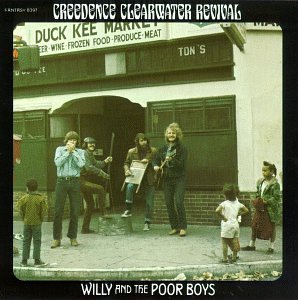
CAT: Creedence Clearwater Revival – Willy and the Poor Boys (1969)
With a sound from straight out of the Bayou, it’s California’s very own Creedence Clearwater Revival. Now 1969 was a pretty hot year for Creedence. Five top ten singles, three successful albums and not to mention a string of sucessful tours. This Southern Rock quartet was on a roll and out of all this I’d probably say my favorite Creedence album from that year (Probably my favorite Creedence album of all time) is Willy and the Poor Boys

A countrified mix of Fogerty penned rock classics and some popular blues standards (Such as Cotton Fields and The Midnight Special, both by Lead Belly) Creedence gives us what’s probably their closest effort to making a country album and it’s loads of old fashioned Blues/Rock fun. Coming in at a sharp 34 minutes, Willy and the Poor Boys is an album you can really bring in the summer with (especially round Independence Day) I mean how can you not bob your head to the jaunty tune that is Down on the Corner, or smile at the silliness that is It Came Out of the Sky. Though Creedence has always been good at dishing out upbeat sing-a-long rock songs you can’t forget the more serious, politically charged side of Creedence. I’m talking about songs like the heavy 6 minute number Effigy and of course one of the most famous anti-war songs to ever come out, the classic American rocker Fortunate Son

Though basically I consider Willy and the Poor Boys to be just good ol’ fun! It’s music you sing-a-long to, or drive down the highway to (like in Twilight Zone: The Movie) or dance to, or whatever. It holds up pretty well after all these years as Creedence’s sound is still quite contemporary (perhaps due to their genre of rock) and it never fails putting me in a good mood. Plus you got to respect the fact that they actually play the instruments they’re playing on the cover on one song, now that’s dedication.

Favorite Tracks: The Midnight Special, Down on the Corner, Cotton Fields

C.A.T: A Farewell To The Kings

My personal favorite of the Rush discography, this album has a variety of different themes dealing with lyrics, time signatures, tonal centers, and much more.

It starts out with the title track, which is a derivative of Ernest Hemingway’s A Farewell to Arms. It deals with certain themes such as departure, medieval feudalism, and autocratic monarchy.

Next is the aptly titled, “Xanadu”. This song has one of the rare occurrence of Geddy Lee on rhythm guitar, and some great lyrics about honey dew.

My personal favorite “Closer to the Heart”, is a short but sweet song featuring some of Niel Peart’s finest work.

The rest of the album is kind of sub-par like most Rush albums at the end, but the last track Cygnus X-1 has one of the best rush grooves I’ve ever heard.