C.A.T: Lola versus Powerman and the Moneygoround, Part One

The Kinks – Lola versus Powerman and the Moneygoround, Part One (1970)
Among my favorite albums ever, Lola is the best album by the Kinks and one of the classic rock albums of the 1970s.  “Lola” is probably the band’s most well-known song, but that is just a hint of the greatness contained in these 14 tracks.

The Kinks stadle both folk and hard rock with the songs here, with softer tunes like “Get Back in the Line” and rockers like “Powerman.”  There is a story of sorts here, an investigation of many of the aspects of the music industry.  “This Time Tomorrow” is about life on the road, “Top of the Pops” is about business taking over the creative process.  You get the impression that the band got burned by the industry, but I’m too lazy to research them right now.
So “Lola.”  This is an awesome song, everyone loves it.  If they don’t, they love the Weird Al parody.  Despite lyrics in the song putting it pretty clearly, a lot of people still question whether Lola is a transvestite.  She is.  Deal with it.
Of course, “Lola” isn’t the only great song on here, there a plenty.  Anyone who saw The Darjeeling Limited will be familiar with “This Time Tomorrow”, “Strangers”, and “Powerman.”  There’s also a pretty good chance you’ve heard “Apeman.”  All these songs are awesome.  This is a classic and there’s not a dud to be found.
I love this album.  I know John does to.  If you haven’t yet checked this out, I really implore you to do so.  Oh, and even though it’s called “Part One,” I have no idea what could be considered part two.

Favorite Tracks: “The Contenders,” “This Time Tomorrow,” “Lola”

90s Week: C.A.T: Nevermind


Nirvana – Nevermind (1991)
Here it is the extreme return of Cat Fancy’s “Classic Album Tuesdays” via 90s week. Naturally I’ll be discussing one the most memorable and arguably best albums of the decade Nirvana’s 1991 release Nevermind.

With a riff that knocked the world off it’s rocker and an attitude to match, Nevermind wasn’t just a breakout album for this legendary Aberdeen trio but the heart of the Grunge movement in music. An electrified showcase of melancholy pop and masterful song writing and perhaps the greatest album of the extreme decade we call the 90s.

Starting out with some minimal success on their first album Bleach released in 1989. This blossoming northwest group wouldn’t truly find their sound until that defining year in 1991. With the recent addition of former Scream drummer Dave Grohl, Nirvana had paved a clean slate for a new batch of tunes that would soon define a generation.

Heading out to Smart Studios in the Spring 0f 1990, Nirvana had chosen former drummer of Killdozer/future founding member of the Alternative band Garbage Butch Vig to produce the sessions. Some important groundwork was done here but after some complications, recording was shut down. Sending around a demo Nirvana made the switch over to Geffen records keeping Vig and going down to L.A. to work their magic.

It wasn’t easy to tighten up Nirvana’s sludge rock sound but with the help of studio engineer Andy Wallace, Nirvana eventually created the trademark sound they’re known for today. Thick Guitars, intricate drums, clean picked bass, all topped off with Kurt Cobain’s angst filled voice truly made for something out of this world.

It’s no surprise that this was an instant success cause Nirvana just had something very special. With a brilliant songwriter in Kurt Cobain and an excellent rhythm section from Krist and Dave, all the elements came together. The style they created was almost like heavy metal pop I guess more popularly dubbed as grunge and every tune is filled with raw emotions and lyrics, that although may have been rushed by Kurt, are a trip to follow along to… That is if you can.

I wasn’t in to a lot of music growing up in the 90s but even I and everyone in my family had respect for Nirvana , and then when I did get into music it was a real treat discovering the greatness of Nirvana which I’ll always hold dear to my heart.

Favorite Tracks: “Breed”, “Drain You”, “Lithium”

Retrospecticus: Oasis

I’m pretty excited to go pick up Oasis’ latest album tomorrow, so in honor of their latest release I figured it was time for retrospective of the Oasis discography, or as we like to call them here at Cat Fancy “Retrospecticus” let’s begin.


Definitely Maybe (1993)

Signed to Creation Records in 1993 this young quintet started the recording of their debut album with some initial difficulty. Working with producer Dave Bachelor, Oasis just couldn’t capture the heaviness of their live sound and soon enough fired Bachelor. Taking the tapes to Tim Abbott to salvage the already recorded tunes, Oasis still struggled to find their sound in the studio. Time passed eventually leading Oasis to re-record the tracks, this time working with producer Mark Coyle. So It was decided the best technique would be to record all the instruments simultaneously, then magic happend. From then on the tapes were sent off to be polished by engineer/producer Owen Morris, stripped of some extra guitar overdubs and eventually remolded. Finally becoming that hard hitting sound that the band was looking for all along.

It was some journey to get this album to perfection but in the end I’d say it was totally worth it. Combining Beatlesesque pop with huge guitars and heavy rhythms, Definitely Maybe would prove to be an instant classic and would pave the way for the blossoming “Brit Pop” genre of music. The dynamic of Liam’s English swagger, obviously inspired by Lennon and Noel’s talent for penning great tunes would become the perfect stepping stone for this band’s fresh new sound and a grand contribution to rock music.

There’s just too many great songs on this album to list and it’s definitely one of my favorite’s of the 90s, Oasis were fresh and in firing form on this balls to the walls British Rock infused record and were ready to take on the scene of the decade of the extreme.

Favorite Tracks: “Live Forever”, “Supersonic”, “Married With Children”
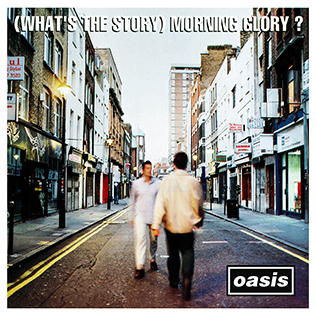

(What’s The Story) Morning Glory? (1995)

Now I already wrote a review for this album a while back on this blog so I’m gonna make this brief. “(What’s The Story) Morning Glory?” is pretty much the best album these guys have ever put together. With track after of top notch single material and heavy guitars this is a classic staple of 90s music. This was also when Oasis was probably at their peak popularity and an exciting time in music, if you haven’t heard this album than I highly recommend it.

Favorite Tracks: “Don’t Look Back in Anger”, “She’s Electric”, “Wonderwall”
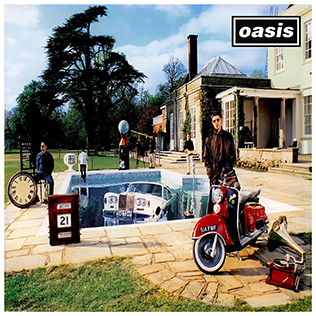

Be Here Now (1997)

After the major success of their previous two albums, Oasis were now riding a huge wave of success. While the band was certainly big on the music scene, the Gallagher brothers had themselves become popular if not controversial celebrities within the media often caught publicly fighting, but of course that would never tear these two apart and soon enough they were ready to start work on their most ambitious album yet.

Heading into Abbey Road in October of 1996, after Noel had recently gone through a stage of writer’s block. Noel had a vision on making an ablum of epic proportions basically deciding to throw the whole kitchen sink into this one. There’s mellotrons, strings, sitar, psychedelic guitars and even slide guitar played by who else but Johnny Depp. The sound here truly is epic but unlike most of the critics who initially praised the album, I was never too big on this record.

Now the compositions here a fairly good, perhaps not Oasis’ most catchy or memorable tunes but the melodies and progressions are pleasant. The main problem here is every song is so god damn freaking long. With most songs well above 5 minutes this 71 minute album is just too tiring to enjoy on the same level as previous Oasis works. I mean most of the songs make their point in about 3 minutes but then just keep going and going. I just find it boring after awhile and I really think this could of been better if Oasis had simply cut back a little.

I’ve never really been sure about what Oasis personally though about this album, but on their 2006 greatest hits compilation “Stop the Clocks” there isn’t a single song from “Be Here Now”… Hmmm, very interesting…

Favorite Tracks: “D’You Know What I Mean?”, “Stand by Me”, “All Around the World”


The Masterplan (1998)

Although a B-sides I compilation I think “The Masterplan” is worth touching on. There’s some really swell numbers on here including; “Acquiesce”, “Talk Tonight”, “Half the World Away”, the moody ballad “The Masterplan”, and an excellent live cover of The Beatles “I Am the Walrus” I’m not sure why these songs didn’t make it on any albums, but I guess that’s the beauty of a compilation disc.

Favorite Tracks: “Acquiesce”, “Half the World Away”, “The Masterplan”


Standing on the Shoulder of Giants (2000)

In 1999 a Oasis faced a difficult transitional period, with the departure of founding bassist Paul McGuigan and rhythm guitarist Paul Arthurs. Noel, Liam, drummer Alan White and a collection of other studio musicians would make up the body of work for “Standing on the Shoulder of Giants” probably Oasis’ most experimental album to date.

With two key members leaving the group during the recording process, “Standing on the Shoulder of Giants” would not only require lead member Noel Gallagher to fill out the extra guitars and bass work but also push the band to try out some more experimental techniques including; drum loops, mellotron, electric sitar, flute and other unique tricks in the studio.

Looking at this album as a whole it’s neat to see Oasis try out such a psychedelic approach to their new songs but I can’t help but feel this album is somewhat of a bore in spots. I love all the bizarre sounds and textures, not to mention Mark Stent’s producing, but I think they should of set the bar a little higher regarding the quality of the songs. “Go Let it Out” is easily the best song on the album with it’s stadium sounding drums and single friendly melody followed by the Zeppelin inspired/partially instrumental “Fuckin’ in the Bushes”. As for the rest their just typical generic rock wrapped in a trippy package. There’s lots of moments where I find myself really into some of the little grooves here and there but also segments where I’m just tired.

Over time I’ve found this not to be a bad album necessarily but definitely not one of this band’s more impressive efforts. I understand that it was a strange period for the band and I appreciate their attempts to stay fresh, they just needed to work out a few more of the kinks.

Favorite Tracks: “Go Let it Out”, “Fuckin’ in the Bushes”, “Gas Panic!”


Heathen Chemistry (2002)

It was in 2000 that Oasis became whole again (Though this would be Alan White’s last album with the band). After a few setbacks on their last album Oasis recruited Andy Bell, formerly off the Brit Pop band Ride on bass and Gem Archer of Heavy Stereo on rhythm guitar (Both members already having played on the Oasis live album “Familiar to Millions”). Filling in a much needed void in Oasis’ lineup both Bell and Archer would not only bring talented musicianship but as well contribute many ideas to the sound and song writing of Oasis.

Recorded in 2001-2002, Heathen Chemistry was an attempt at getting “back-to-basics” with the strength of the songs being top priority over effects or fancy production. it was definitely a step in the right direction for this band and for the most part was received warmly by fans and critics. Heathen Chemistry was a nice change of pace from the more elaborate Oasis albums that had recently proceeded it and pretty strong regarding the quality of songs.

Liam has definitely improved as a songwriter penning his first Oasis single titled “Songbird” a simple yet sweet acoustic number that’s easily one of the best on the album. Noel’s found a good rockin’ niche here while still managing to whip up another brooding ballad with “Stop Crying Your Heart Out”. There’s some other nice highlights throughout and this album and overall it’s a pretty respectable entry into the Oasis catalog. Aside from the last track having a 20 something minute bonus track that I often skip, it’s good listening and reminds me of why I love these guys.

Favorite Tracks: “The Hindu Times”, “Songbird”, “Stop Crying Your Heart


Don’t Believe the Truth (2005)

Not long after Heathen Chemistry Oasis were already laying down demos and sessions for what would prove to be their most collaborative album yet. For not only would we see compositions from Noel but multiple songs penned by Liam, Andy and Gem rounded off by the fantastic Keith Moon inspired drumming of Zak Starkey.

Now though Oasis’ star status had waned over here in the states I think it’s safe to say that this album was Oasis in top form. I mean sure they were great in the past with former members Paul McGuigan and that bald guy Paul Arthurs but it’s not like thise guys ever made that much of an impression on most listeners. The addition of Andy and Gem on the other hand really seemed to make the band a more collaborative group. Not only do Gem and Andy both play more than their respective instruments on this album but as well write some really great tunes. Archer’s a “A Bell Will Ring” and “Love Like a Bomb”, co-written with Liam are beautiful guitar infused alternative rock while Andy Bell has success with “Keep the Dream Alive” and especially with the opening track “Turn Up the Sun” which immediately grabs you with it’s dreamlike picking that heads right into pure rock heaviness. Liam’s song-writing, while perhaps a little more basic, has found a good middle ground. “Guess God Thinks I’m Abel” is an enlightening acoustic number and “The Meaning Soul” is your basic fist pumping rock number.

Everyone has a lot of great ideas on this album, but you can never count out Noel, who shows he’s still the master of the rock in this band. “Lyla” is your typical catchy Oasis single, “Mucky Fingers” is an energetic riff driven rocker, “Part of the Queue” is a more morose yet intriguing acoustic song, “The Importance of Being Idle” is a retro Kinks sounding tune and “Let There Be Love” is of course a beautiful sweeping ballad. Quite a collection of songs overall and a very satisfying record.

The reception for Don’t Believe the Truth was for the most part pretty positive even if there wasn’t a whole lot of strong promotion behind it. I think this album will always have a place in my heart as the Oasis album that made me a fan, it wasn’t long after that I attended one of their shows and here I am now giving you an Oasis retrospective, it’s funny how things work out.

Favorite Tracks: “Lyla”, “The Importance of Being Idle”, “Let There be Love”
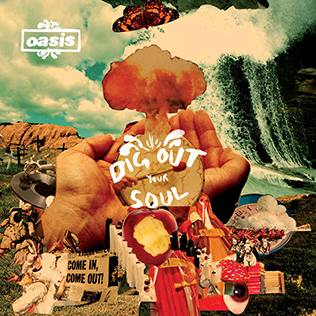

Dig Out Your Soul (2008)
I’ve probably heard most of this album since it was added to Myspace, but I still wait to review it later this week. Based off what I have heard and from Oasis’ show at WaMu last August, it looks like yet another satisfying rock/pop record from the bad boys of Brit Pop. Zak Starkey’s drums sound Zeppelinesque and Oasis has really put together a heavy collection of powerful grooves and melodic pop. A lot of critics are calling it Oasis’ best album since “What’s the Story” so it’ll be very exciting to sit down and groove to the whole album in the comfort of my own home, can’t wait.

C.A.T.: Electric Warrior

T. Rex – Electric Warrior (1971)

Sorry I didn’t do the CAT last week, I intended on doing it but work and that fact that I couldn’t access any of the Lemme’s computers prevented me from doing it. Anyways, this week I thought I’d review Marc Bolan and T. Rex’s seminal 1971 breakthrough, Electric Warrior. It’s an album I continuously find myself coming back to, and it’s probably my favorite album to come out of the glam rock movement of the early seventies.

Electric Warrior showed T. Rex exploring a more electric rock sound than the earlier acoustic, folky sound Bolan and percussionist Mickey Finn had explored as a duo. This album shows T. Rex with a more band oriented format with the addition of bassist Steve Currie and drummer Bill Legend, as well as the backup vocals of Flo and Eddie of the Turtles. However, theres still a number of acoustic numbers such “Cosmic Dancer” and “Girl”, both of with feature some unique orchestral arrangements.

Of course, the album is probably best known for having T. Rex’s most famous song “Bang a Gong (Get It On)”. The song was their only hit in the U.S., despite having a long run of top 10 singles in the U.K. during the early seventies. “Bang A Gong” as well as many of the other songs on the album like “Planet Queen” and “Life’s a Gas” have a great laid back, glam rock sound that also features Marc Bolan’s spacey lyrics. There’s also a few songs with a more aggressive hard rock sound that T. Rex would persue on the fantastic follow up to this album, The Slider.

Along with the rise of the glam rock movement, Bolan and T. Rex became one of the leading figures of rock in Britain in the early Seventies. However, Bolan’s uncontrollable appetite for excessive drugs and alcohol would result in a decline in popularity and the eventual breakup of T. Rex just prior to Bolan’s sudden death in 1977.

Favorite Tracks: “Mambo Sun”, “Jeepster”, “Life’s a Gas”

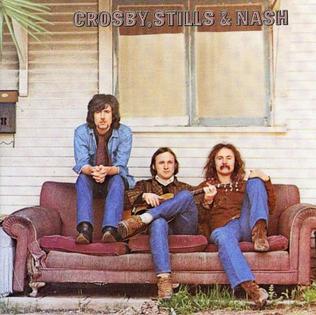
C.A.T: Crosby, Stills, & Nash


Crosby, Stills & Nash – Crosby, Stills & Nash (1969)

Seeing as no one seems to be interested in reviewing a classic album this week, I thought I’d whip up an analysis of one of my favorite summer albums the self-titled debut from Crosby, Stills, & Nash.

Formed from the remnants of bands; Buffalo Springfield, The Hollies and The Byrds music lovers were given the pleasure of recieving one of the most influential and long lasting groups of the era and here’s where it all started. With the disintegration of Stephen Still’s band in 68′ and David Crosby’s dissmissal from The Byrds in 67′ these two veteran musicians began looking for a new project and soon enough, would join together jamming and working on songs together. In 1968, Crosby and Stills would be joined by Graham Nash for an impromptu performance of “You Don’t Have To Cry” only to discover their ability to create a unique vocal chemistry would be perfect for a new musical venture. Nash would leave The Hollies in a heartbeat and the trio signed to Atlantic records to cut one of the most beautiful and unique sounding albums of the late 60s.

Starting production of the album in June 1968, each member brought something different to the table to create this diverse record. Stephen Stills brought a bluesy, folk oriented sound to the group, accompanied by a southern drawl and some accomplished musicianship, Graham Nash, a member of the British Invasion crowd, would bring not only upbeat pop sensibilities but quite an impressive vocal range, while David Crosby added a powerful, soft spoken maturity to the tone and lyrics of the group.

Keeping most of instrumentation sparse, the most important aspect to take note here is the vocal abilities of these three diverse musicians. With Nash taking the high end, Crosby filling out the middle range and Stills’ Texan voice singing in his own bluesy manner, Crosby, Stills & Nash can’t be beat when it comes to harmonies and here we get plenty of folk, blues, pop and rock music to capitalize off of their unique voices.

I find it difficult to specifically note any key tracks, as I can’t find a weak spot on the entire record. It’s a very laid back and pleasant experience when it comes to the upbeat southern style of songs like “You Don’t Have to Cry”, “Helplessly Hoping” or the classic “Suite: Judy Blue Eyes” while the bittersweet folk of songs like “Guinnevere ” or the intimate “Lady of the Island” leave for a significantly more serene experience, and if by chance you’re not too big on the stripped down, unplugged sound of these songs, then you can find solace in the electric swagger of Crosby’s “Long Time Gone” and especially the casual rockin’ of “Wooden Ships”.

Crosby, Stills & Nash is without a doubt, required listening for fans of 60s rock and roll and definitely worth checking out for any fans of accomplished song-writing or singing. I always consider it to be perfectly suited for the warmer season and always find myself coming back to it on those muggy summer days.

Favorite Tracks: “Helplessly Hoping”, “Guinnevere”, “Suite: Judy Blue Eyes”

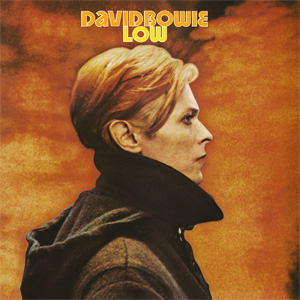
C.A.T: Low

I know it’s pretty close to midnight already, and it surely will be tomorrow by the time I finish this post, but I’ve got to put my time in, you know? This work has got to be done.

David Bowie – Low (1977)
One of Bowie’s most popular and critically acclaimed albums, Low, was released in early 1977, one of the most important years in recent memory. As the first in the legendary “Berlin Trilogy;” the collaboration with Brian Eno, Low marked the beginning of another of Bowie’s “changes.”

While churning out incredible albums like Station to Station and starring in hit films like The Man Who Fell to Earth, David Bowie was also freaking himself out with cocaine and a wacky diet of milk and peppers. He also thought witches were stealing his semen and The Rolling Stones were sending him secret messages. But this is not that story. This is what came after that, when Bowie found himself interested in his art again, and tried to kick coke. The album titles refers to his withdraws-induced bad moods. The music here is serious and deals with heavy issues.

It is also awesome. The obvious influence here is the unstoppable sound of Kraftwerk, but Bowie brings plenty to the table here. Wikipedia says the drums’ sound was especially influential, all I know is that they sound neat. The album kicks off with the instrumental “Speed of Life,” which sets the tone for much of the album.

It occurs to me now that I’m really tired, so I’ll wrap this sucker up. The last half of the album is almost entirely instrumental, which may turn off Bowie fans. But I’m more than happy with what we get here, and I commend him for letting the music stand on its own. I know a lot of people want to pretend David Bowie is another sing-a-long artist, and just listen to classics like “Ziggy Stardust” and “Changes.” But his “musical chameleon” reputation is deserved. The dude knows what he’s doing and whether it’s the Sixties, Seventies or today, the tunes he delivers are pretty damn good.

Favorite Tracks: “Speed of Life,” “Sound and Vision,” “Subterraneans”

C.A.T: Wheels of Fire


Cream – Wheels of Fire (1968)
In honor of the event “Hippiefest 2008”, which I attended on July 12th to see Jack Bruce (See “The Ottman Prophecies” for the full story) I decided to do a Cream album for this week’s classic album and why not an album that recently enjoyed it’s 40th anniversary? Cream’s psychedelic blues opus “Wheels of Fire” easily the most experimental album of their brief but memorable run.

Working closely with future Mountain bassist Felix Pappalardi, who would act as producer while also playing viola, bells, organ and brass on the album, Cream cut this epic double album Wheels of Fire. Spawning such hits as the poetic, wah guitar infused “White Room” and Clapton’s legendary rendition of Robert Johnson’s legendary blues standard “Crossroads” this would prove to be an impressive work from this band and era.

Musicianship here is nothing short of brilliant, as all three members show off their skill as the cream of the crop of British blues. Blues numbers like “Sitting on Top of the World” the Bruce penned “Politician” and Booker T. Jones’ “Born Under a Bad Sign” are stunning pieces chocked full of old Slowhand’s flawless guitar solos, Jack’s energetic bass lines and incredibly precise drum work from Ginger Baker. Not to forget the well layered vocals fronted by Bruce’s powerful Scottish howl and the obserd but memorable lyrics of Pete Brown.

One of my favorite aspects of this album is addition of more instruments to build up Cream’s already powerful sound. The ringing church bells of “Those Were the Days”, the morose violin work on numbers like “Deserted Cities of the Heart” and “As You Said” which accompanied by unique de-tunings and classical instruments like glockenspiels or bells sounds like a precursor to some of Led Zeppelin’s more acoustic, string based ventures and what can I say about “White Room”? It quickly became a great 60s rock standard.

Wheels of Fire may feel a tad exhausting by the time you reach the live portion of the album, but it’s completely worth wait for a number like “Crossroads”. Bruce and Baker’s rhythm is a dizzying orgy of immense grooves while Clapton shows us why so many call him a god. I could see why some could find this album too busy or complicated, but I say it’s a triumphant rock venture and once in a blue moon I still find myself coming back to it.

Favorite Tracks: “White Room”, “Deserted Cities of the Heart”, “Crossroads”