Oscars Fortnight Day 12: Million Dollar Baby

Million Dollar Baby (2004)

The 77th Academy Awards (2005)
Nominations: 7
Wins: 4

The 2000s was when I became an Oscar fan. Yeah, I know, the Oscars suck. Most of the time it’s just a bunch of Hollywood Elites patting themselves on the back and awarding the best run campaigns (not movies). But it’s also a celebration of movies. Those are like my favorite thing. So much so that in 2006 I watched every Best Picture Nominee. This is a tradition I have carried on every year since then. I still haven’t seen every nominee between 2000 and 2004 but I’m getting there. What’s odd is that it took me this long to watch Million Dollar Baby. The last Best Picture Winner of the 2000s I hadn’t seen.

Continue reading

Oscars Fortnight Day 11: Erin Brockovich

Erin Brockovich (2000)

The 73rd Academy Awards (2001)
Nominations: 5
Wins: 1

An interesting thing happened with the Oscars in the 1990s: they started giving the big awards to popular movies. Forrest Gump won Best Picture. Titanic won Best Picture. For as snooty and out-of-touch the Academy has a reputation for being, there was a stretch there were being the biggest movie of the year also meant you had a legit shot at Best Picture. That trends goes at least as far as the 73rd Academy Awards, which gave the top prize to Gladiator, the third highest grossing film of 2000 (behind How the Grinch Stole Christmas and Mission: Impossible II). Now, I love me some Gladiator, but is it truly superior to Steven Soderbergh’s one-two punch of Erin Brockovich and Traffic? And beyond that, did the Academy pick exactly the wrong time to go mainstream?

Continue reading

Oscars Fortnight Day 10: The English Patient

The English Patient (1996)

The 69th Academy Awards (1997)
Nominations: 12
Wins: 9

Probably not the most appropriate review to accompany today’s news, considering this is a very white person movie. But hey, my Guess Who’s Coming To Dinner review is still sitting there for the reading if you want.

Anyways… going into The English Patient, I wasn’t really sure what to expect, since the two things I equate this movie with don’t actually have much to do with the content of the film itself. One big thing about this movie for me is that it took home a bunch of Oscars at the first Academy Awards ceremony I can remember watching live on TV. Granted, it’s not like its ability to bring home the gold inspired me to seek it out (until now), since I wasn’t exactly interested in a sweeping romantic epic at the age of eight. As you could probably guess, the other thing I equate with this movie is the episode of Seinfeld called “The English Patient”, where Elaine Benes is driven insane by being seemingly the only person in her life that doesn’t love the film in question. Continue reading

Oscars Fortnight Day 9: A Few Good Men

A Few Good Men (1992)

The 65th Academy Awards (1993)
Nominations: 4
Wins: 0

A Few Good Men is totally 90s. It stars Tom Cruise and Demi Moore. It’s Rob Reiner. It’s got the Castle Rock logo—Seinfeld vibes intensifying. This is an era where a courtroom drama could be a top ten grossing film of the year (it was number 7 for 1992). I mean, it’s got the line. You know? The one about the truth! He can’t handle it! How many times has that been spoofed on The Critic?

Continue reading

Oscars Fortnight Day 8: Chariots of Fire

Chariots of Fire (1981)

The 54th Academy Awards (1982)
Nominations: 7
Wins: 4

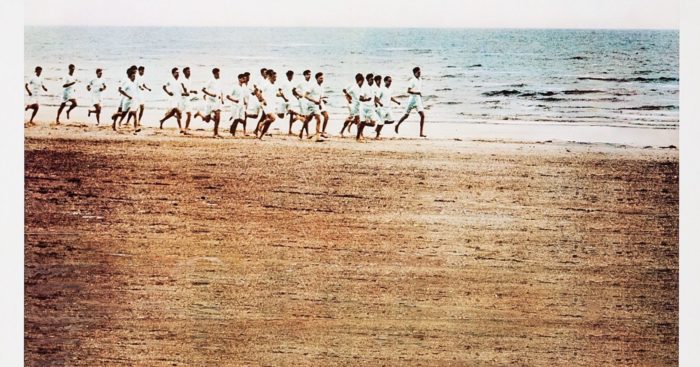
When I chose the films I did for these Oscars reviews, I was not intending to chart the course of British films at the Oscars, but here we are. After dominating the Oscar conversations throughout the ’60s, the ’70s were a pretty fallow period for the UK film industry in terms of prestige. I’m sure much of this has to do with the sheer amount of groundbreaking films filled with sex and violence that were coming out of Hollywood that decade, while the Brits struggled to keep up. However, Chariots of Fire seemed to rejuvenate both the British film industry as well as its chances at the Oscars, as there were considerably more UK films going head-to-head with the Americans at the Oscars throughout the ’80s. This, of course, is fitting considering Chariots of Fire is the story of some scrappy Brits going up against the big bad Americans at the 1924 Olympics. Continue reading

Oscars Fortnight Day 7: The Deer Hunter

The Deer Hunter (1978)

The 51st Academy Awards (1979)
Nominations: 9
Wins: 5

I’ve wanted to watch The Deer Hunter for a long time for a lot of reasons. First and foremost, it’s the last of John Cazale’s film roles that I hadn’t seen, and the fact that all five movies he was in went on to get a Best Picture nomination meant this was the perfect opportunity to close that blind spot. It’s also coincidentally the second time he played a character named Stan. But Cazale might not even be the most interesting person involved in this production. That honor might go to his legendary costars: Robert De Niro, Christopher Walken, and Meryl Streep. Or it could be its director, Michael Cimino, who did so well with this that he went on to spearhead one of the biggest disasters in cinema history: Heaven’s Gate. Yes, the pedigree of the creatives behind The Deer Hunter sure make it an interesting movie. But also, on a less intellectual level, I was really curious about seeing those Russian roulette scenes.

Continue reading

Oscars Fortnight Day 5: Guess Who’s Coming To Dinner

Guess Who’s Coming To Dinner (1967)

The 40th Academy Awards (1968)
Nominations: 10
Wins: 2

So 1968 is the Oscar year where everything changes. It’s the year where the Academy stops only nominating musicals and British period pieces (save for Doctor Dolittle) and starts nominating movies about what was happening in the culture, man. It’s an Oscar year so pivotal that Mark Harris wrote the book Pictures At A Revolution about the five Best Picture nominees in 1968 and how they reflected where Hollywood was at the time. While I had already seen The Graduate, Bonnie and Clyde, and In The Heat of The Night, I had never gotten around to Guess Who’s Coming To Dinner, probably because I’d assumed that its depiction of ’60s-era race relations wouldn’t hold up that well. However, I was actually quite surprised how deftly this movie handles its complicated subject matter. Continue reading