Sean Lemme

I started blogging as a way to lazily pass my high school senior project and somehow I've kept doing it for more than half my life

Zeptember: Sean’s Top Ten

I’m assuming we’re all sticking to the “Stairway to Heaven” is disqualified rule, even though no one has officially mentioned it. If that is indeed the case, then these are my ten favorite Led Zeppelin songs. It was damn near impossible to narrow it down to these ten, since I had around 50 songs that I thought were competitive. I had to make some deep cuts and these are the ones that survived, so try at least not to worry about the order they’re in.

10. All My Love
The song that inspired my recent foray back into Led Zeppelin, it’s kind of amazing just because it’s a slow, synth-driven song by Led Zeppelin. That seems weird, doesn’t it? But that’s kind of the reality of In Through the Out Door – songs that don’t quite seem like what Led Zeppelin would be doing. Unlike “Carouselambra,” the other great song from that album, “All My Love” is exactly the right length to stick with you and somehow also leave you wanting more.

9. Kashmir
Can a song survive on just one great guitar riff? Probably, but “Kashmir” is not that song. Because, even though the “Kashmir” riff is one of Led Zeppelin’s most well known, its not just the guitar that makes this great. It’s one of a handful of songs the band recorded with strings and horns, adding a suitably epic feel to the number. What I really love about it are the lyrics, an aspect of music I don’t spend much time thinking about. If I had seen “Kashmir” written before hearing it, I would have thought it was some quality poetry. Or a crappy poem. I’m not that great a judge of poetry.

8. Rock and Roll
Legend has it that while frustrated recording the tremendous “Four Sticks,” Led Zeppelin accidentally jammed their way into this diddy. Suitably titled, “Rock and Roll” draws from the history of the genre and amps it up, making the song among the most rocking I’ve ever heard. It also the first Led Zeppelin song I heard, or at least remember hearing. I remember listening to it on Colin’s portable CD player and remarking that I recognized it from a car commercial. That’s kind of a shitty association, but it got me to where I am today.

7. In My Time of Dying
I’ve always liked a good slide guitar, and its hard to get it better than Led Zeppelin’s version of “In My Time of Dying.” I wanted to include long songs on my list, since I really do love most of their long songs, even this one, which I believe is their longest. Early this year I heard the Bob Dylan version of this song, which is a totally different, more traditionally blues experience. Led Zeppelin takes the song and jams all over it until nothing’s left. It’s pretty amazing. And it ends with coughing and joking. They’re people too.

6. When the Levee Breaks
Yeah, that’s right, another blues cover. As John pointed out, the drums and harmonica do this song an amazing favor. The drums are gigantic, it’s no wonder bands like the Beastie Boys were drawn to sampling them. The reverb or whatever that’s applied to the harmonica makes it sound different from any other harmonica ever. Let’s not forget the guitar part, which is no slouch, with plenty of interesting effects piled on top of it as well. And in the middle of it all is Robert Plant, doing his thing as possibly the greatest lead singer in rock. It all comes together on “When the Levee Breaks.”

5. Good Times Bad Times
This is the first song on the first Led Zeppelin album and I like to keep that in mind when I hear it. I think if I had never heard the band before, if this was something entirely new, it would take me about a minute of “Good Times Bad Times”  to declare I will buy ever single album these guys put out. Since we’re paying tribute to the 31st anniversary of John Bonham’s death, I would be remiss not to point out that the man played the kick drum and hi hat with just one foot. Listen to the song again. I’m not a drummer, but that’s madness!

4. Over the Hills and Far Away
This is kind of like “Stairway to Heaven” if it was a little less ambitious and popular. Wow, that sounds much more negative than I meant it.  “Over the Hills and Far Away” is one of those songs that makes the world a better place. How about that? It’s an emotional, beautiful song from the group that’s considered the inspiration for heavy metal and hard rock. It’s not just one of my favorite Led Zeppelin songs, it’s one of my favorite songs.

3. Babe I’m Gonna Leave You
Ah, time for a gentler little tune. Or is it? “Babe I’m Gonna Leave You” starts gently enough, with a delicate flurry of guitar and then some soft vocals. But at the halfway point, the song explodes. Drums and bass drive the song, the guitar gets heavier and the vocals become screams. This is another song that covers a shorter, simpler tune. In this case, it’s a Joan Baez song that simply sticks to guitar and vocals. That’s what makes Led Zeppelin so special. They make it a journey.

2. Ramble On
This is probably the Led Zeppelin that first comes to mind for me… And a lot of people. The Lord of the Rings references, stupefying guitar and amazing bass and drums all add up to something that no one else ever did or ever will do. I love how the acoustic guitar gives into the electric in this song, it’s another great example of the kind of journey a quality Led Zeppelin song can take you on.

1. Bron-Y-Aur Stomp
Led Zeppelin does country. I can’t really explain why I like this so much, or why it’s easily my most listened to track from the band. Certainly the guitar of Jimmy Page is partly responsible, from the craziness of the intro to the simpler verse, it’s undeniably great. Certainly John Bonham’s percussion is a partly responsible, featuring drums you can’t help but tap along with, as well as spoons and castanets. Certainly John Paul Jones’ bass is partly responsible, since he so beautifully accompanies, nay, matches, the skill on display from the previous two. Certainly Robert Plant’s vocals are partly responsible, since this is the most sing-a-long Led Zeppelin got this side of “Your Time is Gonna Come.” I guess they’re all responsible. And when you put them together, they can’t be beat.

It’s a Good Time to be Pissed at Nintendo

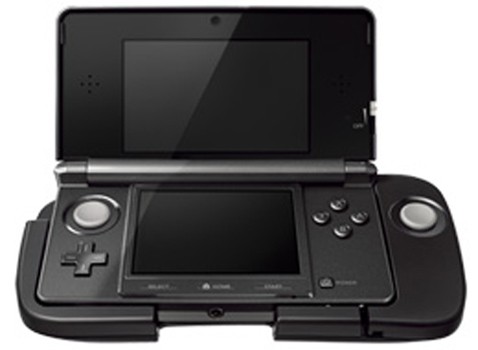
This monstrosity is the Nintendo 3DS Slide Pad add-on. It’s probably the biggest news out of TGS, even though Nintendo announced it before the event and pictures were leaked out before that. If you’ve never seen a 3DS before and you’re wondering why it looks so bulky and lopsided, let me tell you what’s new. The Slide Pad add-on grips onto your 3DS, surrounding your previously sleek system’s lower half, adding new shoulder buttons and, notably, a second circle pad. Never mind that it laughs at symmetry and aesthetics, new buttons!

When I first saw this thing, I was flustered, but I took solace in knowing that its announcement was in conjunction with the new, 3DS-exclusive Monster Hunter game. That franchise is massive in Japan, it turned the PSP into a success over there. So I could understand Nintendo bending over backwards to secure what could become its new console’s biggest hit. But, when Nintendo showed the Slide Pad off at its pre-TGS show, it confirmed that the add-on will be used by multiple upcoming games. And the news just got worse from there.

Probably the most remarkably terrible thing about the Slide Pad is that it takes a battery. You’d think with something stupid like this, they could at least build additional battery power into the device, helping to overcome the 3DS’ most obvious flaw. But no, Nintendo expects me to find a freakin’ AAA battery for it. And I can’t use my sweet 3DS dock with this monstrosity either. Boo!

More importantly, the Slide Pad goes against the concept of the 3DS. It doesn’t need a second analogue stick because it has the touch screen. Every single DS game compensated for that, and that limitation made DS games unique and popular. With a second analogue stick, developers don’t necessarily need to use touch anymore. What does that leave us with? A less powerful PlayStation Vita with headache power.

But as someone who bought the 3DS after Nintendo dropped its price, I feel betrayed. When I bought the system, I knew battery power was an issue and I knew a new iteration of the system was inevitable. I accepted that. Now my handheld has to either become an abomination or incompatible with the future of its software lineup. Now when they come out with a new 3DS revision, which they haven’t announced but you know is coming, it will essentially be a relaunch of the system. As a consumer, I have never felt so completely fucked over by a company that I previously trusted. I can think of no other peripheral in gaming history that is as damning as the 3DS Slide Pad. So I’m pretty pissed. Nintendo’s going to have to come up with something pretty extraordinary to make this 3DS Ambassador come back home.

Sort of Sweet Child of Mine

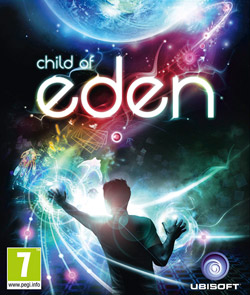
Child of Eden

Child of Eden was clearly designed to be played with the Kinect. Since I don’t have one, I don’t know what I’m doing reviewing this game. When you factor in that I enjoyed, but didn’t necessarily love, Child of Eden‘s spiritual predecessor, Rez, I feel hardly qualified to talk about this game, nonetheless critique it. But here we are. And while I’ve always considered myself the type who backs away from a challenge, this one seems doable.

So it’s the future. Mankind has moved on out into deep space. The first person born in space, Lumi, had her consciousness transferred into the future Internet when she died. Now she’s come under attack by viruses or something and it’s up to you to save her. Even though she’s already dead. Information is important, damnit!

Of course the story doesn’t really matter that much, it’s merely an excuse for you to travel through some genuinely beautiful and trippy visuals. Like Rez, Child of Eden delivers a synesthetic experience that no other form of entertainment can match. It’s like a more beautiful, interactive Pink Floyd lazer light show. As important to the experience as the visuals is the music, which walks the thin line between techno and trance. Each song drives its level and you’ll have to attack with the rhythm of the music to get a high score.

Oh what’s that? You’d like to know how this game plays? Fair enough. It’s a sort of on-rails shooter. You can attack in two ways: a lock on attack and a rapid fire blast. Most enemies are best defeated with lock on, but every once in a while you’ll encounter an armored enemy who must be blasted down. More importantly, you’re rapid fire shots can take down incoming enemy fire. You also have bombs. Moving along…

Actually, I guess that’s enough. Child of Eden is a prettier, Kinect-enabled Rez. It’s five levels long, and each of those will take you about 10 minutes to beat. The game lengthens itself by demanding you repeat levels to unlock the next one, which would be more annoying if the game wasn’t so zen-like to begin with. My biggest complaint was the lack of checkpoints, when you die you’re booted all the way back to the main menu. That really sucked when I died toward the end of the last, and longest, level in the game. I get the feeling that with Kinect, Child of Eden could really be something. Playing it with just a controller, well, it was something.

A Bewitching Game

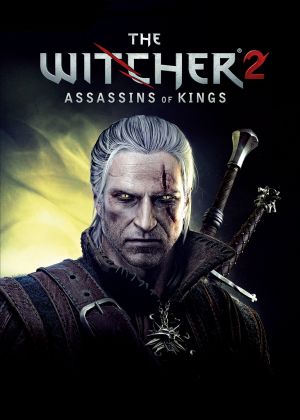
The Witcher 2: Assassins of Kings

I was a little nervous going into The Witcher 2. The first game didn’t seem as fun to me as everyone else seemed to think it was and I never got that far into it. Like the Elder Scrolls and Fallout franchises, I just didn’t see what they saw in the game. But I could tell that it wasn’t bad and The Witcher 2 came out right when I graduated from college, so I took a leap of faith. I’m glad I did, because I can say, unequivocally, that this is the best game that is a sequel to a game I didn’t play that much of and is also based on a popular series of books I never read. And that’s something.

Geralt of Rivia, the witcher you heard so much about, begins Assassins of Kings locked in the dungeons. This isn’t uncommon for him, since witchers are humans that mutated themselves to become monster hunters. There is a lot of racial tension in this world, with plenty of humans taking a strong anti-elf and dwarf stance. Since Geralt isn’t quite human, he’s an outsider. But more importantly, he’s been accused to killing the king. The game catches you up a little bit and then Geralt is off on a quest to clear his name, one way or another.

The structure of The Witcher 2 is simple enough, each chapter you have a hub town where you can accept quests and explore. There’s plenty to do in this game, especially if you choose to replay it. At a certain point you’re forced to choose between two paths, and the entire game is different from that point. What I liked about that choice, and many of the choices Geralt makes, is that it wasn’t a clear good or evil decision. In this world, everyone’s a jerk and you can never be sure exactly who you should side with, since they might betray you as soon as they’re done using you. It makes the story a lot more engaging than I expected, especially since I came in with practically no lore knowledge.

This is a game that embraces newcomers, while dropping in enough to give returning fans a kick. When Geralt meets up with characters I assume were in the last game or the books, conversations never get too referential, just enough that even I can understand their relationship. I get that Triss is a love interest and Dandlion is a wannabe loverboy without having to have them explained to me. It’s good writing and that’s something I can appreciate.

Assassins of Kings takes a bit of time to learn to play, which isn’t helped by the game’s general lack of tutorials. The first sequence you’ll play through is somewhat demanding for new players, and the game doesn’t help you out. I found the controls a little floatier than I would have desired and lacking in basic functionality and customizability. I ended up playing most of the game with an Xbox controller, which seemed better in some aspects, such as the inclusion of a “loot all” button, something keyboard controls are missing.

This can be quite a difficult game, if you let it. To do well in battle, you’ll have to carefully plan ahead, setting traps and drinking potions to increase your combat ability. Swordplay is simplified to just heavy and quick attacks, forgoing the styles and timing mechanics from the last game. Leveling is a bit more straightforward too, and I made myself quite a beast, making most battles fairly simple by the end of the game. Then again, I played on normal. Maybe I should have adjusted the difficulty when things got too easy.

But I was never not enjoying The Witcher 2. This a great RPG that does everything you could ask of the genre. It engages you with the story, puts a premium on player choice and gives plenty of motivation to explore and quest. That’s about everything I’m looking for. In fact, I better start a new campaign pretty soon, I want to see more of the alternate path.

Legacy of Lame

Dragon Age II – Legacy

It seems that I was in the minority when I came out in favor of Dragon Age II. The game suffered from a lack of scope, to be sure, but I had fun playing it. The first major DLC for the game was a weapon pack, which probably wasn’t the best strategic move for a game criticized for being a money-grab. Now another weapon pack is coming out, which seems like a really bad idea. But sandwiched between those two item collections came the Legacy DLC, an additional quest that added a bit to the main game’s lore and tried to address the chief complaints leveled against Dragon Age II.

Legacy immediately takes you two a new locale, as if Bioware was trying to apologize for not coming up with enough new settings. Hawke and company track down the dwarven cartel that has been trying to kill them and demand answers. What they get is violent resistance, and a new dungeon to explore; a dungeon that contains some dark secrets and an ancient evil. While it’s an admirable effort to make the game’s locations more diverse, an underground dungeon isn’t that much to look at, making the effort appreciated, but pretty much wasted.

The chief complaint against the combat in Dragon Age II was enemies appearing out of nowhere mid-fight, which as far as I could tell was not an issue in Legacy. The stakes of every battle seemed obvious from the get-go, with all enemies and traps clearly obvious. Legacy introduces a few new enemy types as well, some of whom return from Dragon Age Origins. My only real combat-related complaint is the final boss battle, which relies heavily on your three AI-controlled allies being able to not stand in the fire, a skill that many real life World of Warcraft players still don’t have. As a result, the final battle can either seem unfairly difficult or unusually tedious, depending on the difficulty you’re playing on.

All in all, while it’s not Lair of the Shadow Broker, I think this is a solid piece of DLC for a solid game. It won’t redeem it for anyone who didn’t like Dragon Age II to begin with, but those people probably wouldn’t be shopping for DLC anyway.

The Vault: Mighty Morphin Power Rangers

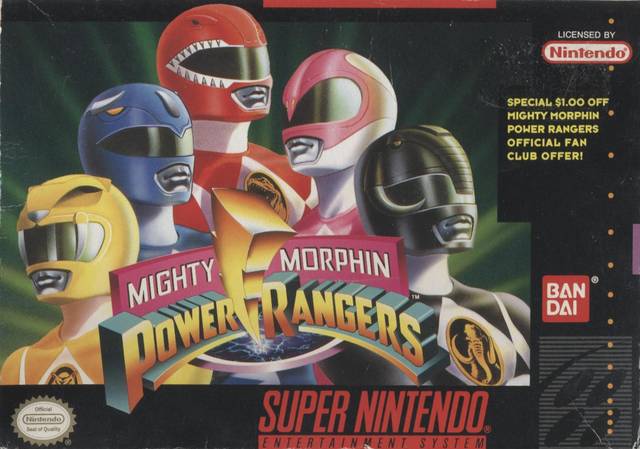
Mighty Morphin Power Rangers (Super NES)

Released after the eponymous series’ first season, Mighty Morphin Power Rangers came crashing onto the Super NES at the height of the beat ’em up genre. Unfortunately it does basically nothing to stand out in the world of brawlers, aside from represent the Power Rangers franchise. That’s not necessarily a bad thing, as a solid game with a hot property slapped on it is often all a kid is asking for when he chooses the game most deserving of his allowance money.

Power Rangers is seven stages long, although five of them are two parters. They play out in a straightforward manner, you’ll run around locations as varied as “park” and “weirdly spacious sewer” beating up putties until the boss shows himself. At that point, you’ll transform into your Ranger alter ego and go through another level of putty massacre. Finally, you’ll fight the boss, then be returned to the character select screen and do it all again. That is, except for the last two levels, which play out like a fighting game as you take on one giant enemy as the Megazord. After that, you’re treated to a cinematic of the gang going for a joyride (no seat belts) and then watching Zack dance at their favorite gym/juice bar.

The in-game model for the Power Rangers is an obvious pallet swap for each ranger, which is a bit disconcerting of the girls. At least for the Pink Ranger, whose uniform had a skirt on it in the show. Less of a problem for the Yellow Ranger, since she was a dude in the Japanese original. 90% of the game is spent defeating putties of various colors, which is not that exciting. The game mixes it up with a few weird robot enemies and the occasional platforming section, but there’s really not much to it. The boss fights are all pretty easy, and against foes that apparently were in the first season of the show, but were not recognizable to me. There’s no sign of Rita, Goldar or even that other guy. Well, Rita does show up after the credits, but you don’t get to fight her or anything. An image of her just shows up in the sky. Maybe that was meant as a hint for the sequel? “Hey kids, maybe we’ll make another game in which you can finally fight the people you care about!”

The biggest surprise for me, when I pulled this game out of the vault, was the weird code I got after the game’s credits. Apparently there actually is a two player mode in this game, but it’s just one-on-one zord vs. giant enemy fighting. It’s essentially the last two stages of the game, but with a human controlling the enemy. That last fight of the game, by the way, was the only time I died in the whole half an hour it took me to beat the game. That last boss has like twice as much health as the Megazord! What do you want me to do?

Anyway, Mighty Morphin Power Rangers is a burning hot shot of nostalgia in its first few minutes, and then kind of boring for a while, and then a little bit difficult at the very end. As someone who remembers renting the title and being thoroughly entertained, I was pleased enough with it. But if you don’t have a place in your heart (buried deep down, I’m sure) where you still care about the Power Rangers, you probably would see this game the way it really is: mediocre.

I Killed Your Brother and I Want to Kill You

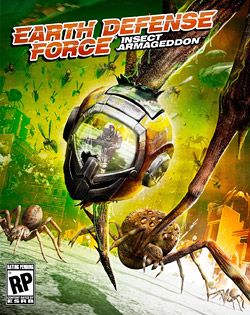
Earth Defense Force: Insect Armageddon

In a lot of ways, EDF: Insect Armageddon is better than its surprise hit predecessor. The voice cast is better, the controls are significantly tighter and it finally adds the online multiplayer that the previous game so desperately needed. It seems like everything a fan could ask for. But the problem is the last Earth Defense Force game, 2017, came out at a time when you could get away with a being a laughably poor game, and those years of progress reflect harshly on this new, obvious cash grab.

Identifying what’s wrong with Insect Armageddon is as much about identifying what was right with 2017. That game came out in early 2007, before Halo 3, before Bioshock, before XBLA was a serious place to buy quality games. It gave us a new, ridiculous world, where the earth was being invaded by giant insects that also had space ships and robots. Where everyone spoke the dumbest lines with worse acting. Where entire skyscrapers fells after being shot by a machine gun a little. It was a gamer’s game, and it’s ridiculous level of camp matched its inexplicably fun gameplay to make it a cult classic. But when has making a sequel to a cult classic ever worked out?

Insect Armageddon introduces classes to the series, which can be leveled up given enough experience. This means you can play as a jet pack guy, a shield guy or even a turret guy. It also means you can’t access a lot of the weapons you pick up in the game, despite all the classes basically using the same weapon types. So instead of continually upgrading your arsenal, you’re forced to grind out levels as your class of choice. Each class can level up to level 8, I played as the turret guy for the entire campaign and finished just short of level 4. That’s right, over the course of the entire game, I only leveled up twice. A rarely got to try new weapons and didn’t unlock many of the meaningful upgrades to my class. A game like this, where the core gameplay is so repetitive, needs to reward players with constant progress. Insect Armageddon doesn’t do that fast enough. There aren’t even checkpoints, so if you die on a level, all that XP and any new weapons you picked up are just gone.

Dying wasn’t really a concern of mine on normal difficulty, however, since health pickups were plentiful and enemies not that dangerous. If you do fall in combat, you can be resurrected by one of your two AI buddies. They’re probably the funniest part of the game, since one of them is clearly based on Will Smith, he even says “welcome to earth” every once in a while. The rest of the games humor is a little more forced, as you listen to the lady who gives you orders bicker with the less-than-helpful intel guy. Beyond that there’s a weird homage to Captain Sully, and that’s about it for the speaking roles. There’s not really that much of a story, you start fighting giant ants and end fighting robotic giant ants, with a little variety in between.

You’ll spend most of your time in Insect Armageddon firing into hordes of giant insects. When they die, they instantly evaporate, denying you any joy in the results of your carnage. Every once in a while you’ll have to fight a bigger enemy by shooting it in its giant, glowing weak spot. This takes far too long, as enemies show no sign of weakening until they die. Often, I’d find myself just standing in place shooting my endless supply of rockets into my enemy’s space hole, waiting and waiting for it to finally explode. This is the first game in a long time that actually made my trigger finger sore.

Insect Armageddon makes a lot of improvements over 2017, but as everyone knows, unintentionally bad can be hilarious and fun, intentionally bad is no good for anyone. This game’s forced bad dialogue, decidedly poor gameplay variety and slow character progression made it a chore to play. Insect Armageddon simply is not bad enough or good enough to be a worthwhile experience.