Sean Lemme

I started blogging as a way to lazily pass my high school senior project and somehow I've kept doing it for more than half my life

The Mildly Pleased Awards

2013! The super future! No one planned for humanity making it this far. Instead of staring down into the scary void that is the unknown future, let us instead look back at the year that was 2012. What we’ve got planned is about a month of best of 2012 lists. Why? Because we don’t have press passes, it take us time to catch up with everything. Plus, January is boring and nothing’s going on anyway. But before we get to the best ofs, there’s the Mildly Pleased Awards.

What are the Mildly Pleased Awards? They are an opportunity to look back at the things that often fall through the cracks on normal award shows – the stuff that is neither exceptionally bad nor especially good. The stuff that most people walk away from thinking, “well, that was OK,” and then immediately forget about. We remember.

Top Ways to Listen:
[iTunes] Subscribe to T3 on iTunes
[RSS] Subscribe to the T3 RSS feed
[MP3] Download the MP3

Continue reading →

Come on Baby, Light My Torch

Torchlight II

Torchlight II is an excellent counterpoint to Diablo III. Despite them outwardly appearing to be incredibly similar games, they actually differ in a lot of key areas. That, coupled with the hyper fanatic nature of the video game industry, meant an imaginary war went on between these two titles last years, as fans picked sides and set forth on campaigns to destroy each other. But the reality is that both are really great games, and I had a lot of fun losing a lot of hours to both of them.

If you haven’t been paying attention, the Torchlight series is made by the guys who made Diablo II – the game a lot of people hold up as the greatest of the dungeon-crawling action RPGs. These are loot-driven games, players pick characters and go out exploring, opening chests and killing thousands of monsters, looking for new gear so they can keep exploring and killing monsters. It’s a very addictive cycle, as the charm of cool looking armor and more destructive weapons is pretty hard to resist.

While the first game basically just sent players deeper and deeper into one cave, Torchlight II is full of different environments. Over the course of the story, you’ll be fighting in snow, deserts, and forests all of which are home to dozens of mines, caves, ruins, and plenty of monsters. The change of scenery is a something you wouldn’t expect to make as huge a difference as it does, I found it way easier to play this game longer than the original.

You can play as four classes: the Outlander, the Berserker, the Embermage and the Engineer – essentially ranged DPS, melee DPS, mage, tank. I initially chose the Outlander, but as that class started turning from a ranged DPS class to a caster, I decided to reroll as a berserker, which I stuck with. Unlike Diablo III, which encouraged experimentation and did away with skill trees, Torchlight II has very deep skill trees and punishes experimentation. There is no way to respec stat points and you can only undo the last three skill points invested, meaning you basically have to play the game with one build in mind. Some more old-school players might be into this, but I think it’s a terrible choice. I don’t want to make another character in the same class just to try playing a little differently.

Look, I can keep comparing this Diablo III if you want, but it’s getting kind of tedious. That game was really fun, but marred by the realization that there really wasn’t any endgame outside of the auction house. Torchlight II has New Game +s coming out the wazoo. Diablo III is always online, Torchlight II supports any kind of play imaginable – offline, LAN, online. Diablo III has a great look and amazing cinematics, Torchlight II has a great look and silly cinematics. Neither story is that great. And in the end, Torchlight II costs $20. So if you haven’t gotten either of them, get this one.

Draggin’ the Line

Spec Ops: The Line

This has been a pretty great year for video games that challenge the term “video game.” After all, what does that mean, really? Doesn’t the term “game” indicate there must be winners and losers? That an experience must be fun? That it can’t be taken seriously? Spec Ops: The Line seems, at least at first, to be a typical macho shootfest, a third-person Call of Duty clone. But it quickly grows into something much more interesting than that, to the point where you might consider it a deconstruction of the genre and the medium.

Dubai has been hit by an enormous sandstorm, one that straight up destroyed the city. The U.S. Army’s 33rd Battalion, led by decorated hero Colonel John Konrad, volunteered to help evacuate all the city’s civillians who were abandoned by the United Arab Emirates government. They haven’t been heard from in months, so three delta operators are sent in to recon the situation. The deltas are led by Captain Martin Walker, who has a deep respect for Konrad since he saved his life. But when they get to the city, they find that the 33rd has defected and declared martial law, and things only get more FUBAR from there.

As Walker, you’ll have a few tough decisions to make. All the results are shitty. While this game plays like a typical cover-based, modern military third-person shooter, I would never really call what you have to do as fun. Almost every enemy in the game is someone you don’t want to kill, and the game makes you very aware of how ridiculous your kill count becomes. Remember that moment in Uncharted 2, the “we’re not so different” scene? This is almost like an entire game of that, especially since the Walker is also played by Nolan North. As the game progresses, the loadscreen tips shift from gameplay tips to questions like, “Do you feel like a hero yet” and “How many people have you killed today?”

More than dealing with just the ridiculousness of modern military shooters, Spec Ops also focuses on the mental damage of war. The characters deal with post-traumatic stress and insanity as the game goes on. There’s one sequence in which characters massacre civilians thinking they are enemy soldiers. In another, a character has such a horrific breakdown that the world appears to be on fire and the Burj Khalifa is shown silhouetted and as terrifying as Barad-dur in The Lord of the Rings movies.

All this is to say the game has a memorable, masterful campaign that challenges patriotism, the military-industrial complex, and the nature of modern video games. Which is why it’s weird that game included a multiplayer mode that feels exactly like the multiplayer in all the games Spec Ops is challenging. If you’re making me feel bad for shooting computer-controlled guys, why would you think I would enjoy shooting human-controlled guys? I guess it was a move to make the game sell better, but, looking at the sales numbers… Oops.

Spec Ops: The Line is on sale in Steam today, and I would recommend anyone interested in video games as an artform, or who generally plays a lot of games, pick it up. Especially while we have to deal with things like the media and the NRA blaming video games for a national tragedy, it’s important that people are exposed to games such as this one.

2012 Music Recap: Kill for Love

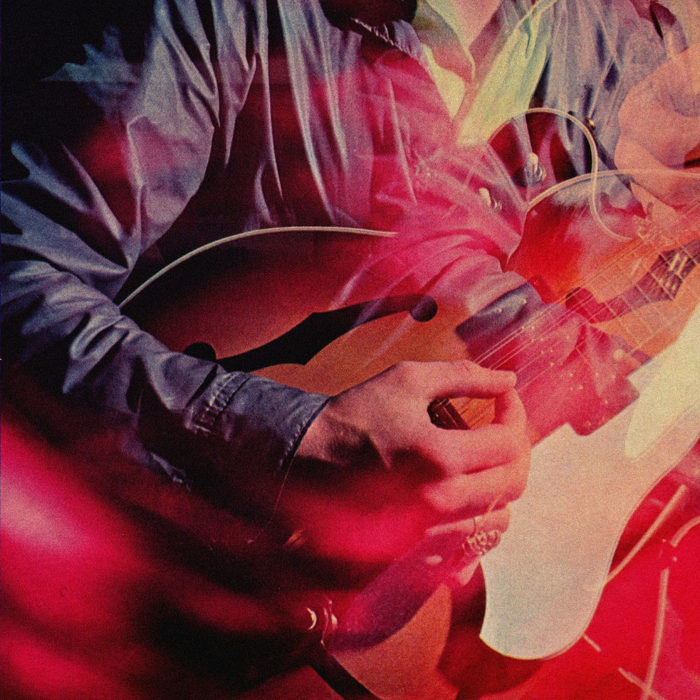
Chromatics – Kill for Love

I don’t know you guys. Kill for Love is a long electronic album that got a pretty “meh” review from the A.V. Club, but placed really well on Pitchfork’s best albums of the year list. Last time that happened, it was M83’s Hurry Up, We’re Dreaming, one of my favorites from last year. The Chromatics did a song for Drive, the movie, and this album opens with a Neil Young cover. I think I’m destined to like this a lot, but not be able to share that with anyone else. It hasn’t quite hit me as hard as M83 did, but I bet it will. At the very least, I’m probably destined to listen to this on the bus going to class a whole lot.

Favorite Tracks: “into the Black,” “Kill for Love,” “These Streets Will Never Look the Same”

2012 Music Recap: Sun

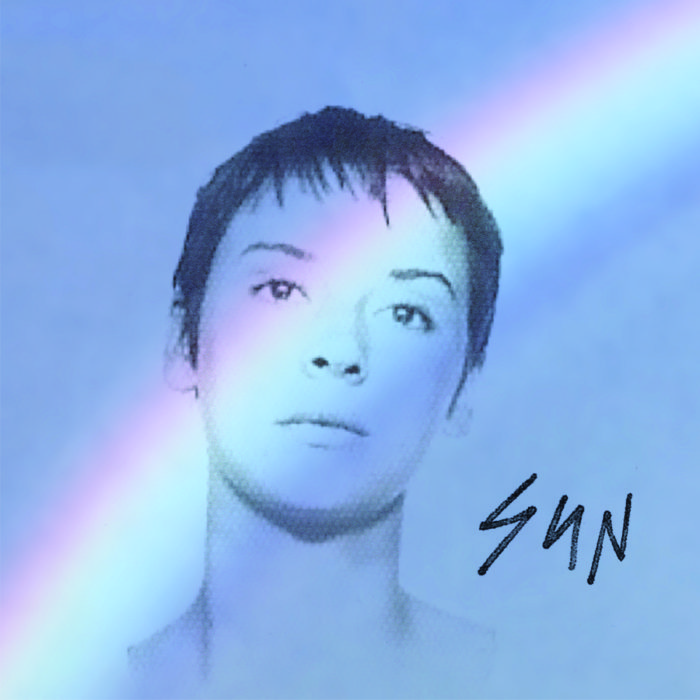
Cat Power – Sun

I had never listened to a Cat Power album before, so I didn’t really know what to expect. What Sun turned out to be was an album somewhere between electronic and folk music, as awesome as that sounds. I can’t honestly say if this is a departure or par for the course, but I like it. Check it out, it’s really neat. Be sure to stick around for the long song, “Nothin But Time,” which features an appearance from Iggy Pop that fits even worse than Lou Reed did on that Metric song “Wanderlust.”

Favorite Tracks: “Cherokee,” “Manhattan,” “Nothin But Time”

2012 Music Recap: Celebration Rock

Japandroids – Celebration Rock

I think Colin thought I would review this and I thought Colin would review it, because somehow we never made an actual post about the great new Japandroids album. Unless someone did review it, in which case I simply could not find it with our search box and I’m sorry. We did talk about it on our best stuff of the first half of the year podcast and I’m pretty certain we’ll be talking about it again on our best music of the year podcast, but I figured I should probably throw out an official mention on the blog.

Japandroids are great because they throw it all into every song. They sound full of energy and huge, much bigger than you would think a two-man band could be. Like their first album, the lyrics are simple and earnest, and the songs are anthemic, the kind of stuff pretty much anyone could get behind. It rocks so much. Seriously, check out the song I embedded, “The House That Heaven Built,” it’s the one we played on the podcast and probably one of the best songs all year.

Favorite Tracks: “Younger Us,” “The House That Heaven Built,” “Continuous Thunder”

2012 Music Recap: Visions

Grimes – Visions

Visions by Grimes is fucking weird, man. Grimes, if you didn’t know, is a Canadian lady who is only a few months older than I, and we both have put albums together in GarageBand. But while I just stick to the loops and insert very little musical know-how, Grimes has put together three allegedly great albums, including this latest one. It’s electronic, it’s cooky, and yet accessible, with some pop sensibility. Not to say this one will immediately hook you in, I think Visions definitely falls in the “grower” category. If you’re interested, the repeated listens are worth it.

Also, all the reviews written about this album talk about its theme of the real versus the digital in really pretentious terms. So that’s fun to read.

Favorite Tracks: “Genesis,” “Oblivion,” “Vowels = Space and Time”