
Bridge Of Guys

Bridge Of Spies

Steven Spielberg no longer makes movies for the zeitgeist, and I imagine he’s perfectly fine with that.  This was demonstrated quite clearly this weekend, as myself and my colleague Sean Lemme went and saw a sparsely-attended showing of Steven Spielberg’s latest, Bridge Of Spies at this small family-owned theater in West Seattle where Spectre was playing in the theater next door.  And because apparently the walls in this theater are not sound-proofed particularly well, we could often hear the overblown audio pyrotechnics of Spectre bleeding over and sometimes distracting from the quiet backroom dealings of this old-fashioned spy thriller.  It’s an idea that’s kind of carried into Bridge Of Spies theatrical run so far, as its gotten completely drowned out by Spectre this week at the box office, as well as in the former weeks by the idea that people just aren’t going to the movies as much lately.

You could say that Bridge Of Spies feels like it’s of a piece with recent Spielberg efforts like 2012’s Lincoln and 2011’s War Horse, which felt almost defiantly old-fashioned (that said, I really liked Lincoln).  But the fact of the matter is, Steven Spielberg has always had a fairly old-fashioned approach, both in his style (which owes a lot to the American masters of Hollywood’s golden era) and in their past-obsessed subject matter.  He’s been making corny shit like Always and The Color Purple (I assume, since I haven’t actually seen them) since the late ’80s, when he was finally able to convince producers that he can direct more than just blockbusters.  So I can’t help but think that it’s possible that Spielberg sees these quieter period-pieces as the truest expression of him as an artist, rather than the awe-inspiring spectacles that are synonymous with his name.  Which might explain why Raiders Of The Lost Ark has always been my favorite Spielberg film, as it combines these two sensibilities so effortlessly.

But back to Bridge Of Spies, which stars Tom Hanks — an actor who’s been in about as many Spielberg movies as you’d imagine (three) — who plays James B. Donovan, an American lawyer assigned to defend a Soviet spy named Rudolf Abel (Mark Rylance) at the height of the Cold War.  Despite the overwhelming public hatred toward Abel (due to the whole being a commie thing), Donovan wants to give Abel a fair trial, and though he more less does, Abel is still convicted.  However, Donovan pleads for Abel not to be executed in the hopes that he could be used as a bargaining pawn in the event that an American is captured in Soviet territory.  Sure enough, this type international tug-of-war is quickly set in motion, as an American pilot carrying valuable information is shot down and captured by the Soviets, while Donovan attempts to spearhead a deal to bring the two men back to their respective homes.

On a recent Fall preview episode of the podcast Filmspotting, Chicago Tribune film critic Michael Phillips talked about his wariness towards Bridge Of Spies (which hadn’t come out yet), because he feared it might feel a bit stale due to it featuring so many collaborators that Spielberg has worked with numerous times in the past (like Hanks and cinematographer Janusz Kaminski).  And thought I wouldn’t say Bridge Of Spies ever succumbs to this theoretical staleness, I do feel like there is a slight workmanlike quality to this film.  It hits all the beats you would want an espionage/spy thriller to hit, but while still being fairly interesting in the way it zeros in on a conflict like the separation of East and West Berlin, which is a mid-20th century crisis that I don’t feel has been explored a ton on screen.

But I think what really keeps this movie from ever feeling too clinical (like a lot of serious spy thrillers will), is that it’s not only propelled by a super-intricate and confusing plot, but more by the human elements at play here.  Mark Rylance — a renowned stage actor in Britain, who’s been tapped to play the titular character in Spielberg’s The BFG — is quite good here as the tight-lipped Abel.  Him and Hanks’s Donovan have a nice relationship that seems indicative of the kind of quiet, dignified men of this particular era who were just trying to do their best for their country.  And because of this, the film skirts any sort of Spielberg-ian corniness, by the mere fact that these are two guys who are only capable of opening up so much.  Which maybe isn’t the sexiest relationship you could choose to put at the heart of a spy thriller, but its human elements are nonetheless easier to understand and sympathize with than whatever the hell the plot of Spectre was supposed to be.

Why Bond is OK, and why Bond will always be alright

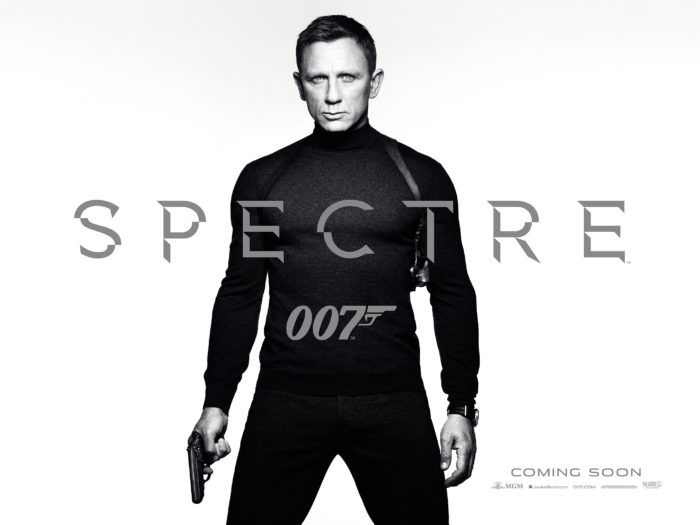
Spectre

I’ve been reading the lot of different scalding takes on James Bond since I was able to see a private Ellensburg screening of “Spectre” with 12 of my closest Ellensburg friends (some of which were able to point out quite verbally that the Star Wars trailer was indeed for the new Star Wars movie).

A lot of these takes include phrases like “How this shit killed Bond” or “Why 007 is dead” or “The Legacy of James, why you should click my shitty thought-piece about how these Bond movies are kind of like other movies that are out this generation. Ya know? I made connections to different pieces of pop culture in a similar era. I’m a good writer, see?!”

The thing is, it doesn’t fucking matter. Yes, this is the first time a James Bond plot has intertwined throughout multiple movies. And there is absolutely nothing wrong with that.

Like the man in the Rolling Stone so eloquently put it, Bond adapts to the times. Whether it was Moonraker in space, Brosnan driving through a fucking city with a tank or Craig bringing his grittier persona to character, the point is, Bond is fluid. It has to be. Bond would not have survived this long if it wasn’t.

Now I am a canon junkie. I’m a franchise guy, I like big universes and I like references back to things. It’s gratifying to me. That’s why I can apologize for this movie. The main plot of “Spectre” to me served a similar role to “The Dark Knight Rises.” An unnecessary, but fun and satisfying conclusion to a series of films. Do people that say this movie “KILLS BOND” wish they hadn’t made “Spectre”? I don’t get it.

But besides the sort of contrived link to the past decade of films, which admittedly I’m a sucker for, I understand if people didn’t like it. But on it’s own, I thought it still offered a lot. Besides all the sweet helicopter action, as someone who has seen all the movies, and as a huge Bond fan, seeing Blofeld on screen for the first time since 1983 (and canonically for the first time since 1981), was FUCKING AWESOME. I feel like people don’t understand how iconic of a character he is. Just like Bond, he’s been portrayed by half a dozen actors, he has probably one of the most recognizable parody portrayals and I thought Christoph Waltz did a great job.

I did think the whole adoptive brother thing was kind of dumb and felt pretty forced, but I loved the torture scene. The cat was perfect, the watch explosion and the escape was sweet, and when Blofeld comes back with the scar, I lost my damn mind. Blofeld rules, and the fact that they brought him back for this movie, to me, makes up for a lot of the weaker, forced shadow organization stuff. Again, Blofeld rules. He’s got that cat, remember? Dr. Evil? Does no one remember?

I also really feel like Daniel Craig has quietly gone full circle from being everyone’s least favorite, to favorite Bond, back to being THE MAN THAT KILLED BOND. Please relax. In my humble opinion, he has been one of my favorite Bonds. Maybe it’s just because he’s the Bond whom I’ve grown my fandom through, but I definitely cared about him more than I did any other portray-er, and maybe that’s a result of the films being connected. Craig is great, and I hope he never comes back. (Unless he comes back for one in like 2043 that’s unofficial).

These were Bond films for the multiverse era, and that is OK. There is nothing wrong with that. There’s also nothing wrong with people not liking it. Soon there will be a new Bond for a new era, and I’m excited and afraid, like I should be. I’m sure every generation’s Bond critics have declared the death of the franchise. Hell, who thought he could come back from the diamond man’s ice palace?

All in all, Spectre was a good, not great Bond movie. Probably ranks third for me in the Craig era behind “Skyfall” and “Casino Royale.” People just need to understand, not every movie will be the best movie ever, and just because you think something is kind of done, doesn’t mean it’s dead.

James Bond Will Return. He has to, cuz like, they make a lot of money, and stuff.

Secret Agent Men

Protomartyr – The Agent Intellect

Let’s talk about the darkness.  No, not the band The Darkness (thought it is interesting just how irrelevant that band seems now, considering even at their peak they were embodying a kind of rock n’ roll that had been irrelevant for over a decade).  I’m talking more about the kind of darkness that lies in the hearts of all men, and by extension lies at the heart of a band like Protomartyr, who released their second album in as many years about a month ago, which has been growing on me at a pretty rapid pace.  Historically, I’ve found that artists that embrace darkness don’t usually do much for me, as I’ve still never really gotten into Joy Division though I’ve tried so many god damn times, while supposed geniuses like Nick Cave and Leonard Cohen just seem alright to me I guess.  This Detroit band however, has a scrappiness and a kind of everyman anxiety that’s easy to rock out to, but also makes wallowing in darkness seem kind of fun (or as fun as you could expect wallowing in darkness to be).

I was hoping I could make it to at least the third paragraph before comparing Protomartyr to The National (because they really don’t sound that much like The National), but I feel like I have to do it.  Maybe blame it on the fact that one of my first introductions to the band was seeing a video of Protomartyr’s performance at this year’s Pitchfork musical festival, where singer Joe Casey was sporting a three-piece suit while bellowing into a microphone, not unlike a more unkempt version of The National’s Matt Berninger.  So because of that I’ve had a hard time looking at Protomartyr as anything other than a “garage rock National”, even if that seems like it’s short-changing a band as great as this one.  Though at the same time, I can’t imagine I’d be as receptive to Protomartyr if it wasn’t for my undying National fandom, as they’re really the only band I’ve managed to love who also embrace the kind of typically unwanted darkness I was describing earlier.

But unlike The National, more often than not Protomartyr will let ‘er rip.  Alex Leonard is a particularly great drummer for this kind of band, because he’ll use the whole drumkit in intricate and ferocious ways that fill in the gaps of whatever chiming dissonance the guitars will be laying down, in true post-punk fashion.  Casey, on the other hand comes off as a kind of wonderfully drunken poet, spouting off random ideas about good and evil while being perfectly in time with the band one minute, and going off the rails at the other.  And the fact of the matter is, he sounds like could go off the rails as much as he possibly wants, since this band (which has been playing together since 2008) are clearly a tight-knit and well-oiled machine — a machine built to fight off the darkness, but while also realizing that sometimes the darkness can be your greatest ally.

Favorite Tracks: “The Devil In His Youth”, “Cowards Starve”, “Dope Cloud”

Under Pressure

Brian Wilson – No Pier Pressure

The Beethoven of the beach, the poet of the summer, there are many honorary titles to which you could bestow upon the legendary Brian Wilson. An innovator in pop music and a beautiful soul, if not a tortured one, there will only ever be one Brian Wilson. In his long tenure with The Beach Boys, Wilson redefined the modern pop song. Songs didn’t have to just be about love anymore. They could be about God and man, or vibrations, they could be miniature symphonies blasting out of your dashboard. There were no rules, just music. But after so many years of writing and recording, not to mention a few nervous breakdowns, does Wilson still have a voice in today’s musical landscape? Let’s find out in my review of Wilson’s last album from earlier this year, No Pier Pressure.

Continue reading

Crimson and Cliffs of Dover

Crimson Peak

I realized I forgot to review Crimson Peak. Well, technically I didn’t because I’m reviewing it right now. It’s not a difficult film to forget, which seemed to be the consensus at the box office. Guillermo del Toro is like Hollywood’s ghost. Some have heard of him, few have ever seen him (his films) and even fewer believe. I believe.

Few filmmakers are around today, making the kinds of stylish fantasy films with the amount of passion and detail as del Toro. Few filmmakers have as much fun. This is the man who made Pacific Rim, a $190 million excuse for a grown man to play with toys. Who wouldn’t want to play along? Yet soulless, boring movies like Transformers: Continental Drift are the “films” people see. Why does mainstream America avoid del Toro like the bubonic plague? Are his films too weird? Too gross? Not enough single dads with hot daughters? Maybe everyone is scared. No one likes to say they believe in ghosts, and yet many of us believe.

Continue reading

Just Another Beach Band

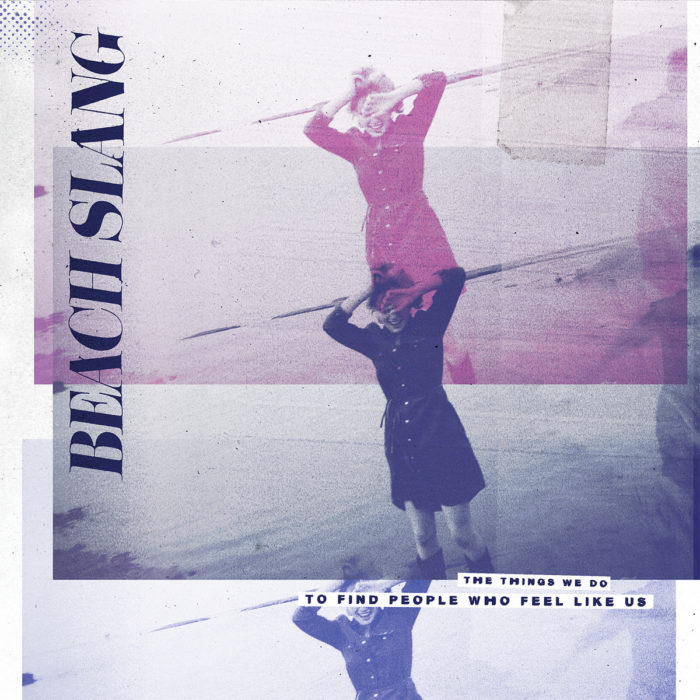
Beach Slang – The Things We Do To Find People Who Feel Like Us

You ever feel obligated to like something, almost out of duty?  Like there’s a movie or TV show or band that comes along, and seems to have all the attributes that you constantly find yourself searching for, to the point where it almost seems suspicious?  Because this band Beach Slang certainly embodies the kind of all-out embrace of rock and roll and all of its healing powers as an escape from the crushing mundanity of everyday life that I tend to be looking for.  And yet, maybe because I’m just a born skeptic (or maybe just an asshole), I couldn’t help but find myself being a bit skeptical about instantly embracing the relentlessly rocking The Things We Do To Find People Who Feel Like Us, which even its title feels like it’s pandering specifically to me (though it’s clearly trying to pander to all of us).  But after listening pretty consistently to this album since Friday, I will say Beach Slang has won me over.  This is a band that you either have to be all in or not with, and I’d be a fool not to be, since again, they know what a rock disciple like myself wants, and by golly do they deliver the goods.

This doesn’t necessarily makes sense, but another reason there was a fair amount of obligation for me to enjoy Beach Slang’s debut comes from the fact that my favorite music writer going, Steven Hyden, wrote his final piece for Grantland about Beach Slang before the venerable sports/pop culture site closed down last week (it will be sorely missed).  In the piece (which was overwhelmingly positive), Hyden compared Beach Slang to modern rock warriors like The Hold Steady and Japandroids, while the band itself has admitted to a bit of a Replacements obsession, which is not hard to discern after listening to Beach Slang for a good 20 seconds or so.  Since I know I’ve already gone over my own Replacements obsessions (and Hold Steady obsessions for that matter) on this blog enough already, I’ll spare you any of that nonsense.  However, I will point out that Beach Slang’s similarities to Japandroids is more than welcome for yours truly, since that band’s 2012 album is probably still my favorite straight-up rock record of the decade so far.  Yet it’s starting to become more and more doubtful that Japandroids will ever release a follow-up, so an epically celebratory record like The Things We Do more than fills that niche.

And yes, I do realize that just talking about the extent to which a certain band sounds like other bands is always a little lazy/reductive, but with Beach Slang it seems appropriate.  Lead singer/songwriter James Alex imbues these songs with a kind of loving admiration and homage to his influences, with lyrical passages like “I feel most alive when I’m listening to every record that hits harder than the pain,” or “If rock and roll is dangerous, how come I feel so safe in it?”  It’s that sincerity and need to connect with something bigger that keeps Beach Slang’s songs from sinking under the weight of their somewhat obvious influences, while the 41-year-old Alex’s status as a consummate underdog gives the band even more of an irascible charm.  So there you go, Beach Slang.  You’ve got me just as hooked on your record as the ones you grew up getting hooked on.

Favorite Tracks: “Bad Art & Weirdo Ideas”, “Too Late To Die Young”, “Hard Luck Kid”

Blank Your Ducky Cars

Beach House – Thank Your Lucky Stars

A month and a half ago, in his Depression Cherry review, Colin expressed a retiscence to submit to Beach House’s alluring ways. Their sound was consistent and unchanging, and their appeal only lasted him for as long as their latest album felt new. As if to answer Colin’s particular needs, Beach House then went out and made another album this year and got it out only a couple months after that last one. That’s really fast, probably too fast. I can’t speak for Colin, but Depression Cherry still feels really new to me. Did we need a new one so soon?

Probably not, Depression Cherry was really great. Releasing Thank Your Lucky Stars especially seems like an odd move because Beach House has been quite firm in stressing that it is not a companion piece or b-side collection. It’s simply another new album, they say. And that’s true, I don’t think you can play these back-to-back and gleam any greater meaning. Maybe you could do a crazy playlist of all the songs from both albums arranged by feel, that would be really cool. Maybe I’ll go do that next. But I guess I should tell you if I like this first.

The answer is of course I do. I’m a sucker for the Beach House. I wouldn’t put this one too high up on the list (Depression Cherry‘s still my preferred LP this year) but it still has that same ethereal, dream pop sound that I can’t get enough of and Colin can, apparently. I wish I had some incite into why some things resonate with some people more than others but I don’t. All I can tell you is that Thank Your Lucky Stars is a little more downbeat than their past few albums have been, but still quite beautiful. Lots of reverb and strategically placed wailing guitars. I’ll take as much of it as I can get.

Favorite Tracks: “All Your Yeahs,” “One Thing,” “Elegy to the Void”