
Cancel The Apocalypse

Pacific Rim

I guess I’ve loved giant robots ever since I watched the Transformers cartoon as a kid. Or maybe it was the Megazord from Power Rangers? Let’s just say I’ve always loved giant robots. They defy the limits of reality in such a way that I simply cannot resist being both incredibly aroused when I see them. The problem with that? There’s never been that great Western giant robot movie. For spaceships I had Star Wars and a dozen other options; for giant robots, I had Robot Jox. Guillermo del Toro changed that (praise Jesus) by releasing Pacific Rim, my favorite movie of the year so far.

Let’s take a step back. Yes, Western media has been a huge letdown when it comes to giant robots, but Japan gets it. They have a long tradition of mecha anime, from Gigantor in 1963, to Mobile Suit Gundam in 1979, to Neon Genesis Evangelion in 1997, to whatever weird shit is going on today. These beautiful have a fascination with gigantic city-destroyers, as they are also the country responsible for the kaiju genre of cinema, most notable for giving us Godzilla. However, both of the genres have been limited to animation of dudes in costumes. Japan is the greatest place on earth when it comes to entertainment, but they just don’t have the big bucks like Hollywood does.

I go through all this not because I don’t think you know it already, but because it’s important to keep in mind what Pacific Rim really is: a tribute. It was as if del Toro managed to get the budget Gundam and Godzilla never could, and used it the way he think they would have. That means the movie might have some problems on it’s own, but it also means the movie screams: “Hey! Fuck you Michael Bay! Fuck your Transformer movies! Fuck you, fuck you, fuck you, fuck you!”

Because seriously, this is the opposite of those terrible Transformer movies in most ways. OK, yes, it also has a portal between worlds that has to be blown up, but what movie doesn’t these days? But do the characters make jokes that are funny and not racist? Yes. Does what’s going on make sense all the time? Yes. Is the action exciting and fun to watch and paced in a way that I don’t want to commit suicide? Yes!

So this is set in the future, when Kaiju (giant monsters) invade the world through a portal in the Pacific Ocean. Humanity united and created Jaegers (giant robots) to stop them. It worked. Years later, Beckett (Charlie Hunnam) is a washed up Jaeger pilot who ends up teaming up with his old commander (Idris Elba) and the new hotness (Rinko Kikuchi) on a last-ditch effort to close the portal before the kaiju invasion speeds up to an unstoppable rate. Also, Charlie Day and that guy from The Dark Knight Rises are there trying to understand the kaiju brain, and later Ron Perlman shows up.

Anyway, the action. Here’s the trick: it’s really exciting to watch. The jaegers are ginormous and beautiful works of machinery. They look like unstoppable killing machines. But the kaiju, the evil creatures from the depths, are just as diverse and menacing. Despite how powerful the jaegers were, I always believed they were outmatched by the kaiju. More importantly, even though the pilots were deep inside the machines, they were clearly in danger all the time in every fight. It’s amazing and tense and so fun to watch.

And then you get to the dumb stuff that you have to accept as tropes of the genre or you’ll be driven mad. Yes, they did build giant robots just so they could wrestle the monsters. Yes, for some reason, the sword is way more effective than missiles and lasers. And yes, people are going to yell dumb things when they attempt to kill the kaiju. Melodrama is a massive part of the shows and movies Pacific Rim was inspired by, you just have to be willing to eat it up. And good guy, I was starving.

This is probably the worst review I’ve ever written, because I’m pretty sure I’d defend Pacific Rim to the death. I concede the middle drags a bit and I wish there were fights outside of the ocean, raining, at night. But I was never bored, I liked all the characters, and damnit, I’d have paid damn near any price to see the two or three great battle sequences in this movie. Congratulations, Guillermo del Toro, you saved this disappointing summer for me. I hope they let you make another.

Lovers Assemble

Much Ado About Nothing

You could say that The Avengers was the ultimate test for Joss Whedon; a big budget summer blockbuster seemed pretty far out of the wheelhouse of the guy known for niche nerdy shows that get cancelled. But he made it work by doing basically what he has always done: writing a funny, exciting script that allowed the movie to focus a little more on character than spectacle. You see, Whedon is a writer, and a good one. So if you think about it, his real ultimate test is doing a movie he didn’t write, like when Kevin Smith did Cop Out. Fortunately, by taking on Shakespeare, Whedon set the bar a little higher for himself.

If you haven’t heard about the production history of this movie, allow me to leave you really unimpressed. Basically, while on post-Avengers vacation, Whedon invited his actor friends over to his Santa Monica home and shot the movie right there in his house. Knowing that made me think of the movie as a fun little exercise and not really a film worthy of analysis, but obviously I was wrong, or this wouldn’t have gotten a wide release.

The movie is shot in black and white, so as to create even further distance from The Avengers, which is nice. After Frances Ha, I’m getting used to the idea of seeing really modern places in black and white, might as well see this trend continue. As for Whedon’s interpretation of the script? He turned Conrade into a lady (played by Riki Lindhome of Garfunkel and Oates fame) who is totally doing Don John (Sean Maher, Firefly‘s Simon) which makes him seem a more credible threat. Also, Whedon implies that Beatrice (Amy Acker, who was in both Angel and Dollhouse) and Benedick (Alexis Denisof, from Buffy/Angel) already had a relationship previously, which I can get behind.

As for the rest of the cast? Clark Gregg, who apparently subbed in for Anthony Head at the last minute, is having a lot of fun as Leonato, as it should be. Nathan Fillion is obviously cast as Dogberry, and does it due diligence. Fran Kranz, of Dollhouse and Cabin in the Woods makes Claudio a little more interesting than he usually is, and was fun with Reed Diamond’s Don Pedro. And there are other, mostly inconsequential parts for women.

Much Ado About Nothing is probably me favorite of Shakespeare’s comedies, and I probably would get some enjoyment out of any rendition of the material. That said, I think Whedon deftly handled the material and the cast had a lot of fun with it. Shooting it in Whedon’s house gives the film an intimate feel, and the score, which Whedon also helped do, accentuates that tone. The whole movie just seems fun and casual, which it probably should, especially compared to Kenneth Branagh’s 1993 version. I liked it.

Video Updead

V/H/S/2

Looks like we’ve hit the summertime slump here at Mildly Pleased. The days get warm as the posts dry out. Though something unusual that always seems to happen about mid-July is the rekindling of my love for horror movies. It’s probably because this is normally when I start watching films in advance for “Shocktober” (a 31 day celebration of horror movies in October.) Anyways, I decided to take my renewed interest in the genre and watch V/H/S/2, the found-footage anthology sequel to 2012’s V/H/S. If you’d asked me a year ago, “Do you think V/H/S needs a sequel?” I would have told you you’re dumb. Yet not only was a sequel not a dumb idea, it took the opportunity to improve upon the former.

Some Spoilers!
V/H/S/2 like its predecessor follows the same format; a collection of horror shorts by different directors all brought together under a filmed framing device (all found footage style). In this case the framing device (directed by Simon Barrett) revolves around two private investigators searching for a lost college student. Their investigation leads them to a house filled with TV’s and VHS tapes. The investigators find a recording of the student on a laptop where he informs them that watching the tapes in the correct sequence will “affect you” in a mysterious way. The female investigator begins to watch and the shorts begin.

vhs-2-phase-i-clinical-trials

Phase One Clinical Trials

The first segment is about a man who has his eye replaced with an untested cybernetic eye. The eye is installed with a camera to test the eye’s functionality but is also prone to occasional glitches. The man goes home but immediately starts seeing what appear to be dead people. He soon discovers that these aren’t glitches but are in fact ghosts! The short is simple but scary and ends in a grisly fashion, setting the tone for the rest of the film.

Phase 1 is directed by Adam Wingard (A Horrible Way to Die and the upcoming You’re Next, a film with a lot of festival buzz) and is an exciting, out-of-yer-seat opener. It certainly has the most BOO! moments and I enjoy the clever setup. It’s a little lean on plot and the ending isn’t much to speak of but it’s fun nonetheless. With an anthology you want to open and close with a bang and this is a good enough bang to get the heads rolling.

VHS 2 Review 005

A Ride in the Park

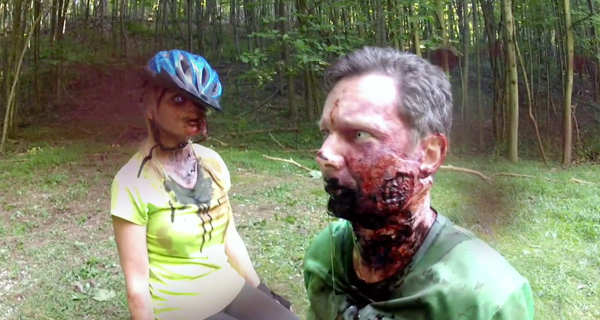
A Ride in the Park is directed by indie horror trailblazer Eduardo Sanchez (The Blair Witch Project) and Gregg Hale, who produced The Blair Witch Project. The segment is shot almost entirely on a GoPro camera attached to a bicycler’s helmet. The cyclist goes for a ride in the woods only to encounter a gang of ravenous zombies. The short takes an interesting turn when the cyclist is attacked and becomes a walking corpse himself. Leaving us with a mindless zombie protagonist (and I use the term lightly).

I like the old school style Romero zombies and especially the “twist” of having our main-man becoming a pile of dead man meat. Though after the first few minutes the segment doesn’t really go anywhere. Essentially, it’s the same-old, same-old zombie story in new packaging. Fine, but nothing that’ll stick with you. Though I must give props to the GoPro, “Be a Hero” and go pro.

vhs2-clip26

Safe Haven

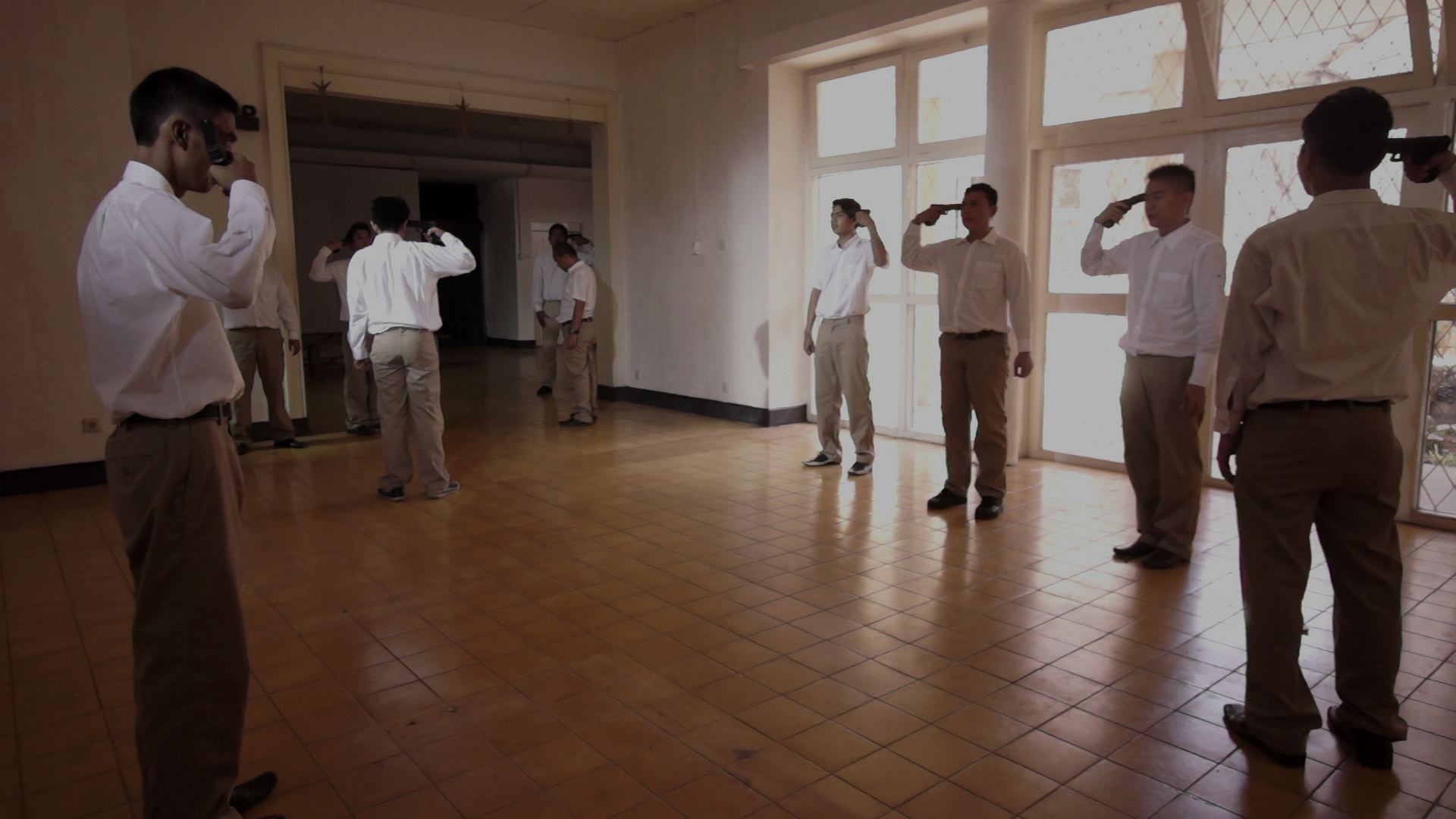
Wow, not only is Safe Haven the best segment in V/H/S/2 (by a great deal) but it’s also better than any segment from the first film. Directed by Gareth Huw Evans (The Raid: Redemption) and Timo Tjahjanto, Safe Haven is a horrifying depiction of “cult” brought to its most extreme.

Set in Indonesia, Safe Haven is about a camera crew following a mysterious Indonesian cult and its short-tempered leader. What begins as the most grounded segment in V/H/S/2 quickly escalates to the most ridiculous short in either film. This one makes it all worth it and could’ve easily stood alone as its own movie. The cult is undeniably creepy in their quiet, brooding disposition and you actually care about the fate of the characters. I tiptoe around this one only because it deserves to be seen. If you like demonic stuff and are scared of stern, southeast Asian men, this is your film.

vhs-2-alien-encounters

Slumber Party Alien Abduction

The name pretty much sums it up. Directed by Jason Eisener (Hobo with a Shotgun), a group of rowdy pre-teen boys, a slutty older sister, and their dog are attacked at a lakehouse by a group of grimacing greys. Conceptually, it’s the weakest and doesn’t really do much out of the ordinary. What does work in its favor is how it’s photographed. A majority of the short is photographed by a camera strapped to a terrier, which is surprisingly effective. In addition, the various puffs of smokes and flashing lights make this one a strange visual trip (easily the most nauseating.) Most important are the aliens, retaining the classic black eyed stare with just the right amount of slithery lankiness. It’s nothing to write home about but it has some out-of-this-world scares.

The overarching film ends with a bit of whimper, opting out for a cheap scare instead of a real resolution to the missing student’s whereabouts. Though overall I had some freaky fun with V/H/S/2. It’s refreshing to see what filmmakers can come up with when they have to deal with the limitations of found footage. I equate the entrainment value of V/H/S/2 with that of a spook house. There’s not much when you look under the surface, but there’s just enough skin-crawling scares to keep you away from delving too deep. Only time will tell if V/H/S/2 returns for my “Best Horror Films of 2013” list in October. Happy Haunting!

C.A.T.: Pretzel Logic

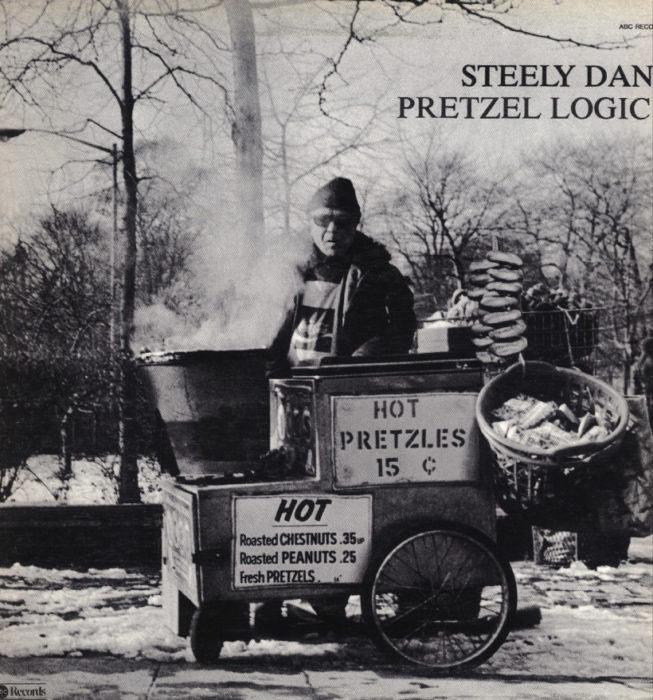
Steely Dan – Pretzel Logic (1974)

How does an artist go from seeming lame and cheesy, to something worth listening to?  As a constant explorer of rock music’s rich past, this is a question that I’ve often asked myself.  Because when I step back and look at it, some of my absolute favorite artists were once designated to the cheesy/lame category (Bruce Springsteen, Prince, Randy Newman).  Yet somehow, they were able to completely transcend that at some point.

I think this kind of turnaround from hate to great is usually a gradual process, made up of several key reference points.  A line in a Judd Apatow movie; a certain friend’s strange infatuation with the song “Peg”; the realization that Donald Fagen and Walter Becker were basically the original rock nerds; the final revelation brought on by Random Access Memories that studio-manufactured pop-rock isn’t necessarily a bad thing.  All of these moments combined are what recently convinced me to get in to Steely Dan, a band that I once dismissed as being totally second tier classic rock, mainly on the grounds that they barely rocked.

Now that I’ve delved a bit further in to the Dan’s discography, I might go as far as to argue that Steely Dan were one of the more consistently solid bands of the ‘70s.  And that’s what makes Pretzel Logic such a quintessential Steely Dan album — it’s just a great example of their impeccable solidness.  I wouldn’t even say it’s their best album (that distinction would probably go to the silky smoothness of 1977’s Aja), but it finds them in that sweet spot of transitioning from pop-rockers with a faint interest in jazz, to pop-rockers with a noticeable interest in jazz.  It’s also a transitional album in that for the first time it saw Donald Fagen and Walter Becker starting to swap out their own band members for seasoned studio musicians.  This seems like kind of a dick move, but I suppose when you’re going for the kind of pop perfectionism that Fagen and Becker were chasing, it only makes sense to try to get the best sound possible.

I’ll be honest.  I always thought that whenever Dan fans (Daniacs?  Danatics?) cited the jazz element of Steely Dan’s music, they were just trying to rationalize their adoration for a somewhat saccharine pop group.  But the jazz is definitely there, especially in “Rikki Don’t Lose That Number”, one of the band’s signature tunes and probably the only time anyone ever managed to build a hit single out of a riff lifted from jazz pianist Horace Silver.  And sure, you can try to intellectualize Steely Dan all you want, but I’ve found it impossible to deny that their albums were great because they dared to churn out slick, infectious, and vehemently uncool pop music — which also happens to be why I once disliked them.  But I suppose that’s what should make a formerly derided artist click for you: learning to no longer recoil from their most distinctive qualities, but to embrace them.

Favorite Tracks: “Rikki Don’t Lose That Number”, “Barrytown”, “Parker’s Band”

No More Shroom in Hell

The Last of Us

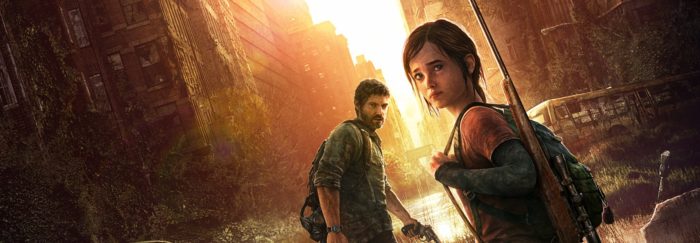
The end of the world seems to be as hot as ever this year. Though it will be difficult to find another apocalypse from this year that’s as engaging or captivating as The Last of Us from Naughty Dog. Set in the aftermath of a worldwide infection (based on the real-life fungal parasite Ophiocrodyceps unilateralis), you take control of Joel, a smuggler hired to transport a 14-year old girl, Ellie, to a rebel group known as the Fireflies. A lot is on the line as Ellie may hold the cure to the infection, but not only does that mean traveling outside of the quarantine zone, but facing the infected lifeforms on the outside.

I don’t go out and buy a lot of games these days but there are several things that will always suture me in. One, fluid gameplay, something unobtrusive and easy to remember that doesn’t throw a bunch of new shit at you every few minutes. When I found out that Last of Us was more or less the same engine as Naughty Dog’s Uncharted series I was hooked. Something about the feel of those games was so natural and simple, it helps you enjoy the story and characters. Another thing that always draws me in is atmosphere. I love the idea of games becoming more and more like movies, but not so much that you’re not still playing a game. Last of Us has a superb cinematic quality built up by engaging character interaction, dramatic situations and an eerily beautiful, realistic visual quality. It’s just as much fun to watch as it is to play.

I’ve noticed a lot of perfect and near perfect reviews for Last of Us. As much as I enjoyed this game, I do have a few critiques. One, I don’t agree that the premise is as original or unique as some may suggest. I think the characters are great and I love their interactions, but the whole overarching plot is fairly stock. That’s not necessarily a bad thing, but it did feel a little overly familiar. The whole “We found someone immune in the face of an epidemic” is a little played out. Off the top of my head 28 Weeks Later has something like that or maybe even The Stand. The country-fried characters definitely remind me of some of the folk on Walking Dead as well. Though there’s certainly nothing wrong with building off of past ideas to make something even better.

Personally, doing combat with the infected was also a bit of a mixed experience. I love slinking through the shadows and shanking Clickers (one of the game’s distinct adversaries) but other times it feels very by the numbers, fighting off waves and waves of enemies until you’ve cleared an area. Though familiar isn’t necessarily bad, I don’t think there was anytime where I wasn’t enjoying myself. Most of all I admire the cinematic quality of this game more than anything else. I rarely enjoy cutscenes but here it’s exciting and even terrifying. You care about the relationship between Joel and Ellie and that’s saying something. Naughty Dog never ceases to amaze me with their ability to craft worlds that overflow with personality and adventure. I can only dream (or have nightmares) about what they’ll do next.

Good Movie/Bad Movie: Dredd

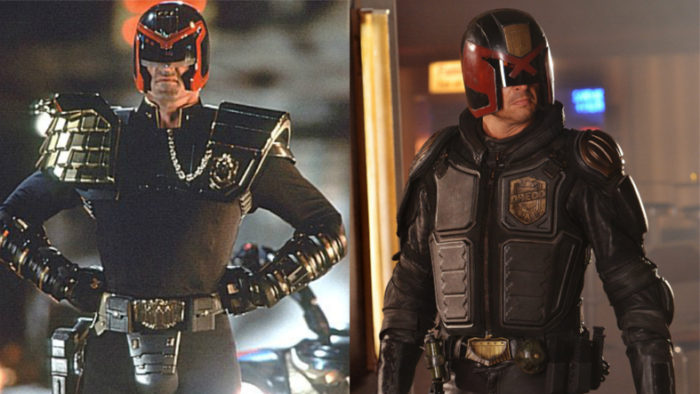
This week we play judge, jury, and executioner for the two Judge Dredd movies that have been made thus far. The first, starring Sylvester Stalone, tries to be the ultimate story for the character, full of massive reveals and incredible consequences for the rest of the franchise. The second, starring Mildly Pleasedman Karl Urban, is a day-in-the-life adventure that thrives on atmosphere and style. Which approach is right? Which approach is wrong? Because one must be good and one must be bad. How will the movies plead? I knew you’d say that.

Top Ways to Listen:
[iTunes] Subscribe to T3 on iTunes
[RSS] Subscribe to the T3 RSS feed
[MP3] Download the MP3

Yeezus Walks

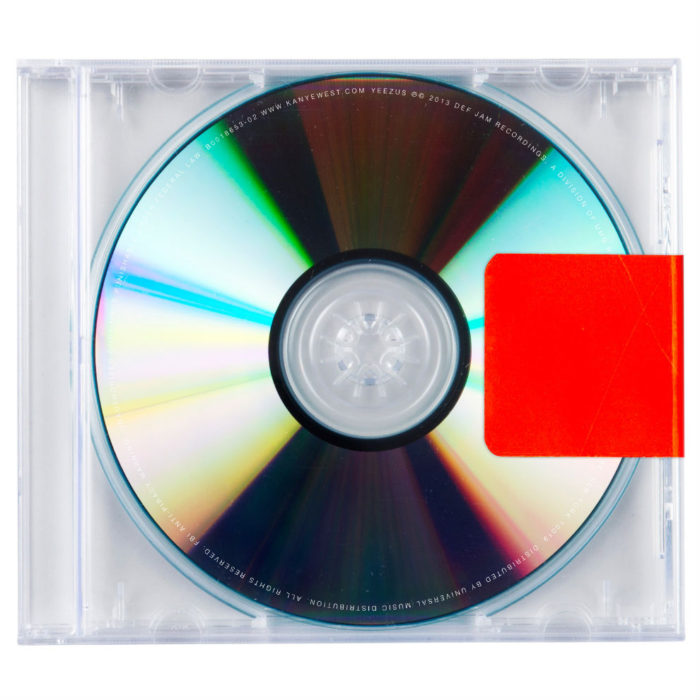
Kanye West – Yeezus

At this point, I’m pretty sure every yutz out there on the internet has put in their two cents about the new Kanye West album, but I still got some shit to say about it, so I figure I might as well say it.  Plus, I don’t know that these kinds of instantly formed opinions are very well-suited for an album as challenging as Yeezus.  I’ve listened to it a few times now, and though I’ve come to a fairly conclusive opinion, I wouldn’t be surprised if I ended up liking it more further down the road.  But for now, I’d say Yeezus stands along with 808s And Heartbreak as one of Mr. West’s more uneven – if nonetheless fearless and ultimately fascinating releases.

I’m not terribly unique in the regard that I’ve come to appreciate Kanye West’s ability to mash together all sorts of different soulful sounds in a way that’s sweeping and epic, while his lyrics have often been markedly honest and soul-bearing.  Yeezus is pretty much the sound of Kanye taking a giant dump on both of those trademarks, as it musically bears an intensely bare-bones, almost industrial kind of dynamic.  As for the lyrics, I’m not sure what to really make of them, though my best guess is that they’re the words of a man trying desperately to exorcise his demons.  The lyrical content is almost uncomfortably graphic in its hedonism, but because Kanye is still able to intersperse his dark sense of humor, you kind of get the idea that he’s merely playing the role of provocateur.  You could make the case that because of his impending fatherhood, Kanye’s using this lyrical approach almost as a way of venting every dark twisted thought lurking in the back of his mind.  But at this point, it’s hard to make any clear sense of whatever the fuck is going through Kanye West’s head.

I hate to be this reductive about such a lightning rod of an album, but for me Yeezus is really just an album that starts out really strong and kind of loses its way towards the middle.  With a combination of ass-stomping rhythms and memorably subversive lyrics, “Black Skinhead” and “New Slaves” almost perfectly distill the kind of abrasiveness he seems to be shooting for here.  However, once you get to the kind of pulsating ickiness that you see on a song like “I’m In It”, things start to feel a little muddled for me.  However I do appreciate that Kanye threw us a bone with the album’s closer “Bound 2”, which feels like a grandiose throwback to 2010’s My Beautiful Dark Twisted Fantasy, an album that now feels almost light years behind us.

The gaping difference of opinion that’s happened between music critics and the general music-listening public in regard to Yeezus has been kind of fascinating to me.  And because I don’t think I quite fall in to either category, I’ve been torn about what kind of star rating to assign to this album in a way that rarely happens to me.  But basically my conclusion is that, as an artistic statement, Yeezus is remarkable.  As something that I want to listen to, it’s more of a mixed bag.

Favorite Tracks: “Black Skinhead”, “New Slaves”, “Bound 2”