Retrospecticus: Star Trek

This post has been sitting around, incomplete, for a few days now. So, instead of letting it go to waste any longer, I rushed through it and posted it now. Enjoy!

Space, the final frontier. Throughout history, only one franchise has managed to united the geeks and nerds of the world. Over 10 films and half a dozen television shows, Star Trek has had a lasting influence on society and multiple generations.

The new movie is out today and I’m quite excited to go see it. Lots of people are. In preparation for this new film, let’s take a look at everything that had led up to this latest release. That’s right, everything.

Star Trek: The Original Series (1966-1969)

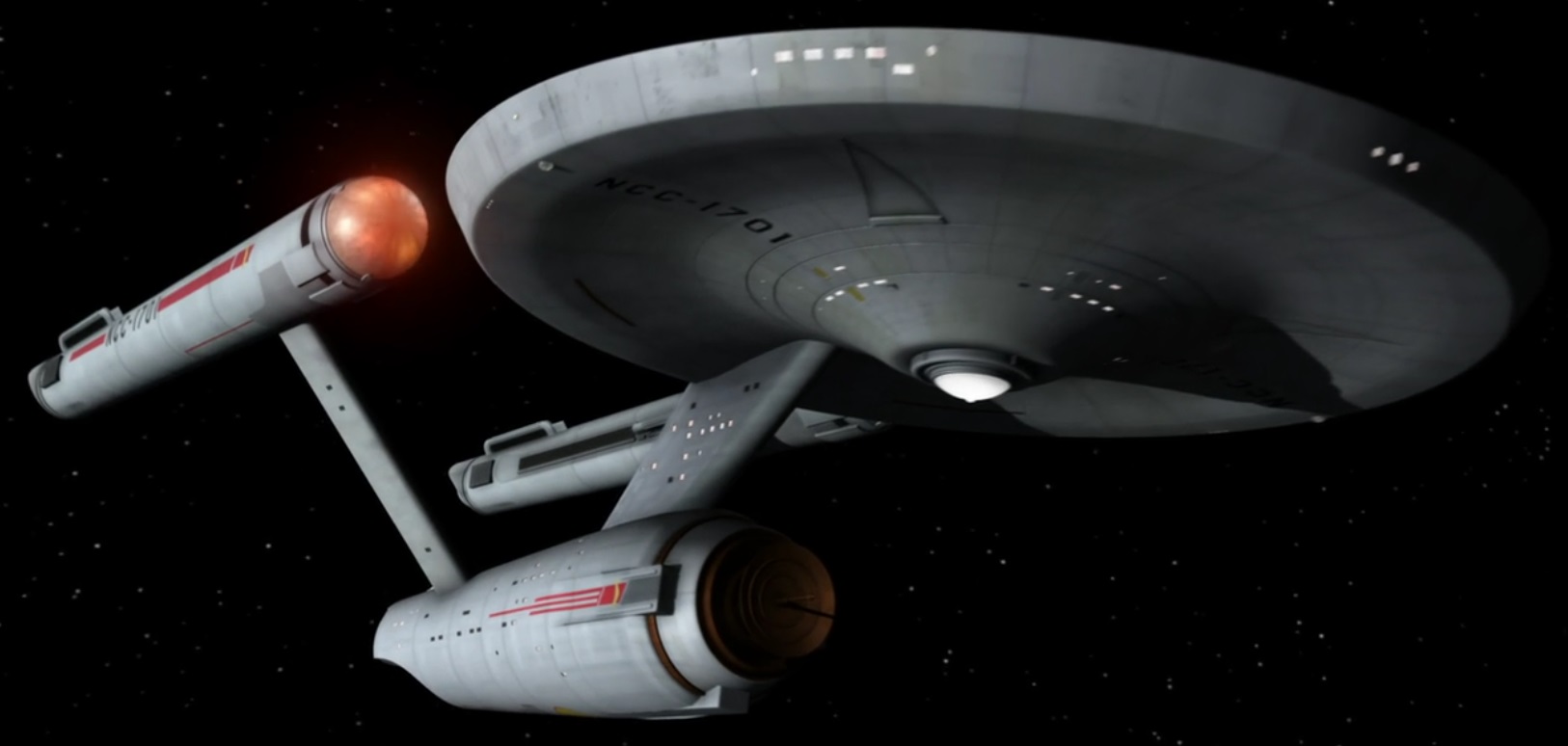
The Original Series, or “TOS” aired from 1966-1969. There were 79 episodes produced before it was cancelled after its third season. While the show was not too successful when it first aired, it picked up a cult following in reruns, a following so massive that it started holding conventions celebrating the relatively short-lived show. In 2006, CBS remastered the show in high definition with brand new CGI; it looks awesome.

TOS follows the adventures of James T. Kirk, Spock, Leonard “Bones” McCoy, and the rest of the crew of the starship USS Enterprise, NCC-1701. Their’s is a mission of exploration and scientific curiosity. What makes the show so great, as my dad likes to point out, is that despite being set in the far flung future, this show focuses on relatable, human problems. That, and some really fun futuristic science helped make this show so memorable, and I heartily recommend everyone check it out.

Star Trek: The Animated Series (1973-1974)
(Haven’t Seen It)
TAS, the Animated Series, aired from 1973-1974. It continued the story of the original Enterprise crew, but since it was animated, it allowed for more exotic storylines.

Series creator Gene Roddenberry declared that the show was not cannon, but several parts of it, like the holodeck, have made it into latter series.

Star Trek: Phase II (1978)
(Never Aired)
This attempt to start a new Star Trek live action show never made it to the airwaves. It would have featured the original cast on a new mission, except for Leonard Nimoy. In his place, there was a new vulcan written in, Xon, with the hopes that Nimoy would later guest star. Before the series was even able to take off, Star Wars happened, and it was decided to recommission the pilot into the first Star Trek motion picture.

Star Trek: The Motion Picture (1979)

In 1979 the first Star Trek movie was released. It was the epic tale of a monstrous cloud, the V’ger, and the Enterprise’s attempt to stop it from destroying the earth. Kirk, now an Admiral, and the rest of the crew find their way back aboard the Enterprise in an attempt to stop this alien threat, usurping power from the Enterprise’s current crew.

The first film in the franchise definitely got too caught up with itself. “Ooh, look at me, I’m a movie, I have a big budget.” There are lots of long, slow moving shots and it seems that the whole movie was designed as a visual spectacle rather than an exciting story. Overall, this movie is fun, but not that great. I just read on Wikipedia that some fans call this The Slow Motion Picutre, that’s hilarious.

Star Trek II: The Wrath of Kahn (1982)

I think everyone knew that the first movie dropped the ball, because these guys were not messing around when it came to its sequel. When Chekov and Clark Terrell of the USS Reliant beam down to Ceti Alpha V, they stumble across the superman Kahn. Kirk had previously marooned Kahn on the planet 15 years ago, since then Kahn’s followers and wife had died. Kahn embarks on a mission of revenge. What follows is the best Trek has to offer.

Seriously, if you don’t like Wrath of Kahn, what’s your problem? It’s one of the best sci fi films I’ve ever seen. With so many memorable scenes and dialogue, this movie is just a lot of fun. It ends with the most famous scene in all of Star Trek, the death of Spock. That’s a hell of a thing. I really cannot praise this film enough, it is exactly what I want out of a Trek movie.

Star Trek III: The Search for Spock (1984)

This is where the thing about odd numbered movies sucking got started. After the events of Wrath of Kahn, it was decided that the movies would follow a story arc, one that would continue until the sixth motion picture. In this feature, the distraught crew of the Enterprise learn that Spock’s essence is within McCoy, and that neither of them will be able to rest until they can bring Spock’s remains to Vulcan. So they hijack the Enterprise and go back to the Genesis planet, only to find hostile klingons.

Since he is hardly in the film, Nimoy took over as the director this time, a job he would continue in the next movie. While not terrible, there’s not too much going on here, except for Christopher Lloyd as a Klingon commander. This story is really just a means to get Spock back, instead of another grand adventure. That said, since these movies lead into each other, you will want to see this movie so that you can fully appreciate the fourth one. Plus, you want Spock to be OK, don’t you?

Star Trek IV: The Voyage Home (1986)

This movie is pretty zany, but pretty entertaining too. After the events Search for Spock, the exiled crew, along with the new Spock, decide they have to return to earth. But on the way back they intercept an alien signal that sounds like humpback whales. With humpback whales extinct and the earth in danger, the crew decide to slingshot around the sun to go back in time. Their plan: To steal a whale and travel back to the future to save the earth.

Yep. Time travel to the 20th Century was always great on the original series, and that doesn’t change when they finally do it in a movie. The Voyage Home was both a commercial and critical success, and it deserves to be. For the emphasis is put squarely on the actors here, and they more than rise to the challenge. This is my second favorite Trek movie.

Star Trek: The Next Generation (1987-1994)

So it turns out people still liked Star Trek, even in the 1980s. In 1987, a new series was commissioned, set 70 years after the exploits of Kirk, Bones, and Spock. This new show was called Star Trek: The Next Generation.

TNG was set aboard the Enterprise-D and featured a diverse crew from multiple species. There was its captain, Jean-Luc Picard, his first officer, William Riker, the android Data, the Klingon Worf, the blind Geordi La Forge and more. This show would introduce several key races and conflicts for the universe, as well as create some of the most memorable characters in the franchise.

The series was one of the most successful Star Trek shows, responsible for the series’ resurgence in the 1990s on TV. It also won several awards.

Star Trek V: The Final Frontier (1989)

What a piece of crap.

Seriously.

This movie starts out with Kirk and Spock having a good time at Yosemite before decending into the schemes of Spock’s evil brother Sybock.

This was the one that Shatner decided to direct. I guess he decided that the franchise needed a comedy, because that’s the closest thing we get here.

It’s kind of campy fun, but I won’t go as far as to actually recommend this to anyone. It’s just a mess.
Star Trek VI: The Undiscovered Country (1991)

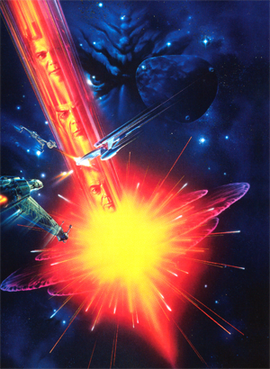
This movie is supposed to be much less of a piece of crap. Sadly, I haven’t watched it since I was much younger, and I didn’t want to hold up this post any further by limited attempts to watch it. Especially after sitting through The Final Frontier.

I guess the story is about Klingons and the Federation finally making piece, which definitely makes sense, since they are good guys by the time you get to the latter TV shows. If any of you get a chance to see this movie, comment about it so that other readers can get a piece of your knowlege.

Everything that I’ve read suggests that this film was somewhat a return to form, and that it is overall an acceptable entry into the series.

Star Trek: Deep Space Nine (1993-1999)

DS9 started airing 1993, a year before TNG‘s conclusion. It was the story of Deep Space Nine, a Federation outpost near the planet Bajor and a wormhole that provides immediate access to the gamma quadrant. This heavily contested area is the target of the antagonistic cardassians, which eventually results in the first war seen in the Star Trek universe, between the Federation and the Dominion.

At the head of the cast is Avery Brooks as Captain Sisko, who sadly does not take up his signature bald, bearded look until halfway through the show. It also features the shapeshifting Odo, the passionate Kira, the immortal Dax and two former TNG crew members, Chief O’Brien and Worf. Everyone is familiar with Quark, I assume.

Unlike all the other shows, DS9 was all about plot archs and character development, making the show much more compelling and geniunely interesting than I thought it would be. Infact, I think I like this show more than any other, despite having grown up in a strict TOS household. Give it a shot.

Star Trek Generations (1994)

As TNG was coming to a close in 1994 and the OS cast was getting old, it was time for them to finally pass the torch to the next group of movie heroes. Sadly, Leonard Nimoy and DeForrest Kelley did not appear in the film, so that torch was left in the capable hands of William Shatner.

The retired Captain Kirk’s last adventure sees him hurdled into the deep future, where it is up to him and the crew of the Enterprise-D to stop Malcolm McDowell, as the evil Dr. Soran, from messing shit up. Kirk is always a fighter, never giving up even at the bitter end, but if you ask me, this film makes it perfectly clear that Picard is the superior captain. Kirk is just a lot luckier.

This movie may not be that great, but the symbolism of it pushes it over the top. If you want to see how Captain Kirk gives his final performance, you need to see this movie.

Star Trek: Voyager (1995-2001)

Lady Captain Janeway takes the reigns in this series. Voyager marked a return to tradition for the Star Trek franchise, with the empahsis back on exploration and science. When the new ship the USS Voyager is thrown 70,000 lightyears across the galaxy, its young crew embarks on its greatest mission: to return home.

This multi-year journey would be marked by difficulty, specifically from the newest threat to galactic piece, the Borg, who seem pretty damn hard to stop. The episodes I’ve seen of Voyager seemed pretty bland, not necessarly bad, but not that interesting either. I’m sure plenty of people like it, I just have a hard time wanting to see it.

Star Trek: First Contact (1996)

Those Borg bastards! In this movie they go back in time to stop the Federation from being founded by preventing the first meeting between humans and vulcans.

Thankfully, we’ve got the Enterprise-D and those guys to come save the day.

This film is the first in a series of movies with the Next Generation guys at the forefront. Like those movies, its action-packed, but not too great. It’s just OK. Just OK.

Actually, this is probably my favorite TNG movie. Not only does it have a couple great scenes, it is pretty much the climax of the Borg conflict, which is pretty sweet.

Star Trek: Insurrection (1998)

This movie is based around a planet where people are immortal due to some strange anomaly. This wackness has strange regenerative powers, like allowing Geordi to see. But then this Federation Admiral is being a dick and its up to Picard to stop him.

I hardly even remember what goes on for most of this movie.

This is the least interesting of TNG movies. It’s like an episode of the show, with little consequence to the overall arc for these characters.

Riker doesn’t even have a beard.

The movie’s not bad, but there’s little to gain from watching it.

Enterprise (2001-2005)
(Haven’t Seen It)
Later retitled Star Trek: Enterprise this show put Scott Bakula in the captain’s chair of the first starship Enterprise as humanity made its first steps into space diplomacy. Since humanity discovered warp drives and founded the Federation, they have started becoming the organization we all know and love from the other shows.

I think we all watched the first episode of this show, then lost interest. Which is a shame, because I guess much later on, like by the third season, this was looking alright. Oh well, this still ended up being the first show to get canceled since the original. Better luck next time.

Star Trek: Nemesis (2002)

This movie is kind of fucked up. The main enemy is a Picard clone. There’s an evil Data. It’s the final adventure of TNG crew. And it’s action packed.

Totally action packed.

Yeah, once again this movie is not very interesting. But I think the action is more fun this time around. That’s based on what limited memory I have from seeing this movie in theaters.

What’s more important is that this was the last movie in the franchise, and with the conclusion of Enterprise three years later, for the first time in a long time, we had to Trek.

Not for four whole years.

Star Trek (2009)
With that guy from Heroes! Seriously though, more on this in a second.

Breaking Balls

MLB 09: The Show

I’ll be honest, I haven’t really played a baseball game in years. That’s been due to a series of depressing Mariners seasons and the fact that the good games have been PlayStation exclusives, and I had a 360. Well, now that that’s changed, I made sure that my first PS3 game was this gem, and I was not disappointed.

Something that bothers me about the MLB: The Show series is where they put the year in the title. Since every year it is still “The Show,” who isn’t this game called MLB: The Show 09? I know, it’s a weird thing to complain about, but this is exactly the kind of nitpicking a game like this requires, because it is so damn good.

You have every game mode you could possibly ask for. There’s your standard quick play and exhibition modes, which are single and multiplayer. Then there’s the franchise mode, where you take a team through through several years of dynasty-building. This is the mode for people who really care about everything that there is to baseball, considering factors such as salary arbitration, waiver transactions, September call-ups, and the 40-man roster. Then there’s the mode that I like a little more, Road to the Show. RttS is like a baseball RPG, where you create your player and then take control in every play he factors into.

My player is the plucky first baseman Sean Lemme, or “Sean. Lemmon,” as the announcers call him. What’s cool is that not only do you customize how your player looks, but you can load music off your hard drive for when he comes to the plate and other situations (like setting it to play “Kernkraft 400” when your reliever comes in). Also, if you have a microphone, you can record custom taunts and chants for the audience to yell while you play. That’s just so cool.

Oh, and if you do get this game, I would not recommend making a first baseman. “Hey, run to first base and stand there” gets pretty old pretty quickly. Be a pitcher.

Online offers everything you could want. You can play a single game, or participate in an online league. Apparently lag is a problem in this game, but I’m not too interested in online play to begin with, since my PSN friendslist is empty right now (you don’t have the game, do you, Peter?). Aside from gameplay, you can go online to download rosters, both the official one and ones designed by players.

I really like the way the game controlls. When you’re pitching, you pick your pitch, aim, and then use a meter to determine your strength and control. It’s simple and effective. You don’t have to mess with aiming or any other gimmicks when you bat. You simply press a button to swing at the right time. That certainly doesn’t mean batting is easy, just not needlessly difficult. I can really get behind it.

The graphics here are just great. Realism is always the goal for sports titles, with the best ones looking just like a broadcast game. MLB 09 gets pretty close, with characters looking so great you can actually recognize familiar faces. The animation is mostly smooth, but there’s little hit detection, so you will slide into home right through the catcher and that sort of thing.

So I got myself a very warm welcome back into baseball games. Speaking of that, I better get back to Sean Lemme’s career, I’ve got to work on that batting average.

Retrospecticus: Bruce Springsteen

Well here it is, the most epic retrospective of an artist’s discography yet.  I kept most of reviews of these albums fairly brief, and I didn’t attempt to listen to all of the Boss’s live albums, although him and E Street Band do give fantastic live performances.  I’m sorry I wasn’t able to get this up by monday, but give me a break this this thing is pretty huge, besides I didn’t want to take away from Nancy’s glorious post.  Anyways let’s get on with this look back at a very impressive discography from one of rock n’ roll’s most prolific talents.

Greetings From Asbury Park, N.J. (1973) 

New Jersey’s own Bruce Springsteen first made his mark with his debut, Greetings from Asbury Park, N.J.  The album’s sales were modest, but it established his unique abilities as a songwriter and drew many comparisons by rock critics as the “new Dylan”.  This was probably due to some of the songs have a bit of a more folk-rock sound to them as well as The Boss’s unique lyrical sensibilities that evoke fantastic imagery.  But the album also features plenty of songs with that certain anthemic quality that Bruce would later pursue such as “Growin’ Up” and “For You”, as well as his original version of “Blinded By the Light” which Manfred Mann would turn into a #1 hit.  At this point what would become the E Street Band certainly infused the songs with a great exuberance, even if they weren’t yet made up of what would become the classic E Street line-up.  

Favorite Tracks: “Growin’ Up”, “Spirit in the Night”, “It’s Hard To Be A Saint In The City”


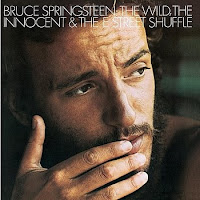
The Wild, The Innocent, and The E Street Shuffle (1973)

Recorded and released the same year as his debut, The Wild, The Innocent, and the E Street Shuffle already shows The Boss finding his groove as a songwriter and  an artist.  He builds on the same sound he established with the first album, but the songs are definitely longer (4 of the 7 tracks are over 7 minutes long), but also at the same time much tighter instrumentally.  There’s some great intstrumental interplay between the musician’s and you can really hear the E Street Band start to gel as an outfit.  You can also hear Springsteen starting to grow lyrically as his songs are chocked full of distinct characters and vivid images of the New Jersey boardwalk.  Songs like “Kitty’s Back” and “Rosalita” are among the most thrilling songs of the Boss’s discography, and this albums still remains one of his best.

Favorite Tracks: “The E Street Shuffle”, “Kitty’s Back”, “Rosalita (Come Out Tonight)”


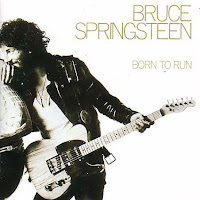
Born To Run (1975) 

The Boss’s third album was without a doubt the most ambitious album of his then young career and is quite simply one of the greatest rock n’ roll albums ever recorded.  From the opening piano bars of “Thunder Road”, you know you’re in for a special ride and Born To Run simply never lets up.  However, the road to the completion of Born To Run was not an easy one, it took over 14 months to record and nearly drove Springsteen and his record company to bankruptcy.  The production of the album is definitely a lot more lush than his first to albums, Springsteen has said that he was going for a Phil Spector-like “Wall of Sound” approach, and he definitely achieves it.  


Another big contribution to the sound of the album is the addition of drummer Max Weinberg, who adds a much more precise style of drumming, and pianist Roy Bittan who’s piano work is among the hallmarks of the album.  Also with the addition of guitarist/vocalist and future Sopranos star Steven Van Zandt, the classic E Street line-up was complete.  Also, songs like “She’s The One”, the title track, and especially “Jungleland” feature many of the Clarence Clemens’ best sax solos.  The song “Born to Run” is simply one of my favorite songs of all time, there aren’t many songs that are so epic and so brimming with hope.  The song as well as the album finally brought Springsteen some mainstream success and helped to establish him a national fanbase.


Favorite Tracks: “Thunder Road”, “Born To Run”, “Jungleland”

Darkness On The Edge Of Town (1978) 

Coming three years after The Boss’s breakthrough Born to Run, it seems that he had already distanced himself considerably from that album’s youthful optimism.  The songs still have the same energetic treatment from the E Street band, but there’s a slightly darker tone to Darkness on the Edge of Town.  Also, instead of Springsteen’s lyrics about teenage New Jersey life, many of them are unglamorous odes to the working man.  This album marked a clear turning point from The Boss’s early sound into the next decade, and I don’t really feel any need to write anything more considering I already wrote a CAT for this album.

Favorite Tracks: “Badlands”, “Candy’s Room”, “The Promised Land”

The River (1980) 

The only double album in Bruce Springsteen’s catalog, The River is composed of a number of songs that The Boss had written during earlier parts of his career as well as newer material.  One distinct feature of the The River is the contrast of almost frivolously upbeat songs such as “Cherry Darling” and “Crush On You” as well much more solemn, personal songs like “Independence Day” and “Drive All Night”.  The River was also notable for featuring The Boss’s first top ten single, “Hungry Heart”.  Most of the songs sound like Bruce and the E Street Band are just having a good time banging out these catchy pop numbers, and although most of the songs aren’t quite at the level of the past Springsteen outings up to this point, I think the fact that the album contains so many solid songs is what makes the album work.  And although I’d say the album’s lenghty duration does make it a little less appealing, I don’t think it would be nearly as good as a condensed single album.


Favorite Tracks: “Jackson Cage”, “Hungry Heart”, “I’m A Rocker”


Nebraska (1982) 

Though even at this point, Bruce Springsteen had shown the ability to take his music in a number of different directions, nothing was nearly as huge of a departure as the somber folk sound of Nebraska.  Demos for the album were initially recorded by Springsteen at his home on a 4-track cassette recorder with nothing more than guitar, harmonica, and Springsteen’s voice.  The same songs were then recorded with the E Street Band before being scrapped after it was decided that they didn’t capture the haunting nature of the demos, and the demos where ultimately released as the album.  


The sparse but effective sound to the album makes for one of Springsteen’s most memorable albums, even if the songs have a fairly bleak tone to them.  There are plenty of songs that explore working class themes such as the title track or “Highway Patrolman”, although this time around they seem to evoke images of the Midwest rather than Springsteen’s native New Jersey.  The Boss would pursue a similar bare, acoustic folk sound with The Ghost of Tom Joad and Devils And Dust, but neither of them quite capture The Boss’s more introspective side quite as brilliantly as Nebraska.


Favorite Tracks: “Atlantic City”, “Johnny 99”,  “State Trooper”


Born In The U.S.A. (1984) 

At this point Bruce Springsteen had acheived quite a bit of success with a couple of hit singles, but Born In The U.S.A. was the album that transformed him into a bona fide superstar.  The album is by far the best selling album of Springsteen’s career and contained an unbelievable seven top 10 singles.  The album shows Springsteen continuing to explore songs about “the working man”, although they have a much more optimistic and energetic feel to them than his previous album thanks to the reliable power of the E Street Band.  


A main aspect that can be attributed to the album’s success is the more pop-friendly sound to the album, with many of the songs containing some memorable use of synthesizers, especially on the hit singles “Born in the U.S.A.” and “Dancing in the Dark”.  However, there’s still many guitar driven songs such as “Cover Me” and “I’m Going Down”, even though guitarist Steven Van Zandt would leave the E Street Band after the recording of Born in the U.S.A. to be subsequently replaced by Nils Lofgren.  Born In The U.S.A. was certainly one of The Boss’s breakthrough albums and an album that defined the pop/rock sound of the early ’80s.


Favorite Tracks: “Downbound Train”, “No Surrender”, “Dancing In The Dark”


Tunnel Of Love (1987) 

After the overwhelming success of Born In The U.S.A. and the massive tour that followed it, Tunnel Of Love shows The Boss scaling back a bit.  Most of the songs feature meditations on love in the face of success with a bit of a regretful tone to them.  Synthesizers and acoustic guitars are definitely at the forefront of the album which make for one of Springsteen’s most polished sounding albums.  Some of the album does sound a little bit dated at times due a very ’80s sound, but the quality of introspective songs like “Walk Like A Man” and “Brilliant Disguise” make Tunnel of Love an enjoyable and somewhat underrated entry in Bruce Springsteen’s catalogue.


Favorite Songs: “Tougher Than The Rest”, “Tunnel Of Love”, “Brilliant Disguise”


Human Touch (1992) 

Lucky Town (1992) 

A few years after officially disbanding the E Street Band 1989, Bruce Springsteen released the albums Human Touch and Lucky Town on the same day.  Both of them have a similarly pop-oriented sound and are among The Boss’s most optimistic material.  The Boss would feature songs with less serious subject matter on many of his prior albums, but these two albums seem to be entirely consisting of mostly pretty poppy, upbeat songs.  I’d say this sound works to a certain extent on Lucky Town

because it has a handful of undeniably catchy songs like “Better Days” or “Leap of Faith”, but Human Touch just seems kind of bland in comparison to every album 

Springsteen had released up to this point.  For me, the ’90s seemed kind of like a time in which Springsteen didn’t quite have that same spark that he had in the earlier years with the E Street Band, although he would achieve another impressive accomplishment with his Best Original Song Oscar win for “Streets of Philadelphia” in 1994.


Favorite Tracks: “Better Days”, “Local Hero”, “Human Touch”

The Ghost of Tom Joad (1995) 

With The Ghost of Tom Joad, Bruce returned to somewhat familiar territory that definitely bears a similar sound to 1982’s Nebraska.  Much like Nebraska, The Ghost of Tom Joad features for the most part just Springsteen’s voice and acoustic guitar playing, although there are a few songs that feature some sparse keyboard work and percussion.  The lyrical content is among The Boss’s most politically driven, which make for some occasionally interesting songs, but a lot of them seem a little forgettable.  The Ghost of Tom Joad is definetely one of The Boss’s most personal albums as well as having a somewhat charmingly intimate sound , but for me fails to match the haunting intensity of his earlier acoustic folk effort, Nebraska.


Favorite Tracks: “The Ghost of Tom Joad”, “Highway 25”, “Dry Lightning”


The Rising (2002) 

Coming seven years after his last album, The Rising reunited Bruce Springsteen with the E Street Band while marking a major comeback for The Boss.  Much of the album was inspired by the terrorist attacks of 9/11, and The Rising features many songs that feature messages of hope and healing.  There’s a good mix of more downbeat mournful songs such as “Nothing Man” and “My City of Ruins” as well as  songs that have a more upbeat hopeful nature to them such as “Lonesome Day” and the title track.  One aspect that added another layer to the E Street sound is the inclusion of violinist Soozie Tyrell.  Also, thanks to producer Brendan O’Brien who has also produced each subsequent album by Bruce Springsteen gives a more modern sound to some of Springsteen’s most exciting work as a songwriter in years.  It seems like ever since the release of this album, there’s been a constant flow of creativity from Springsteen seeing as though he’s been incredibly active as far as recording.  Really the only complaint I have about this album is that at a running time of 72 minutes it’s a bit long, and I could do without a couple of tracks but for the most part it shows The Boss and the E Street Band in prime form.


Favorite Tracks: “Lonesome Day”, “Couning On A Miracle”, “Sally’s Place”


Devils & Dust (2005) 

Comprised mainly of older songs Sprinsteen had written that go back as far as ten years, Devils and Dust shows The Boss returning to the more stripped down acoustic folk sound of Nebraska and The Ghost of Tom Joad.  However, this time around the songs are considerably more melodic and not nearly as bleak.  Devils And Dust also has a bit more lush sound than those records because of the contributions from several musicians that Springsteen has worked with over the years.  The lyrical content is definitely pretty diverse, featuring songs such as the title track, a commentary on the Iraq War, “Reno”, about an encounter with a prostitute, and “All I’m Thinking About”, a simple love song featuring a falsetto vocal performance.  Devils and Dust is another charming addition The Boss’s more intimate acoustic material, even if it has a somewhat conventional sound to it. 


Favorite Tracks: “Devils and Dust”, “Long Time Comin'”, “Leah”


We Shall Overcome: The Seeger Sessions (2006) 

Definitely one of the most unique sounding albums in Bruce Springsteen’s catalogue, We Shall Overcome is comprised entirely of songs written or made famous by folk legend Pete Seeger.  Springsteen is backed by The Seeger Sessions Band which comprised mostly of lesser known musicians that Springsteen had met through E Street violinist Soozie Terrell as well former collaboraters such as Max Weinberg 7 members, Mark Pender and Richie “La Bamba” Rosenberg.  The mix of lots of bouncy strings and brass combined with other acoustic instruments and Seeger’s songs give the album a very lighthearted and enjoyable sound, and make for another great addition to the slew of quality work The Boss has been putting out this decade.


Favorite Tracks: “Old Dan Tucker”, “John Henry”, “Pay Me My Money Down”


Magic (2007) 

Releasing an album for the third year in a row, Bruce Springsteen shows him and the E Street Band continuing to explore a similar sound as on 2002’s The Rising while also recalling the vigor of some of his earliest records.  The leadoff track “Radio Nowhere” is among The Boss’s most electrifying rockers in years and for the first time in years, “Livin’ in the Future” provides Clarence Clemons with a chance to really shine.  Producer Brendan O’brian once again gives the album a very lush pop/rock sound that are complemented excellently by some of Springsteen’s catchiest numbers such as “Girls In Their Summer Clothes” and “I’ll Work For Your Love”.  Magic is just another testament to Bruce and the E Street Band’s knack for turning out great records each time they get together to record an album.


Listening to all these albums has definitely gotten me quite a bit more excited than I would have normally been for a new Bruce Springsteen album.  But seeing as though all of Springsteen’s recent albums have been pretty great, I’m more than looking forward to hearing his latest album, Working On A Dream.  The title track has a similar feel to the songs on Magic, and I wouldn’t be surprised if the rest of the album has a similar sound considering some of the songs were recorded around the same time as that album.  Sadly, It’ll be the first E Street outing not to feature the recently deceased keyboard/organ player Danny Federici who’s been with the band ever since Springsteen’s second album.  I’m glad to see that “The Wrestler” made on to the album as a bonus track, and I’m also excited to see Bruce and The E Street Band play the Super Bowl the Sunday.  And of course you’ll be seeing a review of Working On A Dream form me in the near future.

Retrospecticus: Oasis

I’m pretty excited to go pick up Oasis’ latest album tomorrow, so in honor of their latest release I figured it was time for retrospective of the Oasis discography, or as we like to call them here at Cat Fancy “Retrospecticus” let’s begin.


Definitely Maybe (1993)

Signed to Creation Records in 1993 this young quintet started the recording of their debut album with some initial difficulty. Working with producer Dave Bachelor, Oasis just couldn’t capture the heaviness of their live sound and soon enough fired Bachelor. Taking the tapes to Tim Abbott to salvage the already recorded tunes, Oasis still struggled to find their sound in the studio. Time passed eventually leading Oasis to re-record the tracks, this time working with producer Mark Coyle. So It was decided the best technique would be to record all the instruments simultaneously, then magic happend. From then on the tapes were sent off to be polished by engineer/producer Owen Morris, stripped of some extra guitar overdubs and eventually remolded. Finally becoming that hard hitting sound that the band was looking for all along.

It was some journey to get this album to perfection but in the end I’d say it was totally worth it. Combining Beatlesesque pop with huge guitars and heavy rhythms, Definitely Maybe would prove to be an instant classic and would pave the way for the blossoming “Brit Pop” genre of music. The dynamic of Liam’s English swagger, obviously inspired by Lennon and Noel’s talent for penning great tunes would become the perfect stepping stone for this band’s fresh new sound and a grand contribution to rock music.

There’s just too many great songs on this album to list and it’s definitely one of my favorite’s of the 90s, Oasis were fresh and in firing form on this balls to the walls British Rock infused record and were ready to take on the scene of the decade of the extreme.

Favorite Tracks: “Live Forever”, “Supersonic”, “Married With Children”


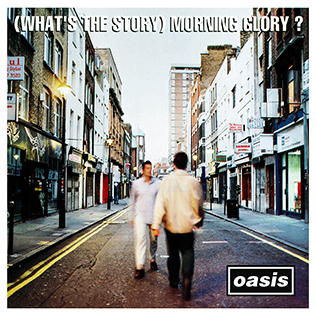
(What’s The Story) Morning Glory? (1995)

Now I already wrote a review for this album a while back on this blog so I’m gonna make this brief. “(What’s The Story) Morning Glory?” is pretty much the best album these guys have ever put together. With track after of top notch single material and heavy guitars this is a classic staple of 90s music. This was also when Oasis was probably at their peak popularity and an exciting time in music, if you haven’t heard this album than I highly recommend it.

Favorite Tracks: “Don’t Look Back in Anger”, “She’s Electric”, “Wonderwall”


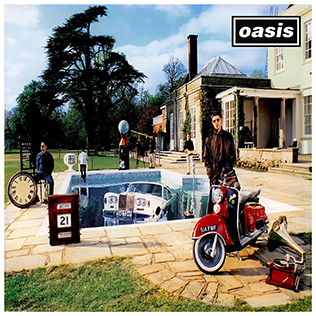
Be Here Now (1997)

After the major success of their previous two albums, Oasis were now riding a huge wave of success. While the band was certainly big on the music scene, the Gallagher brothers had themselves become popular if not controversial celebrities within the media often caught publicly fighting, but of course that would never tear these two apart and soon enough they were ready to start work on their most ambitious album yet.

Heading into Abbey Road in October of 1996, after Noel had recently gone through a stage of writer’s block. Noel had a vision on making an ablum of epic proportions basically deciding to throw the whole kitchen sink into this one. There’s mellotrons, strings, sitar, psychedelic guitars and even slide guitar played by who else but Johnny Depp. The sound here truly is epic but unlike most of the critics who initially praised the album, I was never too big on this record.

Now the compositions here a fairly good, perhaps not Oasis’ most catchy or memorable tunes but the melodies and progressions are pleasant. The main problem here is every song is so god damn freaking long. With most songs well above 5 minutes this 71 minute album is just too tiring to enjoy on the same level as previous Oasis works. I mean most of the songs make their point in about 3 minutes but then just keep going and going. I just find it boring after awhile and I really think this could of been better if Oasis had simply cut back a little.

I’ve never really been sure about what Oasis personally though about this album, but on their 2006 greatest hits compilation “Stop the Clocks” there isn’t a single song from “Be Here Now”… Hmmm, very interesting…

Favorite Tracks: “D’You Know What I Mean?”, “Stand by Me”, “All Around the World”


The Masterplan (1998)

Although a B-sides I compilation I think “The Masterplan” is worth touching on. There’s some really swell numbers on here including; “Acquiesce”, “Talk Tonight”, “Half the World Away”, the moody ballad “The Masterplan”, and an excellent live cover of The Beatles “I Am the Walrus” I’m not sure why these songs didn’t make it on any albums, but I guess that’s the beauty of a compilation disc.

Favorite Tracks: “Acquiesce”, “Half the World Away”, “The Masterplan”


Standing on the Shoulder of Giants (2000)

In 1999 a Oasis faced a difficult transitional period, with the departure of founding bassist Paul McGuigan and rhythm guitarist Paul Arthurs. Noel, Liam, drummer Alan White and a collection of other studio musicians would make up the body of work for “Standing on the Shoulder of Giants” probably Oasis’ most experimental album to date.

With two key members leaving the group during the recording process, “Standing on the Shoulder of Giants” would not only require lead member Noel Gallagher to fill out the extra guitars and bass work but also push the band to try out some more experimental techniques including; drum loops, mellotron, electric sitar, flute and other unique tricks in the studio.

Looking at this album as a whole it’s neat to see Oasis try out such a psychedelic approach to their new songs but I can’t help but feel this album is somewhat of a bore in spots. I love all the bizarre sounds and textures, not to mention Mark Stent’s producing, but I think they should of set the bar a little higher regarding the quality of the songs. “Go Let it Out” is easily the best song on the album with it’s stadium sounding drums and single friendly melody followed by the Zeppelin inspired/partially instrumental “Fuckin’ in the Bushes”. As for the rest their just typical generic rock wrapped in a trippy package. There’s lots of moments where I find myself really into some of the little grooves here and there but also segments where I’m just tired.

Over time I’ve found this not to be a bad album necessarily but definitely not one of this band’s more impressive efforts. I understand that it was a strange period for the band and I appreciate their attempts to stay fresh, they just needed to work out a few more of the kinks.

Favorite Tracks: “Go Let it Out”, “Fuckin’ in the Bushes”, “Gas Panic!”


Heathen Chemistry (2002)

It was in 2000 that Oasis became whole again (Though this would be Alan White’s last album with the band). After a few setbacks on their last album Oasis recruited Andy Bell, formerly off the Brit Pop band Ride on bass and Gem Archer of Heavy Stereo on rhythm guitar (Both members already having played on the Oasis live album “Familiar to Millions”). Filling in a much needed void in Oasis’ lineup both Bell and Archer would not only bring talented musicianship but as well contribute many ideas to the sound and song writing of Oasis.

Recorded in 2001-2002, Heathen Chemistry was an attempt at getting “back-to-basics” with the strength of the songs being top priority over effects or fancy production. it was definitely a step in the right direction for this band and for the most part was received warmly by fans and critics. Heathen Chemistry was a nice change of pace from the more elaborate Oasis albums that had recently proceeded it and pretty strong regarding the quality of songs.

Liam has definitely improved as a songwriter penning his first Oasis single titled “Songbird” a simple yet sweet acoustic number that’s easily one of the best on the album. Noel’s found a good rockin’ niche here while still managing to whip up another brooding ballad with “Stop Crying Your Heart Out”. There’s some other nice highlights throughout and this album and overall it’s a pretty respectable entry into the Oasis catalog. Aside from the last track having a 20 something minute bonus track that I often skip, it’s good listening and reminds me of why I love these guys.

Favorite Tracks: “The Hindu Times”, “Songbird”, “Stop Crying Your Heart


Don’t Believe the Truth (2005)

Not long after Heathen Chemistry Oasis were already laying down demos and sessions for what would prove to be their most collaborative album yet. For not only would we see compositions from Noel but multiple songs penned by Liam, Andy and Gem rounded off by the fantastic Keith Moon inspired drumming of Zak Starkey.

Now though Oasis’ star status had waned over here in the states I think it’s safe to say that this album was Oasis in top form. I mean sure they were great in the past with former members Paul McGuigan and that bald guy Paul Arthurs but it’s not like thise guys ever made that much of an impression on most listeners. The addition of Andy and Gem on the other hand really seemed to make the band a more collaborative group. Not only do Gem and Andy both play more than their respective instruments on this album but as well write some really great tunes. Archer’s a “A Bell Will Ring” and “Love Like a Bomb”, co-written with Liam are beautiful guitar infused alternative rock while Andy Bell has success with “Keep the Dream Alive” and especially with the opening track “Turn Up the Sun” which immediately grabs you with it’s dreamlike picking that heads right into pure rock heaviness. Liam’s song-writing, while perhaps a little more basic, has found a good middle ground. “Guess God Thinks I’m Abel” is an enlightening acoustic number and “The Meaning Soul” is your basic fist pumping rock number.

Everyone has a lot of great ideas on this album, but you can never count out Noel, who shows he’s still the master of the rock in this band. “Lyla” is your typical catchy Oasis single, “Mucky Fingers” is an energetic riff driven rocker, “Part of the Queue” is a more morose yet intriguing acoustic song, “The Importance of Being Idle” is a retro Kinks sounding tune and “Let There Be Love” is of course a beautiful sweeping ballad. Quite a collection of songs overall and a very satisfying record.

The reception for Don’t Believe the Truth was for the most part pretty positive even if there wasn’t a whole lot of strong promotion behind it. I think this album will always have a place in my heart as the Oasis album that made me a fan, it wasn’t long after that I attended one of their shows and here I am now giving you an Oasis retrospective, it’s funny how things work out.

Favorite Tracks: “Lyla”, “The Importance of Being Idle”, “Let There be Love”


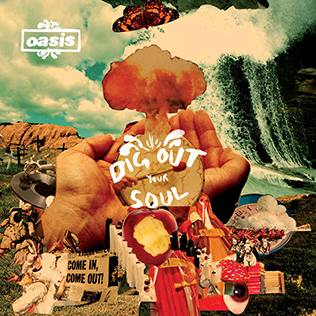
Dig Out Your Soul (2008)
I’ve probably heard most of this album since it was added to Myspace, but I still wait to review it later this week. Based off what I have heard and from Oasis’ show at WaMu last August, it looks like yet another satisfying rock/pop record from the bad boys of Brit Pop. Zak Starkey’s drums sound Zeppelinesque and Oasis has really put together a heavy collection of powerful grooves and melodic pop. A lot of critics are calling it Oasis’ best album since “What’s the Story” so it’ll be very exciting to sit down and groove to the whole album in the comfort of my own home, can’t wait.

The Time Has Come

Rock Band 2

I have beaten almost every song in Rock Band 2, conquered most of the world tour and dabbled in the other game modes. So, finally, I feel like I can review one of the most anticipated games of the year.

Simply put, Rock Band 2 is the perfection of the first game in the series; it forgoes much innovation for renovation. Online multiplayer and single player were most certainly Harmonix’s focus here, and I feel like they accomplished all their goal of making Rock Band a viable platform for future musical releases.

With the first game, many complained they were unable to play world tour online, Harmonix has fixed that this time around. Since none of my friends play online, this was never a problem for me, but logging into profiles was. No one liked wasting the time and those without Xbox 360s needed to be guided through the login process in the first Rock Band. No more is that a problem, as all the band and character data can be linked to one profile, streamlining the process. Furthermore, band world tour can be played singleplayer, and you can even put your band mates in as CPUs, so you don’t have to deal with some of the freaky NPCs showing up in your band.

The biggest new feature is the battle of the bands mode, which consists of daily online challenges. People can duel for the best vocals score on “Master Exploder,” for example. While I’m not particularily interested in this feature, I know a lot of players only care about score rankings and the like and this is a great mode for them.

Rock Band was toted as a viable way for people to learn the basics of drumming, and we all know how that turned out. Rock Band 2 tries to take this learning concept further with a full drum trainer mode, which is interesting but ultimately boring. I’ve never been to into the practice modes in these games anyway, but I think it’s really cool that they’re putting in the effort. At least people can go into the fill trainer mode and learn stuff a little more creative than the smack hte bitch technique.

But the most important aspect of Rock Band 2 is its track list, and its a respectable one indeed. At 84 songs, there had to be some duds, and I do have my fair share of complaints. For example, the top tier difficulty songs are all lousy metal songs that are all very fast, very difficult, and very bad. But the majority of the tracks are great, and very cleverly chosen. Most songs are fun to play on something. Sure, “Tangled Up in Blue” is kind of painful on guitar, but it’s a blast to sing.

With the ability to import all but three Rock Band 1 tracks, and all the DLC, many players already have hundreds of songs to play, which is incredible. Just browsing through my own music collection is kind of incredible, and I haven’t even exported the first game yet. With all the great DLC coming out, like the Offspring pack and “All Right Now” by Free this week, our music collections are going to keep growing for a while too.

Rock Band 2 perfected the Rock Band formula. With this title, Harmonix are in the position to establish this as a platform for all future content. And they seem aware of that too, I think it might be a while until we see Rock Band 3. Just look at that Walmart-exclusive AC/DC pack, it seems like they might be trying alternate ways of releasing new discs. Anyway, no matter where the franchise is going, at least right now it is in a great place.

Batweek: The Knight Stuff

The Dark Knight

When The Dark Knight came to an end this morning, I had to stay sitting silently for a moment. My friends and I didn’t say anything to each other. I wasn’t that sleepy. The gargantuan line we had to summit to get in hadn’t fatigued me. I just needed to go over in my head exactly what I had just seen. More than 12 hours later, I am prepared to call The Dark Knight the absolute best Batman film ever made, as well as one of the finest I have ever seen.

The story picks up close to where Batman Begins left off, with Batman and Lt. Gordon working on bringing down organized crime in Gotham. Newcomer Defense Attorney Harvey Dent is working with Rachel to prosecute those criminals. And a psychopathic killer, called the Joker, is on the loose.

The Joker is not like any of Batman’s other opponents. He’s not after money or anything else. All he wants is to rise up to Batman’s challenge, to be the villain that can match him. His schemes are acts of diabolic genius, forcing Batman, Gordon and Dent into moral dilemmas seemingly free of “right” choices.

Heath Ledger has received a lot of hype for his work in this film, and it’s a pleasure to say he deserves all of it. He creates in this 2-and-a-half hour epic one of the most sadistic and memorable villains ever put to screen. When the next Batman comes around (and it will, this sucker is gonna make bank) the Joker will be a real problem, because no one else can play this part as well as Ledger did, and it’s hard to imagine a better villain.

But the film does not thrive on Ledger’s performance alone; the direction, writing, special effects and the cast are all top-notch. Christian Bale proved himself in the last film and remains just as strong here. Morgan Freeman and Michael Cane are as good as you would expect them to be. Newcomer Aaron Eckhart gives an extremely strong performance, and Maggie Gyllenhaal does more than fill Katie Holmes’ shoes as Rachel. Every major character gets their own moment, they all shine here.

The story and large cast of characters is compelling throughout. The action sequences are all memorable and easier to follow than in Begins. While Joker is the focus here, the other villains get more than enough screen time and development. Bale’s Batman has started to grow into the Batman of the 1980s, a fearsome man who must question whether what he is doing is right or wrong every time he puts on the mask.

In a summer of comic book super heroes, The Dark Knight stands alone. This is so much more than just a comic film; this is a genuine crime drama. The story and the themes it explores are complex and interesting. The pacing and the score keep you on the edge of your seat for almost the entire duration of the movie.

This isn’t just great super hero movie making, this is straight up fantastic movie making. I haven’t been so completely blown away by a movie since No Country for Old Men, and maybe even longer than that.

I feel proud to be able to say I saw first showing of The Dark Knight at Lincoln Square (which has the same name as the theater the film premiered at earlier this week). This is a movie people will be talking about for years to come, and absolutely cannot be missed. See this, now.

Retrospecticus: Weezer

It’s been 14 years since Weezer’s breakthrough debut album and here we are now just a day away from the release of their sixth studio album Weezer (The Red Album). Thus in honor of this I decided to put together a retrospective or “Retrospecticus: if you will (because it sounds funny) of these Alternative rock trailblazer’s albums thus far.


Weezer – Weezer (The Blue Album) (1994)

Rising out of the L.A. club scene in the early nineties Weezer was only together for a few years by the time their demo tape had caught the attention of a major record label. So in the summer of 1993 they headed into the studio with Ric Ocasek producing and set out to make the 90s Rock classic that is Weezer (The Blue Album). By combining a unique quirkiness with clever pop hooks and a heavy rock guitar edge, Weezer created an incredibly unique sound for the time. In an era dominated mostly by grunge, Weezer managed to breakthrough with catchy numbers like “Buddy Holly” or the offbeat “Undone (The Sweater Song)” and mark their territory in the 90s rock scene. Simply put this was a perfect start for these geek-chic rockers and a good sign of things to come.

Favorite Tracks: “Buddy Holly”, “Surf Wax America”, “The World Has Turned and Left Me Here”


Weezer – Pinkerton (1996)

Soon after the success of The Blue Album front-man Rivers Cuomo began working on material for what would most likely be Weezer’s next album Songs from the Black Hole but unfortunately this never quite took off, so Weezer started the production of a different album. Featuring a handful of songs written even before Weezer’ first album, along with a few new one’s and a couple originally slated for Songs from the Black Hole,Weezer made their brilliant follow up Pinkerton. Reflecting a more personal side of Rivers Cuomo song-writing and an even heavier sound for Weezer, Pinkerton was a more straightforward rock album. Though their quirkiness remained primarily on the album’s most popular track “El Scorcho”. Though this album struggled to find success with its less commercial sound it’s caught on over the years and become a staple of 90s rock. Personally I’m torn between this and The Blue Album as my favorite Weezer album but I suppose when a band can do that for you it should be considered a good thing.

Favorite Tracks: “The Good Life”, “Getchoo”, “Pink Triangle”


Weezer – Weezer (The Green Album) (2001)

Many moons had passed between the commercial failure of Weezer’s misunderstood Pinkerton and their return to success with another self-titled album Weezer (The Green Album) A lot had happened in this 7 year hiatus including the departure of former bassist Matt Sharp, River Cuomo’s continuing isolation and other members various side projects. Luckily by 2000 (After an offer to play together at a festival in Japan) Weezer was again inspired to make music. WIth the recruitment of new bassist Mikey Welsh, Weezer went through over a hundred demos until winding it down to ten and headed back into the studio reuniting with producer Ric Ocasek. The result was a tight and heavy 28 minutes of classic Weezer Pop/Rock. With popular singles such as the risque “Hash Pipe” and the laid back “Island in the Sun”, Weezer was back on top and with quite a punch.

Favorite Tracks: “Hash Pipe”, “Photograph”, “Island in the Sun”


Weezer – Maladroit (2002)

Following up the success of Weezer (The Green Album) was yet another commercial success for Weezer with their 2002 album Maladroit (This being the first album with new bassist Scott Shriner). Weezer went about production this time around with fans having opportunity to choose which tracks to include on the new album (Being given a selection of 30 or so online). Unfortunately I am sorry to say that at this point I have to disagree with the popular opinion. This being that I can’t find the same liking for 2002’s Maladroit as so many others do. I find that though there is still some fun tunes like “Dope Nose” or the Costelloesque number “Keep Fishin”, a majority of these songs are lacking the creative flair and ingenuity of previous Weezer works. I mean when a band has to resort to having their fans help them put together an album, you have to question if they are a little burned out musically. I mean that’s a pretty gimmicky stunt, I’d say they should have waited a little longer to start work on another album, because if you ask me, Weezer just sounds like any other mainstream rock band on this album. I suppose as long as a majority of fans liked it, it was a good move for them but it certainly left me cold.

Favorite Tracks: “Dope Nose”, “Keep Fishin”, “Burndt Jamb”


Weezer – Make Believe (2005)

A few years passed and Weezer once again (after sifting through various demos) were ready to make an album. Teaming up this time with notable producer Rick Rubin, Weezer made yet again another popular Rock/Pop album entitled Make Believe. Another more mainstream record boosted by the success of it’s lead off single “Beverly Hills” (the bands most successful single to date) Personally I found the song “Beverly Hills” to be somewhat uninspired. Not a particularly inventive lyrically or even that original of a progression, topped off with a Talk Box sounding guitar solo. These aren’t the elements that drew my interest to Weezer and I was said to see some of that lacking on this album. Though there is a handful of mildly pleasing tracks. “We Are All on Drugs” and “Perfect Situation” are nice little numbers so I found it to even out as an alright album.

Favorite Tracks: “Perfect Situation”, “We Are All on Drugs”, “My Best Friend”


Weezer – Weezer (The Red Album) (2008)
What will the future hold for the fate of Weezer’s latest album? Early reviews are all over the place from bad to pretty good, but nonetheless I’m excited. Especially with Weezer’s return to their nerdier roots and more experimental tracks like “Pork and Beans” or “The Greatest Man That Ever Lived”. I’m not sure what to think quite yet of what I’ve already heard, but time will tell. You can definitely expect to see a review on this blog later this week.


The Lost Album
Weezer – Songs From the Black Hole
As I previously mentioned, after Weezer’s debut album, Rivers Cuomo began working on a space rock opera as the subject of Weezer’s next album. Though after about a year of demoing and recording, the idea was abandoned and forever lost in a sea of lost albums. Luckily a handful of these tracks have surfaced today in one way or another. A few songs such as “Getchoo”, “Tired of Sex”, “No Other One” and “Why Bother?” even managed to make it on to Pinkerton. Along with a few others appearing on River Cuomo’s album Alone – The Home Recordings of Rivers Cuomo. From what I’ve researched and heard, I believe that this probably could of been a pretty good album. It’s sad to see that it fell apart, but at the same time we got Pinkerton so I guess it all worked out for the best.