Grand Theft Horse

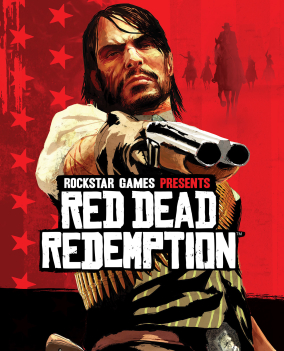
Red Dead Redemption

I like Westerns. There are very few video games that have capitalized on that. Perhaps that is because historically accurate depictions of that era in U.S. history don’t exactly sound fun – lots of racism, hard work, and shitty weapons that are more likely to blow your hand off than your enemy away. But that reality didn’t stop the cowboys of cinema, so why couldn’t a game take the same liberties? There have been attempts, Call of Juarez, Neversoft’s Gun and Rockstar’s Red Dead Revolver tried to deliver quality Western experiences and had mild success, but the genre never had a truly great game. Until now.

Red Dead Redemption is not a linear action game like its spiritual predecessor. It is very much a Grand Theft Auto game set in 1911. Just like the GTA series, Redemption is all about the sprawling sandbox that you are free to explore. But the GTA games were all about wreaking havoc, filling a bustling metropolis with as much destruction as you could before ultimately succumbing to an onslaught of police gunfire. This is a game about enjoying a vast landscape and the strangers that occupy it. The game gives you a huge piece of land, from the U.S. to Mexico, from deserts to forests, mountains to plains. You will spend a lot of time riding around this land on horseback, and while it eventually does get boring, you never fail to appreciate the beauty of this digital world.

And there is a lot to do. You can visit various towns, engaging in games of horseshoes, blackjack and liar’s dice. You can hunt down bounties or actual game. Strangers will ask you for help and take advantage of you. You can search for a new horse to tame. If you stumble upon a gang hideout, it will be up to you to get rid of those criminals. There are even flowers to gather. Everything has a purpose and propels you toward some sort of reward. The developers did a wonderful job of filling this world with life. When someone waves you down, you never know if they actually need help or are about to open fire. And the cougars. Oh those damned cougars.

There is a main story at the center of the game, starring what has to be one of the most compelling main characters I’ve played, John Marsten. When the story begins, Marsten is being pressured into hunting down a member of his old gang by some government agents. The poor guy just wants to leave his old life behind, as the whole gunslinger lifestyle is dissolving around him. In traditional Rockstar fashion, the story is offered to you in tiny chunks, asking you to explore the world at the end of each chapter. Also just like other Rockstar games, you find yourself doing some kind of messed up stuff for really messed up people a lot of the time. But if you make it to the end, I believe you will agree that Marsten’s lengthy story was a pleasure to see unfold.

The game plays a lot like GTAIV, with mostly identical controls. They’ve added a radial menu on the left bumper to change buttons, which is nice but still a little clunky. There are three aiming modes with different amounts of aim assist, I preferred the middle option which lets you aim Modern Warfare-style, automatically aiming at the chest of the enemy you’re looking out when you pull the left trigger. You can also do a mark-and-execute style maneuver by tapping the right analogue stick, which is neat. Most important are the equestrian controls, which take a little getting used to before you understand how they work. But when mastered, it becomes a lot of fun to ride around, which is important since most of the game is spent on horseback.

On top of all this great single player content is an interesting multiplayer mode. The whole world is available for you and your buddies to posse up in, and there is plenty to do there too. There are also competitive multiplayer modes to play, which offer interesting takes on the traditional game types you’d expect from a shooter. Honestly, it all sounds great, but I haven’t really spent much time with it.

Red Dead Redemption is the first Rockstar game I have actually been able to finish. For all that I enjoyed GTA IV‘s story, I did stall out towards the end. I could have probably completed that game in a sitting, but I was done. I was sick of driving around a depressing city, running errands for jerks and constantly appeasing my ever-calling buddies. Redemption was different. The story was so good I couldn’t wait to find out what crazy character I would meet next. The world is vast and beautiful. There is always something fun to do. This is certainly a game worth owning. If you like the west, cowboys or sandbox games, I implore you check it out. Despite a few bugs, this is one of the best games I’ve played.

2009-10 TV Wrap Up: Everything But Lost Edition

Most of the shows I care about have finished their seasons by now, and since the Lost series finale probably warrants its own post, I thought I’d take a look back at all the other shows that I was watching over the past season. Spoilers will probably be dropped.

Curb Your Enthusiasm Season 7

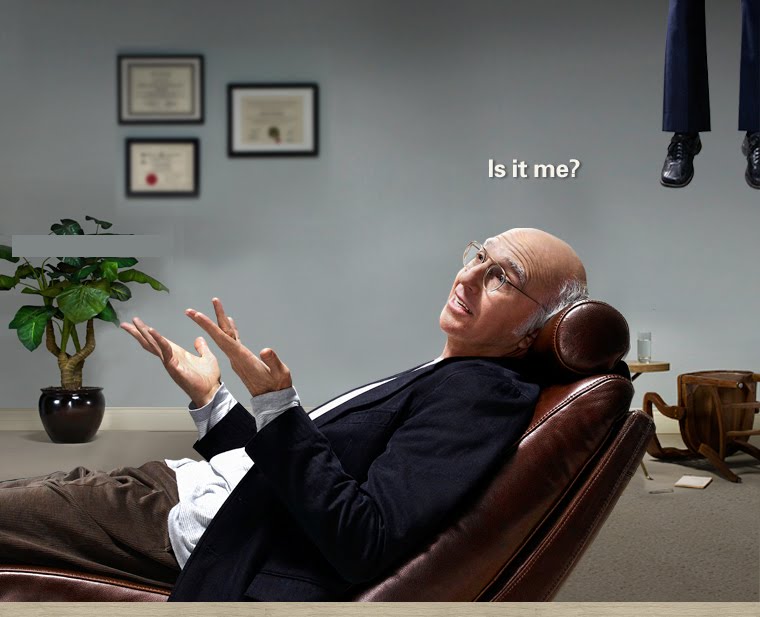
Curb already was just about as good as TV comedy gets these days. Expectations for the new season couldn’t have been higher, after an amazing sixth season that introduced some terrific new characters to the show. And then we found out that it was going to be the Seinfeld reunion season. But Larry David and his people pulled it off. The amusing portrayals of the Jerry Seinfeld, Jason Alexander, Julia Louis-Dreyfus and Michael Richards were a lot of fun to watch, especially with all the other great characters the show has at its disposal. My only criticism: more Leon, please. I can’t wait for 2011’s season eight.

It’s Always Sunny in Philadelphia Season 5

It is easy to forget this show, since FX likes to power through its seasons in just a few months. Sunny‘s season ended way back in December, right around when they came out with their direct-to-DVD movie. This latest season was a little uneven, with a fair number of episodes that fell a little flat. However, there were some really great episodes too, such as “The World Series Defense.” The show keeps pushing just how horrible its main characters are, and how disgusting Frank is, usually with comic results. Sunny kept me coming back for more, and I can’t wait for the next season, so if that’s not a success, what is?

Archer Season 1

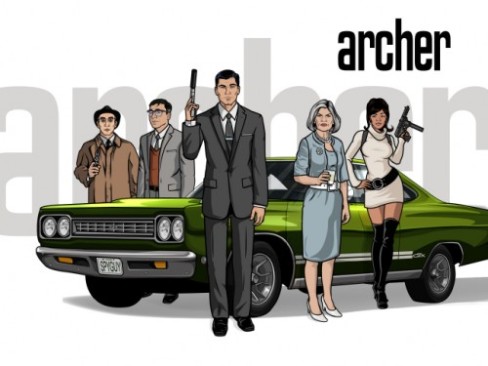
Keeping with the FX theme, Archer maintained the Frisky Dingo tradition of short seasons, going only ten 30-minute episodes before forcing us to wait a year for more. But that’s OK, because it also maintained the Frisky Dingo tradition of being really funny. It took me a little while to get used to H. Jon Benjamin’s voice coming out of character that looks so different from the kind he usually plays, but really this show hit its stride quick and maintained it for the duration. I hope it has a long, healthy run.

Community Season 1

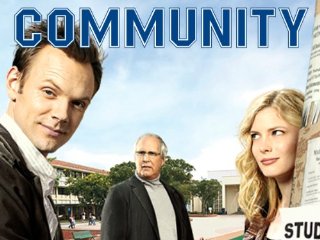
After a somewhat slow start, Community eventually developed into my favorite show on Thursday nights. The blend of off-the-wall comedy and satire is really good, and the whole cast has a great dynamic. This is a show that has made my roommates stop in my doorway and watch until the commercial break. As far as I know, my whole family loves it. Now that the season’s over, this is probably the show I will miss the most until the fall. That is assuming NBC survives that long.

Parks and Recreation Season 2

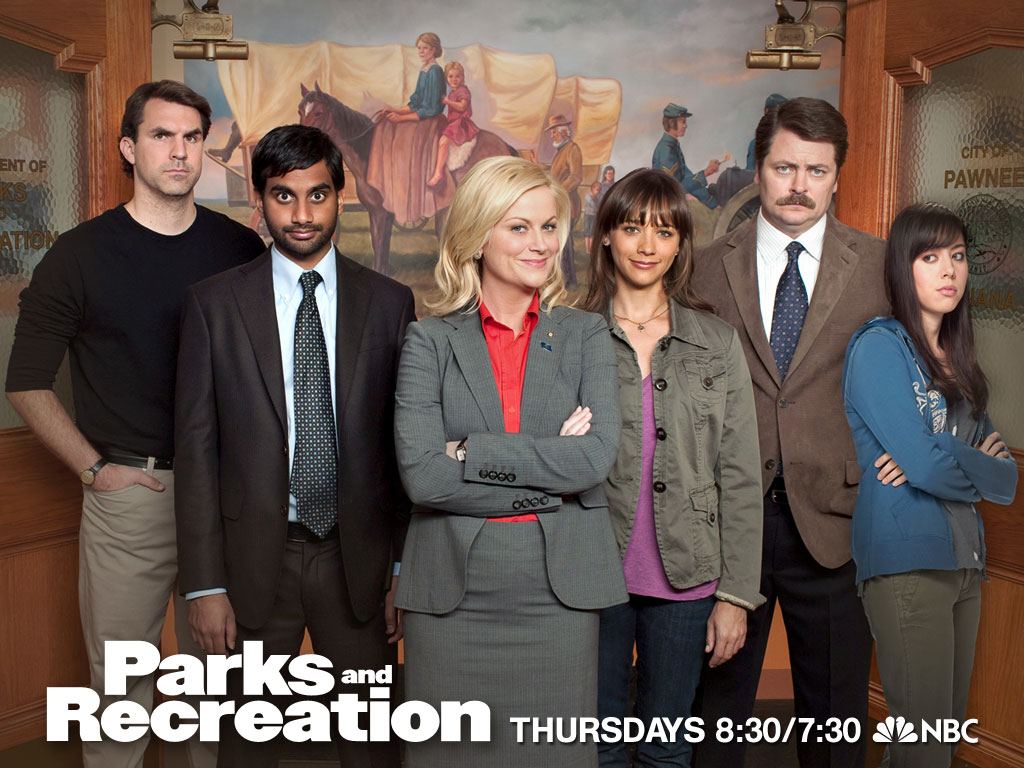
This year Parks and Rec developed into something worth watching. When it’s at its best, you could compare it to The Office at its prime. And even when it’s not, it is still better than The Office is today. I really like the writing on this show, I love that they were able to parody both the Henry Louis Gates arrest controversy and the Mark Sanford scandal. Hell, I love how all the characters say “Mark Brendanawicz” the same way whenever they need to talk to him. A number of great guest stars this season too, including Louis CK and Rob Lowe. The show got demoted to a mid-season replacement next year, it deserves better.

The Office Season 6

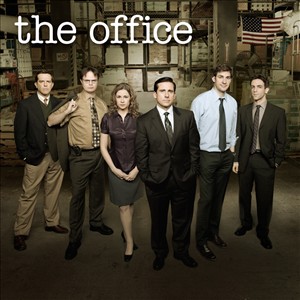
Remember how Seinfeld bowed out when it was on top? And Friends didn’t? And how Friends turned into a weird mostly romantic show with only occasionally good comedic episodes? Well, The Office decided to take the Friends path. This season was all about Ross and Rachel – I mean Jim and Pam – getting married and having a baby. Along the way we are given a new romance between Andy and Erin, and of course Michael has his troubles with women too. Don’t get me wrong, they had to do the Jim and Pam stuff, they were committed to that well before this season. But they needed to make more room for the rest of this funny cast. There were a few gems over the past year, but not enough to make you come back to the show if you had given up on it and certainly nothing to bring new fans in.

30 Rock Season 4

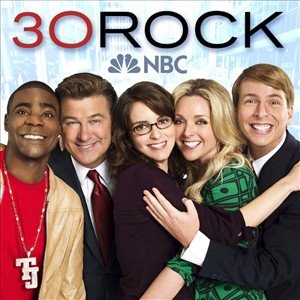
My gold standard for network comedy going into this season did not disappoint. They recognized that Jack is a really great character and gave a lot of the season to him, which was a very wise move. Liz got caught up in romantic troubles, which were funny mostly because of how terribly they all turned out. Tracy, Jenna, Kenneth and the rest of the cast got a little less to do, but still managed to keep me laughing. I mean, how can you not laugh at Jenna starting a relationship with a man who impersonates her? Or Tracy’s attempts to reconnect with the common man? Great stuff. The show also brought in a ton of great guest stars, including Michael Sheen and Julianne Moore. I would have liked to see more down with the Danny character, but the cast was already too big for a half an hour show anyway. Great stuff.

What else is there? South Park is in its mid-season break. Breaking Bad still has a while to go, but waiting to post this until June 13 seemed silly. Of course Lost ends on Sunday, in an event that seems to blanket all of ABC that day. I’m looking forward to see how that turns out. I’ve given up on Fox shows at this point. I mean, sure 24 ends on Monday, but does anyone really care? Even when this latest season picked up, it was no where near what the show was in its prime. Is there anything else I’m missing out on?

Retrospecticus: The Dead Series


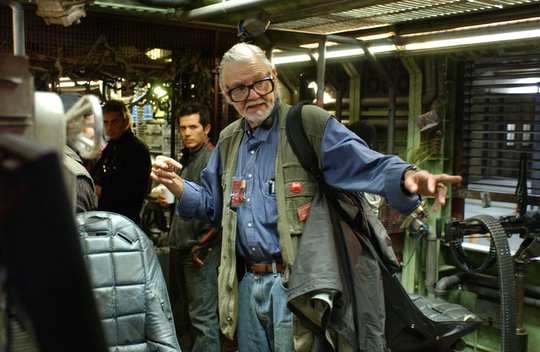
For 42 years George A. Romero has scared the bejeezus out of audiences with his army of the undead. From the groundbreaking Night of the Living Dead to his latest indie installment Survival of the Dead, he’s clearly established himself as the premier authority on zombie films. Combining dark humor with gore and underlying political commentary, no one can put em out like Romero and he’ll never be surpassed in the zombie genre.

In celebration of his latest release, currently on “On Demand” and to be released to limited theaters in May, I present you with a retrospective of his spooky series thus far.


Night of the Living Dead (1968)

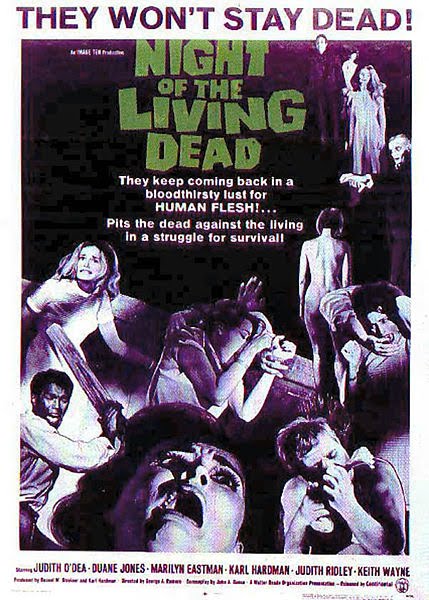
: What can I say that I haven’t already about Night of the Living Dead? Were talking about the progenitor of the modern zombie genre as we know it. A group of people, held up in a farm house, fighting off the undead. So simple you wonder why it had never been done before. It may not be as impressive by today’s standards but you have to remember where this film was coming from. A fearless independent film with much to say about “American society, Cold War politics and domestic racism”. Those were the words of critics and moviegoers alike. It just goes to show you the impact it had as both a groundbreaking piece of intelligent indie filmmaking and as a classic horror flick.


Dawn of the Dead (1978)

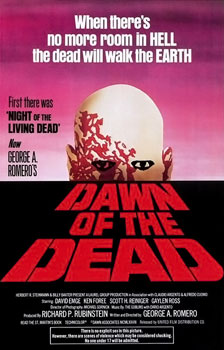
: Years later when Romero was visiting the Monroeville Mall in Pennsylvania, he was inspired to use the setting and what better subject could occupy the mall than the walking dead? This would go on to be the highly successful 70s hit Dawn of the Dead one of my favorite horror films. Again pitting a a group of survivors (led by Kenan’s dad from Kenan and Kel) defending themselves from zombies, although this time in enormous surroundings. Dawn would prove to be a landmark in makeup effects (by Tom Savini) and the genre in general. Filling the script with hits at modern day consumerism and the excess of the seventies, this film goes deeper than your average gorefest and is a must see.


Day of the Dead (1985)

: Originally envisioned as Romero’s epic of Gone With the Wind proportions, Day of the Dead fell somewhat short of expectations but over time has cemented it’s status as a cult classic. Set in and around an underground military base in Fort Myers, Florida. Day of the Dead told the story of a group of scientists and soldiers trying to find a cure, or at least solution to the zombie pandemic. Romero describes this one as “A tragedy about how a lack of human communication causes chaos and collapse even in this small little pie slice of society”. Personally I’ve always thought it was the scariest installment and it’s definitely worth checking out for Tom Savini’s outstanding effects.


Land of the Dead (2005)

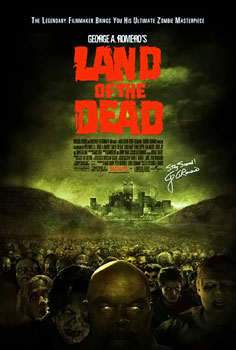
: Almost twenty years passed before production started on Romero’s fourth installment. Romero had worked on a script years back but it was until the new millennium that he’d realized how culturally relevant it had become. Land portrays a post-apocalyptic city torn into two halves. One is the luxurious yet immensely exclusive city “Fiddler’s Green” run by the selfish Paul Kaufman (Dennis Hopper.) While the other half of the population must live in the poverty stricken ghettos on the outskirts. Meanwhile we see the zombies as they start to evolve. Learning to use weapons and grasp simple concepts. All wrapped up it’s a witty and dark piece of action/horror and Romero’s first film to have some well known stars. Aside from Dennis Hopper, Simon Baker (from that show The Mentalist) stars as the hero and John Leguizamo is solid as a weapons clad street rat. It’s a surprisingly entertaining zombie movie that turned out to be both a critical and box office success.


Diary of the Dead (2008)

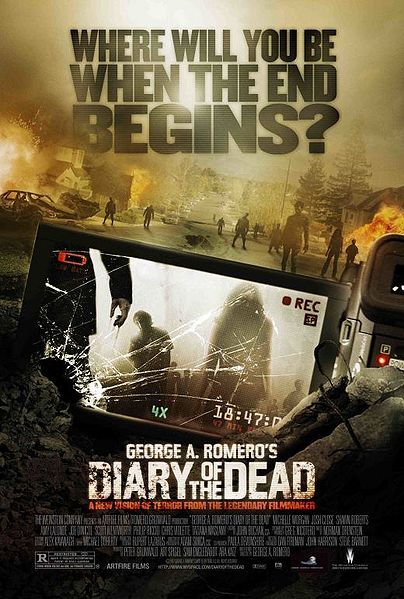
Easily the weakest of the series is the handheld melodrama that is Diary of the Dead. I already reviewed it once on this blog so I’ll keep this short. This installment follows a group of young filmmakers making a horror film when all of a sudden, you guessed it! Zombies start to appear and wreak havoc. This was basically Romero’s attempt to satirize the Youtube generation but it doesn’t feel like Romero is still in sync with younger audiences. His portrayal of young adults feels forced and unnatural. Not to mention the shaky cameras really don’t add much to the experience. It was kind of a neat idea but it just came off as cheesy and amateur, not god awful just disappointing.


Survival of the Dead (2010)

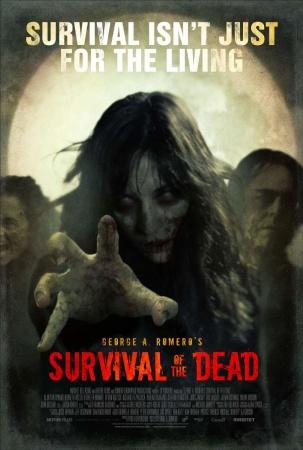
: After Diary I pretty much accepted that Romero was past his prime. I didn’t have much interest in another installment but being that Paul is such a super fan I knew I’d see this somehow. Miraculously, I liked it very much, probably even more than Land. What’s great about Survival of the Dead is it’s approach to create conflict out of characters we care about. Sure some of the folks here are a little over-the-top but it’s fun to watch and made even better by throwing in everybody’s favorite rotting corpses. Survival tells the story of two feuding families the O’Flynns (who want to exterminate all the zombies) and the Muldoons (who wants to cure the zombies) trying to get along, living on an island off the coast of Delaware. Bring a small group of survivors into the mix and things get messy. It’s a clever idea with some great entertainment, that’s really only brought down by the slight silliness of the two family heads (Patrick O’Flynn and Seamus Muldoon), both of which are for some reason Irish. All in all it’s a well made independent feature that’s a welcomed installment to the series.

How many more will Romero make? Who knows but I’m glad to see he still has zombie related stories that are worth telling. This is the kind of stuff I hope to see when AMC and Frank Darabont do their upcoming zombie series The Walking Dead due out next October. As long as they follow the Romero guidelines they’ll be sitting pretty.

Retrospecticus: Martin Scorsese

I was kind of going back and forth on whether it was worth it to commit to such an ambitious post. But with Shutter Island coming out this weekend, I figured I probably won’t get as good a chance to pay tribute to one of my favorite filmmakers and perhaps the world’s greatest living director, Martin Scorsese.
Mean Streets (1973)

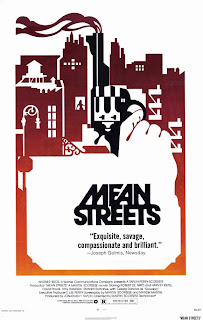
I’ve only seen about half of Scorsese’s first film Who’s That Knocking At My Door and haven’t seen Boxcar Bertha, but this is undoubtedly Scorsese’s first important film and the one that established him as a cinematic force to be reckoned with. In Mean Streets, you can see all of Scorsese’s signature touches: the rapid fire editing, the violence, the themes of Catholic guilt, the rock soundtrack, and Scorsese’s already astounding visual prowess. The film paired Scorsese once again with Harvey Keitel (who starred in Scorsese’s first film) and marked the director’s first collaboration with Robert DeNiro, who gives just one of the many great performances he would give during the ’70s. There’s a certain looseness to the film as a lot of it has this improvised feel and there really isn’t a whole lot of plot to speak of. But Scorsese seems like he’s never been too concerned with story, and Mean Streets is a prime example of his ability to just completely immerse you in this fast-paced, dangerous life style.
Alice Doesn’t Live Here Anymore (1974)

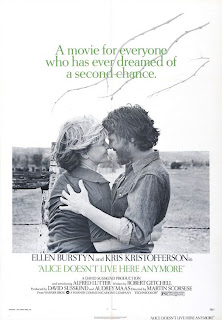
This film’s a little bit of an anomaly in Scorsese’s early career, but already shows him exhibiting a certain amount of versatility as a director. It seems like despite the rise of the feminist movement in America in the 1970s, there’s only a handful of films of that era that reflect this changing of ideals, and this is certainly one of the best examples as Ellen Burstyn stars as a widow trying to pursue her dream of becoming a singer while dealing with the baggage of being a single mother. The film’s ending kind of underpins the film’s feminist message, but it’s filled with some great performances and helped break Scorsese further into the mainstream while helping Burstyn win an Oscar for her performance.
Taxi Driver (1976)

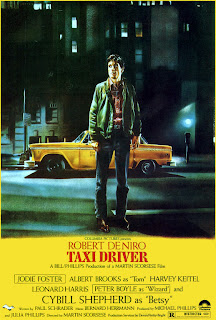
I don’t think I could ever say that Taxi Driver is one of my favorite films due it’s bleak subject matter, but it’s a film that I’m absolutely fascinated by every time I see it. It’s just an absolutely perfect collaboration between screenwriter Paul Schrader, Scorsese, and Robert DeNiro in one of his most brilliant performances. Taxi Driver paints one of the most haunting and masterful portrayals of alienation by giving us one of the cinema’s most iconic anti-heroes, the seriously disturbed Travis Bickle. And the film is first and foremost a unrelentingly dark character study, but also stands as a document of what a truly nightmarish place New York City had become during the ’70s. I’m having a hard time thinking of anything that hasn’t already been said about this film, but it’s in my opinion one of the best films to come out of the ’70s and if you haven’t seen it you should, I’m talking to you Seeeaan.
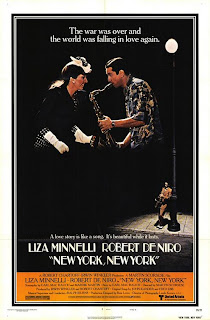
New York, New York (1977)

Coming off of the success of Taxi Driver, with New York, New York, Scorcese set out for something a little more ambitious, and this is one of the few times Scorsese’s ambitions have gotten the best of him. Though New York, New York isn’t without it’s merits, I can’t help but look at it as a noble failure. The film tries to pay homage to the MGM musicals of the 40’s and 50’s with it’s colorful set design, but Scorsese fuses this with his darker character-driven tendencies, and these two clashing styles really can’t help but make the film feel a little uneven. Liza Minnelli gives quite a good performance, but DeNiro’s performance just seems a little out of place in a film like this. Still, even in a slight misfire like this film, Scorsese’s visual playfulness is still intact, plus you gotta love the film’s famous title song.

Last Waltz (1978)

I wasn’t really sure whether to include any of the documentaries Scorsese directed, but it’s hard to deny that The Last Waltz ranks among the best rock films ever made, so I figured it was worth including. For those that don’t know, The Last Waltz documented the final performance of The Band before they decided to go their separate ways and brought together some of the biggest names in rock for this final performance. What makes this film stand out, besides it’s inclusion of so many great artists is the way Scorsese’s cameramen capture the concert in such a thorough and intimate way. I think this was actually the first Scorsese film I ever saw, and I’m kind of having a hard time remembering a lot about it, but I can’t remember any other time that I was as impressed with a concert film, and I’ve seen quite a few.

Raging Bull (1980)

After the box-office failure of New York, New York, Scorsese supposedly sunk deeper and deeper into cocaine addiction, and it was Bobby DeNiro who convinced Scorsese to take on this story of boxer Jake LaMotta. I think I’ve heard that Scorsese believed Raging Bull would be his last film, so in turn set out to make it the best film he could possibly make. Well, I think Scorsese achieved that goal and then some, as Raging Bull is probably the most mesmerizing film Scorsese has ever made, and truly an American classic. The boxing scenes in this movie are among the most frightening and visually stunning depictions of the sport ever put to film, and the more dramatic scenes are handled with the intensity of a truly magnificent director. However, much of the films brilliance has to be owed to Robert DeNiro who throws himself completely into a character that’s hard to like, but even harder to take your eyes off.
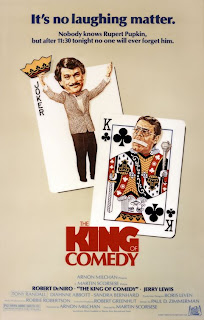

The King of Comedy (1982)

This is one of Scorsese’s films that I’d kind of like to see again. I remember being rubbed the wrong way a little bit by The King of Comedy, as I kind of felt uncomfortable about the tone of the movie. It’s almost hard to watch some of the scenes in The King Of Comedy as DeNiro plays another borderline psychotic who is obsessed with a talk show host whom he basically stalks throughout the whole movie. Jerry Lewis gives a very good performance as the aforementioned talk-show host and I think Scorsese has said that this film contains his favorite performance of DeNiro’s, and I can kind of see why, but he’s still more or less doing a variation on Travis Bickle. It seems like the rest of the 80’s were filled with films that were interesting, but not among Scorsese’s best work, and though some would say this film’s better than that, I can’t help but feel like this is a minor work.

After Hours (1985)

Definitely not one of Scorsese more well-known films, but one that I’m still fond of. After Hours shows Scorsese exploring somewhat lighter material after the dark character studies The King of Comedy and Raging Bull, with a story chronicling one crazy night in the life of Paul Hackett, played not by Robert DeNiro, but Griffin Dunne of all people. It’s a modest little film, but one that still shows Scorsese’s ability to still pull off smaller, more independent features in a decade ruled by box-office spectacle.

The Color of Money (1986)

I’m pretty sure I’ve read that Scorsese has said that he did this sequel to the 1961 film The Hustler just so he could get funding for The Last Temptation of Christ. But from watching the film you probably wouldn’t be able to tell, as it show’s Scorsese innate ability turn out quality work, even when it’s one of his more mainstream ventures. It’s also entertaining as hell to see the great Paul Newman reprise the role of Fast Eddie Felson, and seeing him facing of with Tom Cruise makes for an interesting dynamic. And though it’s far from Newman’s best performance, it helped him win his long-overdue Best Actor Oscar.
The Last Temptation of Christ (1988)
I actually wasn’t able to get around to seeing this one before completing this post, sorry. I guess I just have a hard time committing to watching controversial Jesus movies, which also explains why I still haven’t seen The Passion of The Christ either. I really didn’t want to postpone this post any longer from being finished, I hope you’ll forgive me.
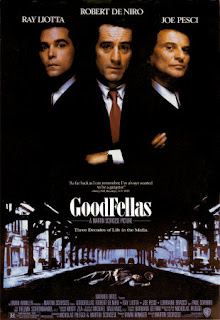
GoodFellas (1990)

After a series of somewhat mixed results during the eighties (or at least by Scorsese’s standards), GoodFellas saw Scorsese returning to the excellence he had shown earlier in his career. GoodFellas is undoubtedly one of my favorite films of all time, and one of the few films I can watch over and over again and not get tired of. For me, GoodFellas captures the mafia lifestyle in a way that really no film has managed to do. But GoodFellas also steers clear of glamourizing the mafia, as Henry Hill’s downfall is just as compelling to watch as his rise to the top. This is quite simply a story Scorsese was born to make, by utilizing his signature fast-paced visual style as well as his penchant for troubled, violent Italian-Americans, GoodFellas is nothing short of a classic.
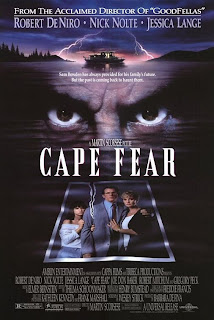
Cape Fear (1991)

Coming right off the heels of GoodFellas, you could say Cape Fear might have been somewhat of a letdown, but I’d say it’s still a first-rate thriller by any measure. I haven’t seen the 1962 original film, but you can see that the film pays homage to the thrillers of that time as it has a very Hitchcock-ian feel to it. At the center of this incarnation of Cape Fear is Robert DeNiro’s interpretation of Max Cady, and though you could say DeNiro goes a little over the top with his performance, he’s still undeniably fun to watch, and the always reliable Nick Nolte and Jessica Lange are quite good as well. You could say that this is an example of Scorsese’s more mainstream, and therefore less personal projects, but I think it’s still a very entertaining thriller even if it doesn’t rank among the director’s most interesting work.
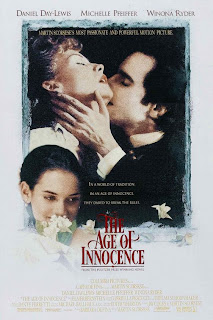
The Age of Innocence (1993)

This is another Scorsese film I’d kind of like to see again, because the first time through I couldn’t help but find this movie a little boring. I guess I just have a hard time getting into the whole 19th century upper-class costume drama thing, although I still found it to be an interesting venture for Scorsese as he’s definitely going out of his comfort zone here. Daniel Day-Lewis gives what might be his most restrained performance, but as far as I remember Michelle Pfeiffer gives the real stand-out performance as the two of them as well as Winona Ryder are stuck in a forbidden love triangle. Though I really couldn’t find myself getting engaged in this story, I still found the film to have not only some nice set design, but also an undeniable visual flair to it, but I guess that’s something you can always count on Scorsese for.
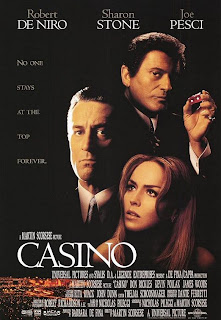
Casino (1995)

When this movie first came out, it seemed to get a kind of mixed response due it’s similarities to 1990’s GoodFellas. Though there are a number of things it has in common with that earlier film, it’s still a very good film by any standard and another example of Scorsese’s mastery of the crime genre. Scorsese does a great job of capturing all of the glitz and glamour of the Vegas lifestyle while giving us this fascinating account of Ace Rothstein’s rise to the top of a Vegas empire. This would mark the last collaboration between Scorsese and Robert DeNiro, but there’s always hope that they’ll do one last great movie together someday.

Kundun (1997)

Another example of Scorsese taking on material that you wouldn’t think he’d be most suited for. I’d say Scorsese does with this material about as much as he can, but to be honest I couldn’t help but feel like the Dalai Lama just isn’t a charasmatic enough figure to deserve a biopic chronicling his life. However, it seems like Scorsese and cinematographer Roger Deakins manage to avoid this somewhat by shooting the film in a way that’s visually stunning, but I still can’t say Kundun ranks among Scorsese’s most memorable work.
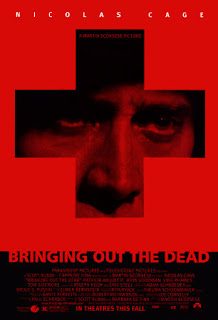
Bringing Out The Dead (1999)

This is probably most notable for it being the first collaboration between Scorsese and screenwriter Paul Schrader since 1976’s Taxi Driver. You can definitely see some similarities between Bringing Out The Dead and Taxi Driver, as Nicholas Cage plays an ambulance who’s slowly becoming dissatisfied with his nocturnal lifestyle. However, Bringing Out The Dead‘s filled with a much more kinetic energy, as well as some great supporting performances from the likes of John Goodman, Ving Rhames, and Tom Sizemore. This has got to be one of Scorsese’s more underrated films, as it’s a very good film whether you take it on it’s own terms or as kind of a companion piece to Taxi Driver.
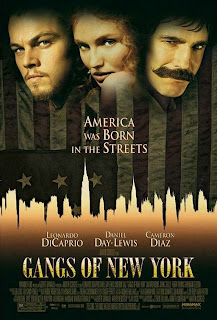
Gangs Of New York (2002)

By the early 00’s, it seems Scorsese was bent on getting that Oscar that had never been given to him for any of his past achievements. What Gangs of New York does very well is immerses you in a somewhat overlooked period in American history, when the streets of New York where overrun with looting and violence. A great deal of the film’s praise has to be owed to the incredible set design that creates this living, breathing world that seems taylor-made for Scorsese’s sensibilities. And at the center of the film is Daniel Day-Lewis, providing a deliciously villainous role as he’s paired against Leonardo DiCaprio in what would mark Scorsese’s first but certainly not last pairing with the actor. I guess the one thing that keeps this from being a great Scorsese film is the fact that when you get down to it, Gangs of New York is a simple revenge tale, and Scorsese doesn’t quite seem able to make this story seem more complex than that.

The Aviator (2004)
This film once again saw Scorsese turning to Leonardo DiCaprio as his leading man in this riveting biopic about the earlier years of Howard Hughes. And after a somewhat underwhelming turn in Gangs of New York, DiCaprio truly shows that he’s the real deal with this astounding performance that might be his best yet. Another great performance comes from Cate Blanchett, who proves just what a talented actress she is by being able to breath life into one of the most recognizable and beloved of all Hollywood starlets, Katherine Hepburn. And besides that, The Aviator shows another example of Scorsese’s ability to take a troubled and complex figure and bring you into his world, although this certainly qualifies as lighter material when you compare it to the likes of Raging Bull or Taxi Driver.
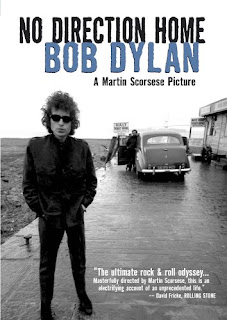
No Direction Home (2005)

I know this wasn’t given a theatrical release or anything, but I figured it deserved to be included as it probably ranks among my favorite documentaries of all time. And this isn’t a film that I’m fond of simply for the fact that it’s about Bob Dylan, one of my favorite musical artists ever, it’s just simply a great documentary. We get a fascinating look in to how Bob Dylan came from humble beginnings in Minnesota to becoming the “voice of generation” only to become the target of vitriol and disgust by his own fans after “going electric”. By telling the story of Bob Dylan, No Direction Home also manages to paint a detailed picture of Greenwich Village’s early sixties folk scene as well as the changes that were starting to happen in America during the first half of that turbulent decade.
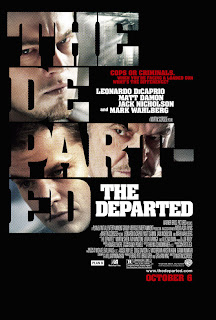
The Departed (2006)

When Scorsese returns to the crime genre, and in this case the mafia, good things happen. But this is just as much a cop movie as it is about the Irish mafia, and Scorsese manages to give us a crime epic that’s brutal, intense, funny, and a testament to Scorsese’s ability to knock you on your ass when he gets a hold of a story of this sort. DiCaprio is quite good in another demanding role, and I feel like this might of been the movie where Matt Damon turned into Hollywood’s most reliable “everyman”, and of course it’s always fun to see Jack Nicholson chew up the scenery in a role like this. It might not be Scorsese’s best film, but I think it’s a film that rightfully earned Scorsese that Oscar that he’d had his eyes on for all those years.
Shine A Light (2007)
Didn’t really feel like writing about this one again, but if you really care what I think about it there’s always this.
Shutter Island (2010)
Not sure how soon I’ll get around to reviewing this considering I’m pretty exhausted from writing this Retrospecticus. If any else wants to review it, feel free.

Mass Good

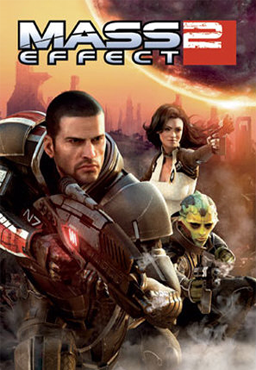
Mass Effect 2

Bioware is one of my favorite video game developers. The first Mass Effect is a big part of that. That game, though surely flawed, was among my favorites back in 2007. Set in a universe somewhere between Star Trek and Star Wars, Mass Effect delivered an amazing fusion of RPG and third person shooter gameplay that seemed tailor-made for me. But it had it’s problems: inventory management was clunky, the combat wasn’t quite there and planetary exploration was more of a pain than it should have been. That Bioware could fix all those issues and improve on everything else is an amazing feat, and the reason why Mass Effect 2 is one of the best games I’ve ever played.

Once again, you step into the ambiguous shoes of Commander Shepherd. You are still free to make the commander exactly how you want, male or female, saint or jackass, master of weapons or skilled biotic. Or you can continue as your Shep from the first game, carrying over all the decisions you made, but giving you the freedom to change your appearance or class. That is definitely the way to go, since the story of the first game has significant ramifications all the way through the second, and it is really cool when you know you were the one to make those calls.

The first game’s trademark conversation wheel is back and used greatly. The cast of characters are great and I never grew weary of all the talking. Bioware’s added an interrupt feature, which lets Shepherd, well, interrupt people. It’s pretty sweet. Paragon options are usually pretty cool, instead of turning Shepherd into some sort of whiny bitch. Renegade options seem to be awesome too. The rest of the RPG mechanics have been streamlined. They’ve done away with weapon skills and the majority of passive traits, characters only have a few skills for you to level and it’s easy to figure out. There’s no more inventory either, just an upgrade system that is also very straightforward. Don’t worry, you can still customize Shepherd’s armor, and with a lot more flexibility than I would have expected. For example, I played through the majority of the game with the commander wearing golden pimp armor.

The combat system has been massively upgraded. The framerate is smooth. The guns feel unique. There is ammo, but it’s not that big a deal. Most importantly, Bioware made shooting dudes fun. The controls are tight enough now that the combat is just as good as any other modern cover-based shooter. But when you throw in all the crazy combat, biotic, and tech skills you and your party have, you have some of the most entertaining gunplay I’ve seen.

The worst part of Mass Effect was going to planets and exploring them in the Mako. It was boring, clunky, and felt like a waste of time. Well, that’s gone. Now you just scan planets. Most of the time, you’ll end up finding a bunch of minerals you can use for upgrades. Every once in a while, you’ll find a side mission. When that happens, you shuttle down to that exact spot and take care of business. No aimless driving around. Great.

That’s Mass Effect 2 for you. Everything is great. It’s hard for me to find flaw in a title this good. I guess you could argue that the final story mission is a little disappointing, since it does a lot of setting up for Mass Effect 3, but it works really well with the rougher tone of the game. To think that Bioware could put out a game this good just a couple months after putting out the great Dragon Age: Origins is amazing. That’s why I can’t wait for The Old Republic, Mass Effect 3 and whatever else they’ve got cooking. Bioware is an outstanding studio.

Off the Charts

Uncharted 2: Among Thieves

I sure am glad that this is the year I decided to get a PS3.  Last spring I got my hands on the PlayStation exclusive that looked best to me, Uncharted (what can I say, Metal Gear Solid 4 intimidated me).  That was a great game, a fun story with competent gameplay and top-notch graphics.  Now its sequel is here and it blows its competent predecessor, along with pretty much every other game, away.

The first few hours of Among Thieves are about is good as video gaming can be right now.  I’ll tell you why.  On one level, the graphics are spectacular.  This might be the best looking game that a person can buy right now.  On another, the story is really good for a game.  It’s kind of an Indiana Jones-esque story about the quest for Shambhala (Shangri-la) complete with a love triangle, nazis and supernatural monsters.  It’s a lot of fun, especially thanks to some really enjoyable writing and top-notch voice acting and mo-cap.

The playing of Uncharted 2 is a vastly improved experience as well.  Enemies are fun to fight and need a much more reasonable number of bullets to take down.  Hand-to-hand combat is a lot better.  The puzzle levels are fewer and easier, and the climbing is somehow more enjoyable too.  Naughty Dog took everything that didn’t work about the original and made it work.

Obviously, the game is not perfect.  It couldn’t be.  The latter part is not up to the quality of the beginning of the game.  It’s a little frustrating that you cannot run out of melee combat whenever you want.  There are maybe a couple instances where what you need to do is a little vague.  But when an experience is this good, you just don’t care.

Playing through the single player is a good enough time to justify this purchase.  When you’ve done that, there are plenty of unlockables to invest in to keep you coming back.  Furthermore, Naughty Dog has added in a complete multiplayer suite, with all the co-op and competitive modes you’d expect from a modern game.

Seriously, if you have access to a PlayStation 3, you need to get this game.  If you don’t have one, start saving.

So I Sing a Song of Love

The Beatles: Rock Band

I just read that Guitar Hero 5 was comfortably outselling The Beatles: Rock Band. The fuck is up with that? The only thing that seems interesting about that game is the questionable use of Johnny Cash and Curt Cobain as playable characters. On the other hand, The Beatles: Rock Band is easily the best gaming experience I’ve had all year.

You have to understand that this is completely different from a game like Guitar Hero: Metallica or even that Rock Band: AC/DC pack. This is no simple track pack, this is like a documentary. A documentary game. Everything was designed to take you on a journey through the Beatles’ career. From the breathtaking opening cinematic to the final credits of story mode, it’s obvious an incredible amount of care went into making this title possible.

The main feature is the story mode. You start out playing in clubs in England, and play in all the big venues you’d expect, Ed Sullivan, Shea Stadium, and Budokan. After that, as we all know, the Beatles went studio. The game’s answer for that are these sweet dreamscapes that are somewhat interpretative of the lyrics or reflective of the Beatles films. All in all, the game provides a delightful glimpse at what it was like to live through the Beatles.

There are 45 songs in the game. That’s fine. Sure, it would be nice to have more, but these are 45 great songs. I’m sure Harmonix wanted to maximize DLC sale, and I can’t blame them. Everything sounds great and it’s all charted well. The big new feature is vocal harmonies, and I can’t imagine going back to a game without them. Playing and singing is incalculably fun, you really have to try it.

I’m bored of writing this. Have been since I started. I shouldn’t have to write this. You know how you feel about the Beatles. If you like that music at all, buy this freaking game. Even if you don’t like video games, buy it. It’s so good.