
Boy N’ Da Hood

Boyhood

These days, movies are for the most part very, very derivative.  Even the really good films from the last few years have usually had some sort of precedent, or are in some way an homage to some well-established style or subgenre.  This is not a terribly profound insight by any stretch of the imagination, but I think it helps to put in perspective why Boyhood is such a special little film.  I use the word “little” because despite being an ambitious 12-year year production, in which director Richard Linklater would shoot more scenes with his cast with each passing year, it is nonetheless a small-scale story.  And yet, because Linklater decides to focus on the smaller details of growing up while combining it with this experimental approach, he’s ended up with something that feels entirely unique and singular.  And yes, I’ll admit that I probably couldn’t have come up with a dumber title for a review of such an undeniably great movie.

As I said, director Richard Linklater decided to shoot this film over the course of 12 years, which thus gave him the ability to capture the formative years of actor Ellar Coltrane and his character Mason.  Of course, this doesn’t really explain what Boyhood is about, and that’s not an easy question to answer, since it’s kind of like asking “what is childhood about?”  But on a surface level, the movie is about Mason’s travails from ages 5 to 18, as we see the way different events and different people come and go while shaping Mason into the person he eventually becomes.  Unsurprisingly, the boy’s mother (played by Patricia Arquette) and dad (Ethan Hawke) play the most prominent role of any of the adults in Mason’s life, while Mason’s sister (played by Linklater’s daughter Lorelei) spends a lot of time hanging out with Mason early on in life, and then kind of drifts away as the years go by, as is the case with most siblings.

Perhaps this is as good a time as any for me to explain why I said earlier that Boyhood feels like a film without precident.  Well, the best example I can give happens early on when we see Ethan Hawke explaining to his young son why the Iraq War is bullshit and George W. Bush sucks.  Watching this scene, I had the reaction of thinking “Oh, yeah.  I guess that’s a timely reference.”  And then I instantly realized, “Holy shit!  I’m not watching a period piece.  They filmed that scene in the exact time period it’s taking place.”  Which is something I kept having to remind myself of, as we see many references to things that were going on in the culture at the time the movie was being filmed, despite the fact that the film doesn’t have the luxury of hindsight.  So instead of ever feeling nostalgic, the movie is simply able to just exist within it’s own time period, and in turn gives the story this whole other layer of reality.

Then there’s also the obvious fact that we get to see each character grow older as the actors also grow older with them.  Having known about Boyhood‘s production for a while, I was a little surprised at how the film progresses in a very non-pandering way, without a single “one year later” thrown in to let us know how much time has passed.  Instead we’re sort of forced to recognize what year it is with each childhood or cultural milestone that greets Mason, as well as how much his appearance has changed.  And having been a fairly young person during the time period Boyhood takes place, it was hard for me not to constantly compare Mason’s childhood against my own, since I did live through a lot of these years with the same sense of youthful naiveté and helplessness.

Still, despite all these organic elements, Boyhood is a work of fiction, and I think it’s completely valid to question whether it works on a dramatic level, though I’d say it completely does.  It’s hard to tell exactly how much of the story Linklater had mapped out in advance, but I’d probably guess about half of it.  There are definitely some storylines where it seems like there was a natural arc in mind, while other parts of the story seem like they would’ve been dependent on how the actors matured, as well as what would’ve been going on in the country (and the film’s Texas setting) at the time.  Also, because Boyhood seemingly aims to capture so many different aspects of childhood, I really responded to the way the film would quickly change tones from light and funny to raw and painful within an instant.  Because sure, being a kid can be a fun and uninhibited time in one’s life, but even the best parents in the world can’t keep the proverbial monsters away forever.

The following is probably going to sound a bit pretentious, but it feels like a nice coincidence that I just started reading Anna Karenina (only 700 pages to go!), since the back cover of my copy of Tolstoy’s supposed masterpiece (again, I still got 700 pages to go) has a quote that I think could easily be applied to Boyhood.  The poet Matthew Arnold claimed that Tolstoy’s novel was not so much a work of art as “a piece of life”, and despite being a work of complete fiction, that’s how I’m starting to look at this movie.  Because it doesn’t entirely feel like a narrative film to me, though it’s definitely not a documentary by any means, so it instead exists in this untapped nether region between fact and fiction that I’ve never seen before in a film.  And if that isn’t the kind of shit we go to the movies for, I don’t know what is.

MIyazaki Month: Spirited Away

Spirited Away (2001)

Most of if not all of Miyazaki’s films have received universal acclaim but only one has received the film industry’s top honor. At the 75th Academy Awards, Spirited Away took home the Best Animated Feature award, beating out DreamWorks and Walt Disney Feature Animation. Does this make Spirited Away Miyazaki’s best movie? I’m not sure that’s a question that can be answered but I do know one thing, Spirited Away is my favorite Miyazaki movie.

Continue reading

Love Artificially

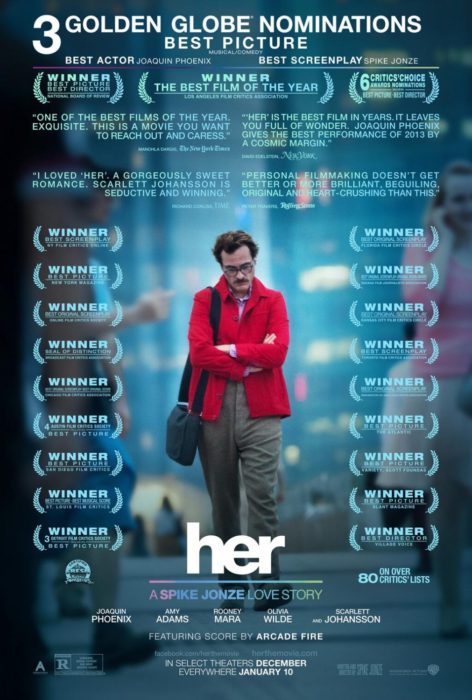
Her

Can I call Her the best sci fi movie of 2013? Maybe Pacific Rim is my favorite, but I’d look silly calling it the best. Gravity is really, amazingly good – but just because it’s set in space doesn’t make it sci fi, does it? I mean, we’ve been hanging out up there for a while now, and as far as I can tell that movie’s set in the present. Really, it’s just a disaster movie. But Her? Now that is some good old fashioned, hard core sci fi. You just might not notice it when it’s wrapped in such a relatable, dare I say human, shell.

I bet the pitch for this movie was: “What if someone fell in love with Siri?” It’s the future. Not the distant future, not some dystopia, but a few years from now. Theodore Twombly (Joaquin Phoenix) lives in LA, and he’s been trying to deal with his divorce from Rooney Mara by giving up much of his social life. He spends his time quietly coasting, listening to his computer read email and play melancholy music when he’s out in public, hardly interacting with anyone. But it’s been hard, especially because he spends his days working at a company that writes beautiful, heartfelt, handwritten letters. It is in this state that one day, seemingly on a lark, he buys a new operating system; the first with artificial intelligence. But as he gets to know his new digital companion, Samantha (Scarlett Johansson), Ted quickly finds out he got a lot more than he paid for.

There are a few predictable paths I could go on from here: I could talk about how Scarlett Johansson’s performance is confounding award shows across the country is fitting, given that how to treat an OS is one of the central dilemmas of the movie. But that’s probably more overhyped marketing than a real, significant controversy. I could write about how great sci fi always deals with real problems, whether they be the issues of the day or ideas bigger and more universal than that. But everyone knows that’s the case already, and it doesn’t speak to why this movie is unique.

So what makes Her special? For one, it’s deeply intimate. A movie like this, with only one physical lead, demands that actor bear his soul for us. Joaquin Phoenix, hot off his stellar, challenging performance in The Master, shows us something very different, but just as insightful, here. A lot of Her is spent in close up, looking at Ted as he processes his new life. But thankfully, he is never made to seem overly sad or pathetic. He’s lost, but he wants to be found, and he wasn’t always this way. As easy as it is to fall in love with ScarJo’s Samantha, the movie also makes it clear why she would love him.

Samantha is charming, and watching (or listening to) her growth is the joy of this movie. I don’t know what inspired the casting of Scarlett Johansson, but let any doubts be cast aside – she gives a great performance. She’s immediately disarmingly compassionate and hits all the right beats as she transcends her programming and begins to wonder what she really is and how she really feels. I did wonder if the knowledge of how beautiful a woman Scarlett Johansson is in the real world affected my reaction to Samantha in the movie. After all, in the movie she has to compete with a Rooney Mara and Olivia Wilde as a voice in a box, which might have been a tougher sell without knowing that yeah, she’s actually really beautiful too. I mean, maybe, right?

The movie has a distinctive, colorful, clean look. There are some weird visuals, but mostly everything is as spartan and pretty as tech companies like Apple would want the future to be. The movie’s set in future LA, but it doesn’t really feel like anything but itself; a metropolis full of people and spectacle, but easy to feel alone in. That feel is surely enhanced by the score by Arcade Fire, which, for my money, is better than Reflektor. As I left the theater I started to wonder if “Supersymmetry” had just become my favorite song on that album just because of this movie. It’s really good.

I also loved how gentle and open-minded Her was in its approach to its subject. It would be so easy for a story like this to twist itself into a story about perversion and sickness, about a character’s disconnection from reality. Her almost entirely avoids that pitfall. The movie never really fights against that idea that an AI has rights or deserves to be treated well, despite it being the centerpiece of so many iconic Star Trek episodes. It never looks down on anyone for following their heart. At most, it just questions the logistics of certain things. Her embraces love in any form, and I love it for that.

We are the first generation in human history that is being directly shaped by technology. We are growing up in a time when online connections are not only important, but can take precedence over real world ones. Rooney Mara and Olivia Wilde exist in this story to remind us of the potential downside of that. Maybe it’s not ideal, but Her shows us that it doesn’t have to be the end of the world, either. This is a story about a bunch of people whose lives are shaped by technology. It’s a story about love. It’s a story about life. And it’s hard to find fault in that.

Retrospecticus: The National

I feel like I should be pretty excited about The National’s new album, considering these guys are one of my favorite bands of the last decade or so, but I can’t really say that I am.  It probably has to do with the fact that I’ve been distracted by a bunch of really good albums that’ve come out recently, as well as the fact that The National aren’t the most appropriate band for listening to in the summer, especially compared to the summer jam-packed album Daft Punk are also releasing tomorrow.  There’s also the fact that The National have made a career out of crafting albums that take a while to grow on you, so it’s probably safe to say that the brilliance of Trouble Will Find Me might not hit me until a few weeks after my first listen.  But maybe this retrospecticus will get me excited, as it should make it apparent that The National are very very good at making albums I like.

Continue reading

God Only Knows

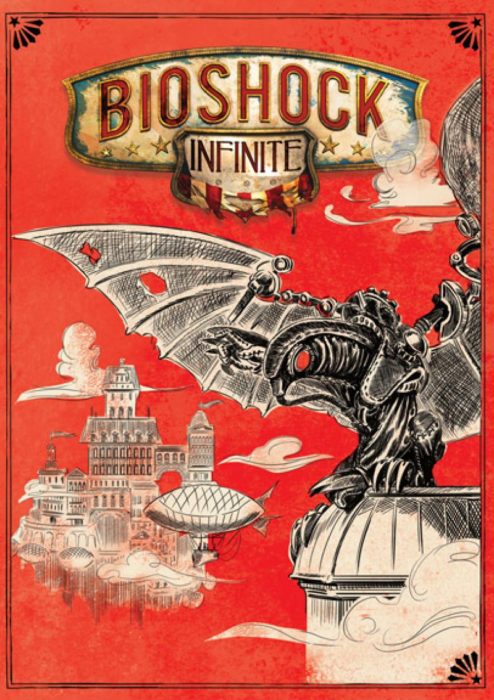
Bioshock Infinite

Not that many games get people talking about their stories, and few receive as much hype and controversy as Bioshock Infinite. In all the noise of that discussion and analysis, not enough time is spent discussing the actual gameplay. Which is a shame, because I had enough fun playing Infinite to recommend it on its combat’s merits alone. This is a hell of a game, one that cannot live up to the impact of the first game in the series, but I still believe will be remembered as an amazing title that will keep those conversations fueled for years.

It’s 1912. You’re Booker DeWitt, a Pinkerton sent on a quest to retrieve a girl to wipe out his massive gambling debt. That girl is Elizabeth, who is trapped in Columbia, a flying city. Columbia was designed to embody the American dream, but as time went on it became more extreme and finally seceded from the Union. Now it floats over the Atlantic Ocean as a perversion of the American dream, where the founding fathers are worshiped as gods and prejudice is prevalent. Infinite‘s exploration of religion, nationalism, racism, and freedom is much more ambitious than the first Bioshock‘s singular focus on objectivism, and all the greater for it.

Everything isn’t as it seems in Columbia, or at least as you might think a floating city in 1912 might seem. Beyond the social, political, and theological issues you’ll encounter, there are also tears – pockets through space and time that appear throughout your adventure. It furthers the sense of how strange and out-of-place Columbia is, and understanding their nature is not necessarily a twist, but a slow, beautiful revelation that left my jaw on the floor. Settings in games are rarely this expansive and dense, and Columbia, especially with its anachronistic music, will surely stick in my mind for years to come.

Once Booker meets Elizabeth, she will be at his side for the majority of the game. Escort quests are just about everybody’s least favorite, and even good examples of this kind of thing, like Alyx from Half Life 2, pretty much just have the escorted get out of the way of the escortee. Elizabeth is better than that. She helps in combat, scrounging healing items and changing the environment using her metaphysical powers to rip things into reality through tears. While you’re exploring, she’ll look around too, interacting with things that amuse her, picking locks, and even pointing out things you should grab. It all goes a long way to create a sense of attachment to Elizabeth, to the point that it feels weird and crippling to not have her around.

Booker can handle himself, however. In traditional Bioshock fashion, he’s all about using a combination of weapons to win a fight. In his right hand, he has a variety of guns, from the practical to the realistic. In his left, he has the power of vigors, this game’s version of plasmids. Vigors let Booker summon swarms of flesh-eating crows or throw around bolts of lightning. It is using both of these together that makes combat in this game special, especially when you introduce the third piece of Booker’s combat trinity: the sky-hook. The sky-hook lets Booker melee enemies in a particularly brutal fashion, but it also lets him hook onto Columbia’s sky-lines and basically roller coaster around the environment. When Infinite puts you in an arena with a variety of enemies, rails to ride, and tears to open, its combat is as fun and engaging as anything else in the genre.

That’s what I love about Bioshock games. Not only are their stories fascinating and, more importantly, only work in the video game world, where the player as agency, but they are first person shooters. They are in the same genre as Call of Duty. And while the whole genre downplays the importance of single player, these games come out without even a multiplayer mode. Is the game perfect? No, I would say there are definitely some aspects, like the fact that the game expects you to constantly be scrounging for supplies, that keep me from saying that. But it is a remarkable game and one I’m still thinking about two days after I beat it. Infinite is definitely an experience anyone who cares about video games should have.

Retrospecticus: David Bowie, Part 1 – Dude Looks Like a Lady

Starting today and continuing for the next few weeks, I’ll be looking back at the entire recorded catalog of one of my favorite recording artists, David Bowie. Why? Well, because his new album comes out tomorrow and I hear it’s quite good. This project is going to take a while, so let’s get started. First up, the early years: from pop to psychedelic folk to glam rock.

Continue reading

‘Merican Manhunters

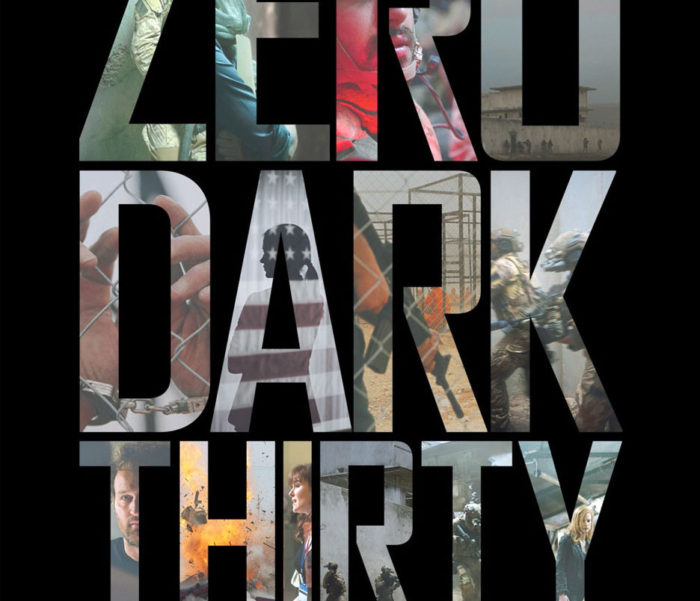
Zero Dark Thirty

And here’s yet another review of a really long movie.  I don’t why this Oscar season has been so rife with movies that seem intent on testing audiences’ patience.  Maybe it’s a reaction to TV’s ever-evolving ability to tell such expansive and complex stories, and this has in many ways felt like a year where Hollywood films have stepped up their game in response to what’s being done on the small screen.  Whatever it is, Zero Dark Thirty rightfully earns it’s 157 minute running time with an approach that recalls the lengthy search for Osama Bin Laden with meticulous detail, and at the same time is uniformly riveting from beginning to end.

The film uses 9/11 as a jumping off point, as this story basically picks up two years later, where we follow Maya (Jessica Chastain), a C.I.A. operative who’s been brought to the Middle East as another able mind with the intention of tracking down the most wanted man in America.  Torture is really the first tactic we see in getting information about bin Laden’s whereabouts, but it’s really just one of many ways in which these characters use every little bit of information or intelligence to scrounge together a lead in the hopes of finding the man.  As the manhunt continues for another eight years, we see C.I.A. members come and go, people whose lives are lost, and an overall feeling of hopelessness, despite Maya’s unwillingness to deter from her single-minded objective.  Of course, eventually she stumbles upon the compound at which bin Laden is hiding in 2011 (which isn’t really explained how, because I guess some information is just too classified) and the rest, as they say is history.

I think some stories are so fascinating that they don’t need a great deal of inflection or filmmaking pizazz to make that story enthralling.  Another film that brilliantly chronicles a fascinating moment in American history with a very straightforward approach is All The President’s Men, which I couldn’t help but think of while watching Zero Dark Thirty.  Unlike All The President’s Men, I can’t really be sure how much of Zero Dark Thirty is based in truth since the C.I.A. obviously wasn’t going to be careless in what details it revealed to screenwriter Mark Boal and director Kathryn Bigelow.  But this feels like a film that strives to do justice to the truth, and because of that it feels like a hard-hitting reminder of what it was like to live through that turbulent decade in the aftermath of 9/11.

I found the tone and morally ambiguities of the film to be about pitch perfect.  There’s been a lot made of the fact that the film glorifies torture, which it does not at all.  In fact it explicitly acknowledges the questionable nature in which torture was used, and yet how the American people where sometimes led to believe that America was too good to get itself involved in that kind of brutality.  But those were the crazy times we were living in, and desperate times often call for desperate measures.  There really aren’t any cut-and-dry answers at the heart of Zero Dark Thirty, as it’s all a mish-mash of conflicted feelings in the wake of the underlying question of “We killed bin Laden, but at what cost?”.  And even after a superbly tense reenactment of Seal Team 6’s infiltration of the compound, we’re still left with that lingering question, in a brilliant last shot that sums up the film’s conflicted nature.

The only real complaint I can make about Zero Dark Thirty is that I couldn’t help but think that Jessica Chastain might have been miscast as the film’s strongwilled heroin.  It was mainly just in the first half of the movie that I had a hard time believing her as this badass C.I.A. agent, but by the end she had basically won me over in believing that this character would go through this kind of transformation.  Also, it’s nice to see James Gandolfini, Kyle Chandler, and Mark Strong sink their teeth into some juicy roles, when that’s not always the case for character actors of their kind.  But honestly, I can’t really think of much more praise I can heap on this film, let alone knocks against it, because for me this a film that more or less gets everything right, and in the process reminds us that movies still have the power to be a vital document of these crazy times in which we live.