
Criterion Month Day 17: Murmur of the Heart

Murmur of the Heart (1971)

Last year, I dedicated an entire Criterion Month to “Horny Movies.” I reviewed films like Luis Buñuel’s Belle de Jour, Nagisa Ōshima’s In the Realm of the Senses, and Louis Malle’s The Lovers. I had a blast exploring not just sexuality in cinema, but how different countries and different eras portrayed it. So when I heard Malle had another “horny” movie in the Criterion Collection, I immediately added it to my list. I just wish I’d known the sexuality in Murmur of the Heart was centered around a teenage boy… and his mom.

Continue reading

Criterion Month Day 16: Five Easy Pieces

Five Easy Pieces (1970)

As I watched the Mariners absolutely shit the bed to begin the second half of the MLB season tonight, I couldn’t help but think of the main takeaway I had from rewatching Five Easy Pieces last night: expectations are a bitch. Now I didn’t remember this movie that well – it has been a decade since the first and only other time I saw it – I’m pretty sure my reaction to it was: boy, this Jack Nicholson guy is a dick. He’s surrounded by people who want to love him and he’s horrible to all of them. But now, I see it more as everyone wants him to live on their (honestly eminently reasonable) terms and he’s just not built that way. I still bristle at this character, but I see the internal tragedy better now.

Continue reading

Criterion Month Day 15: Donkey Skin

Donkey Skin (1970)

A lot of fairy tales are pretty weird, even despite the fact that they’re an inseparable part of most people’s childhoods. Filled with eating children and killing grannies and creepy little weirdos with unpronounceable names, there are a lot of strange things in these stories that get passed down to each generation. And yet, we as children take them at face value because as far as storytelling, they’re all we know at that age. So what does it look like when a director tries to make a film that evokes that childhood purity that one gets being read a fairy tale before going to bed? Well, that’s what Jacques Demy aimed to create with Donkey Skin. However, because it’s a fairy tale that has never been all that popular in English-speaking countries, it’s hard not to be struck by its charming weirdness.

Continue reading

Criterion Month Day 14: Stolen Kisses

Stolen Kisses (1968)

While they seem like an invention of the 2010s, all these Criterion Months have taught me that the idea of shared cinematic universes actually goes way back. So it comes as no surprise to report that legacy sequels – a related and seemingly modern phenomenon – were actually invented by François Truffaut in the 1960s (eat your heart out, Richard Linklater). In between making some of the best movies ever made, Truffaut spent his career returning to his first film and its leading man, Jean-Pierre Léaud as Antoine Doinel, giving audiences a chance to check in on the troubled boy as he grew up.

Continue reading

Criterion Month Day 13: Branded to Kill

Branded To Kill (1967)

I had become more interested in Japanese noir two Criterion Months ago after watching Pale Flower and realizing there must be more there, especially when stumbling onto the reputation that Seijun Suzuki’s Branded To Kill had within the genre. Also, taking into account that I’d seen and liked Suzuki’s earlier Tokyo Drifter, I figured this film would be a fun time. While I’m not sure I understood large portions of what this movie was going for, I can still see some of the allure of this film that seems to have influenced a fair share of filmmakers. But overall, I just found its plot and intentions a little too indecipherable, which was famously what got Suzuki fired from the Nikkatsu film studio, as they declared that he made “movies that make no sense and no money”. Continue reading

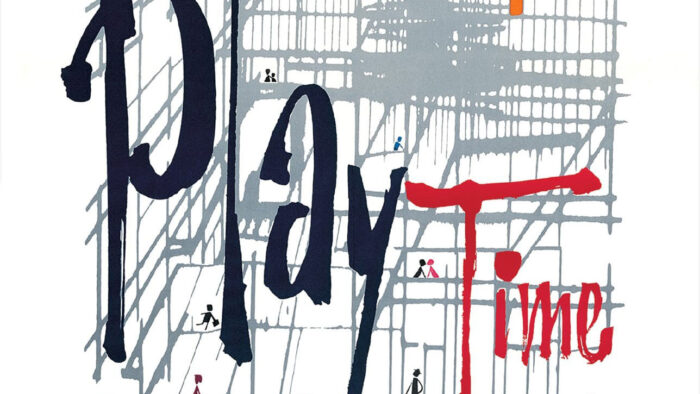
Criterion Month Day 12: PlayTime

PlayTime (1967)

I equate the experience of watching a movie with being told a story so naturally that I often forget that that isn’t essentially what a film has to do. Jacques Tati’s PlayTime is a monumental reminder that cinema can be a game each member of the audience plays by themself. That’s a challenging initial experience, but one I immediately wish to revisit.

Continue reading