This post has been sitting around, incomplete, for a few days now. So, instead of letting it go to waste any longer, I rushed through it and posted it now. Enjoy!
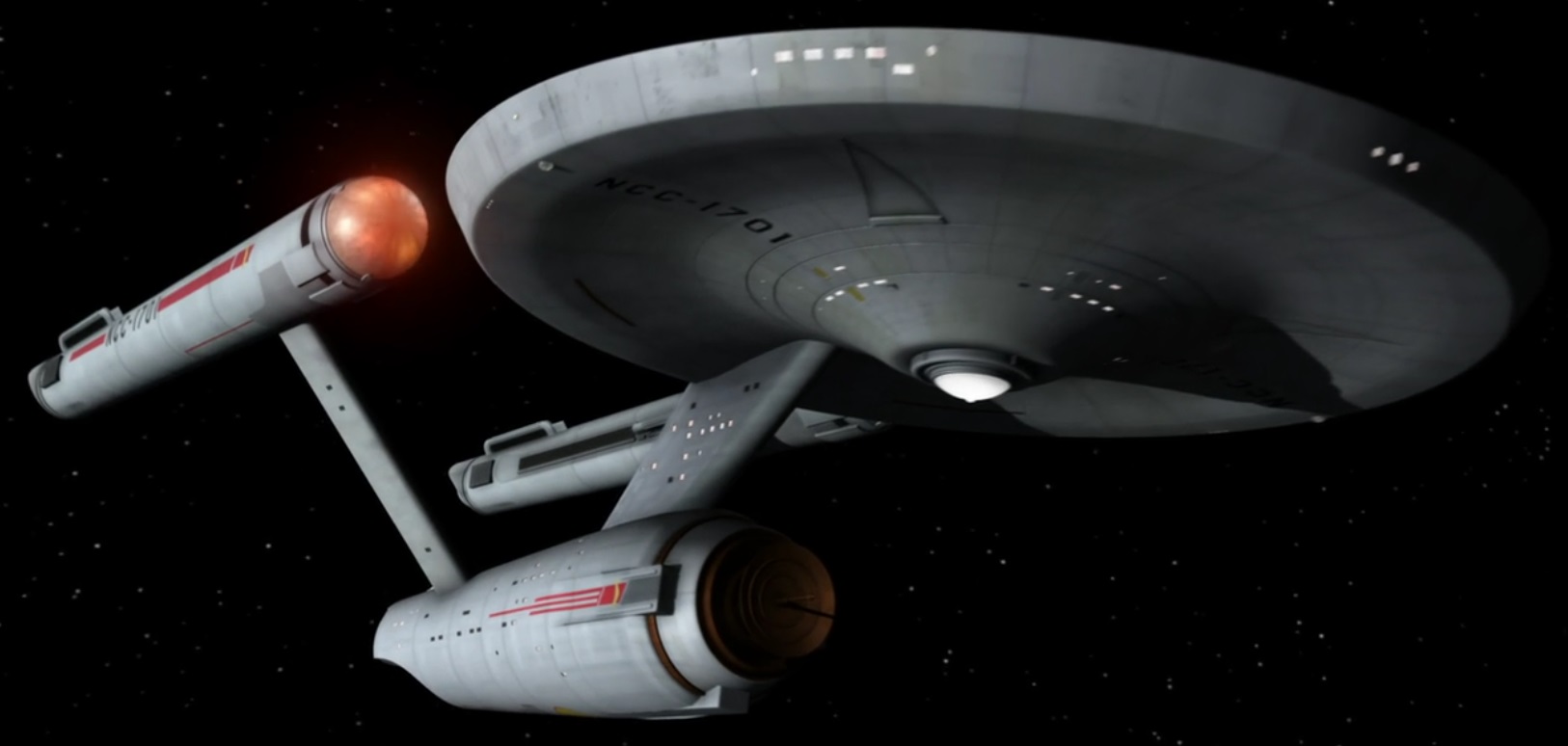
Space, the final frontier. Throughout history, only one franchise has managed to united the geeks and nerds of the world. Over 10 films and half a dozen television shows, Star Trek has had a lasting influence on society and multiple generations.
The new movie is out today and I’m quite excited to go see it. Lots of people are. In preparation for this new film, let’s take a look at everything that had led up to this latest release. That’s right, everything.
 Star Trek: The Original Series (1966-1969)

The Original Series, or “TOS” aired from 1966-1969. There were 79 episodes produced before it was cancelled after its third season. While the show was not too successful when it first aired, it picked up a cult following in reruns, a following so massive that it started holding conventions celebrating the relatively short-lived show. In 2006, CBS remastered the show in high definition with brand new CGI; it looks awesome.
TOS follows the adventures of James T. Kirk, Spock, Leonard “Bones” McCoy, and the rest of the crew of the starship USS Enterprise, NCC-1701. Their’s is a mission of exploration and scientific curiosity. What makes the show so great, as my dad likes to point out, is that despite being set in the far flung future, this show focuses on relatable, human problems. That, and some really fun futuristic science helped make this show so memorable, and I heartily recommend everyone check it out.
 Star Trek: The Animated Series (1973-1974)
(Haven’t Seen It)
TAS, the Animated Series, aired from 1973-1974. It continued the story of the original Enterprise crew, but since it was animated, it allowed for more exotic storylines.
Series creator Gene Roddenberry declared that the show was not cannon, but several parts of it, like the holodeck, have made it into latter series.
Star Trek: Phase II (1978)
(Never Aired)
This attempt to start a new Star Trek live action show never made it to the airwaves. It would have featured the original cast on a new mission, except for Leonard Nimoy. In his place, there was a new vulcan written in, Xon, with the hopes that Nimoy would later guest star. Before the series was even able to take off, Star Wars happened, and it was decided to recommission the pilot into the first Star Trek motion picture.
 Star Trek: The Motion Picture (1979)

In 1979 the first Star Trek movie was released. It was the epic tale of a monstrous cloud, the V’ger, and the Enterprise’s attempt to stop it from destroying the earth. Kirk, now an Admiral, and the rest of the crew find their way back aboard the Enterprise in an attempt to stop this alien threat, usurping power from the Enterprise’s current crew.
The first film in the franchise definitely got too caught up with itself. “Ooh, look at me, I’m a movie, I have a big budget.” There are lots of long, slow moving shots and it seems that the whole movie was designed as a visual spectacle rather than an exciting story. Overall, this movie is fun, but not that great. I just read on Wikipedia that some fans call this The Slow Motion Picutre, that’s hilarious.
 Star Trek II: The Wrath of Kahn (1982)

I think everyone knew that the first movie dropped the ball, because these guys were not messing around when it came to its sequel. When Chekov and Clark Terrell of the USS Reliant beam down to Ceti Alpha V, they stumble across the superman Kahn. Kirk had previously marooned Kahn on the planet 15 years ago, since then Kahn’s followers and wife had died. Kahn embarks on a mission of revenge. What follows is the best Trek has to offer.
Seriously, if you don’t like
Wrath of Kahn, what’s your problem? It’s one of the best sci fi films I’ve ever seen. With so many memorable scenes and dialogue, this movie is just a lot of fun. It ends with the most famous scene in all of
Star Trek, the death of Spock. That’s a hell of a thing. I really cannot praise this film enough, it is exactly what I want out of a
Trek movie.
 Star Trek III: The Search for Spock (1984)

This is where the thing about odd numbered movies sucking got started. After the events of Wrath of Kahn, it was decided that the movies would follow a story arc, one that would continue until the sixth motion picture. In this feature, the distraught crew of the Enterprise learn that Spock’s essence is within McCoy, and that neither of them will be able to rest until they can bring Spock’s remains to Vulcan. So they hijack the Enterprise and go back to the Genesis planet, only to find hostile klingons.
Since he is hardly in the film, Nimoy took over as the director this time, a job he would continue in the next movie. While not terrible, there’s not too much going on here, except for Christopher Lloyd as a Klingon commander. This story is really just a means to get Spock back, instead of another grand adventure. That said, since these movies lead into each other, you will want to see this movie so that you can fully appreciate the fourth one. Plus, you want Spock to be OK, don’t you?
 Star Trek IV: The Voyage Home (1986)

This movie is pretty zany, but pretty entertaining too. After the events Search for Spock, the exiled crew, along with the new Spock, decide they have to return to earth. But on the way back they intercept an alien signal that sounds like humpback whales. With humpback whales extinct and the earth in danger, the crew decide to slingshot around the sun to go back in time. Their plan: To steal a whale and travel back to the future to save the earth.
Yep. Time travel to the 20th Century was always great on the original series, and that doesn’t change when they finally do it in a movie.
The Voyage Home was both a commercial and critical success, and it deserves to be. For the emphasis is put squarely on the actors here, and they more than rise to the challenge. This is my second favorite
Trek movie.
 Star Trek: The Next Generation (1987-1994)

So it turns out people still liked Star Trek, even in the 1980s. In 1987, a new series was commissioned, set 70 years after the exploits of Kirk, Bones, and Spock. This new show was called Star Trek: The Next Generation.
TNG was set aboard the Enterprise-D and featured a diverse crew from multiple species. There was its captain, Jean-Luc Picard, his first officer, William Riker, the android Data, the Klingon Worf, the blind Geordi La Forge and more. This show would introduce several key races and conflicts for the universe, as well as create some of the most memorable characters in the franchise.
The series was one of the most successful Star Trek shows, responsible for the series’ resurgence in the 1990s on TV. It also won several awards.
 Star Trek V: The Final Frontier (1989)

What a piece of crap.
Seriously.
This movie starts out with Kirk and Spock having a good time at Yosemite before decending into the schemes of Spock’s evil brother Sybock.
This was the one that Shatner decided to direct. I guess he decided that the franchise needed a comedy, because that’s the closest thing we get here.
It’s kind of campy fun, but I won’t go as far as to actually recommend this to anyone. It’s just a mess.
 Star Trek VI: The Undiscovered Country (1991)
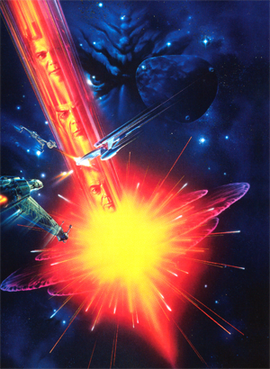
This movie is supposed to be much less of a piece of crap. Sadly, I haven’t watched it since I was much younger, and I didn’t want to hold up this post any further by limited attempts to watch it. Especially after sitting through The Final Frontier.
I guess the story is about Klingons and the Federation finally making piece, which definitely makes sense, since they are good guys by the time you get to the latter TV shows. If any of you get a chance to see this movie, comment about it so that other readers can get a piece of your knowlege.
Everything that I’ve read suggests that this film was somewhat a return to form, and that it is overall an acceptable entry into the series.
 Star Trek: Deep Space Nine (1993-1999)
DS9 started airing 1993, a year before TNG‘s conclusion. It was the story of Deep Space Nine, a Federation outpost near the planet Bajor and a wormhole that provides immediate access to the gamma quadrant. This heavily contested area is the target of the antagonistic cardassians, which eventually results in the first war seen in the Star Trek universe, between the Federation and the Dominion.
At the head of the cast is Avery Brooks as Captain Sisko, who sadly does not take up his signature bald, bearded look until halfway through the show. It also features the shapeshifting Odo, the passionate Kira, the immortal Dax and two former TNG crew members, Chief O’Brien and Worf. Everyone is familiar with Quark, I assume.
Unlike all the other shows, DS9 was all about plot archs and character development, making the show much more compelling and geniunely interesting than I thought it would be. Infact, I think I like this show more than any other, despite having grown up in a strict TOS household. Give it a shot.
 Star Trek Generations (1994)
As TNG was coming to a close in 1994 and the OS cast was getting old, it was time for them to finally pass the torch to the next group of movie heroes. Sadly, Leonard Nimoy and DeForrest Kelley did not appear in the film, so that torch was left in the capable hands of William Shatner.
The retired Captain Kirk’s last adventure sees him hurdled into the deep future, where it is up to him and the crew of the Enterprise-D to stop Malcolm McDowell, as the evil Dr. Soran, from messing shit up. Kirk is always a fighter, never giving up even at the bitter end, but if you ask me, this film makes it perfectly clear that Picard is the superior captain. Kirk is just a lot luckier.
This movie may not be that great, but the symbolism of it pushes it over the top. If you want to see how Captain Kirk gives his final performance, you need to see this movie.
 Star Trek: Voyager (1995-2001)
Lady Captain Janeway takes the reigns in this series. Voyager marked a return to tradition for the Star Trek franchise, with the empahsis back on exploration and science. When the new ship the USS Voyager is thrown 70,000 lightyears across the galaxy, its young crew embarks on its greatest mission: to return home.
This multi-year journey would be marked by difficulty, specifically from the newest threat to galactic piece, the Borg, who seem pretty damn hard to stop. The episodes I’ve seen of Voyager seemed pretty bland, not necessarly bad, but not that interesting either. I’m sure plenty of people like it, I just have a hard time wanting to see it.
 Star Trek: First Contact (1996)
Those Borg bastards! In this movie they go back in time to stop the Federation from being founded by preventing the first meeting between humans and vulcans.
Thankfully, we’ve got the Enterprise-D and those guys to come save the day.
This film is the first in a series of movies with the Next Generation guys at the forefront. Like those movies, its action-packed, but not too great. It’s just OK. Just OK.
Actually, this is probably my favorite TNG movie. Not only does it have a couple great scenes, it is pretty much the climax of the Borg conflict, which is pretty sweet.
 Star Trek: Insurrection (1998)

This movie is based around a planet where people are immortal due to some strange anomaly. This wackness has strange regenerative powers, like allowing Geordi to see. But then this Federation Admiral is being a dick and its up to Picard to stop him.
I hardly even remember what goes on for most of this movie.
This is the least interesting of TNG movies. It’s like an episode of the show, with little consequence to the overall arc for these characters.
Riker doesn’t even have a beard.
The movie’s not bad, but there’s little to gain from watching it.
 Enterprise (2001-2005)
(Haven’t Seen It)
Later retitled Star Trek: Enterprise this show put Scott Bakula in the captain’s chair of the first starship Enterprise as humanity made its first steps into space diplomacy. Since humanity discovered warp drives and founded the Federation, they have started becoming the organization we all know and love from the other shows.
I think we all watched the first episode of this show, then lost interest. Which is a shame, because I guess much later on, like by the third season, this was looking alright. Oh well, this still ended up being the first show to get canceled since the original. Better luck next time.
 Star Trek: Nemesis (2002)
This movie is kind of fucked up. The main enemy is a Picard clone. There’s an evil Data. It’s the final adventure of TNG crew. And it’s action packed.
Totally action packed.
Yeah, once again this movie is not very interesting. But I think the action is more fun this time around. That’s based on what limited memory I have from seeing this movie in theaters.
What’s more important is that this was the last movie in the franchise, and with the conclusion of Enterprise three years later, for the first time in a long time, we had to Trek.
Not for four whole years.
Star Trek (2009)
With that guy from Heroes! Seriously though, more on this in a second.

 The Zombies – Odessey and Oracle (1968)


