C.A.T: Please Please Me

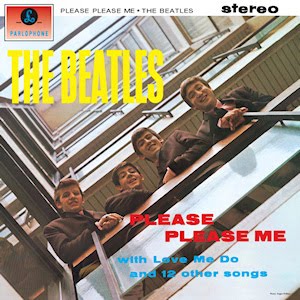
The Beatles – Please Please Me (1963)

You got to crank out an album from a heavy hitter every once in awhile right? Nah, I just couldn’t think of anything, basically it was between one Beatles album and another Bealtes album. Please Please Me gets the edge over With the Beatles for a handful of reasons; more Lennon and McCartney compositions, some of the best early Beatles hits and hey, this is where it all started man, the birth of Beatlemania, very fab.

Please Please Me showcases all the charm and style of The Beatle’s early sound; high energy pop songs, more traditional rock songs and pleasing covers often of soft ballads (with the exception of the iconic “Twist and Shout”) You could almost use this one album as a transitional piece from the classic rock/pop of the 50s to the birth of the “Sixties Sound” whatever that is in your mind. It’s like they took where Buddy Holly left off and took rock to heights so great it could only be labeled as an invasion.

It’s amazing how with all the passing years this album doesn’t feel at all dated, what’s up with that? Is it the strength of the compositions? The production? Maybe a little bit of both? I’ll mark all of the above on that one. I’d love to do this album the justice it deserves with a more comprehensive review, but do you want to know a secret? I’m so tired… Uh oh I better stop now or I’ll just be working Beatles song names into my sentences, there’s a place for that.

Favorite Tracks: “I Saw Her Standing There”, “Love Me Do”, “There’s a Place”
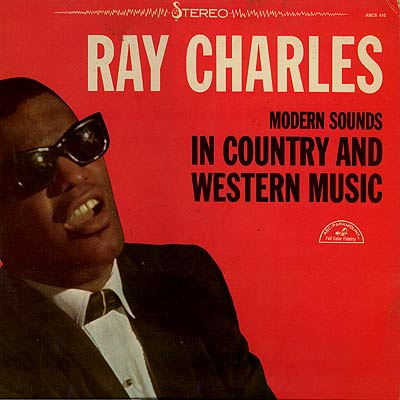
C.A.T.: Modern Sounds In Country And Western Music

Ray Charles – Modern Sounds In Country And Western Music (1962)

I was going to do James Brown’s Live At The Apollo, but then I found out that it wasn’t actually released until 1963 though it was recorded in 1962, contrary to what my iTunes tells me.  But luckily, 1962 saw the release of another landmark in ’60s soul with Ray Charles’ genre-bending Modern Sounds In Country And Western Music.


As we’ve all learned from the movie Ray, at this point Ray Charles had pretty much established himself as the an artist at the forefront of R&B.  So after all the success he had with his great run of singles in the late fifties to early sixties, he decided to try his hand at applying his signature sound to the country and western songs he had grown up hearing.   Considering this was at the height of segregation, some saw this as a dicey move, since even then country music was more or less regarded as the music of white hillbillies.

To say this is a country album however would be fairly misleading, as Charles takes these old standards and puts his soulful stamp all over them.  And the arrangements of these songs are often a little curious as an approach to country songs, as there’s lots of strings and big-band pyrotechnics throughout the album.  But somehow this approach works pretty magificently more often than not, as demonstrated on some of Charles’ most well-known love songs such as “You Don’t Know Me” and “I Can’t Stop Loving You”.

God, I really need to do a post that isn’t a CAT

Favorite Tracks: “Bye Bye Love”, “You Don’t Know Me”, “I Can’t Stop Loving You”

C.A.T: Two Steps from the Blues

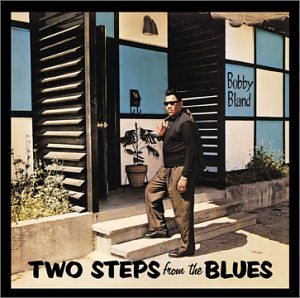
Bobby Bland – Two Steps from the Blues (1961)

Don’t let the name fool you, there’s nothing bland about this soulful blues man. Known as the “Lion of the Blues”, Bobby “Blue” Bland had a voice as powerful as it was sweet, marvelously showcased on perhaps one of the most underrated soul classics of all time Two Steps from the Blues. Stumbling upon this album a few weeks ago without any prior knowledge of it’s existence, I’m not lying when I say this plain and simple, blew me away right from the get go. From the opening horns of the leadoff title track, I was sucked right into a soulful R&b wonderland, that track still gives me the chills.

Though no great can be truly great without a little help from their friends and Bobby had some of the best collaborators in the biz. Bandleader/arranger Joe Scott has written and assembled some of the best bluesy classics and wrapped them up in a beautiful big band sound. The quality of the musicianship is off the charts but there’s one particular band member that stands out in my mind, guitarist Wayne Bennett. Always mixed up as high as the heavens in the sound mix, he just may be my new favorite R&B guitarist. I mean I love Steve Cropper, but this guy definitely gives him a run for his money, he’s outstanding.

The whole production definitely reminds me of all those great Stax records artists along with legends like Junior Parker and Sam Cooke, good friends with Bobby Bland. Though this is my new favorite arrangement of soul music not just for it’s talented vocalist, but for literally every aspect of the production.

So you wanna feel good, take a trip back to the heyday of Duke records and the pinnacle of R&b? Just take two steps to the blues and you’ll find it.

Favorite Tracks: “Cry, Cry Cry”, “Don’t Cry No More”, “Two Steps from the Blues”

C.A.T.: Giant Steps

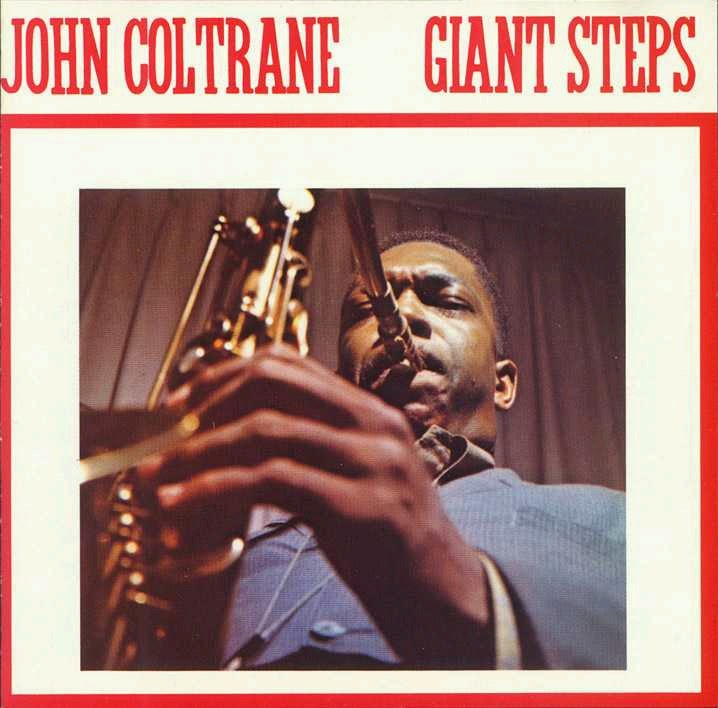
John Coltrane – Giant Steps (1960)

This’ll probably be the last jazz album I’ll do as we head into that wonderful decade of music that was the sixties.  When I was first getting in to jazz in high school this was probably the album that really hooked me in like no other, and it’s still one of those few jazz albums that I find to be pretty much flawless song for song.

This wasn’t Coltrane’s first album as band leader, but it was the one that really established him as his own musical force after parting with Miles Davis’s band after taking part in 1959’s Kind Of Blue.  You can really hear ‘Trane taking full stock in his “sheets of sound” style, while the rest of the band has no problem keeping up with his furious playing.  Giant Steps also saw Coltrane breaking out as a composer, as it’s the first album in which he composed every track, and the melodic quality of the songs are about as good as any Coltrane I’ve heard.

I guess what I always loved about the album is the way it basically just goes for broke with each song.  From the opening chords of the album’s title track, it’s pretty much nothing but really fast, really frantic playing, but the musicians on hand are more than game for it.  And luckily the album slows down a bit for the more laid-back “Naima”, one of Coltrane’s more notable ballads.

Basically, if you want to figure out whether you like jazz or not, I’d probably say this would be as good as any album to try on for size.  It’s also an example of how Coltrane didn’t really subscribe to the idea that jazz was about “the notes you don’t play”, as he always seemed bent on putting every little idea he could into each one of his solos.

Favorite Tracks: “Giant Steps”, “Naima”, “Mr. P. C.”

C.A.T: Time Out

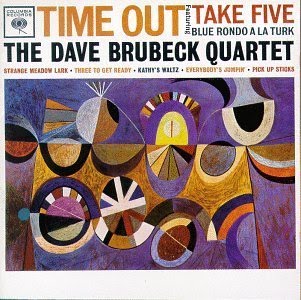
The Dave Brubeck Quartet- Time Out (1959)

My knowledge and or interest in jazz may not expand past a few albums, but I have a lot of respect for the genre. I wish I could hit you up with a more obscure jazz record, as opposed to such a popular one, but it’s all I know. I also find it amusing that one of the jazz albums I have is by a white guy, but it’s all about how you play right?

Led by accomplished jazz pianist Dave Brubeck, The Dave Brubeck Quartet consisted of; Paul Desmond on alto sax, Joe Morello on drums, Eugene Wright on double bass and Dave himself on the keys. Together they swung the 50s jazz scene in San Fran with their unique time signatures and silky smoothness. While Dave holds together the tight ensemble with a rhythmic playing style that just exudes coolness.

Naturally I was drawn to Dave Brubeck through the classic number “Take Five.” If I was only allowed to listen to one jazz song for the rest of my life, it would have to be this undeniably slick classic. The way Morello comes in with those cymbals so big as they echo through the sound space. You have that catchy sax line, tight bass, and that never-ending piano bit that you can’t help but get addicted to, like heroin. Get it because a lot of jazz musicians were junkies? But I think Brubeck was clean, what were we talking about?

Though it’s the unusual structures of these songs that really makes this material stand out. You got 9/8, 5/4, waltz stuff. double-waltz time, that doesn’t mean anything to me, but I bet guys back then were like “Woah you can’t do that, your crazy man!” Maybe that’s why critics back in 59′ received it so unfavorably, now it’s a classic.

Favorite Tracks: “Blue Rondo Ă  la Turk”, “Three to Get Ready”, “Take Five”

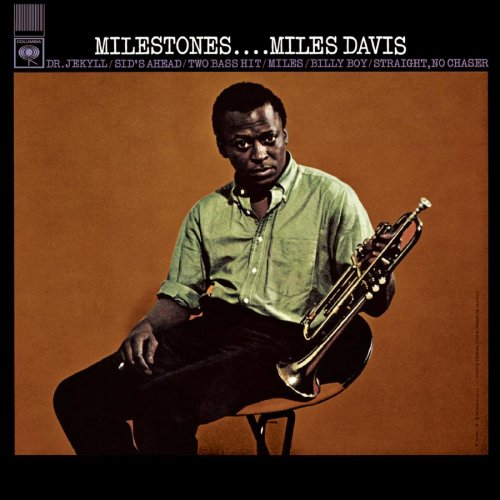
C.A.T.: Milestones

Miles Davis – Milestones (1958)

The late ’50s to early ’60s wasn’t really a time in which the album had really taken hold as a huge force in rock n’ roll, and everything seemed to more based around singles.  I know jazz hasn’t really been represented on this blog at all, but I figured it was about time considering I’ve always been somewhat of a fan of the genre, but by no means a jazz expert or anything.

Milestones has pretty much always lived in the shadow of Miles’ next album, the landmark Kind Of Blue, and for good reason.  However, Milestones is nonetheless a pretty amazing set of songs, as it sees Miles in a way reaching the pinnacle of his frantic ’50s hard bop style, while pointing the way to the kind of etherial sound he’d explore on Kind Of Blue.  The album’s title track even sees Miles exploring the kind of modal-based compositions that would define Kind Of Blue as well as a lot of jazz in general that would come out of the early ’60s.

A big part of any great jazz album is without a doubt the instrumentation, and Milestones is another example of Miles’ ability to bring together the best musicians around and bring out the best in them.  Coltrane, Cannonball, Garland, Chambers, and Philly Joe Jones are all pretty much flawless, and you’d expect nothing less than phenomenal playing from a group like that.  And for anyone that’s ever said Miles Davis was a great conceptualist but not a great trumpet player, just check out “Dr. Jekyll”, in which the dude effectively blows his ass off.

If you’re not really familiar with jazz or the music of Miles Davis, this might not be quite as good a place to start as Kind Of Blue, but it’s definitely at that same level.  Either way, it ranks among my favorite Miles albums, and it captures him in one of the most adventurous and creative periods of his unprecedented career.

Favorite Tracks: “Two Bass Hit”, “Milestones”, “Straight, No Chaser”

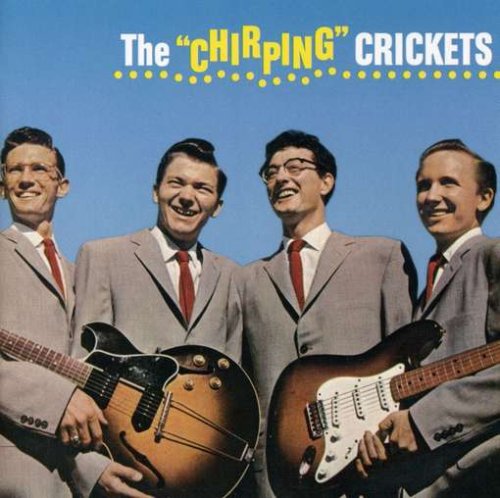
C.A.T: The "Chirping" Crickets

The Crickets- The “Chirping” Crickets (1957)

We had a good run with our regular “Classic Album Tuesday” segment spanning consecutive albums from 1976-2003, but I think there’s a point where you have to draw the line on how much time is needed for an album to become a classic, so we settled snugly in the mid 2000s. So now I’m turning back the clock to present to you my favorite album of the 50s, a decade yet to be represented by our CAT feature.

I can firmly say that Buddy Holly is my not only my favorite artist of the Rockabilly genre, but of the 1950s as well. With such a distinct geeky howl, janglin’ geetar, and such prowess as a songwriter, he truly was an amazing figure in rock. Racking up such classics as; “Oh Boy”, “Not Fade Away”, “Maybe Baby”, “That’ll Be the Day”, “I’m Looking for Someone to Love”, “Everyday”, “Rave On”, “Words of Love” and “Peggy Sue” all within a mere 2 1/2 year span before his tragic death at the age of 22.

This album (one of only three released during his lifetime) is perhaps is most impressive work. Containing six of the songs previously mentioned, this might as well be a greatest hits, cause they just a keep on coming. Now before I go any further I should probably address the fact that this is not a solo album. Here Holly works alongside drummer Jerry Allison, bassist Joe B. Maudlin and rhythm guitarist Niki Sullivan to form the slick quartet that is The Crickets. And these guys weren’t just a backup band, they wrote alongside Holly as well. There couldn’t of been many other bands during the 50s that that functioned that way, so in a way these guys were real trailblazers.

The songs present are all oozing with that 50s rockabilly charm that Holly very much helped popularize. The melodies are tight and simple and the backup vocals provided by an additional group of vocalists make for a delightfully charming listening experience. The Beatles were supposedly inspired greatly by this vocal approach and have always considered Holly a great influence. As a matter of fact I believe Paul McCartney still owns the Buddy Holly catalog. Hmm, anyways yeah, what an album what a legend.

Favorite Tracks: “Oh Boy”, “Maybe Baby” “That’ll Be the Day”