C.A.T: Straight Up

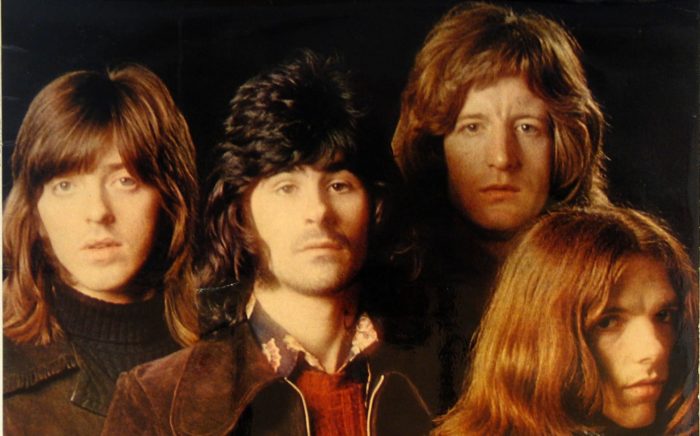
Badfinger – Straight Up (1971)

It’s a good time to be a Badfinger fan. Unless you’ve been hiding under a rock for the past few days, you’ve probably heard that Breaking Bad has ended. I won’t spoil the final moments, but I can say that Vince Gilligan chose “Baby Blue” from Badfinger’s 1971 album Straight Up as the show’s swan song. Since airing, “Baby Blue” and Badfinger has seen an incredible resurgence online. As of today, “Baby Blue” has sold over 5,000 downloads and has seen a 9000% stream increase on Spotify. I haven’t fact checked that last statistic but who cares, 9000%! “Baby Blue” is a great song but it’s also on a great album. Let’s talk about Straight Up.

Relased in 1971, Straight Up is the third release from Liverpool’s Badfinger. Produced by Todd Rundgren and George “Fucking” Harrison, Straight Up is a polished display of power pop rockers and Beatle-esque love ballads. Known for having Badfinger’s biggest single “Day After Day”, featuring Dual slide guitars from guitarist/vocalist Pete Ham and George “Fucking” Harrison, Straight Up is heartfelt and optimistic. The album presents an interesting parallel to the often tumultuous career of this troubled band. Often weighed down by poor management and severe financial issues, a great deal of Badfinger’s work went unnoticed. A real shame when you see the unique talent of each member.

The songwriting and singing is primarily split between guitarists Pete Ham and Joey Molland, with bassist Tom Evans occasionally chiming in with his high Liverpudlian swoon. While Molland handles the 2:50 minute rockers like “I’d Die Babe” and “Suitcase”, Pete Ham (the band’s unofficial leader) crafts the hits. Though every member pulled their own weight, Ham is what made Badfinger, Badfinger. “Day After Day” and “Baby Blue” were not only some of the band’s best songs, but some of the best pop/rock songs of the early 70s.

I’m excited to see where this will all go. While Badfinger’s legacy is guaranteed to live on, I’m curious to see how many Breaking Bad fans will delve deeper into Badfinger’s discography. And hopefully this doesn’t lead to Badfinger forever being associated with smoking crystal meth.

Favorite Tracks: “Baby Blue,” “I’d Die Babe,” “Perfection”
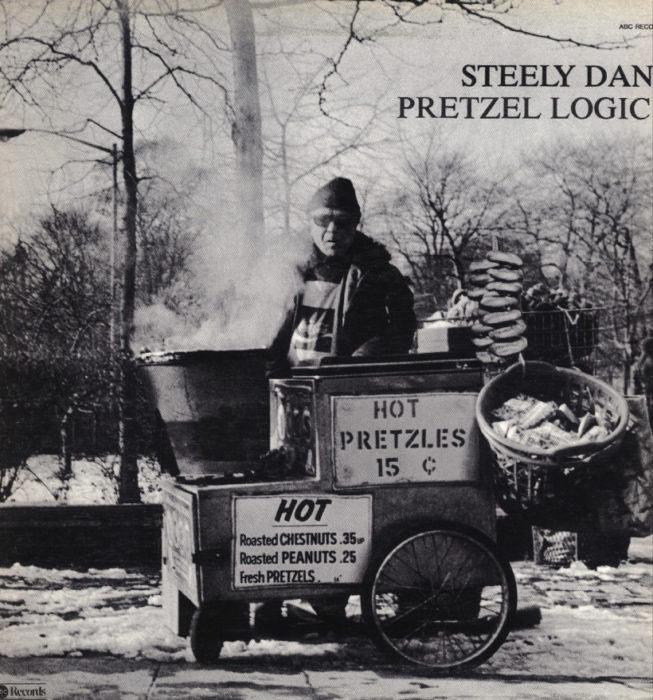
C.A.T.: Pretzel Logic

Steely Dan – Pretzel Logic (1974)

How does an artist go from seeming lame and cheesy, to something worth listening to?  As a constant explorer of rock music’s rich past, this is a question that I’ve often asked myself.  Because when I step back and look at it, some of my absolute favorite artists were once designated to the cheesy/lame category (Bruce Springsteen, Prince, Randy Newman).  Yet somehow, they were able to completely transcend that at some point.

I think this kind of turnaround from hate to great is usually a gradual process, made up of several key reference points.  A line in a Judd Apatow movie; a certain friend’s strange infatuation with the song “Peg”; the realization that Donald Fagen and Walter Becker were basically the original rock nerds; the final revelation brought on by Random Access Memories that studio-manufactured pop-rock isn’t necessarily a bad thing.  All of these moments combined are what recently convinced me to get in to Steely Dan, a band that I once dismissed as being totally second tier classic rock, mainly on the grounds that they barely rocked.

Now that I’ve delved a bit further in to the Dan’s discography, I might go as far as to argue that Steely Dan were one of the more consistently solid bands of the ‘70s.  And that’s what makes Pretzel Logic such a quintessential Steely Dan album — it’s just a great example of their impeccable solidness.  I wouldn’t even say it’s their best album (that distinction would probably go to the silky smoothness of 1977’s Aja), but it finds them in that sweet spot of transitioning from pop-rockers with a faint interest in jazz, to pop-rockers with a noticeable interest in jazz.  It’s also a transitional album in that for the first time it saw Donald Fagen and Walter Becker starting to swap out their own band members for seasoned studio musicians.  This seems like kind of a dick move, but I suppose when you’re going for the kind of pop perfectionism that Fagen and Becker were chasing, it only makes sense to try to get the best sound possible.

I’ll be honest.  I always thought that whenever Dan fans (Daniacs?  Danatics?) cited the jazz element of Steely Dan’s music, they were just trying to rationalize their adoration for a somewhat saccharine pop group.  But the jazz is definitely there, especially in “Rikki Don’t Lose That Number”, one of the band’s signature tunes and probably the only time anyone ever managed to build a hit single out of a riff lifted from jazz pianist Horace Silver.  And sure, you can try to intellectualize Steely Dan all you want, but I’ve found it impossible to deny that their albums were great because they dared to churn out slick, infectious, and vehemently uncool pop music — which also happens to be why I once disliked them.  But I suppose that’s what should make a formerly derided artist click for you: learning to no longer recoil from their most distinctive qualities, but to embrace them.

Favorite Tracks: “Rikki Don’t Lose That Number”, “Barrytown”, “Parker’s Band”

C.A.T: L.A. Woman

The Doors – L.A. Woman (1971)

In remembrance of legendary keyboardist Ray Manzarek, I present you with a “Classic Album Tuesday” of The Doors celebrated L.A. Woman. The last Doors album to be recorded with Jim Morrison (who would die three months after its release) L.A. Woman is The Doors at their nittiest and grittiest. Tired of recording in the upscale Sunset Sound studio, The Doors opted to record their sixth album in their own L.A. practice space. Working alongside producer Bruce Botnick (also co-producer of the classic Forever Changes by Love) and Elvis Presley bassist Jerry Scheff, L.A. Woman recaptures the raw intensity of the band’s early work.

Primarily recorded live, sans a few keyboard overdubs by Ray Manzarek, L.A. Woman feels more like a live album than a studio album. There’s a drunken rambunctious fervor that not only makes the album playful but honest. Even a deteriorating Jim Morrison still had enough chutzpah to give the music just the right amount of “Umph!” Fun fact: Jim Morrison recorded his vocals in the studio’s bathroom to get a fuller sound. Crude? Maybe, but in the end product it only adds to the down ‘n dirty style of L.A. Woman.

The material is primarily blues rock oriented. With songs like “Been Down So Long” and “Car Hiss By My Window” you wonder if Morrison was singing while laid back with a bottle of jack and a mouth full of Texas BBQ. And of course you have the jam based title track. A song that feels as if it was made up right on the spot during band practice. It also spawned one of Morrison’s classic lyrics “Mr. Mojo Risin” a memorable anagram of his own name.

Non-blues cuts include the undeniably catchy pop song “Love Her Madly” and the famously mysterious “Riders on a Storm”, one of Manzarek’s most hypnotic performances and a superb swan song to Morrison’s career. It’s hard to say what would’ve happened to the band had Morrison lived. Either way we still got six solid albums and memories that will last until the end.

Favorite Tracks: “Hyacinth House,” “Love Her Madly,” “Riders on the Storm”

C.A.W: A Space in Time

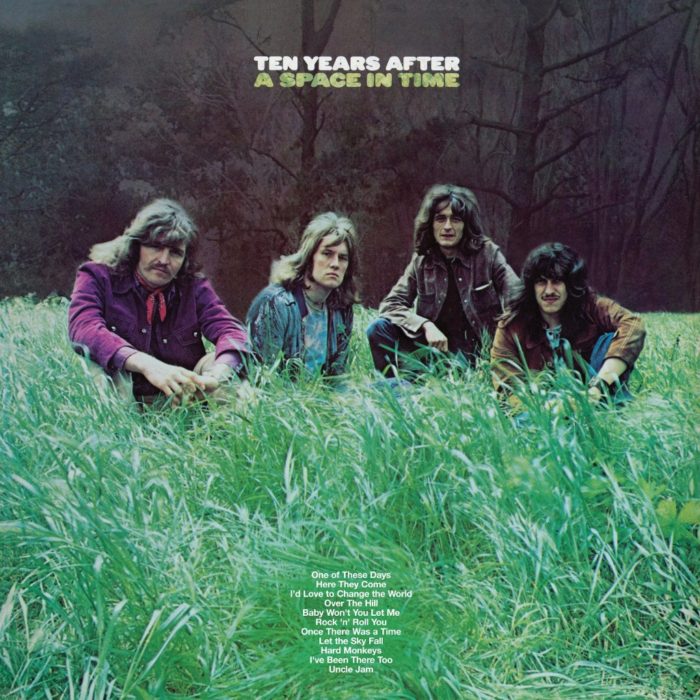
Ten Years After – A Space in Time (1971)

With the news of Alvin Lee’s passing I had to find a way to pay tribute. Normally we save classic album reviews for tuesdays but I just couldn’t wait. So here I present you with only the second ever “CAW” or “Classic Album Wednesday”. The album in question is renowned blues/rock band Ten Years After’s A Space in Time. Aside from being the band’s most popular album, A Space in Time was the group’s most diversely creative record. Ten Years After expanded upon their punchy blues sound with more acoustic numbers and more folk-oriented songs.

A Space in Time is best known for the hit single “I’d Love to Change the World”, a song you’ve probably heard on the radio or in trailers to Michael Moore movies. The song was a big leap conceptually for a group often seen as just a bluesy jam band. Lee, already established as a gifted ax-man, proves his worth as a songwriter through thought provoking lyrics and a sneaky delivery. Add a splash of psychedelia and A Space in Time makes for an exciting counterculture time capsule.

Brooding acoustic numbers aside, Ten Years After doesn’t ignore their blues/rock roots. “One of these Days” and “Baby Won’t You Let Me Rock ‘N’ Roll You” are Ten Day’s After doing what they do best. “Uncle Jam” is an unexpected showcase of the band showing off their abilities in the realm of jazz. Keyboardist Chick Churchill especially wows on that track with his demon-like speed. Not to count out the intensity of the group’s rhythm section in bassist Leo Lyons and drummer Ric Lee. Though everyone brings so much, it’s hard to deny that A Space in Time is Alvin Lee’s show. Though he’ll always be best remembered for his shredding, most notably during Ten Years After’s performance of “I’m Going Home” at Woodstock, A Space in Time reveals a man of many talents. Rest in Peace Alvin Lee, you’ve finally gone home.

Favorite Tracks: “Hard Monkeys”, “Here They Come”, “I’d Love to Change the World”

C.A.T: The Headphone Masterpiece

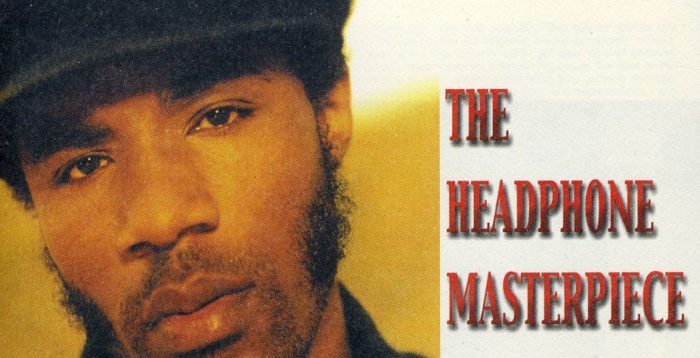
Cody ChesnuTT – The Headphone Masterpiece (2002)

About three weeks ago Cody ChesnuTT released his first album in ten years. Of course this got me to thinking about ChesnuTT’s vastly overlooked 2002 debut The Headphone Masterpiece. It also made me realize that Cody ChesnuTT is one of the greatest rock stars that never was. There’s no reason Cody ChesnuTT shouldn’t have been the next Lenny Kravitz. Though I don’t think Lenny Kravitz has ever been close to capturing the same kind of truth as Cody ChesnuTT. As a songwriter ChesnuTT excels in the genres of; pop, rock, R&B, and even hip-hop. Fortunately, that’s all well documented in the sprawling, lo-fi double album The Headphone Masterpiece.

As good as The Headphone Masterpiece is it’s not surprising it went unnoticed. The album is a staggering 90+ minutes and were talking about 90 minutes of lo-fi. The album sounds like a collection of demos because that’s what it is. All the songs were recorded in ChesnuTT’s home studio on a 4-track recorder. Some songs are more realized than others, but there’s still a stunning amount of great material. ChesnuTT dabbles with everything from acoustic guitars, to drum machines, to other electronic doodads. You never know what’s coming on album like The Headphone Masterpiece.

Where to start with this rock behemoth? How about “The Seed”? A song you may remember when it was remade as the excellent “The Seed 2.0” by The Roots. The track featured ChesnuTT and stands as one of my favorite rock/rap collaborations. It was that song that inspired me to explore the world of rap music. So yeah… Important. Another highlight would have to be “Look Good in Leather” which was used in some commercials a few years back. I love it. How can you not be happy when listening to that song. Some songs are overbrimming with optimism while songs like “Bitch I’m Broke” are probably on the other end of spectrum.

Like a musical diary The Headphone Masterpiece captures a wide range of moods and topics both simple and complex. It’s a shame that it didn’t lead to a more fruitful career in music but ChesnuTT has hung in there. Check back later this week when I’ll review his new album “Landing on a Hundred”.

Favorite Tracks: “Look Good in Leather”, “The Seed”, “Upstarts in a Blowout”

C.A.T: Harvest

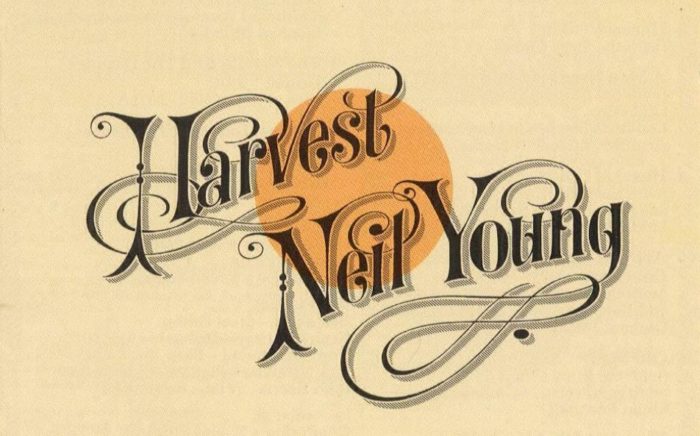
Neil Young – Harvest (1972)

What better time to remember Harvest than on the day after Neil Young’s birthday? Harvest was initially intended to be Neil’s first country album. In preparation, Neil put together a talented backing band dubbed “The Stray Gators” that consisted of such pros as; pedal steel guitarist Ben Keith, former James Brown bassist Tim Drummond, drummer Kenny Buttrey, and legendary multi-instrumentalist/film score composer Jack Nitzsche (also co-producer). All the pieces were there for a great country album and yet Harvest became so much more. How else do you explain the inclusion of the London Symphony Orchestra? I don’t know about you but when I hear the name “London Symphony Orchestra” I don’t tend to think country.

Songs like “Are You Ready for the Country” and “Harvest” reflect Neil’s country-themed vision, but for the most part Harvest is an album that reflects all sides of Neil. I mentioned the London Symphony Orchestra and they’re in full swing on theatrical cuts like “There’s a World” and “A Man Needs a Maid”. “Old Man” calls back to the bittersweet tales of Neil’s previous album After the Goldrush. Perhaps most affecting is Neil’s heartbreaking “The Needle and the Damage done” a live tribute to deceased Crazy Horse guitarist Danny Whitten. Harvest captures a wide range of styles and more importantly emotions.

Reportedly, Neil recorded Harvest while in terrible pain after a severe back injury. I guess you could say recording Harvest was “Back breaking hard work?” Ha! Nonetheless, Neil managed to overcome the pain and not only write some of his best material but some of his most successful. A big chart hit, Harvest also contained Neil’s only number one single “Heart of Gold”. If there’s one song Neil will be remembered for it might as well be that one. You don’t get much more iconic than that opening harmonica riff set against Neil’s always expressive acoustic guitar.

Harvest is another one of those albums that followed a great album and thus asks the question “Which one is better?” Honestly, I can’t decide ,but I’m glad that’s my only quandary when it comes to these albums.

Favorite Tracks: “Heart of Gold”, “The Needle and the Damage Done”, “Old Man”

C.A.T: Black Sabbath

Black Sabbath – Black Sabbath (1970)

During last year’s Shocktober I reviewed some of my favorite “Horror-Themed” rock albums but I left out one essential. The debut album from Black Sabbath is a creepy, bluesy, hard rock experience well suited for this terrifying time of year. Just look at that album cover. What is that? Is that some kind of witch? Is that Ozzy Osbourne from a distance? I’ve never been sure, but I suppose fear can best be described as what you don’t understand. Creepy witch cover aside this is the album that introduced the world to the lumbering dinosaur that is Heavy Metal.

The debut from Black Sabbath, this album was very much a reflection of the band’s live set at the time. As a matter of fact, it was exactly that. Based off of what I saw on an episode of Classic Albums the band just went in and recorded their nightly setlist. The difference being the small but crucial tweaks and overdubs that turned a solid rock album into a classic rock album. This can be noted in the band’s most defining track, appropriately titled “Black Sabbath”. Was there ever a riff more brooding and ominous than on that track? Add in the atmospheric touches of falling rain, thunder, church bells, and you have one helluva an opener.

Thematically, bassist/primary lyricist Geezer Butler was inspired by the occult. Songs speak of mysterious figures in black and even Lucifer himself. “Behind the Wall of Sleep” is a reference to H.P. Lovecraft’s story Beyond the Wall of Sleep while “The Wizard” was inspired by… Gandalf? If you say so Wikipedia. Though this album is more than just a high-five to Satan. The musicianship here is surprisingly tight considering the intense genre of music. This is the kind of band you could imagine jamming for hours without ever running out of compelling ideas. Sometimes it sounds like every member is just soloing, yet it all blends together like a bubbling broth in a big heavy metal cauldron.

Though Sabbath’s followup album Paranoid would be held as the band’s best, this one is damn close. Or should I say “damned close”? Sorry, all this Halloween Hoopla has gone to my head. Halloween may be coming to a close, but that doesn’t mean you should wait until next year to delve into Black Sabbath. Let Ozzy: The Prince of Darkness, guide you into the bowels of Black Sabbath. It’s an eerie ride but it will live forever in your nightmares.

Favorite Tracks: “Black Sabbath”, “N.I.B”, “The Wizard”