
Criterion Month Day 17: Girlfriends

Girlfriends (1978)

Ah, the awkward allure of a low-budget debut feature film. The Criterion Collection is so rife with debut films from directors who would go on to direct movies with bigger stars and bigger budgets that John ended up doing exclusively these types of films one year. It’s a genre of movie that has a certain scrappy appeal to it, where not everything is as fine-tuned as you’d expect from a big studio film with set decorators and costume designers and make-up artists. But there’s still something very pure and honest about it, even if the film is imperfect in many ways. And when a debut film of this sort happens to be made by a director who never got to go on to direct bigger movies, due to the all-encompassing power of Hollywood sexism, the film becomes something you want to grab onto and give a big hug, not unlike you’d do to an old dependable friend. Continue reading


Criterion Month Day 16: Enter the Dragon

Enter the Dragon (1973)

Last March, I watched a 1981 Filipino martial arts flick called “The One Armed Executioner” about an Interpol agent who seeks revenge after losing his arm. The movie was poorly dubbed, melodramatic, and cheaply produced. I liked The One Armed Executioner more than Enter the Dragon. Now this isn’t meant as a slight against the 1973 classic. What I’m trying to say is that I believe that Enter the Dragon’s influence over the genre might be outweighing the actual quality of the film.

Continue reading

Criterion Month Day 15: Touki Bouki

Touki Bouki (1973)

It didn’t dawn on me until now that this will be one of the few Criterion Months where we didn’t cover a film that came out during the height of the French New Wave, although we will cover a French New Wave director later in their career. Fortunately, Touki Bouki is a movie that embodies the style and ideals of the French New Wave about as well as any movie I’ve seen, French or otherwise. It’s also a movie that carries on our tradition of covering Criterion movies about France’s occupation of African countries, be it the Algerian War, the French Foreign Legion’s presence in Djibouti, or another great Senegalese director depicting a woman’s emigration to France. Unlike a few of these movies, Touki Bouki actually takes place in Africa (and is proud of it), yet the influence of France is a constant, repeated presence. Continue reading

Criterion Month Day 14: The Way of the Dragon

The Way of the Dragon (1972)

Well, here we are about halfway through Criterion Month and Colin and I have collectively written 10 posts! But seriously, I am embarrassed that we’re two weeks in and all I’ve watched are a kaiju movie and a kung fu flick. Criterion Month, aside from reading my friends’ reviews, has been such a non-factor in my life these first two weeks of July that I actually forgot that I hadn’t written this post until 12:30 in the morning the day after it was supposed to go up. But don’t you worry, dear reader, I’ll get my comeuppance. I’ll be paying for my lackadaisical ways when I have to review six movies in the last week of the month. That’ll be a real beating. Just like the many beatings Bruce Lee handed out in The Way of the Dragon.

Continue reading

Criterion Month Day 13: Walkabout

Walkabout (1971)

We sure do love Australia here at Mildly Pleased. So much so that not only have we covered every Australian-produced film in the Criterion Collection (there are only four), but we’re now onto British films made in Australia. Yes, to my surprise, Walkabout, which I always assumed was as Australian as a kangaroo playing a didgeridoo, is actually a British film made by British people, based on a British book, and starring two British children. So, Walkabout isn’t a film about Australia as much as it is a film about an outsider’s perspective of Australia. However, it’s precisely this perspective that makes the film stand out.

Continue reading

Criterion Month Day 12: The Learning Tree

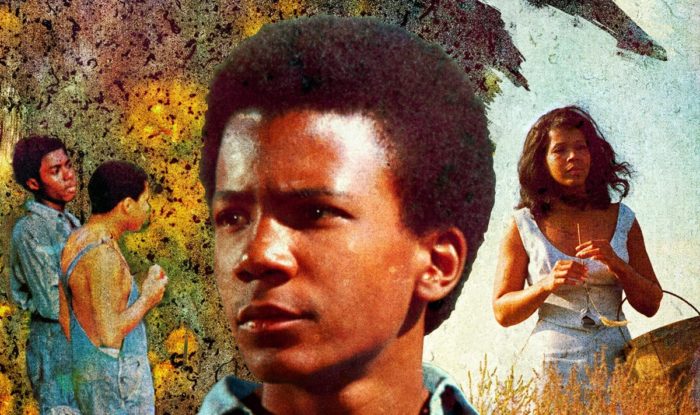
The Learning Tree (1969)

It takes a special kind of person to be able to claim that they were the first Black director to helm a Hollywood studio film. It takes a polymath to able to make that claim, but also while having their directing career be just one of many creative pursuits that they received widespread acclaim for. That happens to be the case with Gordon Parks, whose The Learning Tree was a breakthrough in Hollywood studios becoming open to hiring Black directors. However, this came after Parks had already spent decades as a revered photojournalist, capturing the minutiae of mid-20th century African-American life, while he also published a few books before turning his semi-autobiographical novel The Learning Tree into his first film. And this was before he started scoring his own movies as well as painting in his spare time. Continue reading

Criterion Month Day 11: The Cremator

The Cremator (1969)

I’m a simple man. I see a movie labeled as “horror” in the Criterion Collection, I watch. What makes The Cremator a horror film? Going in I assumed it was because… well, cremation. What I didn’t know until now is that the scariest thing about The Cremator isn’t cremation, it’s Nazis. God, I hate those fuckers. This film hates Nazi’s too and shows us why they suck through one man’s slow descent into madness.

Continue reading