

Criterion Month Day 10: Jules and Jim

Jules and Jim (1962)

A week ago we celebrated our Independence Day, which is always a good reason to reflect on one of our most sacred American values: freedom. Like many of us here, I believe that people should have the freedom to be who they want and do what they want, but I acknowledge absolute freedom is an impossibility. Logistically, it’s immediately obvious that giving one person that platonic ideal of liberty would inherently limit someone else’s; I cannot be free to eat all the hamburgers if you want to eat hamburgers too. But even beyond that, you have to admit that we are born into bondage: we have no say in our skin color, our abilities or susceptibilities, who our parents are, where we’re born, or even the times we live in. From the very beginning, we must compromise.
Continue reading

Criterion Month Day 9: One-Eyed Jacks

One-Eyed Jacks (1961)

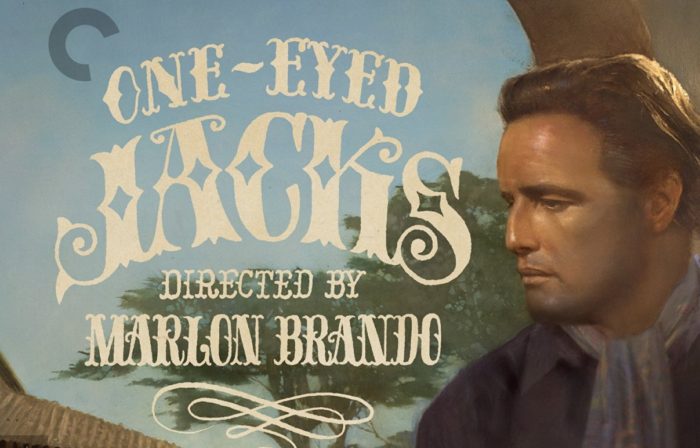
As we make our way through this month-long journey through the Criterion catalog, it seems we’re running into some common threads scattered throughout our picks. Which appears to be the case today, as One-Eyed Jacks, much like L’Avventura is a film that seems to be about something, but then gets lost along the way (which I realize is kind of a vague commonality, but whatevs). Anyways, the difference with L’Avventura, is that its disregard for its plot seems intentional. In One-Eyed Jacks, however, this seems like a byproduct of a film that just went through too many rewrites in preproduction combined with an inexperienced director at the helm known for his indulgences. Continue reading

Criterion Month Day 8: L’Avventura

L’Avventura (1960)

Considering I spent much of my late teens and early 20s watching a lot of classic Italian cinema, I’ve known of L’Avventura (and its director Michelangelo Antonioni) for a while. But for whatever reason, I never felt compelled to seek it out, or for that matter any of Antonioni’s films that aren’t named Blow-Up. Perhaps this is because all I really knew about L’Avventura was that it’s about a girl that goes missing but is never found, that it’s kinda slow and unsatisfying, and that it was booed when it premiered at Cannes in 1960. Continue reading

Criterion Month Day 7: Paths of Glory

Paths of Glory (1957)

Is there another director who has made as many powerfully antiwar movies as Stanley Kubrick? Paths of Glory joins Dr. Strangelove and Full Metal Jacket (and to some extent Spartacus and Barry Lyndon) in the Kubrickian canon of films that fight back against the idea that war can be noble, justified, or heroic. Even the picture’s title is a bitterly ironic reference to Thomas Gray’s Elegy Written in a Country Churchyard: “The paths of glory lead but to the grave.” And for all that, Paths of Glory was brushed aside in 1957, failing to garner even a single Academy Award nomination, in part due to the popularity of The Bridge on the River Kwai.
Continue reading

Criterion Month Day 6: Rififi

Rififi (1955)

I can’t imagine writing a heist movie. Really, any sort of movie that is more plot-driven than character-based sounds hard to do, but the heist might be the hardest in this style. Because with a heist, you know the stakes: Clive Owen is going to rob that bank, George Clooney and Brad Pitt are going to rob that casino, Vin Diesl and Paul Walker are going to rob that Brazilian crime lord. Therefore it’s entirely how they do it that keeps you invested in the picture. That requires genuine cleverness, because if our characters are too good or their solutions too far-fetched, it drains all suspense away and you end up with… I don’t know, Armored?
Continue reading

Criterion Month Day 5: The Wages of Fear

The Wages of Fear (1953)

MAJOR SPOILERS BELOW
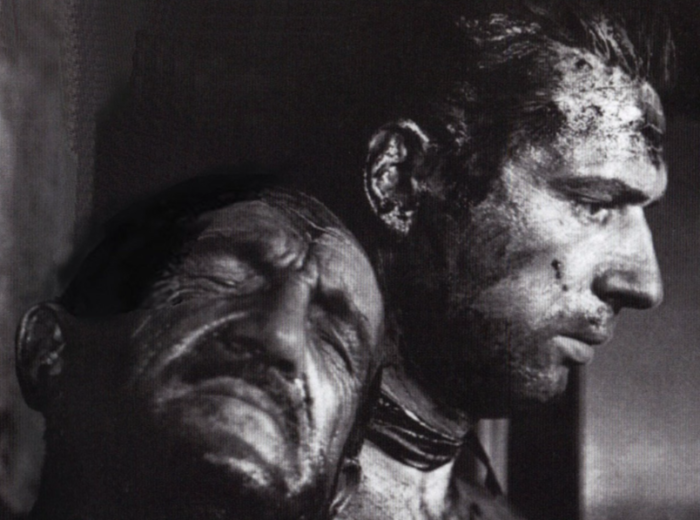
Last February, Sean, Colin, and myself watched William Friedkin’s criminally underrated 1977 classic Sorcerer. Adapted from Georges Arnaud’s 1950 French novel “The Salary of Fear”, Sorcerer is a high stakes adventure film with stunning South American vistas and unforgettable action set pieces. But it wasn’t the first adaptation of the novel. It wasn’t even the second.

There was a loose American version of the story in 1958 titled “Violent Road” and before that Henri-Georges Clouzot’s classic The Wages of Fear (1953). Though this is supposed to be my take on The Wages of Fear, I feel it’s important to bring up Sorcerer. Because even after a single viewing I would put Sorcerer among the twenty or thirty best films I’ve ever seen.

Continue reading

Criterion Month Day 4: Tokyo Story

Tokyo Story (1953)

Happy 4th of July everyone! Now in the spirit of my feelings toward America these days, I will proceed to not talk about America, but instead talk about a film that is incredibly Japanese.

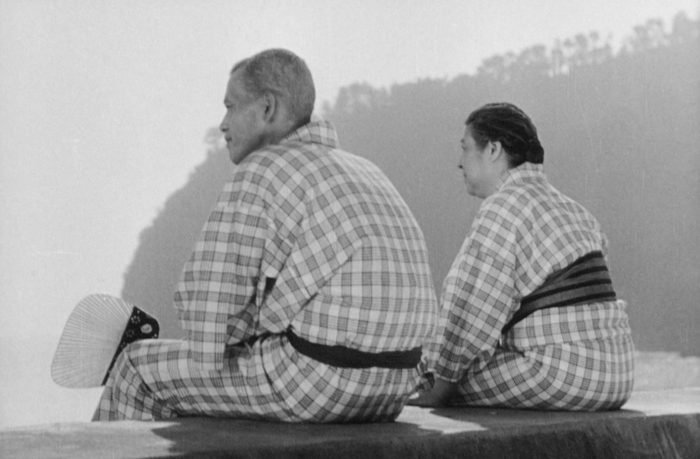
It’s an odd coincidence that I saw the upcoming A Ghost Story at the Seattle International Film Festival the same week I watched Tokyo Story for the first time. Not so much because the films are super similar to each other (though the looming specter of death does play a big part in both of them), but more because they both furthered my appreciation of the 4:3 aspect ratio. Now, I feel like for cinephiles like myself that came of age during the wonky transitional period from VHS to DVD (and also the ubiquity of widescreen across all mediums), 4:3 has a bit of a stigma attached to it. Continue reading