Shocktober Day 8: Incubus

Incubus (1966)

Falling behind on Shocktober this year was a blessing in disguise. Originally, I’d planned to analyze the classy Japanese ghost film Kuroneko. Though I don’t actually know if Kuroneko is classy, it does have a Criterion and we all know how classy most of those films are—I’m talking to you Robocop. But with a film like Kuroneko, I would have needed the time to watch it, swirl it around in my mouth like a fine wine, and let it permeate before writing about it. Whereas my backup film is like violent diarrhea. All it takes is one sitting for me to let it pass through. But man, is it some memorable diarrhea.

Continue reading

Shocktober Day 7: At Midnight I’ll Take Your Soul

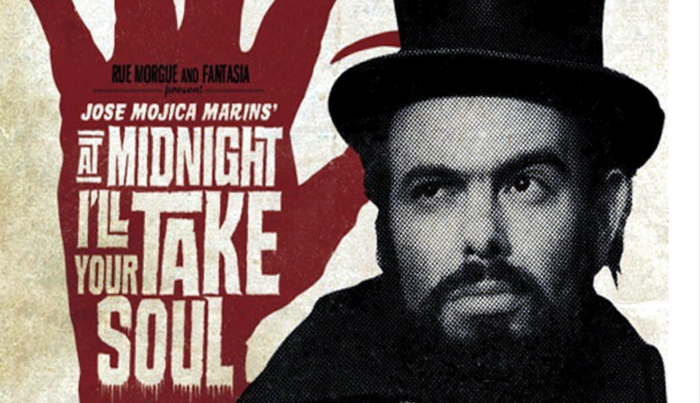
At Midnight I’ll Take Your Soul (1964)

For this year’s Shocktober (Foreign Frights), I wanted to cover as many different films from as many different parts of the world as possible. Though somehow I kept coming back to Germany, Italy and Japan. Hmm, is there a coincidence these are the countries that make up the Axis of Evil? Of course I’m only kidding. I’d put Sweden up there too, as one of the top international horror producers. I mean, they produced Dolph Lundgren and he tried to kill Rocky. That’s pretty evil in my book. One region whose evilness is often overlooked is South America. There are plenty of great foreign horror films from Central America, but somehow the blood seems to dry up the further you go south. I’m not sure why, especially when you consider they gave the world Jose Mojica Marins.

Continue reading

Shocktober Day 6: Eyes Without a Face

Eyes Without a Face (1960)

The other day I was reading a comment thread on Reddit about some movie, and while this is not a course of action I would recommend to anyone, I somehow did find myself thinking deeply about a comment some jerk left. He brought up Citizen Kane and argued that modern audiences would not enjoy or even respond to the film because its technical achievements and narrative devices have become rote in the last seventy or so years. My initial reaction was “fuck you,” but I’ve been thinking about that in terms of trying to review older cinema. My dilemma is that I’m not sure if I should factor the impact a movie had into my musings. It’s not like I can put myself into the head space of audiences back then, or even anyone who isn’t exactly me right now. It’s something I like to call the “John Carter of Mars” effect. And it’s relevant when talking about Eyes Without a Face because its influence is so obvious.
Continue reading

Mars and the Real Girl

The Martian

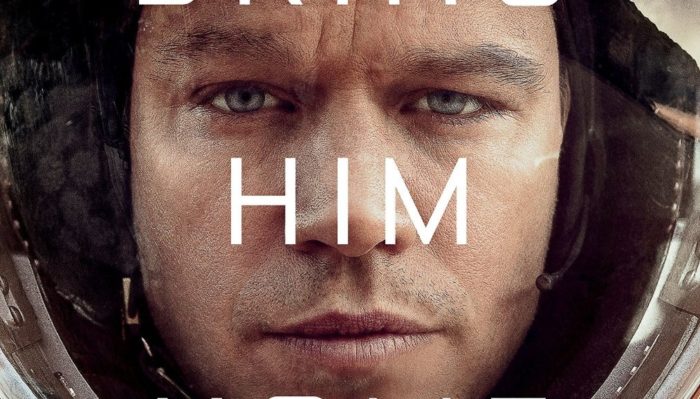
When astronaut Mark Watney (Matt Damon) wakes up after being impaled and left for dead on Mars, he has two choices: stay there and die or get to work on finding a way survive on the red planet. If he just laid there, he’d quickly run out of oxygen and his struggle would be over. His chances of being able to survive long enough for a rescue – which might not ever come – would be so low that it almost certainly isn’t worth all the pain and effort. You and I know there are those two choices, but to Watney there was only one: live.

It’s been another rough week for America, as more innocent people were killed in horrific tragedies in Oregon and Afghanistan; tragedies that are so frustrating because they are familiar now. Mass shootings and drone strikes have become the norm. It feels like there’s nothing we can do about them anymore, they’re a fact of life in the 21st century. People suck, right? Except they don’t. We live in the most peaceful period in human history. Homicide rates go down in America every year. Wonderful people do amazing, selfless things every day. That just doesn’t make good news.

My optimism for society is embodied by organizations like NASA, which is why I was so delighted to see such a pro-NASA, pro-mankind movie like The Martian. When NASA finds out that Watney survived, there isn’t even a conversation about the hundreds of millions of dollars it will cost to bring him home. Just like our favorite Martian, the scientists immediately get to work. In a scene I found particularly moving, an engineer is told he could help Watney, but at the cost of his life’s work. Since his project is classified, no one would ever know if he didn’t help. The man notes this before asking for NASA’s phone number in the same breath. Fucking yes.

The cast of The Martian is loaded down with stars, perhaps because who wouldn’t want to be in this year’s big space movie? After Gravity and Interstellar, this is definitely a thing. But this is Matt Damon’s show, and he lives up to the part. Watney is inspiring not only because of his indomitable spirit, but for his empathy and incorrigible sense of humor. At times it seems like he is more concerned with letting the crew know they did the right thing leaving him behind than the fact that he is stranded. It’s what made the book so easy to read and it works on film too.

Since this is one of the rare opportunities I’ve had to have seen a movie in theaters after reading the book, I will indulge in comparing the two. The film is mostly loyal to the text, mostly skipping over some chapters in favor of a more efficient, cinematic narrative. There are a few changes that felt extremely Hollywood to me, but maybe that wouldn’t have been the case if I hadn’t read the book first so now I’m screwed. Someone else see this and let me know what you thought about the ending.

Anyway, yeah. People, man. We’re cable of some great things. Just remember that the glass is half full. Watney never let himself think he was stranded on a planet that was trying to kill him. Instead, he focused on the fact that he had the skills and knowledge to survive, and billions of dollars of equipment from NASA to help him. You just have to take it one problem at a time.


Shocktober Day 5: Les Diaboliques

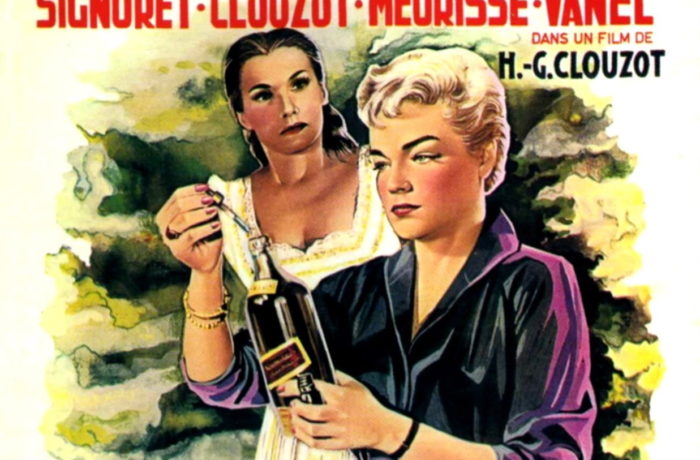
Les Diaboliques (1955)

I don’t know what it says about the state of horror movies abroad during the ’30s and ’40s that there wasn’t a single one worth writing about in between the 24-year gap between our last entry and 1955’s Les Diaboliques (though I’m sure there were a few movies made during this period that have already been reviewed in a previous year’s Shocktober).  But I’m just gonna go out on a limb (since my non-horror expertise can’t speak for itself) and say that the late ’50s/early ’60s saw a bit of a resurgence in the horror genre due to the Hammer Studios and William Castles of the world, as well the massive popularity of Alfred Hitchcock’s Psycho.  Les Diaboliques, helmed by the director Henry-Georges Clouzot, who was often referred to as “The French Hitchcock”, certainly helped established this reputation, but Cluzout also supposedly was able to make the film because he snatched up the rights to the book it was based off of mere hours before Hitch was able to.  And then in some weird series of inspiration, the film was so effective in it’s own Hitchcock-ian inclinations that it helped influence Robert Block, the author of Psycho, who claimed that Les Diaboliques was his favorite film of all time.  It sort of reminds me of how Brian Wilson was trying to outdo Rubber Soul when he wrote Pet Sounds, which in turn inspired The Beatles to record Sgt. Pepper.  But, you know, with more murder. Continue reading

Land of Wolves

Sicario

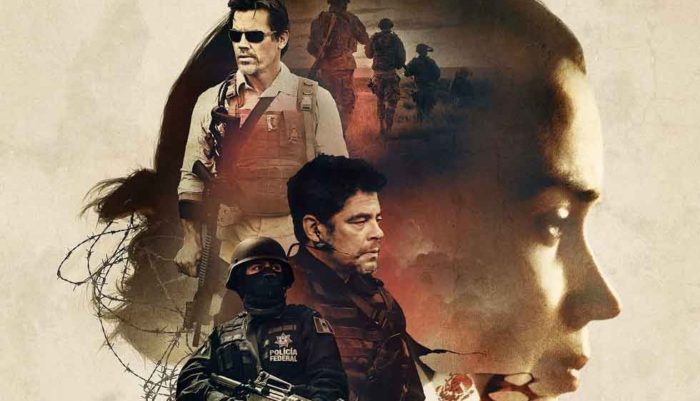
Sicario is amazingly easy to compare to other movies you might have already seen. Traffic, Zero Dark Thirty, even something like The Kingdom touches on Sicario‘s story of naive American armed forces discovering the reality of the world. What makes this film stand out, then, is how it tells its story. So director Denis Villeneuve put his trust in a great cast, legendary cinematographer Roger Deakins, Steve McQueen’s go-to editor Joe Walker, and Icelandic composer Jóhann Jóhannsson to make something greater than just another procedural.

Kate (Emily Blunt) is an FBI SWAT agent who, along with her partner Reggie (Daniel Kaluuya), discover a house of (a couple dozen) corpses in Arizona. This discovery gets Kate teamed up with an enigmatic DoD adviser (Josh Brolin) and his stoic partner Alejandro (Benicio del Toro), as they offer her a chance to really make a difference in the war with Mexican drug cartels. That’s about all they tell her though, and things get really messed up pretty much from the get-go.

So here’s what I’ll say about Sicario: it’s a movie about tension. Not just that conventional “somebody’s trying to kill someone” tension, although there’s a lot of that, but the strain between allies who don’t get along. People trying to work together while simultaneously withholding as much information as possible. Pretty much every scene is about someone trying to get a question answered. The four central characters are constantly, frustratedly asking something that the others can’t or won’t explain. And it seems like every other character in the movie is just there to interrogate or be interrogated by the others.

Those unanswered questions highlight the overwhelming futility of the actions these characters take. The promise to finally make a real difference is what draws Kate to this operation, but as she sees what change actually looks like, she might not be able to handle it. There are big forces at work, bigger forces than a single person could ever take on. The war on drugs is not a war you can ever win.

Roger Deakins does some absolutely incredible work in Sicario, you should see this film on a big damn screen. There are several long helicopter shots that do an amazing job giving you a feel for the vastness of places like Juarez and how tiny and vulnerable our team is there. In the face of such an insurmountable problem, how could they make a difference? Later in the movie is a sequence at night shot partially with night and thermal vision that’s so great it will make you wonder if other cinematographers just aren’t trying hard enough.

This was a movie that I enjoyed for all the reasons I have trouble writing about in a review. It was full of wonderful sights and sounds and feelings. That’s not to say Sicario has a weak script, just that the script’s greatest strengths were in creating memorable set pieces and symbols – some of which are a little too heavy-handed for my taste (I did not especially like the last few shots). A lot of the conversation has focused on the cast too, particularly Benicio del Toro and the way he takes over the movie in the second half. That’s fair too, it’s a great cast, but I don’t think that’s the reason to see this movie. No, Sicario is out there to remind us of the craft of filmmaking. And it does it incredibly well.

Shocktober Day 4: Drácula

Drácula

Imagine if right after they finished a new Fast and Furious, a crew employed by the same studio reused all the same sets and props and remade the entire movie in Spanish. Believe it or not, there was a time when this technique was common practice in Hollywood. In 1931, Laurel and Hardy made the film Pardon Us in five different languages. Therefore, Laurel and Hardy are the greatest actors of all time. You might be surprised to learn how many films received the multiple-language version or ‘MLV’ treatment. Famous artists from Buster Keaton to Alfred Hitchcock to John “F**k it, Genghis Khan is going to talk like a cowboy” Wayne did MLV’s. Though if there is one MLV in particular worth noting, it’s the Universal Pictures 1931 Spanish-language version of Bram Stoker’s Dracula. Notable because many claim it to be better than the original. Let’s find out why my children of the night. Or should I say, “Vamos a pro que mis hijos de la noche.”

Continue reading