
Deathblow

Killzone: Shadow Fall

A little while ago I wrote about how Fuse was maybe the most OK game I’d ever played, since it managed to be good at just about everything, but exceptional at nothing. I think the new Killzone game might be a challenger for that throne, since it is a game that manages to have an equal and opposite problem for everything that it does right. It’s gorgeous, but dull. Ambitious, but under-qualified. The best PS4-exclusive FPS, but also the only one.

The only Killzone that didn’t have undue pressure heaped upon it, Killzone 3, was actually pretty great. The first was crushed under it’s unfair perception as Sony’s answer to Halo, which hid the reality of a linear, story-based shooter until it was too late. The second Killzone was meant to be the flagship PS3 game, what with it’s extraordinary and exciting debut trailer. Of course the real game never lived up to that, and ended up being basically brushed aside as a disappointment. But that third game was pretty cool, with jetpacks, mechs, and a gritty story with a surprisingly terrifying ending. It looked like Guerrilla Games had finally found the franchise’s footing.

I’m sure it’s not easy developing for a console’s launch. You’re probably dealing with constantly changing hardware difficulties and an extremely compressed timeframe, so maybe it’s not a surprise for most people that Killzone: Shadow Fall is an emphatically conservative in its design – a simple, straightforward campaign and a multiplayer suite. Of course, that’s how most FPS games come these days, but this is the next gen we’re talking about here. If I had any delusions about life being really different on the PS4, Shadow Fall was an excellent dose of reality.

Shadow Fall‘s story is absolutely terrible, much worse than anything in the series so far. I’d say it’s even more glaringly misguided than Call of Duty campaigns, since it clearly aspires to be more than macho bullshit. After the destruction of Helghan, the remaining Helghast were invited to live on Vekta, the planet the heroes from the previous games are from. But, because of prejudice, the Vektans decided to erect a massive wall across the entire planet, dividing it into Helghast and Vektan halves. Yeah. As you might guess, this idea doesn’t work out so well, and eventually hostilities ignite between both sides.

This seems so obnoxious because the game is simply not equipped to tell the kind of story it wants to. It tries to show us that maybe the people living on the Helghast side are just people, except their leaders and soldiers are portrayed as cartoonishly villainous. You spend the whole game mowing down Helghan, and the only one who helps you is actually only half-Helghan. The previous games put you in the role of grunt soldiers fighting a massive war, here it’s just melodramatic black ops bullshit. The disturbing ending of Killzone 3 could have led to interesting storytelling possibilities, but this game is more frustrating than anything else, story-wise.

At least the game take you to a bunch of different locales. As much as this game feels like a modern military shooter, it is still a sci fi adventure, complete with a solar system’s worth of settings. You’ll fight on both sides of the wall, other planets, and most memorably, in space. An early mission has you infiltrating a malfunctioning space station, which means you get to float around in some rooms. It’s neat! And so pretty. What a gorgeous game this is, a great showcase for this new console. On the surface level, it’s hard to complain about this game’s campaign. But when you actually play it, especially in a somewhat compressed timeframe, you’ll start to see the cracks.

For one, the game seems to be obsessed with plugging things into ports. It asks you to do it all the time. It’s weird and not fun and way to common an activity in Shadow Fall. This is especially bad in the game’s stealth sections, which are passable, but shouldn’t be there. In a game like this, where all of the interactions you are capable of center around being able to shoot things, stealth should not be a common activity. Also, there’s a boss fight near the end that felt less like a test of everything I’ve learned and more like some bizarre punishment.

The shooting feels good though, especially on the new DualShock 4. You get one gun (that you always have to carry for some reason) that can switch between being an assault rifle and something of a rail gun, which is pretty cool. You also get a robot buddy, called an OWL, who can shoot stuff, hack stuff, create a zip line, throw up a shield, blow up shields, and revive you when you’re down. It’s basically all the stuff your squad could do in the previous games (and more) but you can directly control it. All that stuff is really great, but the rest of the game’s armaments are extremely run-of-the-mill. Basic pistols, assault rifles, SMGs, shotguns, and snipers will take up your second weapon slot, and while they feel good, they don’t feel special.

I had planned on spending a bunch of time with Shadow Fall, but when I finished the campaign, I played a quick multiplayer match and shipped it back to GameFly. I was done. Really, really done. And that’s the trick of launch titles. They seem awesome, they seem like must-owns, until you get them. And then you realize maybe you spent $400 a little prematurely. Will people come back to this game a year or two from now, when the PS4 has a bigger library? I doubt it. But if you’ve jumped on the bandwagon early, here’s at least a good weekend for you. Just don’t expect it to feel like the future you might have thought it would be.

T3 70: Top 10 Christmas Movies

What’s that? It’s too early to talk about Christmas movies? Well, you’re a mean one, Mr. Grinch. It’s less than two weeks away from the biggest holiday in the world, and once it’s come and gone, we’ll have to wait such a long time until it comes again. Let’s enjoy it. Let’s all enjoy it. God bless us, everyone!

Top Ways to Listen:
[iTunes] Subscribe to T3 on iTunes
[RSS] Subscribe to the T3 RSS feed
[MP3] Download the MP3

Play

Continue reading

The Best of Top Ten Thursdays: Vol. 2

‘Tis the season to podcast! It’s Christmas all month-long at Mildly Pleased and to celebrate we’ve got back-to-back weeks of free “Top Ten Thursday” downloads. This week we’re delighted to present you with “The Best of Top Ten Thursdays: Vol. 2”. Where we discuss everything from Batman villains, to Lincoln’s Gold, to James Bond and his undying love for Bea Arthur. It’s 60 minutes of festive fun all in one convenient compilation. Just click the download link below and get the best gift of all!

Download

2013 Music Rundown: Cerulean Salt

Waxahatchee – Cerulean Salt

“I like that album” – Colin Wessman. Is it weird when one of your favorite songs of the year is on an album you otherwise don’t really care about? Not that I think Waxahatchee’s sophomore effort is bad, it’s an interesting, introspective, sort of punk-ish album with a cool, barebones sound. And it’s received a fair amount of praise, going as far as to be called the seventh best album of the year by The AV Club. I wouldn’t call a single song on Cerulean Salt bad, but the album just doesn’t quite hook me in. Except for “Coast to Coast,” a one minute, 45 second joyride that requires only a single listen to take over my brain for a whole day. I don’t know why I like it so much. I don’t know why other, similar songs on this album don’t hit me in the same way. All I know is I really like that one song. You should check it out. It’s really short.

Continue reading

The Mope Of Greenwich Village

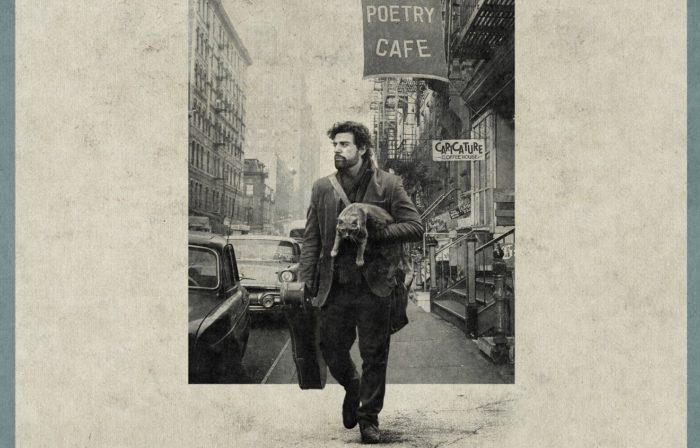
Inside Llewyn Davis

I’m not sure I’ve ever walked out of a Coen Brothers movie and thought to myself, “Yup, I know I exactly how I feel about what I just witnessed”.  There’s such an odd tone and such an odd set of consequences that the Coens always heap upon their characters that it’s usually a bit jarring once you get spit out in to the real world after spending two hours inside the Coens’ own warped vision of American life.  Which I’m not complaining about at all — I think it’s great that these guys always leave an audience with plenty to chew on.  It just makes it kind of hard for a reviewer like myself to pinpoint any sort of precise opinion on something like Inside Llewyn Davis, a film that finds the Coens exploring the music and misery of a troubled folk singer that just can’t quite get it together.

Oscar Isaac stars as the film’s titular character, who finds himself at the heart of the early 60’s Greenwich Village folk scene that famously gave birth to Bob Dylan prior to his rise to superstardom.  Davis is however on a much more downward trajectory, as he finds himself struggling to find a place to sleep each night, while his career as a solo artist appears to be going nowhere.  Much like it’s protagonist, Inside Llewyn Davis has a very rambling nature to it, as Davis encounters a bunch of colorful characters on his way towards the rock bottom of show business.

Of course, it’s not really surprising that a Coen Brothers movie would be filled with a bunch of quirky and often hilarious side characters, but I’ll just point them out anyway.  As it seems to be his speciality in the Coens’ movies, John Goodman plays a pretty insufferable human being who’s nonetheless a lot of fun to watch.  Also, Adam Driver and Justin Timberlake are good in their depictions of characters that feel very specific to the kinds of misfits that inhabited the Greenwich folk scene.  Carey Mulligan also does a good job of being constantly pissed off, even if her main subplot is a bit underdeveloped.  And then there’s Oscar Isaac, who does a good job of giving just enough of a roguish sad-sack quality that keeps this often selfish and reckless character from ever becoming completely unsympathetic.

As someone who’s always looked at the early 60’s New York scene with a certain sense of romanticism, I really enjoyed the way this film captures all the nuances of a time and place that seems so far removed from the kind of New York we’re accustomed to seeing on screen.  There’s a kind of haze that hangs over Bruno Delbonnel’s gorgeous cinematography, which just seems to reinforce the downtrodden nature of Inside Llewyn Davis.  The film’s authenticity is also enhanced by it’s many musical sequences, which are great because unlike a lot of movies about music, they actually convince us that there’s a great artist trapped inside the soul of our troubled protagonist.

So maybe I’m not wrestling with this movie as much as I thought I was, since from all the good things I’ve had to say about Inside Llewyn Davis it would appear that I like it quite a bit.  But perhaps I was just expecting a bit more upbeat nostalgia piece about an oft-romanticized moment in music history, and this is far from that.  Which again is one of those great things about the Coen’s — that they’re willing to explore the nooks and crannies of the American experience with these darkly comic sensibilities that are prone to making you work a little a bit as an audience member, whether you like it or not.

2013 Music Rundown: The Stand-In

Caitlin Rose – The Stand-In

I wouldn’t quite say that 2013 was “the year of country” for me, but I guess you could say it was a year of country for yours truly.  Meaning that I did listen to some country music this year, as opposed to the little-to-zero country music I usually listen to.  Most of this consisted of the classic sounds of Merle Haggard and Loretta Lynn, while the hard-rockin’ brazenness of Lucinda Williams also caught my ear, and then there’s also the pop-country of some of the artists I’ve been listening to for The People’s Albums.

Lately, I’ve been pretty taken with The Stand-In — the second album from Nashville singer-songwriter Caitlin Rose — probably because it evokes a little bit of all the different references I just named.  As you can tell from the album’s retro-y cover, the image of the classic Nashville singer-songwriter is something Rose has molded herself into, but at the same time there’s a soothing pop-savvy to her songs that feels distinctly modern.  And if her lovely cover of The National’s “Pink Rabbits” is any indication, she’s got enough of an indie rock aesthetic to maybe crossover to that audience sometime in the future.  Which would be nice, since there seems to be a bias against country in the online music community, as evidenced by the fact that it took me until the end of the year to even hear about this little gem. Continue reading

2013 Music Rundown: Melophobia

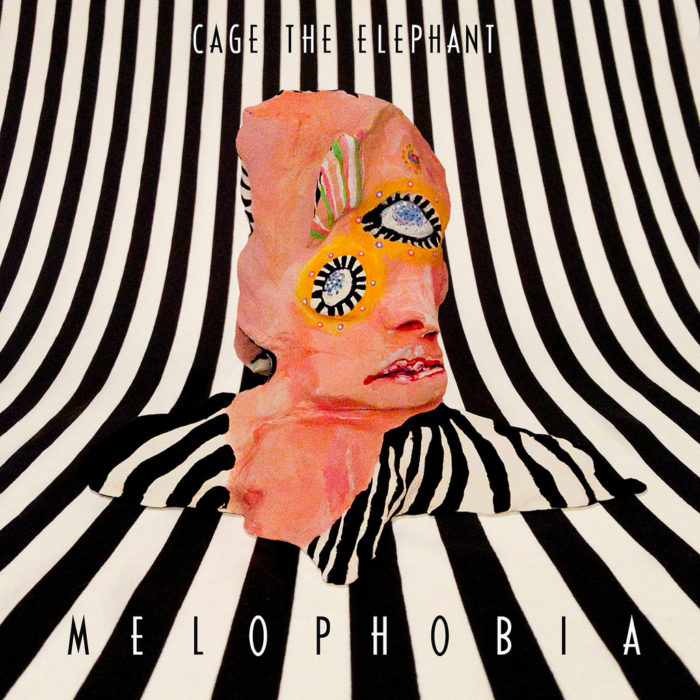
Cage the Elephant – Melophobia

Cage the Elephant has been one unexpected trip so far. They broke out with the mainstream success on their self-titled debut in 2008, propelled by radio darlings, “Ain’t No Rest for the Wicked” and “In One Ear”. Both songs to this day I don’t like very much. Yet they won me over on 2011’s Thank You, Happy Birthday a less commercial tribute to grunge. Where I would have imagined Cage the Elephant descending further into experimental waters they’ve instead met somewhere between their first two albums. Where as the first album was full of commercial rock bravado and the second was a frenzied garage of noise, Melophobia is fairly unassuming. The vibe is more relaxed and mid tempo, like it’s the after party of their first two albums.

The leadoff single, “Come a Little Closer” is a good representation of the mood on Melophobia. The verse is low-key, faintly mysterious, that builds to a standard pop chorus, all at a careful pacing. It lacks the punch of your typical Cage the Elephant single but it gets the job done. If there’s one song really worth taking notice of it’s “Spiderhead”. The song is a retro rumble of distorted guitars against a dissonant honky tonk piano that sees this album at its liveliest. It’s a little disappointing that this level of excitement is never fully captured again. And at the end of the day that’s what’s lacking: excitement. I’m sure on Cage the Elephant’s next album we’ll see yet another variation on their style, and maybe then they’ll have my ears.