
Above the Law

Muse – The 2nd Law

The mixed responses to Muse’s The 2nd Law do not surprise me at all. Fans were already uneasy with the direction the band had taken with their last album, the heavily classical-inspired The Resistance and The 2nd Law takes even more risks. Has Muse strayed too far from their roots? Perhaps, but even if you don’t like what they’ve done here, you have to at least commend the staggering amount of production that must have gone into this album. It’s easy for any band to lose sight in the scope of a big project, but I truly believe Muse aspired to do something daring and for most part turned out an admirable piece of work.

Sometimes The 2nd Law feels a bit melodramatic, but then hasn’t Muse always been melodramatic? The 2nd Law takes that melodrama and turns it into something reminiscent of a sweeping space-opera that instantly conjures up images of Flash Gordon and dub-step talking robots. I can’t remember the last time I heard an album this grandiose and I think that’s saying something. Some are going to criticize the experimentation with genre, but I was surprised how evenly this album flows. Nothing here feels out of place and everything feels well thought out.

Breaking down individual tracks there is a lot to like. “Madness” thus far appears to be the album’s big single and with good cause. It’s got a chillaxed, electro-beat that moves at a refreshingly mellow pace. The melody bears more than a resemblance to Queen’s “I Want to Break Free” (which has been acknowledged by the group), but it has lots going for itself. “Panic Station” is perhaps the most nostalgic sounding track, harkening back to Queen’s The Game album. It’s a slap-happy, bass driven, funk adventure that would feel just as at home in the Red Hot Chili Peppers’ catalog. Early rumors were that The 2nd Law was going to be mostly dubstep tracks, but really that only turned out to be true for about two or three songs. “Follow Me” has a bit of a dubby beat, while “The 2nd Law: Unsustainable” goes all out with squealing guitars and robot voices.

Out of all the reviews I’ve read, the one recurring trend seems to be the polarizing effect of the track “Survival”. Originally written for last summer’s Olympics, some like it, but many more have criticized it for simply going too big. Personally, I am blown away by the track. I’ve never felt so in the minority for loving one song. Honestly, I think it’s one of the best songs they’ve ever done, certainly their most ambitious. Though what it all comes down to is how I like this album and I do like this album. I’m just disappointed I can’t share that feeling with others. I like to think The 2nd Law will have it’s following. The question is “Will You Follow?”

Favorite Tracks: “Madness”, “Panic Station”, “Survival”

Shocktober: Day 3

Maniac (1980)

Remember Tony Gazzo from Rocky?  You know he was Rocky’s former boss in the fancy duds? If it’s starting to come back to you that was character actor Joe Spinell in arguably his most notable role. Spinell was also known by mainstream audiences for his role as Willi Cicci in The Godfather Parts 1 and 2. But to most horror fans Joe Spinell will always be known as Frank Zito in William Lustig’s 1980 film Maniac. A film so violent that film critic Gene Siskel famously walked out of it mid-progress. Then again, that was 1980. By today’s standards, the film is less shocking and far more compelling for another reason. Joe Spinell gives one of the best slasher baddie performances since Anthony Perkins in Psycho.

Frank Zito (Spinell) is an overweight, fortysomething, Italian-American man living in a New York ghetto. By day he’s the landlord of an apartment complex, but by night he’s a schizophrenic serial killer. His fetish involves killing women, scalping them, and then decorating a room full of mannequins with their scalps. Frank often talks to the mannequins and on occasion pretends he’s talking to his deceased mother. At this point, you might be saying, “Isn’t this just Psycho in different packaging?” And you’d be right. Still, this is better than your typical slasher and certainly better acted.

Joe Spinell (who also co-wrote the film) was a seasoned character actor. It would have been easy to bring in some big lug to just stand around in silence, but Maniac takes a different approach. We follow Frank every step of the way, delving deeper and deeper into his psychosis and Spinell never falters. Of course, it doesn’t hurt when you have effects wizard Tom Savini pumping all that blood on screen. One of Savini’s finest effects is on display in Maniac (I think it speaks for itself) and if I’m not mistaken, it was after this scene that Gene Siskel walked out.

I’m not sure why there has been so much ill will towards Maniac over the years. It’s certainly not absurdly sickening by today’s standards. If anything, the practical effects are greatly underappreciated. The film also makes great use of its setting, presenting New York like a landscape for Urban warfare. It’s not unlike the kind of feeling you get from watching a late 70s John Carpenter movie like Assault on Precinct 13. It may not be the most innovative slasher film, but it’s a film that attempts to capture a certain mood and on that level, it succeeds.

P.S. A remake was recently made and premiered at this year’s Cannes Film Festival. It stars Elijah Wood… What?

Master Craftsman

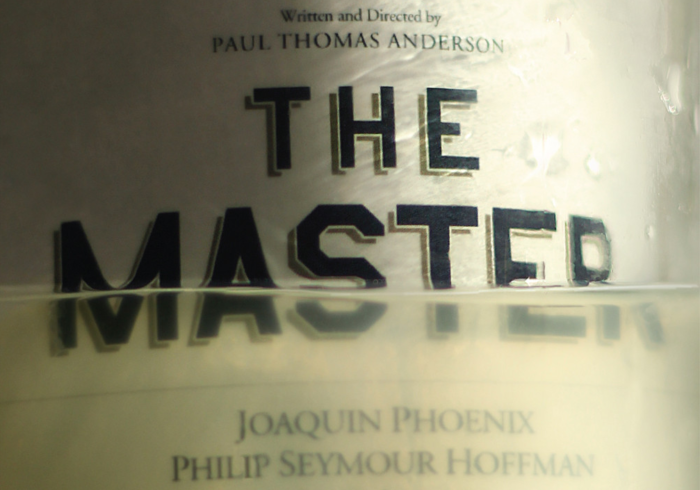
The Master

It certainly says something about The Master that Sean, John, and I have all seen the film and yet for the last week and a half have been waffling over the very act of reviewing it.  It’s a film full of lots of ideas and questions that I guess are just a little too baffling for a couple of schmoes like us to really give a thorough critique of, but I’ll try my best.  And as hard of a film as it’s been to wrestle with, I wouldn’t have expected anything less from Paul Thomas Anderson, a writer-director who with his last film There Will Be Blood basically launched himself up into the ubiquitous position of Great American Filmmaker.

When you pull it apart, The Master is about a lot of things.  However, on the surface it’s about Freddie Quell, a naval officer (played by an often riveting Joaquin Phoenix) who returns home from World War II and finds himself dealing with a wealth of pent-up rage and lack of direction, much of it fueled by his unweildy sexual obsessions and his penchant for alcohol.  He then stumbles (literally) upon a wealthy writer named Lancaster Dodd, who has pronounced himself the leader a Scientology-like religion, and the charasmatic Dodd instantly takes a liking to the troubled Quell.  From there, the film dissolves into an ever intesifying battle of the wills, in which the characters constantly skirt the line between love and hate, all while both characters struggle to better themselves in the name of The Cause.

The Scientology-inspired aspect of the film is certainly there, but it’s mainly just a jumping off point for some brilliant pieces of acting and staging.  Anderson has certainly showed in the past that he’s capable of creating epic, sprawling pockets of society within the worlds of his films, but The Master is decidedly more insular.  Instead of say the barren landscape of an untouched America that we saw in There Will Be Blood, Anderson focuses on the landscape of these two men’s souls and how incredibly different they are in terms of personality and intentions, and yet how there are also shades of both Quell and Dodd in each other.

The most memorable instance of this more restrained style culminates in a scene in which Dodd “processes” Quell, a scene that for me is one of the best of Anderson’s career.   It’s very simply shot, relying almost entirely on close-ups of the characters, as their strongwilled intensity slowly builds and builds to a kind of climax that thoroughly convinces you of why a troubled soul like Quell would gravitate towards this self-proclaimed profit.  Another great scene that sticks out for me comes a bit later, when Dodd is confronted by a non-believer about the seemingly made-up nature of what Dodd is proffessing.  It shows the kind of wonky but also seemingly rational thinking that is at the heart of any religion, and the film always leaves you with plenty to chew on when it delves in to the nuts and bolts of what makes people believe in a greater power.

Besides religion, really the other main driving subject of the film would have to be sex, and there’s plenty of it throughout the film.  Phoenix’s character is a guy who’s sexual obsessions make him seem like nothing less than a borderline deviant, and it’s often fascinating the way the film explores the always complicated relationship between sex and religion.  I do fear that because the film deals with sex in such an explicit way, it might not catch on with movie-goers or Academy voters, but then again this is such a distinctly bizarre film in really every aspect, it’s kind of hard to imagine it being as thought-provoking or engaging if it didn’t.

I guess really the only complaint I can make against the film is that it is so cerebral.  As I said earlier, it leaves you with a lot of ideas and questions to ponder, but it doesn’t necessarily leave you with a lot to latch on to emotionally.  And for that, I can certainly see how some might be left feeling cold in response to The Master, but for me it was a film that I couldn’t help but keep going over in my mind in the day or two after I saw it, and for me a film like that is always a rare treat.

Days of Future Past

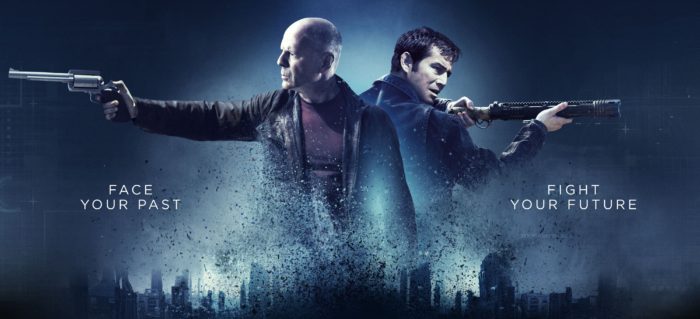
Looper

I probably should be writing about The Master or doing homework, but I am going to pass the buck to Colin and procrastinate, respectively, in favor of writing about Looper, because it sounds more fun. I kind of touched on this on the time travel movies episode of T3, but I think time travel is both a concept that is really appealing to us as people, and really difficult to make work in a story. We’re all mortal, we all have regrets and dreams, it’s easy to see why the idea of moving through time and space, cheating out on the most fundamental dimension of life, keeps coming back. But in practice, most time travel stories leave me frustrated by all the strange logical issues that putting this idea in practice creates. Fortunately, Rian Johnson is a savvy enough filmmaker that he mostly sidesteps these issues by making Looper a story about people, rather than the science fiction.

If you’ve seen the trailers for this movie, you really only know a part of the story: Joe (Joseph Gordon-Levitt, in Bruce Willis makeup) is a special kind of assassin living in a somewhat dystopian city in the future. In the future’s future, time travel has been invented and outlawed. It’s nearly impossible to get rid of a body. So future crime organizations use time machines to send people they need killed back in time, where “loopers,” people like Joe, make the kill and dispose of the body. It’s a sweet gig, except someday the person a looper kills will be his future self, meaning both his job is over and he’s only got thirty years left. When future Joe (Bruce Willis) is sent back, he escapes his younger self, setting of a desperate chase, as young Joe has to kill himself or risk being jacked up by his boss and coworkers.

Are you getting confused yet? Don’t worry, it makes more sense when you see it happen. The time travel logic never makes sense at all, especially with the Paul Dano character, but there’s a scene where Bruce Willis yells, “it doesn’t matter how time travel works,” and I think that’s good advice. What’s interesting is that this action movie set up changes about halfway through into a much more meditative film, with the introduction of Emily Blunt’s character and her son. None of it’s in any of the marketing, so I won’t write any more on the plot, but I will say I think Johnson did a pretty great job about turning time travel into a device for introspection; for analyzing motivations and consequences.

It’s been a good year for JGL and the good times keep on rolling as he turns in a solid performance and great Bruce Willis accent, saddled only by how slightly strange his young Bruce Willis makeup looks the whole movie. I think it’s the eyebrows. Speaking of Bruce Willis, he’s fine. He’s honestly not given much to do outside of his familiar badass persona, but it’s safe to say his is a most bad ass. Pierce Gagnon, playing Cid, the son of Emily Blunt’s character Sara, does a pretty great job, this kid might have a future. Maybe not, I’m not really sure how these things go. Where’s Abigail Breslin, does she still act?

Hey, it’s 2012, we don’t get a lot of smart sci fi anymore, it’s basically just Duncan Jones movies. On that scale, I’d say Looper is somewhere between Moon and Source Code – a movie with some solid action, a great cast and a fun premise that ultimately runs out of steam a little bit before it should. It’s plenty of fun and totally worth your time, unless you’re the type who ask too many questions about the mechanics of movies like this, in which case, be prepared for a swift kick in the balls from Bruce Willis. Yeah, I wouldn’t like that either.

Shocktober: Day 2

The Changeling (1980)

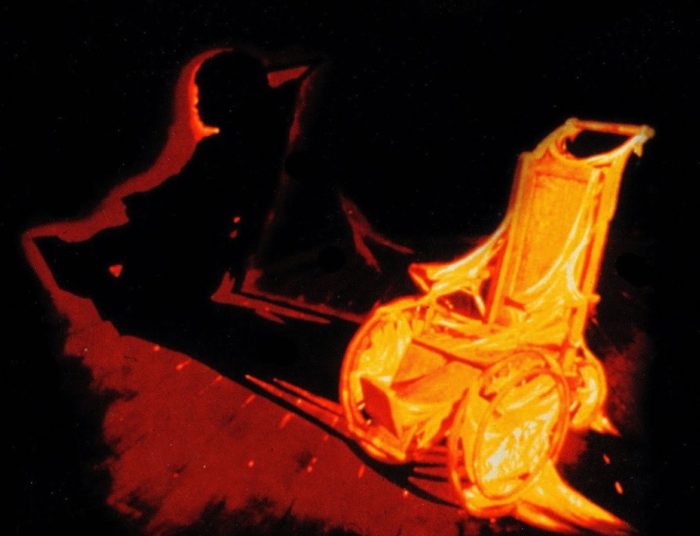
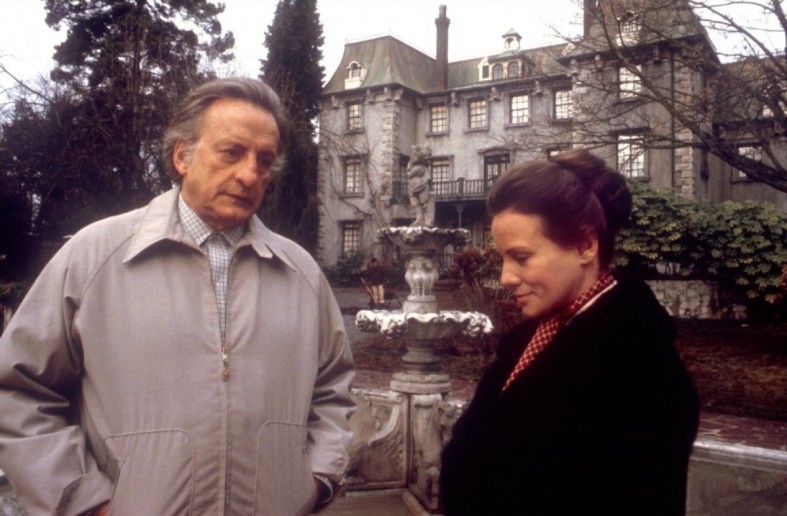
The Changeling is a significantly underrated ghost story from writer Russell Hunter. Right now you probably think I’m talking about that Clint Eastwood movie right? No, though The Changeling does involve another fiery-tempered old coot in screen-legend George C. Scott. Directed by Peter Medak, The Changeling is the story of composer Dr. John Russell (Scott) trying to overcome the recent deaths of both his wife and son in a traffic accident. Russell moves from New York to Seattle, Washington (nothing scary or depressing about that place) where he rents a spooky Victorian mansion and tries to find some kind of normalcy. Of course no good ever comes from living in spooky mansion as Russell is soon haunted by the ghost of a young boy. Who is the boy? Is it Russell’s son? This leads Russell to the discovery that the house was once linked to a well known Senator (Melvyn Douglas) and that’s when all hell breaks loose.

First of all, I don’t care what he’s in, George C. Scott is always a treat to watch. He brings such gravitas to such a heartbroken character and carries the film quite well. Not normally the kind of guy you’d expect to see in a horror movie, Scott adapts and takes you along for a bumpy ride. Melvyn Douglas is equally entertaining even at 79 years old, and the two character’s confrontation at the end wraps everything up in a chilling finale.

The Changeling is perhaps best known for the “Ball and the stairs” scene which although very simple, is one of the eeriest sequences in the grand echelon of ghost stories. Maybe the idea of “creepy ghost kids” has worn a little thin these days, but back in 1980 it still felt fresh, and this is one worth checking out. So if you’re looking for the right thinking man’s horror movie and not just a gory spookfest, checkout The Changeling. It will make you fear small rubber balls.

Come at Me Bro

Borderlands 2

I really liked the first Borderlands. In the end, I think I beat the main campaign four times and all the DLC campaigns twice. I put a lot of hours into that game. Gearbox did an amazing job of fusing two genres that shouldn’t go together at all and I loved it. And I craved more; much, much more. Three years later, Borderlands 2 is out, and it sure as hell is more Borderlands.

Picking up after the first game, Hyperion, led by a man called Handsom Jack, has taken over the planet Pandora since the Vault was opened. It turns out there’s another Vault, even better than the last one, and a new batch of Vault Hunters has come seeking that treasure and glory. There’s Maya, another siren, with the magical power to trap people in the air. Or Salvador, a gunzerker, who can dual wield any two weapons, even rocket launchers and sniper rifles. Plus Axton, the commando, with a turret somewhat like Roland’s from the first game. And don’t forget Zer0, a haiku-spouting assassin with stealth abilities and a sword. No matter who you chose, you’ll arrive on Pandora to a rude surprise: Handsom Jack’s been killing all the new Vault Hunters.

And so you’re taken on an adventure to defeat Jack with the help of damn near every character from the first game and its DLC packs. Simply having a story makes Borderlands 2 a better game, but it’s actually pretty good, too. Anthony Birch of HAWP fame wrote the game, and did a pretty good job. It’s not amazing storytelling, but it gets the job done. Jack is a real dick, which makes him fun to hate, although probably not as funny as intended. I feel like the whole game just tried to be funny, which is a shame, because it can’t be funny the whole time. That’s impossible for a 30+ hour RPG, especially when most the jokes are about Internet memes and dated pop culture. I don’t care for Axton, my character of choice, saying “cool story bro” when he kills a guy.

Much of the gameplay is the same as it was in the first game: that is, a solide shooter MMO-style fetch/kill quests with loot constantly as a motivator. The random gun generator still does an amazing job popping the most random and wonderful weapons out of enemies corpses. I have a sniper rifle that criticizes me whenever I shoot or reload, an assault rifle that shoots flaming grenades and a rocket launcher that I functions and an additional rocket when I run out of ammo: I literally throw it and then a new rocket launchers is digitally constructed in my hands. If you are at all susceptible to loot lust, this has the potential to ruin your life.

But really, what’s disappointing about this game is how much it feels like the last game. They fixed a lot, but there’s still some things they haven’t addressed. I still can’t track multiple quests at the same time. I still can’t fast travel whenever I want, meaning constantly backtracking across entire maps when I finish a quest. Each class only gets one action ability, which, although they’re all more customizable this time around, is disappointing. There’s still no crafting system or really anything worth sinking my money into, except for vending machines, which seems to have nice gear way less, and slot machines, which are about as good an investment as they are in real life.

Imagine if this game went more in the direction of other action RPGs and MMOs. Imagine it with a crafting system, where you could actually have some control over your weapons, choosing your favorite barrel, elemental effect, grip and whatever other parts guns have. If all the characters had more defined roles and powers that supported that. If loot was instanced, instead of a mad dash whenever a big enemy dies. Because right now, there’s little incentive to play with friends, unless you like enemies taking more shots to kill and getting less loot for it.

But do I still love Borderlands? You’re goddamn right. And I can’t fault Gearbox for playing it safe and giving us a slightly improved, bigger version of what made the first game fun. I’m still addicted, I’m still going to play through it a second time and I still am looking forward to more in the series, especially since no one else is really doing what these games do. But Borderlands 3 better make some serious changes, or the series runs the risk of getting stale.

Shocktober: Day 1

Cannibal Holocaust (1980)

Some of the movies I’ll be talking about this year are famous, some are less famous, Cannibal Holocaust is one of the few that is infamous. For years I’ve heard the urban legend-like stories that have surrounded this exploitative docudrama. Stories that included; real-life violence, torture, and even murder! Cannibal Holocaust is a film that remains controversial today for some of the most shocking imagery you’ll ever see in any kind of film.

The setup is quite ingenious for the time. NYU professor Harold Monroe (real-life former porn star Robert Kerman) travels deep into the Amazon in search of a missing documentary crew. What he discovers are several film reels left behind by the missing crew. Monroe then brings the footage back to New York and with several colleagues, watches the footage that details the last days of the fateful mission. Could Cannibal Holocaust be the first found-footage movie? Anyways, it’s on these reels that Monroe discovers that the documentary crew was not only SPOILERS killed, but eaten by the natives. The results of which are surprisingly real and only more shocking when you learn the rest of the story.

Cannibal Holocaust was a film deemed so shockingly real by audiences that director Ruggero Deodato was actually arrested in his native Italy under snuff film allegations. The charges included obscenity and even MURDER, until Deodato was finally able to prove the violence was fake. How could people be so stupid as to believe this was real? For one, the makeup effects in this film are phenomenal. Two, the then unseen found-footage style gave the film a certain realism. Three, the fact that there is other violence in the film that IS REAL may have blurred the lines between fact and fiction. What real violence? I’m talking about the killing of real animals on camera.

Cannibal Holocaust is a film that really challenges what you can justify with art. On camera we see the death of; a coatimundi, a turtle, a spider, a snake, a squirrel monkey, and a pig. Of course this kind of animal cruelty would never fly today, but it makes you think. Apocalypse Now is a masterpiece, but there is a scene where an ox and donkey are killed. We kill animals for food all the time, but for movies? It makes me uncomfortable and reportedly much of the cast and crew of Cannibal Holocaust were equally uncomfortable on set . Even Deodato (the animal deaths being his idea) has regretted some of the decisions he made but some fans have stood by the violence.

Is Cannibal Holocaust a good movie? Surprisingly, it’s not that bad, but also not that great. The acting just borders on passable, the pacing is a little meandering, but the effects and style are genuinely terrifying. The film covers some interesting themes about civilized versus uncivilized society, but it’s often overshadowed by the film’s violence. Whether this film should be praised or condemned is up for debate, nonetheless it has it’s place in horror movie history.


P.S. Two of the guys in this picture get completely naked for this movie.