Give A Little Glimpse

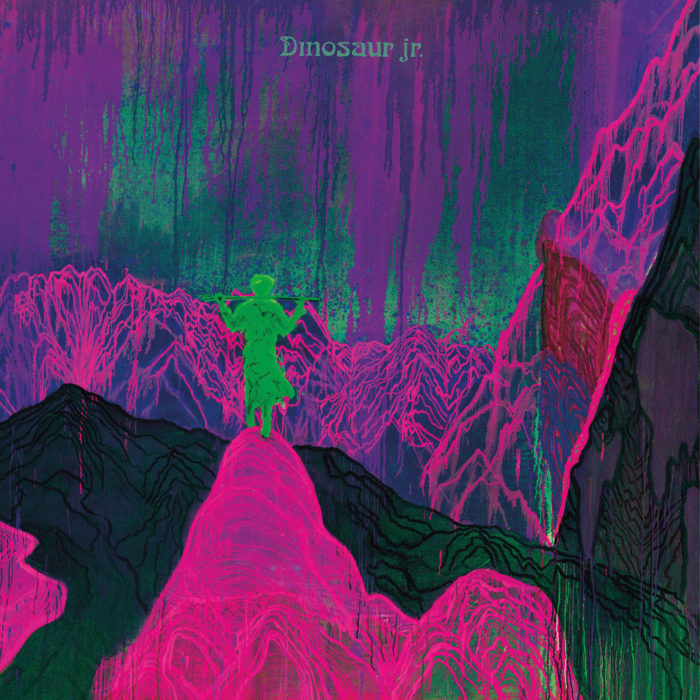
Dinosaur Jr. – Give A Glimpse Of What Yer Not

There are times when I think that writing for this blog has really fucked with my ability to be a fan of anything.  Because yes, I consider myself a music fan first and foremost.  And yet because we’ve had this ongoing conversation about pop culture on this blog that has forced us to think about things much in the way that professional critics do, it tends to make me (and I’m assuming Sean and John) a little more hesitant to enjoy things that I most certainly should enjoy without reservation.

Case in point, this newest Dinosaur Jr. record.  It’s been out for almost a month now, and I think its taken me until now to accept that this is not just a really good Dinosaur Jr. record, but a really good record in general.  And why is that so hard to accept?  I like Dinosaur Jr.!  I’ve liked Dinosaur Jr. for a long time! And yet while thinking about this album, the dumb music critic in the back of my head has to sit there going, “Well, I mean this band peaked in the late ’80s and probably haven’t been truly relevant since 1993’s Where You Been“.

But I guess I have to ask how “relevant” an opinion like that is nowadays.  If something sounds good, that probably means it is good, right? And Give A Glimpse Of What Yer Not most certainly sounds good.  Sure, it by no means sees this band reinventing themselves, but I think this is a band that realizes it doesn’t need to.  Or maybe it doesn’t, since J. Mascis doesn’t strike me as a guy who thoroughly maps out every single one of his career decisions, but rather goes by his gut.  That’s definitely the vibe I got from him when I saw the mighty Dinosaur live a few years ago, as Mascis’s cascading guitar solos seemed to go on as long as his gut told him, while Lou Barlow and Murph were there to steer the sludgy ship wherever it needed to go.

That said, the interlocking nature of these three musicians has always felt like a bit of a combative one, but with these past few Dinosaur Jr. albums (Give A Glimpse is the fourth since the band re-united in 2005), it seems like they’ve grown more harmonious, but without ever sacrificing their sublime loudness. This seems most apparent on songs like “Be A Part” or “Lost All Day”, which I guess technically count as Dinosaur Jr. ballads, yet still manage to have that kind of monolithic power that this band naturally possesses, while also embodying the reflectiveness and vulnerability that comes with growing older.  It makes for an album that’s easy to put on and enjoy on a lot of different levels, which has certainly helped give me the strength to tell my inner music critic to go suck on it.

Favorite Tracks: “Going Down”, “Tiny”, “Lost All Day”

C.A.T.: King of the Delta Blues Singers

Robert Johnson – King of the Delta Blues Singers (1961)

Robert Johnson has all the trappings of a classic rock star. He made a deal with the devil, died at 27, inspired a Ralph Macchio movie, all between a remarkable two-year span. Look at all the classics; “Cross Road Blues,” “From Four Until Late,” “Kind Hearted Woman Blues,” “Love in Vain,” “They’re Red Hot,” “Traveling Riverside Blues,” and the list goes on. If it wasn’t for Robert Johnson, Eric Clapton wouldn’t be God. He wouldn’t even be a demi-god. Led Zeppelin wouldn’t have the “Led” and The Rolling Stones would be gathering moss.

Sadly, Robert Johnson only recorded 29 songs before kicking the bucket from drinking poisoned whiskey. Hell, there’s like, two pictures of him in existence. Yet he lives on thanks to compilations like 1961’s King of the Delta Blues. Compiled from sixteen mono recordings between two sessions in 1936 and 1937, King of the Delta Blues has built its legacy as one of the greatest collection of blues songs ever assembled.

There’s no denying the age of these recordings shows. Numerous tracks have crackles and fuzz, but that’s the charm. There’s a gritty, ghostly presence to Robert Johnson, playing with as much passion as any man to ever strum on a six-string. My favorite moments are when Johnson plays slide. The tinny slide of Johnson’s strings are unmatched. “Traveling Riverside Blues” being my favorite example. Robert Johnson’s guitar was no more a guitar than an extension of his personal pain, and you can feel every note.

I can see how it’s easy for people to overlook Robert Johnson. His songs are simple, the recordings are old, there’s not a great deal of variety in the numbers. What those people fail to notice is how ahead of his time Johnson was. Few artists of the era were as passionate. Few are that passionate today. Robert Johnson was the real deal. When he sang about crossing the country, drinking and looking for women, you know it was real. I think that’s lost in most modern blues. You can’t play the blues unless you are the blues. Robert Johnson was the blues. Robert Johnson still is the blues. Hail to the King of the Delta.

Favorite Tracks: “Cross Road Blues,” “Kind Hearted Woman,” “Traveling Riverside Blues”

Give Me Puberty Or Give Me Death

Mitski – Puberty 2

Not to get too heavy or anything (he said as he got heavy…), but if there’s been one recurring theme I’ve found in 2016 music just on a personal level, it’s been having to face my own mortality as a music fan.  Firstly, because one of 2016’s most notable releases has been David Bowie’s Blackstar, which I’ve been finally catching up with after plopping down the money to buy it on slightly overpriced vinyl.  While 2016 also saw the self-proclaimed possible last album by Bowie’s buddy, Iggy Pop, in the form of Post Pop Depression.  Also, I suppose just in general I’ve had to deal with the fact that being a classic rock guy has forced me to reckon with the fact that most of my musical heroes are not only going to die within my lifetime, but probably within the next 10 years.

Then on the other end of the spectrum, I’ve been reminded that I’m not necessarily that young anymore by some of my favorite bands to emerge in 2016, like Car Seat Headrest or Frankie Cosmos, who are several years my junior.  Which brings me to Mitski Miyawaki, who is really only about a year-and-a-half younger than me, and yet I still can’t help but equate her with these younger artists, and how I’ve been learning to embrace the fact that I’m starting to be comfortable with my adoration for musicians who still aren’t old enough to rent a car.  I mean, Bowie recorded Hunky Dory when he was 24, and Iggy was 22 when The Stooges recorded their first album.  So it’s not like this shit is new.  As we all know, rock and roll is a young man (and woman)’s game.

Anyways, getting back to Mitski, if there’s an easy comparison to make, I’d say her guitar-based freak-outs coupled with her strong vocals and electronic flourishes bring St. Vincent to mind.  Much like Annie Clark, Mitski seems to have been brought up on ’90s alt-rock, but I think also has a kind of curiosity about more modern and unconventional sounds that leads to different sonic treasures that can be found on this album with each listen.  Though if I’m being honest, my favorite track on the album, the blisteringly catchy “A Loving Feeling”, happens to be pretty straight-forward while also having the distinction of being the shortest track on the album at 1 minute and 32 seconds.  In short, it’s the kind of song you can find yourself hitting play on over and over again.

I would say another big part of Mitski’s appeal would be in her ability to come off as an open wound, unafraid to let her most insecure feelings bleed all over her music.  On “My Body’s Made Of Crushed Little Stars”, she shouts “I wanna see the whole world!/I wanna see the world!/I don’t know how I’m gonna pay rent!/I wanna see the whole world!”, which are words I can’t help but gravitate towards, since I recognize that a big part of being a young adult is wanting to experience everything the world has to offer, while also having to grapple with the fact that the world doesn’t give a shit about your stupid indulgent experiences.  But, at least you can always write a song about it…

Favorite Tracks: “Your Best American Girl”, “I Bet On Losing Dogs”, “Loving Feeling”

C.A.T.: Sketches of Spain

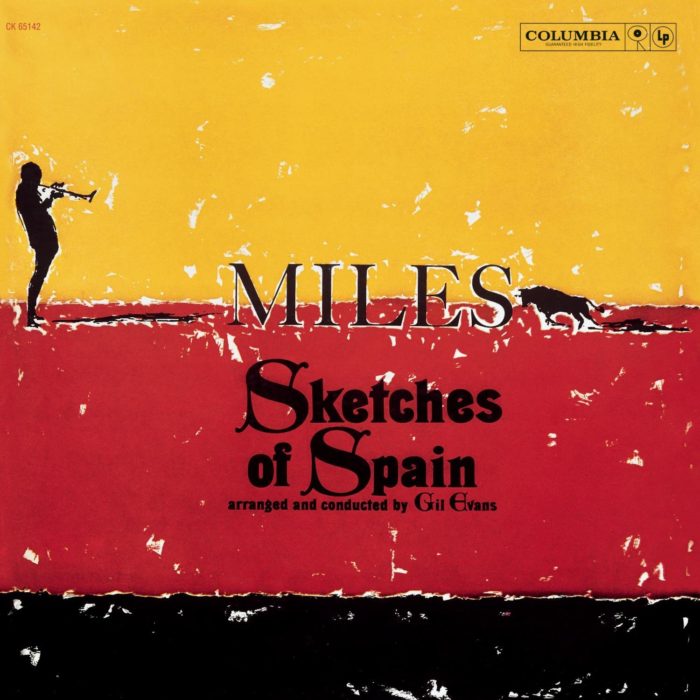
Miles Davis – Sketches of Spain (1960)

This might be a crock of shit, but Miles Davis has to be the most versatile jazz musician of his time. I say this because I have only heard three albums by Davis aka the “Prince of Darkness.” “How the hell did he get that nickname?” And those albums are; Birth of the Cool, which had kind of an uptempo bebop feel, Some Kind of Blue, which is the laid back lounge lizard jazz, and this one, which is on a whole other planet… A planet called Spain.

Initially, I imagined an album with a few salsa numbers, merengue, bossa nova, maybe a little cha-cha. Only to find out later none of those genres come from Spain. What is Spanish music? A wiki search will tell you Spanish music is commonly associated with flamenco, traditional folk and European classical musical. This definitely helps me color in the numbers of Sketches of Spain, a symphonic jazz odyssey that must be heard to be understood.

“Concerto de Aranjuez” is the album’s most memorable piece. Clocking in at almost twenty minutes, the song is an arrangement of Joaquín Rodrigo’s 1939 piece written for classical guitar. Though because Davis is a horns man, he plays the arrangement on flugelhorn. The result is moody and atmospheric, even scary at times. It’s hard to believe such a complex jazz arrangement existed at the same Andy Griffith was winning over the hearts of America with his small town ways.

The origin of this album (if true) is another fascinating story. Apparently, Davis was given the only album in existence with “Concerto de Aranjuez” and Davis and his arranger Gil Evans had to copy the music from what they heard on the record. The rest of the album developed from Spanish folk music the two heard in clubs. The end result is a collection of music that is both intricate and engaging.

Sketches of Spain feels like a soundtrack to an unmade film. I could imagine this album being at home in a European-produced western or something involving an exotic land or overseas adventure. This album takes the mind for a ride and that ain’t no crock of shit.

Favorite Tracks: “Concerto de Aranjuez,” “The Pan Piper,” “Will o’ the Wisp “

C.A.T.: Chuck Berry Is On Top

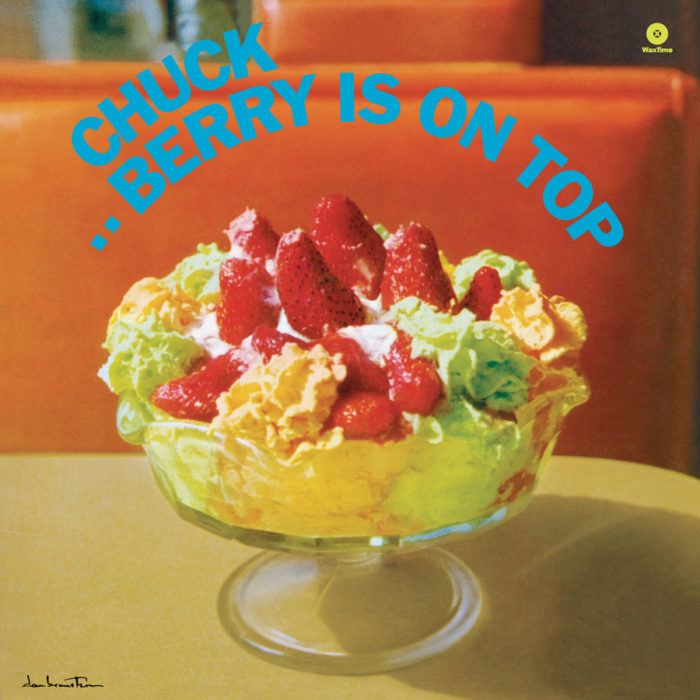
Chuck Berry – Chuck Berry Is On Top (1959)

The other day I was watching a video of Chuck Berry performing at the Blueberry Hill Restaurant and Bar in St. Louis in 2014. The legendary rocker looked nice in his satin shirt and captain’s hat, but man, it didn’t sound nice. Chuck more or less wandered around the stage, mumbling his lyrics and occasionally reaching down to strum the wrong note on his Gibson hollow-body. Then I looked up his age. Chuck Berry was born in 1926! This means he was still performing live at 88-years-old! Pardon my French, but that is motherf#@king rock ’n roll!

I don’t care if Chuck Berry today sounds like shit. The fact that he’s up there, living the dream, even as a deteriorating skeleton-sailor-man is the personification of rock. Hats off to you Mr. Berry. Now on to this week’s “Classic Album Tuesday” where I will be discussing one of Berry’s finest works.

The 1950s was an odd era for the “album.” Apart from jazz or classical musicians, most albums were nothing more than compilations of singles. The “album” didn’t take off as an art form until the 1960s, so most 1950s rock albums were a couple of the hits and then a bunch of covers or leftover junk. What’s special about Chuck Berry is he was a hit making machine. Seven of the twelve tracks on Chuck Berry is On Top were on the Billboard Hot 100 and there’s not a cover to be found.

Not only was Chuck a hitmaker, he had a presence. Few people were playing the guitar like Berry back then, with Bo Diddley being one of the few exceptions. So guess who also plays on this album? Yep, Bo Diddley. This stuff was raw, or at least as raw as you could get back in 1959. I think a great deal of credit goes to Chess records for making this happen.

If you’re not familiar with Chess Records, Chess was a record company founded by Polish immigrant brothers Leonard and Phil Chess, that over time became what Brownsville Station frontman and later music critic Cub Koda described as “America’s greatest blues label.” They even made a movie about it with Adrien Brody as Leonard Chess. I believe Mos Def plays Chuck Berry. I should watch it, but only if Mos Def duck walks. It ain’t a Chuck Berry movie if there’s no duck walking.

And these songs, what can I say? “Johnny B. Goode”, “Carol”, “Maybellene”, “Roll Over Beethoven.” It’s like the 1992 NBA “Dream Team” of songs. These are the songs that Berry built on a foundation of earth, wood and rock and roll. When I was taking guitar lessons as a teenager, the opening riff to “Johnny B. Goode” was one of the first things I learned. It’s amazing how much power Berry’s songs carry today and will continue to carry on.

Thanks, Chuck.

Favorite Tracks: “Carol”, “Johnny B. Goode”, “Roll Over Beethoven”

C.A.T.: Somethin’ Else

Cannonball Adderley – Somethin’ Else (1958)

Four years ago, Colin and I did a series of Classic Album Tuesday reviews spanning 1957 to 1984. There wasn’t any particular theme or reasoning behind it, but it kept posts steady and let me explore a wide range of artists I otherwise wouldn’t have heard. Such artists included; Bobby Bland, The Beau Brummels, The Feelies and Briano Eno. I would like to try this again. Any other Mildly Pleasers are welcome to join me but don’t feel obligated. The truth of the matter is I could use the motivation to listen to more classic music. This being said I present you with my two cents regarding one of my favorite Jazz albums of all time.

I’m probably the last person who should write about Jazz. Do I even need to capitalize “Jazz?” I’ve probably heard less than ten Jazz albums in my life, and probably have no more than five I can say I love. Lucky for Cannonball Adderley, this album is one of them.

Somethin’ Else released in 1958 is a classic for more reasons than I can snap my fingers at. Here, the legendary alto saxophonist is not only accompanied by some of the most accomplished jazz artists of the time, he’s accompanied by Miles “Freaking” Davis. This is notable not only because Miles Davis is the most famous Jazz musician you’ve ever heard of, but because it is one of the few times Davis was a sideman. Adderley takes the spotlight with his busy yet bluesy playing style, well complemented by Davis’ more understated work. I have no idea what I’m talking about.

Though I can’t say much regarding the playing style, I can tell you how Somethin’ Else makes me feel. It makes me feel like a 1940s noir detective, smoking a cigarette and peering out at the rain-soaked streets from my office. You better believe I have an inner monologue going too. The leadoff track, “Autumn Leaves” best accompanies this fantasy (or delusion). At nearly ten minutes it’s a moody piece with a creeping piano and bittersweet horns.

I like to listen to Somethin’ Else when I write. I don’t usually listen to music when I write as I find it distracting but jazz feels just mellow and atmospheric enough for it to work for me. Especially if I have a hot cup of joe, looking out at the rain with an inner monologue in my head.

P.S. I plan on revealing a NEW weekly blog feature this Friday. Stay tuned!

Favorite Tracks: “Autumn Leaves,” “Dancing in the Dark,” “Love for Sale”

The Two O.J.’s

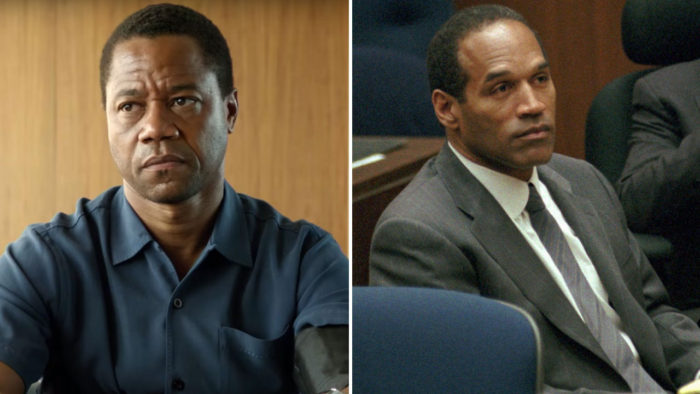
I’m not sure how this happened, but I somehow managed to be absolutely riveted by the same story twice this year.  You see, back in February, FX launched the first season of American Crime Story, which was dubbed The People v. O.J. Simpson, and it was fantastic.  Every episode was much-watch TV just as much as the 1994 trial that it depicted was, and I honestly didn’t think I was going to see a better piece of American television this year.  Then, by no one’s intended design, two months after the FX mini-series concluded, ESPN released their own mini-series — a five-part documentary under their 30-for-30 moniker called O.J.: Made In America — which somehow managed to be even more captivating than the fictional series that preceded it.  And what’s great is that I don’t think Made In America does anything to diminish what The People v. O.J. Simpson accomplished.  They both compliment each other quite nicely as two distinct and marvelously done retellings of this insane story that could have only happened in America. Continue reading