C.A.T.: The Black Saint and the Sinner Lady

Charles Mingus – The Black Saint and the Sinner Lady (1963)

Last night I listened to The Black Saint and the Sinner Lady while drinking warm Pepsi and playing Tecmo Super Bowl. It turned what was a relatively quiet evening into an offbeat jazz odyssey. Also, the 1991 Seahawks beat the Jets 28-6. All thanks to the power of jazz. So we’re rolling a smoke and hitching a ride back to 1963 for this week’s Classic Album Tuesday.

I find writing about jazz, particularly for someone not well versed in the genre, challenging. There are no words and the intentions aren’t always clear, but that’s kind of the beauty. It’s how YOU interpret the music. I try to close my eyes and remember what I can. The first thing I recall is the music, swaying in, like a drunk elephant, followed by a bizarre low buzz, like a fart machine. Is it a tuba? An alto, something? I can’t believe it only took me two paragraphs to type “fart machine” describing one of the greatest jazz albums of all time.

At first, the whole album has a chaotic feel. Like a circus that keeps piling on attractions and stunts before the previous performance has ended. From what I’ve read, Mingus utilized a great deal of overdubbing, piling on more and more instruments and unique sounds throughout the recording process. Himself a talented double bass player, Mingus is accompanied by the equivalent of a small chamber orchestra in a ten-piece backing band. Even instruments I wouldn’t associate with this bluesy kind of jazz are included like classical guitar and flute.

I could name the names of all the talented musicians on this record, or at least copy and paste their names–I don’t know any of them, but I’m told they’re amazing–but why do that when Mingus himself can do that right here. If you don’t feel like clicking on that, it’s a link to the album’s liner notes, written by Mingus. He’s very technical in breaking down the album, which is broken into four tracks and six modes like a ballet. I was surprised considering the album has an improvised vibe. Apparently, Mingus planned much of this in workshops and had a specific vision. The greats always do.

I find it interesting to note that the rest of the liner notes for this album were written by Mingus’ personal psychologist, Dr. Edmund Pollock. Though I don’t know the nature of their relationship the liner notes are not weird or science-y. Pollock is complimentary towards a musician often called, “The Angry Man of Jazz.” One of my favorite comments is when he says Mingus is in “great pain and anguish because he loves.” What a beautiful way to describe music as a vehicle for personal expression.

The album isn’t all downbeat rhythms and melodies. There are moments of elation when Mingus switches to playing piano as cherubic flutes play overhead. It’s the kind of album that can’t be listened to in pieces. The Black Saint and the Sinner Lady is a symphony, with all its highs and lows. There’s too much to take in on a first listen. It’s the kind of album you can listen to one hundred times and always hear something new. I look forward to hearing it again when the 1991 Seahawks go to the Super Bowl. Go jazz!


Spoonful of Spoon

Spoon – Hot Thoughts

Spoon is a good band.

This is probably about as close to an irrefutable fact that is not actually a fact but a mere opinion that you’re going to get from any 21st century rock music fan. Well, other than that Radiohead is a good band. But unlike Radiohead, Spoon have actually rocked since the 21st century began, or at least in their own conventionally unconventional way. And perhaps that’s what’s made them one of the great bands of the last two decades – their willingness to embrace rock tropes while undercutting and reconstructing what those tropes are in their own image. Continue reading

Debuts of Sorts

Among other similarities, Jay Som and Vagabon just released debut(ish) albums that make me feel old and obsolete in a good way. What I mean by this is that both Jay Som (aka Melanie Duterte) and Vagabon (aka Lætitia Tamko) are both indie rock artists in their early 20’s, and also happen to not be white males. I know, my first instinct as a white male that has an affinity for the last 20 years of indie rock – which of course has been mostly dominated by white males – should be to feel completely alienated.

But fortunately, this seems to have been the way my music listening habits have been leaning in the past few months, for fairly obvious reasons. Looking at the albums I’ve responded to from this year so far, other than the one-two punch of my last Compare/Contrast, it’s mostly been female-led. But I realize I probably sound like an over-compensating male wannabe feminist libtard, who has all of the sudden made a cultural conversation about himself. And since no one wants to hear that, I’ll just proceed to talk about what makes Jay Som’s Everybody Works and Vagabon’s Infinite Worlds pretty great, regardless of whether you care about what perspective they’re coming from. Continue reading

Follow Her Voice

Julie Byrne – Not Even Happiness

In a more normal year, it’s entirely possible that I would’ve overlooked Julie Byrne’s Not Even Happiness without blinking an eye. This isn’t to say that I’m incapable of appreciating a quality stripped-down singer-songwriter album. But I guess it’s just a little hard for one of them to really grab me, especially one that relies so heavily on what I usually refer to as “pleasantness”. Which is the very definition of a back-handed compliment, and maybe one I should consider using less.

Because in a year where chaos seems to reign supreme, I find there’s been something incredibly comforting about wrapping myself up in the softness of Byrne’s guitar-playing and her voice. Hell, the album begins with the lyric, “Follow my voice./I am right here./Beyond this light./Beyond all fear”. And this has definitely been an album you can kind of just put on and kind of retreat into yourself while listening to. Which I think is something that has become healthy for us humans to do from time to time. Continue reading

C.A.T.: Tous les garçons et les filles

Françoise Hardy – Tous les garçons et les filles (1962)

What better album to feature for Valentine’s Day than one from Paris, France: “The City of Love.” Awhile back, I set out to review an acclaimed album once a week—for Classic Album Tuesdays—chronologically from 1957 to modern day. I crapped out at 1961. The problem being most rock albums back then sucked. Don’t get me wrong. There were 31-flavors of good Jazz and Blues. Yet Rock had yet to evolve past the single. Most rockers were too busy being rebels (most of which without causes) and dying in motorcycle crashes.

Continue reading

Duos Doubling Down

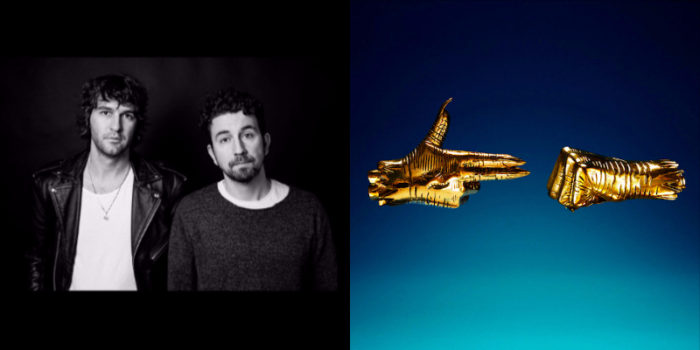
“The future’s under fire. / The past is gaining ground. / A continuous cold war between my home and my hometown.”

Yes, this is the opening lyric to the Japandroids’ new album, and yes, I suppose it does feel appropriate for the disparity that exists between rural and urban America in 2017. But then again, Japandroids are Canadian, so maybe it’s not as topical as it sounds. And it becomes even less topical when you think about the fact that its a lyric that could’ve been on any Japandroids album, since these guys tend to paint with big broad strokes designed to speak to whatever personal anguish you seem to be going through, no matter what year it is. Continue reading

Obsessong: “The House That Heaven Built”

It’s rare that I ever get excited for new rock albums anymore. However, even though there have been much more pressing things going on this weekend, I am quite excited to listen to Near To The Wild Fire Of Life, the new Japandroids album that came out on Friday. This is in no small part due to the fact that if I had to choose a favorite album of the ’10s so far, it’d have to be the band’s 2012 release Celebration Rock, which is also perhaps the most aptly titled album of the decade so far. Also, the fact that it took the band a whole five years to release a follow-up has also fueled my anticipation, even if there’s also a part of me that wishes they’d broken up after that last LP. Because if I’m being honest, it’s hard to imagine them putting out a better collection of heart-pounding anthems, such as the one I’m about to talk about.

Song: “The House That Heaven Built” by Japandroids
Album: Celebration Rock
Year: 2012
Written by: Japandroids Continue reading