
Sean Lemme

I started blogging as a way to lazily pass my high school senior project and somehow I've kept doing it for more than half my life

The End of the End

Uncharted 4: A Thief’s End

Naughty Dog had a console generation formula: A new IP, two sequels, and then a fourth, different game. The first PlayStation had the three Crash Bandicoot games, then a kart racer. The PlayStation 2 had the three Jak and Daxter games, then a kart racer. The PlayStation 3 had the three Uncharted games, then wacky kart racer The Last of Us. So for consistency’s sake, I wasn’t sure there needed to be an Uncharted 4. Especially since the third game seemed to wrap a bow on the franchise. Well, I was wrong: Uncharted 4: A Thief’s End is a bow-wrapping masterclass.

The leap to the much more powerful PlayStation 4 is immediately noticeable – Naughty Dog has always had a knack for getting the most out of Sony’s machines, and Uncharted 4 is one of the best-looking games I’ve ever played. Sure, that’s superficial, but given the type of game this is, it ends up meaning a lot. The exotic locations are gorgeous to look at and explore, it makes the adventure more alive and dangerous and the destruction of ruins more tragic. And when the characters are this detailed, the motion capture so good, you get one of the few games where watching cinematics is a genuine pleasure.

Like all great franchises eventually, Uncharted 4 is about family; specifically, Nate’s long-lost brother Sam, who was presumed dead at the very beginning of Nate’s adventuring career. Now Nate, after the insanity of Uncharted 3, has done his best settling down with Elena, but he’s getting restless living a normal life. So when Sam resurfaces and explains that he needs to get the greatest pirate hoard in history, it doesn’t take much convincing to get Nate on board. But like all lost treasures, it’s stayed lost for a reason, and the brothers are far from the only ones looking for it.

Most of the game is played with Sam at your side, doing his best to help take out enemies and get boosted up ledges by you. You don’t really have to worry about protecting Sam, The Last of Us this is not, and giving the game constant banter from beginning to end is definitely a net positive. It is kind of like that other game in that Sam is played by Troy Baker, the guy who played Joel in The Last of Us and one of the most prolific video game actors today. But, you know, he gets a lot of work because he’s good, and he and Nolan North are pretty great together in this game.

But this is a game and I play Uncharted games because I’m looking for the epic set pieces. This one has a ton of them, many of which built atop some of the new abilities added to the game. Nate has a grappling hook now, which he can you to swing or climb on certain points of the world. He also has learned how to drive cars, which is used both in action scenes and puzzle solving. This all comes together in one of the game’s high points, when Nate smashes through a city in a jeep, then proceed to grapple between various cars and motorcycles as he chases his target. It’s nuts.

There’s also a multiplayer mode but I didn’t really care. There’s some coop stuff that I’d like to check out, I guess, if someone I know ever buys this game. Really, though, it doesn’t matter. I came for a new Nathan Drake adventure and I got maybe the best one yet. My biggest complaint is with the villains, who both are pushed in unfortunate directions at the end of the story, kind of ruining them for me. But I loved me all that family togetherness. Uncharted 4, you’re great! Never make another one.

Top Stuff of 2016 So Far

Hey buddy! Just wanted you to know that even though we are on the cusp of a post-T3 world, that doesn’t mean we’re going to stop doing the big, easy best of the year lists (for at least as long as we keep doing these irregular podcasts). That includes the top stuff of the year so far podcast as well, one of the shows that least well fit the T3 format in which we discuss an arbitrary number of video games, albums, TV shows, and movies that have been abnormally good during the first half of the year. Which ends today! It’s June 30! July starts tomorrow! We’re halfway there, living on a prayer!

Top Ways to Listen:
[iTunes] Subscribe to T3 on iTunes
[RSS] Subscribe to the T3 RSS feed
[MP3] Download the MP3

Gundam Dumb Fun

Gundam Breaker 3

Can you believe we’re already close to half of the way through June? That means were almost 50% done with 2016! Most years I’d write about how amazing it is we’re already this far into the year (and thus this close to Christmas) but this year has been, frankly, a slog. Between beloved entertainers dying, outright tragedies, the Trumpification of politics, and everyone’s personal struggles, I’ve got a depressingly large selection of reasons to wish we could just skip ahead to 2017, but a few compelling ones forcing me to focus on the here and now – like my video game backlog!

The Witcher 3 was such a good, long game that I’ve had a hard time since then committing to lengthy experiences since completing it. I’ve still barely scratched the surface of Metal Gear Solid V, and am paralyzed in fear of getting into the new Fire Emblem and X-Com games. Instead, I spent the winter and spring on lighter fare like Tom Clancy’s The Division (it was OK), Hearthstone (the new cards are fun), and VR games to go with that crazy expensive headset I bought. So it wasn’t until May that I saw the credits roll in a game. It was one I imported, a sequel to one of my favorite games last year, a crazy little gem called Gundam Breaker 3.

Gundam Breaker 3 is all about bringing the joy of building Gunpla (that’s the street term for Gundam plastic models) to the digital world. And they do that not by simulating tearing tiny parts out of plastic molds, but by letting you build, paint, and fight in a mobile suit made of all your favorite Gundam parts. This game features over 200 mobile suits broken down into their heads, torsos, arms, legs, backpacks, shields, and weapons. It’s up to you to pick the best combination, as pretty much everything is allowed, no matter how ugly things get.

The big change this time around is that stats for all parts are identical when they’re at the same level, so players aren’t forced to choose between their favorite parts and the most optimal build. To compensate, the game has added new optional parts which can be attached and positioned to the mobile suit’s body. These parts include various guns, missiles, grenades, swords, funnels, bits, reactors, and even the signature Gundam V fin, so all the most iconic stuff is available to you, if you want it. Even special moves, when used enough, will be unlocked for use without their default weapon type/part requirement. You even don’t necessarily have to migrate from the starter HG parts to the larger MG parts this time, as you can just keep leveling your HG parts and they will maintain stat parity.

Anyway, that’s the sell for people who already have tried Gundam Breaker games. For everyone else, here’s all you need to know: this is Gundam Diablo. There is a small set of levels which you will play over and over with increasingly stronger enemies. Every single one of them will drop parts, which you can take and use on your Gundam. So you kill a Tallgeese, you might get a Tallgeese head. You’ll do this over and over, as even if all you want is that Tallgeese head, parts have levels and you want to level yours up to the cap so you can have the strongest Tallgeese head possible. If that sounds good to you, go get this game now.

The story is actually a lot weaker this time around, as the melodrama of the last game is replaced with a lame story about a humble Gunpla shop trying to establish itself as the best team of Gunpla fighters in the world. It picks up at the end, with space elevator high jinks, but you can skip the whole thing. Which is a shame, because this is the first game in the series to be available in English (even though it still didn’t make it to North America). But being able to read the menus will be a big boon for those of us without the ability to read Japanese. And the game plays better than the last one too, so development effort was focused in the right area.

In the mid-2000s, I looked to the Armored Core series and dreamt of a Gundam game like that. We’ve got one now, just with a really light, cartoony tone. Which is fine. Gundams are toys, and my fantasy isn’t to fight in a real war against real humans who are trying to kill me. I just want to make the goofiest, most impractical war machine ever conceived.

The War of Bucky Aggression

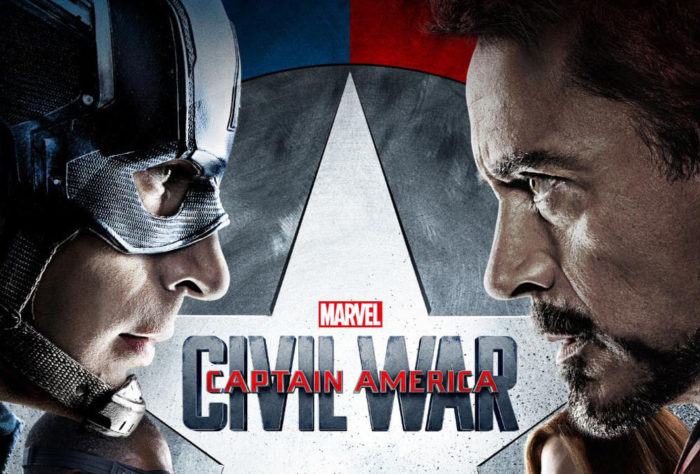
Captain America: Civil War

You’ve heard enough of TV’s golden age, the period starting probably with The Sopranos in which suddenly there were too many great shows to watch. It’s gotten to the point where some people say TV has surpassed movies, especially when it comes to comedies and dramas, while cinema has become obsessed with franchises and blockbusters. I don’t really think it’s as simple as that narrative, but it is definitely something to be aware of as Marvel Cinematic Universe begins Phase 3 with Captain America: Civil War, the best episode of the MCU Show yet.

This year has given us several takes on the superhero in-fighting genre; Marvel did it itself a few months ago with the second season of Daredevil, which pitted The Man Without Fear against The Punisher. That was an ideological battle, with Punisher believing that Daredevil’s belief in redemption really just gives criminals more opportunity to hurt people, and Daredevil arguing Punisher killing villains makes him no different from them. It was good. Also there was Batman v. Superman: Dawn of Justice, which was more obsessed with how the fight between those two titans would play out than why such a fight would ever happen. It was bad. Civil War is closer to Daredevil, thankfully.

It’s been a recurring criticism of Marvel movies that they do a great job fleshing out the main characters and a terrible job making villains interesting, so it figures one of their best villains would be the original MCU hero, Iron Man (Robert Downey, Jr.). After another Avengers-caused disaster, the governments of the world demand that superheroes register with a UN-run agency or retire. Tony Stark becomes the face of the pro-registration movement, and many of the Avengers join him, but Captain America’s (Chris Evans) justifiable skepticism stops him from signing, and the ill-timed reappearance of the Winter Soldier (Sebastian Stan) quickly leads to Cap and those that side with him ending up on the wrong side of the law.

Seeing heroes fight each other is dumb. So the movie has to earn it, and the ideological battle here is a good one. Ever since Man of Steel, if not earlier, audiences have been concerned about the collateral damage of super heroics. One of the best aspects of Age of Ultron was that it showed the Avengers work just as hard trying to save people as they did fighting the bad guy. The debate of accountability also fits the character arcs of both Cap and Iron Man. Over four movies, we watched Steve Rogers become disenfranchised – we know he doesn’t feel like he quite fits in the 21st Century, and even though he started out as literally a soldier, he doesn’t trust organizations anymore after seeing how corrupt SHIELD was. On the other hand, over his five movies, we saw Tony Stark go from the rebel who gave the finger to the board at his company and congress, to a man constantly beaten down by his hubris. He was already dealing with intense PTSD before Ultron, now the guilt of that is destroying him. The soldier becomes the rebel, the rebel becomes the soldier, and it all absolutely fits these characters.

It’s also great that the movie shows the Avengers really don’t want to fight each other. They strongly disagree, but in the big six-on-six battle, it’s made obvious nobody really wants to hurt each other. The most heated parts of that battle are based on misunderstandings and mistakes. And the final battle, which is real, is justified by heightened, compromised emotions. It’s the part of the movie that worked least well for me, especially since the epilogue has one character tell the other that there are no hard feelings.

What I’m trying to tell you is that Civil War does everything Batman v. Superman failed to do, and it does it effortlessly. A believable, meaningful fight between the rich, technology boy and the blue boy scout? Pretty much nailed it. A meddling human who’s masterminding the whole thing? They give us Zemo (Daniel Brühl) an ultimately unnecessary but still interesting villain. An expansion of the cinematic universe by adding new heroes? We get Black Panther (Chadwick Boseman) a badass warrior king who learns a lesson about the price of vengeance and MF’n Spider-Man (Tom Holland), a briefly shown, delightful guest in the fray.

Most importantly, the movie is still fun. Juggling this many characters is hard, what’s even harder is making sure each character seems cool, tough, and funny. The Russos pulled that off somehow, as every damn character in this movie felt like they belonged. Yes, even Don Cheadle’s War Machine. It’s an amazing feat, at it only came at the cost of the movie not really feeling like a movie. This is just part of the story of these characters, a film akin to (but more satisfying than) something like The Hunger Games: Mockingjay – Part 1 in its absence of a beginning and lack of a true ending. Welcome to the new age, movies aren’t movies anymore. You either going to love that or hate that. Time to pick a side.

T3 99: Top 10 Tabletop Games

Sometimes, it’s pretty obvious when our podcast would be controversial if we had a large audience. So go easy on us this time, OK? For us, board games are an activity, a socializing tool, a means of joke creation. It’s not our lifestyle. I can’t even convince the others to play Hearthstone, you really think I can get them into Dominion, Carcassone, or the even deeper games that I haven’t even tried? So instead, try to enjoy the conversation, as this is far, far from the definitive list of the greatest tabletop games.

Top Ways to Listen:
[iTunes] Subscribe to T3 on iTunes
[RSS] Subscribe to the T3 RSS feed
[MP3] Download the MP3

Continue reading

Merc with a Mouth

Deadpool

It’s looking increasingly likely that Deadpool will become the highest grossing R-rated movie there’s ever been, so I should probably write something about it, even though it came out on Valentine’s day and we’ve already passed Easter. Will this success start a trend of R-rated movies? Yes, it already has. We’ve already been told that we’ll be getting an ultimate bummer edition of Batman v Superman: Dawn of Justice which is more than a half hour longer and totally hard R violent. I think the next Wolverine movie will probably go for an R as well. Basically everyone’s going to try to be cool by being more violent, except Disney, who will are quite happy with cute animals/Marvel/Star Wars, thankyouverymuch.

I’ve always thought of liking Deadpool as the comic book equivalent of being a huge Dane Cook fan. The people who like him seem to really like him, but only him, and have like zero appreciation for the actual art form. It doesn’t help that the character’s biggest champion for the last few years has been Ryan Reynolds, the Dane Cook of acting. In fact, I was downright wary of this movie. Not to a Batman v Superman: Dawn of Justice degree, but the trailers didn’t do much for me and the outpouring of excitement from Reddit probably hurt more than it helped. What turned me around? Colin liked it. And Colin has little tolerance for super heroes these days.

So why would a man like Colin give a pass to a movie like Deadpool? For one, Deadpool exists to simultaneously celebrate and shit on comic book super hero movies. The timing couldn’t have been any better, with 2016’s slate of movies threatening to be a breaking point for fans who survived the various breaking points of 2014 and 2015. When Deadpool goes to Xavier’s School for Gifted Youngsters, he quickly roasts the X-Men franchise and the limited budget of his own movie. He’s aware of tropes and often tries to subvert or at least mock them when they come up. Deadpool is a character basically free of consequence, and he revels in that freedom.

Basically, Deadpool‘s more like an OK comedy movie than anything we’ve seen so far, as the jokes extend from the opening titles all the way past the end of the credits. A lot of it’s referential, and not even necessarily to comic books or super heroes. I mean, that after credits scene is mostly funny if you know about Ferris Bueller‘s after credits scene. Even that hard R violence isn’t free of the funny, as Deadpool will either mock his enemies, kill them is grotesque ways, or get himself injured in a slapstick fashion. I’m starting to describe what comedy is now, so I’ll stop and just say the somewhat immature humor landed for me more often than not, and made the whole thing worthwhile.

Frankly, I just didn’t think the potential for a character that wants to be only vulgar, violent, and very aware that he’s in a comic was that great. That leaves no room for subtlety or genuine insight, for the human connection that makes Superman, Spider-Man, or Batman stories great. Yeah, I guess if the lampshading was extremely on point, Deadpool could have been the Airplane! of super hero movies, but realistically, I was expecting maybe a Spaceballs. It was in the ballpark. A good movie, with a game cast, if not necessarily one that will be memorable for me. But to you Deadpool guys (because I know you’re all men): hey, congratulations. You made it. Please take pity on us Superman fans.

Yawn of Justice

Batman v Superman: Dawn of Justice

I’ve been writing Batman v Superman: Dawn of Justice in my head ever since I got over mentally rewriting Man of Steel. By now you’ve probably read the reviews of this movie and maybe even seen it. So me telling you why it’s disappointing won’t help that much, I’d just be adding my small voice to a booming chorus. Instead, to help you understand why my heart is broken, let me tell you how easy it would have been to turn this into a good movie. I will be discussing the plot, so spoiler warning, I guess, but you’ve seen the whole story in the trailers anyway.

You start by combining the Bruce Wayne character and the Lex Luthor character into one person called Lex Luthor. He’s still allowed to have the bits of impotent, psychotic rage that Jesse Eisenberg brought to the film, but mostly he’ll be the angry, paranoid sociopath Ben Affleck played. We watch his journey as his self-importance gets decimated as he can do nothing when Zod and Superman destroy LexCorp Tower (instead of Wayne Tower) and slowly that helplessness turns into an insatiable need to prove how powerful he is, ultimately resulting in an obsession with destroying Superman.

A tragic Luthor, who starts out as a vicious, shockingly brutal vigilante? I think that fits the tone of this franchise and reinvents him in an exciting way, even though it still ends with his mania leading him to trying to kill Superman above all else. And you know what, the infamous “Do you bleed? You will.” line works as a delightfully ominous warning from a Luthor who is actually a threat. Superman movies always struggle with creating great villains, but that wasn’t the problem with Dawn of Justice. This movie’s problem was that it turned one of DC’s greatest heroes into the villain.

But the film needs Batman, right? There is a role for him in this movie too, it’s just the one that Wonder Woman was playing. In my version, it would be Bruce Wayne who’s snooping around Luthor’s business looking for information. He might even be checking out Superman too. Batman would be the no-nonsense character who avoids getting caught up in a stupid pissing match that Wonder Woman was. We would just catch glimpses of him through the film, but it would be enough to know that Batman was keenly aware of everything that was going on. Then, when Luthor is about to kill Superman with his Kryptonite spear, the Dark Knight appears and saves the day.

You see? Batman can be skeptical of Superman, even suspicious, but to actively try to destroy someone who has only saved people is just going too far. I want to see the heroes fight side-by-side, not with each other in a meaningless brawl. And so if Batman defeating Lex in isn’t enough for a finale, we can still have a big, CGI monster show up. Hell, it can even still be Zod’s reanimated body. Just instead of calling him Doomsday, we’ll call him Solomon Grundy. Since Grundy is literally a giant zombie, and a B-list villain who perfectly fits a limited, late-in-the-movie appearance. Doomsday and Superman’s death? Yeah, let’s save that for when it can actually matter.

If Zack Snyder had made this movie instead, it still wouldn’t have been perfect. It doesn’t address the dour, ominous tone of every Superman scene in the movie, or the ridiculousness of him being accused of slaughtering soldiers with a machine gun. But I see in the framework of this picture a worthy successor to Man of Steel. It just got so caught up in setting up a new Cinematic Universe it lost its way.