Sean Lemme

I started blogging as a way to lazily pass my high school senior project and somehow I've kept doing it for more than half my life

Shocktober Day 21: Dressed to Kill

Dressed to Kill (1980)

I remember someone, I think it was Roger Ebert, patron saint of Mildly Pleased, discussing once the idea of star ratings. Specifically, this person was explaining that when critics rate a film, they rate it based solely on its potential. If The Accidental Tourist gets four stars and School of Rock gets four stars, it does not mean they are equally good, but they are both as good as Ebert could have imagined them being. I bring this up because Dressed to Kill is stylish and pulpy, and watching it was easier than Straw Dogs and certainly not an equivalent torment to Salò. But I would never recommend this movie to anyone.

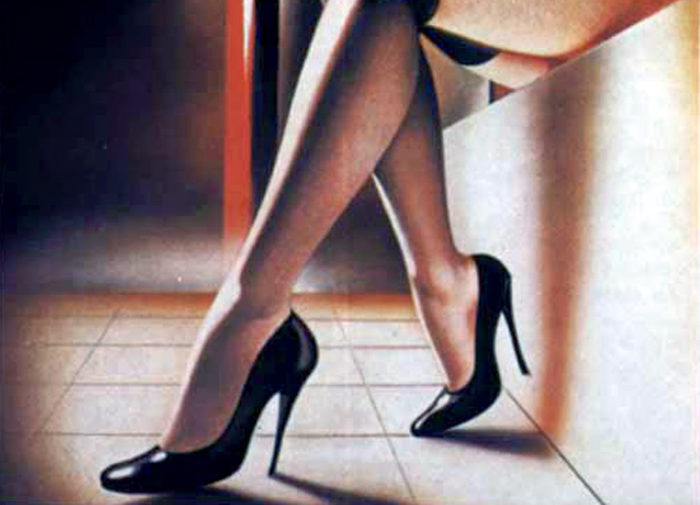
Kate Miller (Angie Dickinson) is a sexually frustrated housewife who uses fantasies to get through being so romantically bored with her husband. One day, after discussing her situation with her therapist (Michael Caine), Kate goes to a museum and starts playing a game of cat and mouse, chasing and being chased by a man there. They leave together and she awakens that night satisfied and goes to leave a note, only to find out that the man had VD and never told her. Horrified, she hurries out of the building, only to remember at the last second that she left her wedding ring. So Kate gets back in the elevator and a blonde woman appears and slices her to death with a straight razor.

This start is the first of many obvious homages director Brian De Palma makes to Hitchcock’s Psycho (Hitch himself called it a “fromage”), to the point where it may be better to call Dressed to Kill a remake. After the murderer escapes, the story shifts its focus to the only witness: a prostitute named Liz (Nancy Allen). Liz picked up the murder weapon, so even though the detective in charge (Hill Street Blues/NYPD Blue detective guy Dennis Franz) doesn’t think she did it, he still says he’ll arrest her in a few days if they can’t find another lead. Bizarrely, she ends up teaming up with Kate’s genius son (Keith Gordon) to solve the case.

Spoilers:

It ends up being the case that the blonde woman is actually the therapist played by Michael Caine. The way Dressed to Kill explains it, being trans meant that she had both genders living inside of her, and her male side would not allow her to undergo a gender reassignment operation. So when she becomes aroused, her female side takes over and she murders the object of her attraction. That’s why she killed Kate, because her talking about being bored and horny turned her on too much.

/Spoilers

A lot of movies, maybe especially in the horror genre, punch down. People of color, the sexually promiscuous, the mentally ill, the awkward, and the weird are all common victims of the monsters that dominate this type of story. And I’m aware that, as a Psycho homage, Dressed to Kill was probably going this way. However, that character in Psycho is presented as a multiple personality, the fact that one is female doesn’t matter. Moreso, I worry movies like this, whether they intended to be transphobic or not, are dangerously normalizing of bigoted attitudes. This character probably wasn’t meant to stand in for all trans people, but that’s hardly an excuse for purposefully misunderstanding and misrepresenting. Plus, this movie isn’t particularly great to women or people of color either. In this case, Criterion, I think Dressed to Kill should have stayed in the dresser.

Shocktober Day 16: Straw Dogs

Straw Dogs (1971)

I asked John to put Straw Dogs on the list for this marathon because I didn’t understand what it was. I hadn’t seen anything by Sam Peckinpah before, but was aware of his reputation for uncompromising, gritty, revisionist films, which made me interested in checking his movies out. The synopsis of Straw Dogs makes it sound like good folk horror, the story of a civilized American taking on a village of drunken monsters. Unfortunately for me, this is a film that has little interest in the concept of fun… or good… or taste.

Continue reading

Shocktober Day 13: Kuroneko

Kuroneko (1968)

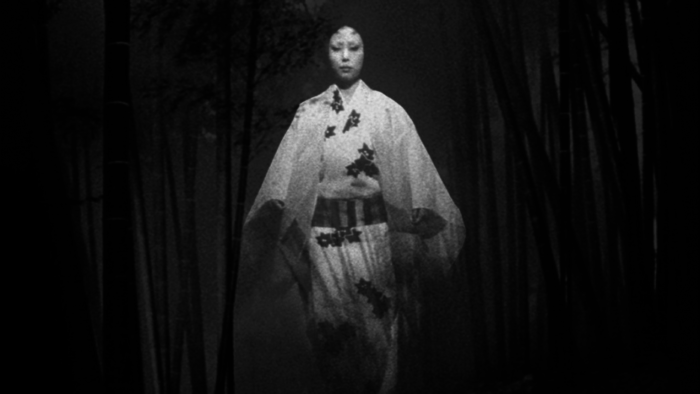
I hope you’re not too superstitious, because today we’re doubling down on bad luck. Not only is it Friday the 13th, but we’re we’re making matters worse by talking about a movie called Kuroneko, or “Black Cat.” It’s the second film in this marathon from director Kaneto Shindo, who also made Onibaba. Kuroneko is also a return for a few of the stars from that film, as well as its brutal treatment of humanity. What sets it apart? Way more flips.

A woman (Nobuko Otowa) and her daughter-in-law (Kiwako Taichi) are living together after her son is dragged away by a war – that sounds familiar right? Except this time, a band of soldiers happen upon their home and quickly steal their food, rape the women to death, and burn the house down. After the fire dies down, a black cat appears and licks the charred corpses. Soon enough, the women reappear as ghosts, dressed in fine clothes. They start leading samurai, one-by-one, into the woods, where they seduce them in an expansive, ghostly manor and finally maul them to death.

Meanwhile, a young man (Nakamura Kichiemon) kills a massive man in a battle that leaves him the lone survivor. The man returns to his governor, Raiko (Kei Sato), who is pleased with him enough to make him a samurai and give him the name Gintoki. Gintoki gets cleaned up and heads back to his home, which he discovers has been burnt down. What’s worse, he can’t find any trace of his mother and wife. He returns to the governor, who assigns him to kill the ghosts that have been murdering samurai.

You get the idea, right? The ghosts have vowed to kill every samurai, which includes Gintoki. Gintoki has vowed to kill the ghosts, but soon after he meets them, he realizes that they’re his dead wife and mother. So he doesn’t really want to kill them either. Like a lot of horror movies, there’s not going to be a happy ending here. But who’s going to break first? And what does this all have to do with cats?

It’s hard to say what the answer to that last question is. The Japanese title for this film is “A Black Cat in a Bamboo Grove,” which might be a reference to the famous Japanese short story In a Grove, and is sort of an idiom for mysteries that are hard to solve (you might know that short story for its film adaptation, Rashomon). What’s not ambiguous is how well Kuroneko creates a beautiful, eerie atmosphere and simply revels in it. This is more of a horror movie than the other Shindo movie I’ve seen, and for that reason, probably an easier movie to recommend. But maybe watch ’em both and have yourself a real bummer of a double feature.

Android Dreams

Blade Runner 2049

It’s very easy to see how questions about artificial intelligence quickly dredge up fundamental insecurities about consciousness and reality. What makes something sentient? How do you know you’re real? How do you know anything’s real? How do you know you’re the real you? Does any of that matter? This nexus of philosophy and science fiction has been delved into recently by films like Her and Ex Machina and goes all the way back to Alan Turing’s Imitation Game. But it’s also the issue boiling under the surface of 1982’s Blade Runner, and the main focus of its sequel, Blade Runner 2049.

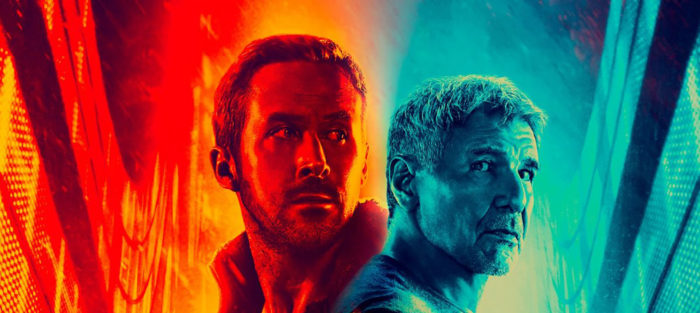
Set 30 years after the events of the first film, Blade Runner 2049 follows K (Ryan Gosling), a blade runner, which is a detective who tracks down and “retires” (kills) replicants (lifelike androids) who are illegally on Earth. That’s the same job Deckard (Harrison Ford) had in the first movie, and it hasn’t changed much in the intervening years, except that it seems to have gotten a lot easier to identify replicants. That doesn’t change the fact that it’s still pretty damn hard to kill someone who is human in every aspect except for the circumstances of their birth.

On a larger level, the world has changed, somehow, for the worse. The Los Angeles of 2019 we saw in the first film was already pretty much a dystopia, but by 2049 it’s even worse. There have been numerous disasters and foot shortages, making life of Earth even more desperate. Tyrell Corp, having lost its leader, ended up getting swallowed up by another company run by a man named Niander Wallace (Jared Leto). He is a ruthless man, in juxtaposition to Tyrell’s dispassionate, bemused leadership, Wallace is chasing power and cares little for the lives of little people. It is as if the whole world is holding it’s breath, knowing that it’s mere moments away from catastrophe.

The greatest strength of the original Blade Runner is its production quality. Ridley Scott created a cyberpunk world unmatched in its detail by anything that came before or after it. The score was powerful and unique, helping to make it one of the finest examples ever of how cinema can create a mood and atmosphere. The actual plot and performances were pretty weak (aside from Rutger Hauer), but the rest was so strong that it didn’t matter. So I think the biggest challenge for Blade Runner 2049 was trying to recapture that magic at a time when CGI lets filmmakers do anything – and therefore nothing is impressive.

What director Denis Villeneuve and cinematographer Roger Deakins accomplished then, is magic. I could not tell you what was a set and what was blue-screened in. The 2049 version of California isn’t just a recreation of what we saw in the first movie, we’re shown deserts and snow and even large bodies of water. None of it seems like our world today, and yet all of it seems to fit with the aesthetic of the first movie. Trust me, this is a movie that demands to be seen on the big screen.

Where 2049 actually surpasses the original is in its story. For one, K is an actual detective, not merely a hunter in over his head, like Deckard was. K actually discovers a mystery and tries to unravel it. Moreover, the original’s themes about being a “real person” are significantly complicated by this story. Ostensibly “artificial” beings are treated with respect and empathy, with their concerns being folded into the broader questions about humanity. Also, since it’s this week, I’ll mention that while the first movie depicted a rape, 2049 only shows a mutual, respectful, unconventional romantic relationship.

But yeah, I have no way of knowing if the me that is typing this now is the same person I remember being yesterday. Maybe not, maybe those memories are implants or delusions. Maybe I was born when I woke up today and I’ll die when I fall asleep tonight. There’s really nothing I can do about it. Even if that is the case, does it matter? Do androids dream of electric sheep? Do androids dream? Do you?

Shocktober Day 10: Onibaba

Onibaba (1964)

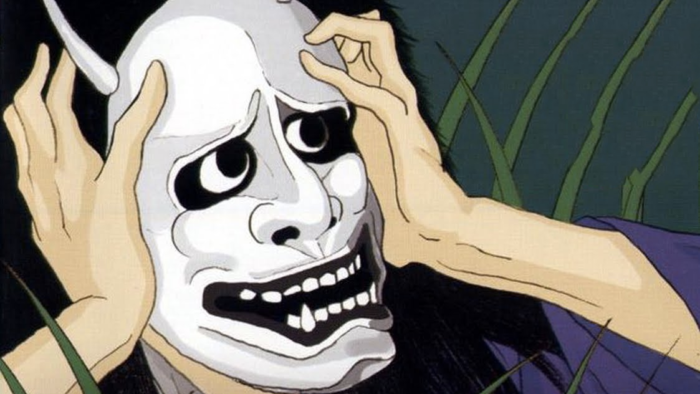
Onibaba, which I think literally means “demon old lady,” is a theatrical fable of a film. It’s a small story with minimal dialogue, a tiny cast, and only a few sets. Nonetheless, it aspires to, and I believe succeeds at, being insightful about the absolute worst aspects on the human condition. I’m talking about starvation and desperation, lust and jealousy, opportunism and selfishness – the aspects of ourselves we’d like to overcome, laid bare in a time of survival. But is it any good?

Continue reading

Shocktober Day 5: The Blob

The Blob (1958)

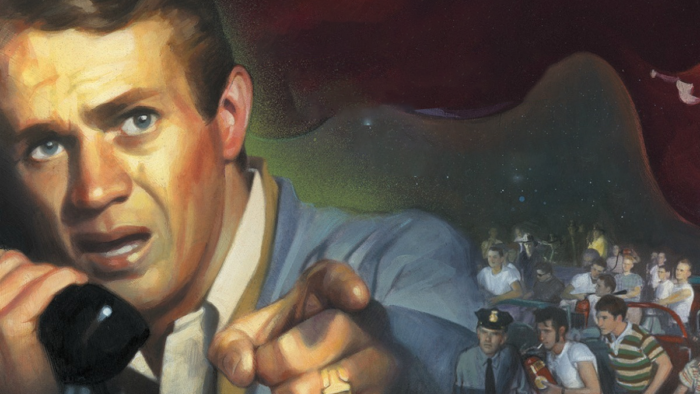
It’s 1958 and a red menace is threatening small town America! No, I’m not talking about the Soviets, I’m talking about the molten meteor from outer space! 1958’s The Blob has a reputation for being a campy joke of a movie, but I think that’s maybe too harsh for a mostly competent film. I’d go as far to say it’s a perfectly fine film, but that may be because it’s structure is one I’m already pretty into: the Star Trek formula.

Continue reading

Shocktober Day 3: The Uninvited

The Uninvited (1944)

It was kind of nice to start this month of ghastly art house terrors and pulpy hilarity with something quaint. That wasn’t my plan and it wasn’t exactly what I was expecting from The Uninvited, given its reputation as one of the scariest films ever (at least according to directors Martin Scorsese and Guillermo Del Toro) but in retrospect it wasn’t realistic to expect something truly horrifying from a Hollywood film made in the forties. After all, outside of those two guys, The Uninvited is remembered for being one of the first Hollywood movies to depict a haunting seriously, not necessarily for being one of the scariest.
Continue reading