



When it comes to civil rights cinema, most of the attention has historically gone down south, where the fight for equality was its most dangerous. John Waters’ Hairspray is a sobering reminder that while things maybe not have been as violent in the north, there has always been just as much struggle to end segregation and work towards a more just future.
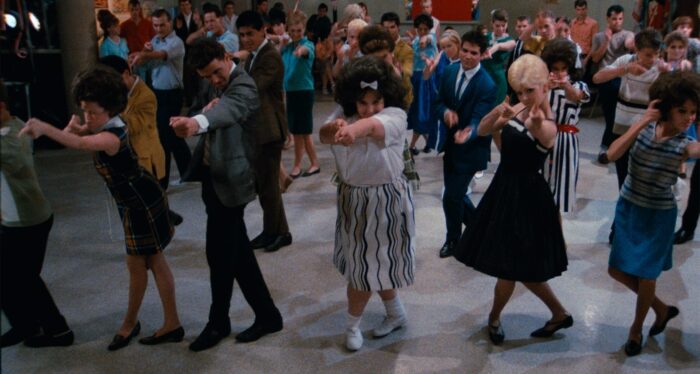
In 1962 Baltimore, “the only things bigger than the bouffant hairdos are the popular dance crazes sweeping the nation” (thank you the back of the Criterion box for this succinct setup). Teen Tracy Turnblad (Ricki Lake) loves the local TV dance party, “The Corny Collins Show,” where her self-confidence and sick-ass moves are making her into a celebrity, much to the chagrin of reigning queen Amber Von Tussle (Colleen Fitzpatrick), the heiress of a racially segregated amusement park. Tracy’s mother, Edna (Divine) initially also disapproves, but soon revels in the reflected glow of her stardom.
But things aren’t totally peachy keen in Charm City: Tracy’s best friend Penny Pingleton (Leslie Ann Powers) begins an interracial romance, offending her bigoted parents so much they threaten to disown her and hire a quack psychiatrist (John Waters’ self insert) into brainwashing her. This and numerous other encounters inspire Tracy to use her newfound fame to advocate for integration. She’s got a lot of spunk, but does Tracy have enough to change the world?
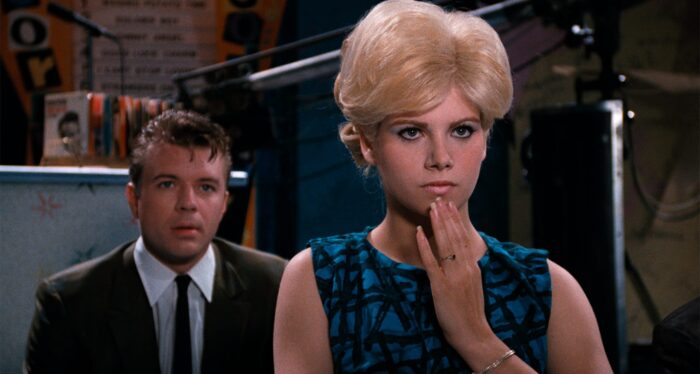
So yeah… while in theory the stakes of Hairspray are really high, in practice it’s just a feel-good comedy that’s mostly about watching people dance. Perhaps that’s what makes it subversive, coming from a director who mostly made rated X, provocative cult movies. After decades of shocking audiences, perhaps the only place left to go was mainstream success?
And mainstream success he found! Hairspray is Waters’ second highest-rated film on Rotten Tomatoes and made $8.3 million a the box office, more than three times its $2.7 million budget. And it certainly became Waters’ more enduring film, especially after it was retooled into a musical which debuted here at Seattle’s 5th Avenue Theatre before becoming a hit on Broadway and eventually getting reinterpreted back into a film in 2007, starring John Travolta.
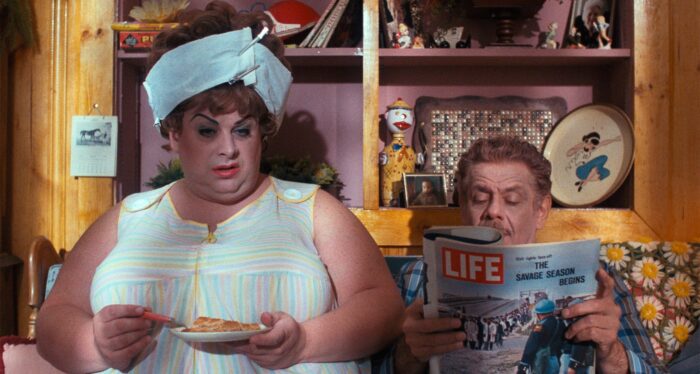
Sadly, the one person who didn’t get to enjoy Hairspray‘s success was Divine, who died of a heart attack a month after the movie’s release. His performance in dual roles here garnered him the broadest acclaim of his career, which inspired Whoopi Goldberg, to send a wreath to his grave which said “See what happens when you get good reviews.” In the weeks after his death, the IRS confiscated many of Divine’s possessions and auctioned them as restitution for his unpaid taxes. Hell yeah, fuck ’em.