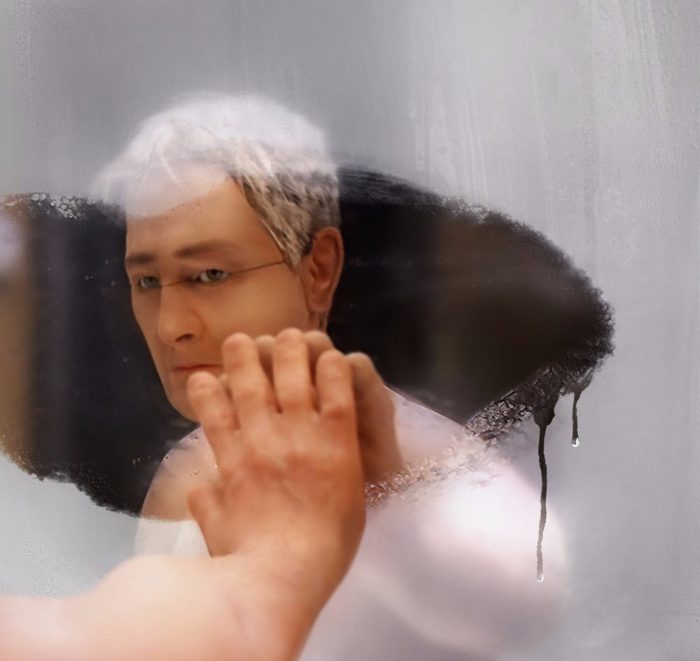
You’re Tearing Me Apart, Lisa!

Anomalisa

I think I’m a huge fan of Charlie Kaufman’s brand of introspective cinema. I certainly love his combination of quirk, genuine weirdness, existential terror he managed to blend into movies like Being John Malkovich, Adaptation., and Eternal Sunshine of the Spotless Mind. But there was a loftiness to those films that I just felt Anomalisa didn’t have. It’s a question asked knowing no one can answer, more like a poem than the novels I want from Kaufman.

Michael Stone (voiced by David Thewlis, this is a stop motion movie, I should mention) is a man living in isolation. He’s on a trip to Cincinnati to speak at a conference, but can’t work up much enthusiasm about that, nor his ritzy hotel or really anything. So alone is he that it sounds like everyone, literally everyone else in the movie, has exactly the same voice – Tom Noonan. He’s not sure if he’s losing his grip or if there’s a massive conspiracy going on, but Michael’s monotone world is definitely pushing him to his breaking point – until he hears another voice: Lisa (Jennifer Jason Leigh), a woman just down the hall.

There are certain traces of one of my favorite movies, Lost in Translation, in Anomalisa. Both tell the stories of older men, deep into dealing with existential crises, who seek revitalization in a younger woman who is staying in the same hotel. But the crisis of Anomalisa is a nightmarish one, despite it often being played for laughs, Michael is genuinely in a bad place and finding a way out won’t be easy.

There are so few stop motion movies these days, and even fewer of them have anatomically correct puppets. Anomalisa is a decidedly adult story, steeped in sophisticated ideas that would probably be quite alarming to a child. Does the story of a customer service expert losing the ability to distinguish between people have to be animated? No, but it’s not for you or I to question such things.

After doing so much wonderfully, Anomalisa really left me hanging with its final scenes. It’s easy to guess that just as indignant as I was, just as confused as Michael, so too was Kaufman, who was probably dealing with his own similar problems and trying to address them by making this movie. I guess the great lesson in all this is you must look for answers within, which is something. Not damn near enough.
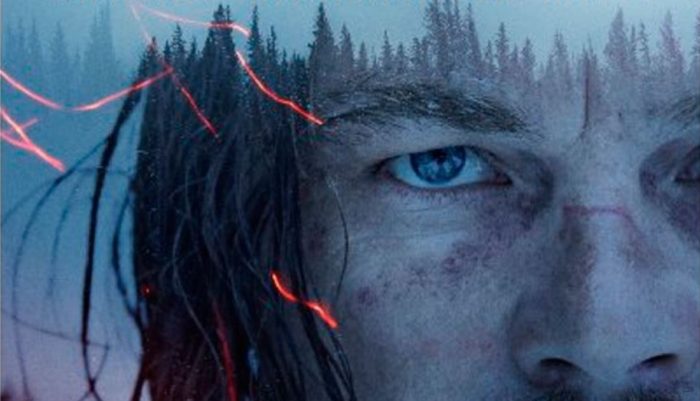
Dead Man Crawling

The Revenant

I think a lot of us heard something about Hugh Glass sometime after Michael Punke’s novel The Revenant came out about a decade ago. I certainly heard the story about the man who was torn in half by a bear, put back together, left for dead, and crawled six million miles just so he could kill the guys who left him. And sure, a lot of movies are about revenge, but how the hell do you turn that into a film?

One way is to give the project to Alejandro González Iñárritu, hot off of turning a person’s state of mind into an aesthetic in Birdman, and reteaming him with Emmanuel Lubezki, one of the masters of showing insane events from one person’s point-of-view. That’s a good start, what gets them the rest of the way? Well, a script that changes events in smart ways and good performances, of course.

The Revenant is set in the harsh west, the scary, untamed American wilderness of the early 19th Century. Hugh Glass (Leonardo DiCaprio) is guiding a band of trappers led by Andrew Henry (Domhnall Gleeson), a man with utmost respect for Glass’ expertise. Their group includes Glass’ Native American son, Hawk (Forrest Goodluck), another boy, roughly the same age, named Jim Bridger (Will Poulter), and the guy who disagrees with everything Glass says, John Fitzgerald (Tom Hardy). The trappers are attacked by an Arikara war party and forced to book it back to the nearest fort, which leads to new route choices, which eventually leads to Glass ending up between a bear and her cubs.

There’s no coincidence that the bear which mauls Glass is trying to protect her offspring, one thing The Revenant is about is a parent’s instinct to protect their child. We’ll soon learn that the leader of the Arikara is looking for his daughter, who was kidnapped by white men. Similarly, Glass’ great motivation throughout the film is his son, who he is ready to die to protect. It’s a safe choice, since revenge movies about dudes trying to save/avenge their wives/sons/daughters have a long track record of success in Hollywood, but I wonder if what could have been a pure story of survival needed to be turned into this.

Plus, it’s not that The Revenant is even solely about the toxic nature of revenge. This movie has a loftier ambition: to show just how hard it is for humans to survive in nature. We forget how powerful the earth is, we romanticize it – pretty flowers and sunsets and all that. When we speak of nature’s danger, we focus on disasters like floods or earthquakes. But even just cold of winter was enough to kill people for pretty much all of human history. During one pivotal scene, a character is shot to death and then immediately an avalanche falls in the background, as if mother nature is roaring “you people have nothing on me.”

An adventure this big deserves to be seen on the big screen, and that’s the legacy of The Revenant to me. As much as I respected to work done by DiCaprio and Hardy, it was the commitment to filming outside using only natural light that wowed me the most. That I think this is the best shot movie in a year that Sicario came out is hopefully a testament to how well Iñárritu and Lubezki honor the old film axiom “show, don’t tell.” They show us a harsh world that we tried to hide from in our apartments, malls, and parks.

Life is bleak and short and hard and it can get ripped away from you in an instant unless you’re willing to fight to hold onto it. I love a lot of stories that try to tell us that there’s a beauty in that, but this is the opposite. The Revenant shows that it’s an ugly, hopeless struggle. You have to measure yourself against that fact. Does it make you want to quit, or does it make you want to fight even harder?

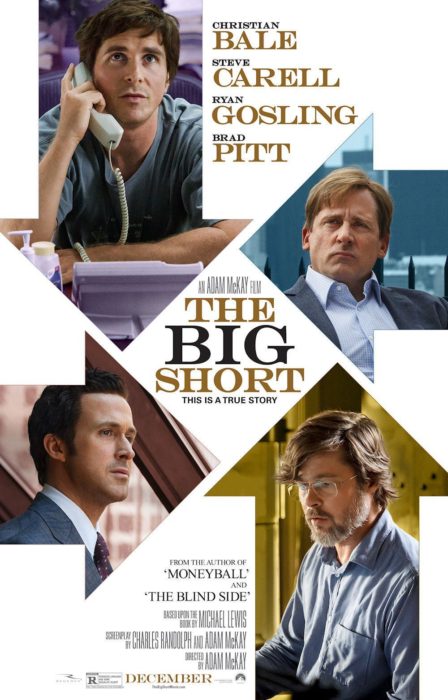
The Big Hurt

The Big Short

You might have forgotten that The Other Guys was as much about the Bernie Madoff Ponzi scheme, Goldman Sachs, AIG, and the financial crisis as it was The Rock jumping off a building. But if you remembered that, maybe you’re not surprised that when Adam McKay decided to try making a movie without Will Ferrell, he went back to the madness that was 2008. It’s clearly something he’s passionate about. The question is: why aren’t more of us?

The Big Short tells the story of three groups of people that were able to make enormous profits directly from the financial crisis. Not just at the same time, but by actually betting the American economy will fail. That’s a thing you can do, apparently, bet everything will fall apart and make a fortune. What’s even more troubling is that these characters are clearly the heroes, as they foresee the problems that Wall Street created, the government turned a blind eye to, and most of us gleefully embraced.

Michael Burry (Christian Bale) is the first to realize the precarious nature of the housing market, he starts steering his hedge fund into it, against pretty much everyone’s wishes. News of this reaches Jared Vennett (Ryan Gosling), who does his own research and comes to the same conclusion. He teams up with another hedge fund, this one run by Mark Baum (Steve Carell), unable to resist a chance at being right and being rich. Lastly there are a couple of eager young investors played by John Magaro and Finn Wittrock who are trying to make a name for themselves by betting on the bad outcomes most people hope won’t happen. Those two team up with the retired Ben Rickert (Brad Pitt) and get started on making some real money.

While not technically a comedy (although it would probably qualify by Golden Globe rules), The Big Short is still an Adam McKay movie and thus still highly entertaining. A lot of the movie is these hedge fund guys meeting with bankers and then just being absolutely shocked and appalled about not only what the banks are getting away with, but with how profoundly shitty these people are. Max Greenfield shows up to play a broker who doesn’t have any idea what he’s doing, but is making a pretty penny selling real estate to recent immigrants and strippers, for example. And when dry concepts need to be explained, McKay finds… compelling… ways to make you pay attention.

The one thing that I worry about in The Big Short is it’s pretty intense focus on vilifying the banks. Not that the banks aren’t villains, everything that happened is their fault and they were and are full of people that are super easy to righteously hate. But they got away with it by taking advantage of the government (with aggressive lobbying) and the American public (by praying on our narcissism and ignorance). Deeper than that, even, is the idea of never-ending greed, the constant desire that plagues so many of us, which McKay dares not really touch on at all. After all the main characters are all trying to make money too, and so is Paramount, the big, giant company that paid for this movie.

With the recent hullabaloo about the gargantuan lottery winnings, it’s important to remember that for a lot of people, the American dream will always just be a dream. The Big Short is about one of the biggest bets in history, one made by people who were already for the most part well off. There is no real rags to riches story here, and there’s hardly even a riches to rags aspect. Wall Street and wealthy people, as always, live in a different world than the rest of us. The real lesson of The Big Short is that nobody paid for creating the biggest economic downturn of our lifetimes. A few people got rich, everyone else got bailed out. Seriously, nobody paid. Except for us, if you didn’t notice.

Hateful Great

The Hateful Eight

A few years ago some bloggers thought it would be cool to share the script of Quentin Tarantino’s The Hateful Eight online, which was such a dick move the writer/director said he wanted to abandon the project. Eventually he decided to stage a reading with some of his favorite actors, and that could have been it. The Hateful Eight is very theatrical, the closest Tarantino has ever gotten to a play, so that probably would have been an acceptable end of the road. Instead, he decided to make it into a lavish cinematic event.

So, yes, we did go see The Hateful Eight roadshow, which meant I saw it on 70mm film, got a little souvenir booklet with a Tim Roth centerfold, and enjoyed an overture, intermission, and some additional footage. It’s possible all those factors made the movie seem better than it actually is, but then again I also paid almost $20 for my ticket and expected my money’s worth, so who knows?

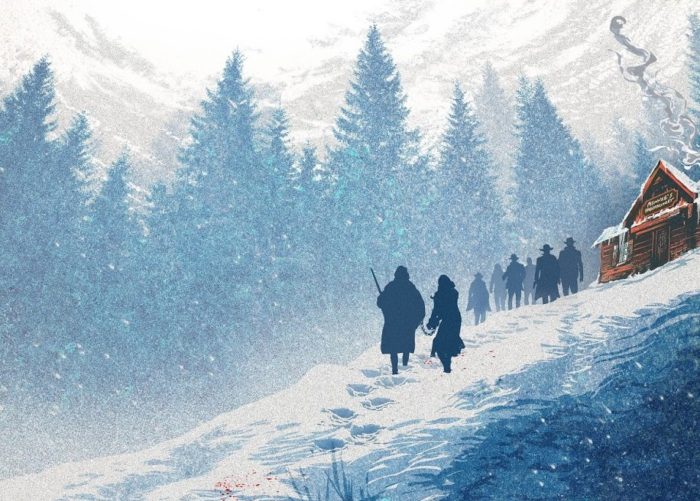
The real interesting thing about The Hateful Eight‘s presentation is that it is one of Tarantino’s least sprawling movies, rivalling Reservoir Dogs for largest portion of the movie set in one location. In this case, that setting is a cabin in Wyoming in the middle of a blizzard. You get to know this space pretty well over the movie’s epic runtime, and it’s a testament to the director’s skill in staging and composition that I never grew tired of the various conversations and hijinks staged within. Also the writing, but that’s kind of a given at this point.

John Ruth (Kurt Russell) is a bounty hunter bringing in Daisy Domergue (Jennifer Jason Leigh) to hang in the town of Red Rock. On his journey, he runs into a fellow bounty hunter (Samuel L. Jackson) and a supposed sheriff (Walton Goggins) before they take shelter in a lodge while the blizzard bears down on them. There we meet the other bastards who are also stuck waiting out the storm, and the game is afoot: are some of them hoping to steal Ruth’s bounty? Are some of them in league with Domergue? I mean, probably, right?

On our way home from the theater, it dawned on me that The Hateful Eight was sort of Tarantino’s way to stretching the best parts of The Thing into a western. It’s got the isolated, claustrophobic setting, complete with the unrelenting cold of winter outside. Basically the whole movie is the infamous blood testing scene, as Ruth tries to determine who he can trust and who he should fear, just like Russell did as MacReady in that 1982 film. There are more similarities, but that would require spoiling stuff, so I’ll just keep thinking myself quite clever.

But I will say that if the movie had a weakness, it’s that Tarantino ended up going with kind of the expected Tarantino ending with plenty of horrific, gratuitous violence. I’m not sure this movie deserved that and it comes at the expense of more character development, which was so much of what I liked about The Hateful Eight. Despite the implications of the movie’s title, I kind of hoped there would be some redemption here. But, as they say, haters gonna hate.

Carol of the Bells

Carol

The most surprising thing to me about Todd Hayne’s Carol is that it is a pretty faithful adaptation of a book from 1952 called The Price of Salt. It is a lesbian pulp fiction novel written by Patricia Highsmith, who also wrote Strangers on a Train and faced struggles because of her own sexuality. According to Wikipedia, she was also a bit of a drunk, a racist, and an anti-semite. She sounds pretty intense, but the rough edges of that author are far removed from this film.

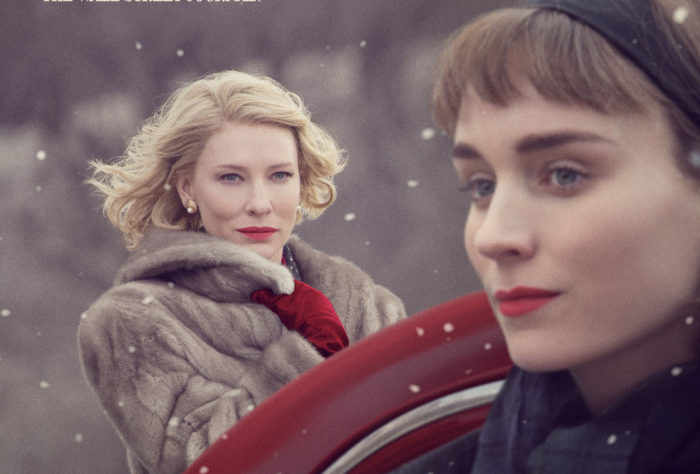
It’s Christmas 1952 and Therese Belivet (Rooney Mara, having recovered from Pan) is working in one of the giant New York department stores that seem to show up in every yuletide movie set in this period. Therese, like every single person in their twenties, is trying to figure out how her life should go and is deeply unsure of her current state. She wants to be a photographer, but isn’t really pursuing that in a meaningful way. She has a nice boyfriend (Jake Lacy), but she doesn’t want to go all the way and she really doesn’t want to talk about his idea of a long trip to Europe. Then one day she meets Carol.

Carol, as played by Cate Blanchett, is an older woman who we soon will find is going through a divorce with her husband Harge (Kyle Chandler), leaving her similarly listless and lonely. Therese is immediately drawn to Carol and the two eventually strike up a friendship. But as things get more intense, their relationship begins to face the realities of the fifties, which are even harsher than the ones shown in that other romantic movie that people liked this year, Brooklyn.

I have seen director Todd Haynes’ film Far From Heaven and it’s hard to not see the similarities between these two movies. Working from a script by Phyllis Nagy (who wrote another Patricia Highsmith adaptation, The Talented Mr. Ripley), Haynes does an amazing job recreating the feel of fifties melodramas while telling a story that would be shocking back then but is insanely tame by modern standards. Both romances feature an older woman who is scorned by a husband who is less upset about their marriage falling apart than he is about his own masculinity being challenged. Both are really good.

I think I’ll take well-acted melodrama over subtle innuendo most of the time, and Mara, Blanchett, and Chandler are some of my favorite actors. Rooney Mara brings a tenderness to Therese that I didn’t know she had in her after seeing her play more calculating characters in The Social Network, Side Effects, and Her. Kyle Chandler captures the intense self-hatred of Harge, clearly a man without much experience not getting his way. Cate Blanchett, as always, demands your attention whenever she’s on screen. For the movie to work we have to fall for her mysterious allure, and I’ll be damned if I wasn’t hooked after her very first scene.

Carol is simply, elegantly, a story about about two people who can’t resist each other. In dabbles into the differences between romantic love, platonic love, and maternal love, but it’s overwhelmingly a story about two people who have had a bunch of obstacles thrown in their way for stupid reasons. And the most melancholy thing about that is we know that for these two, there would be no hope of true acceptance. In 1952 a woman could hardly wear pants, there was still a long, hard fight for acceptance ahead. Does that make their love futile, or does it simply remind us that true love is something worth fighting for?

T3 96: Top 10 TV Shows of 2015

Funnily enough, even though all three of us wrote about being totally overwhelmed by the increasing quantity of quality TV shows last year, our three lists weren’t that different. Between John, Colin, and myself, less than 20 shows were honored with top 10 spots. Maybe it’s not surprising that three guys who have been friends almost their entire lives have similar tastes, but it’s a shame great shows like Veep and Inside Amy Schumer didn’t even get to be part of the conversation. What conversation? Why our overall top 10, silly. Take a listen!

Top Ways to Listen:
[iTunes] Subscribe to T3 on iTunes
[RSS] Subscribe to the T3 RSS feed
[MP3] Download the MP3

Continue reading

Colin’s Top Ten TV Shows Of 2015

Ah, so much good TV!  I don’t usually have a problem constructing my top ten of the year lists, since whatever’s gonna end up on them will assuredly fall into place over the course of a given year.  But TV this year was an intense struggle, just because there was so much of it that I watched and so much of it was great, and at the same time there were probably a lot of great TV I didn’t manage to catch up with.  That said, I apparently have been watching basically all the same great TV as Sean and John, so there’s not gonna be a ton here that hasn’t been talked about already.  And instead of doing a long list of honorable mentions, I’ll just say Rick & Morty, Difficult People, Key & Peele, Unbreakable Kimmy Schmidt, The Americans, Louie, and Wet Hot American Summer: First Day Of Camp were all really great but didn’t make the cut. Continue reading