Creepy Crawlers

Nightcrawler

It has taken me awhile to digest the greasy late night snack that is Nightcrawler. I didn’t think I’d have much to say considering the film is at its best when not a word is spoken. I’m talking about scenes where a nearly skeletal Jake Gyllenhaal is slinking through police tape and into crime scenes shooting footage of vicious acts all for his his distorted obsession. Nightcrawler is a razor sharp thriller from screenwriter/first time director Dan Gilroy, the brother of Tony “Michael Clayton” Gilroy who also penned all the Bourne films. Do these brothers have some sort of psychic bond when it comes to delivering blood pumping suspense? What are they drinking out there on the Gilroy family farm?

Continue reading

C.A.T.: Saxophone Colossus

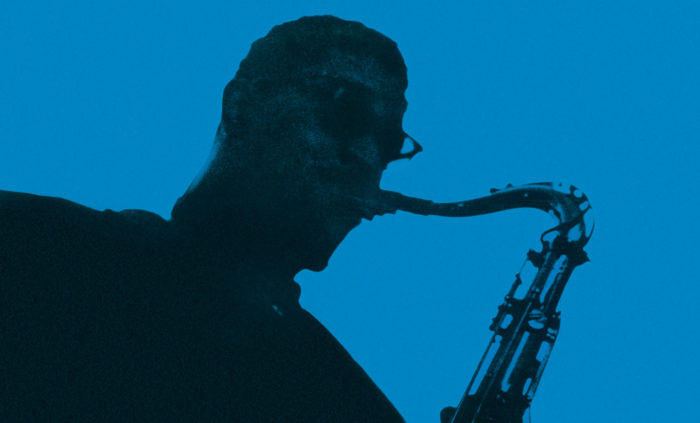
Sonny Rollins – Saxophone Colossus (1956)

Well the weather has turned to punishing frigidity, those Fall leaves are now dead and dying on the ground, and my recent viewing of Whiplash has sufficiently gotten me back in to jazz again.  As a moderate fan of jazz, it tends to work out that once or twice a year I’ll return to this most moodiest of genres for a rather concentrated stretch of a week or two, and more often than not it’ll be during one of the colder months of the year.  I’m not exactly sure why jazz seems so well suited for shitty weather, but I’m gonna say it probably has to do with the inherent New York-ness of jazz, as the city harbored pretty much every jazz great despite it’s brutal winters.  So since I’m in the proper mood for the time being, I figured I’d talk about a release that I always come back to when revisiting jazz, Sonny Rollins’ Saxophone Colossus, which quite honestly might be my favorite jazz album at this point.

I don’t know a ton about Sonny Rollins as a person, but he’s always struck me as a pretty zen dude, as he eventually studied Eastern philosophy and was known to play his sax alone on the Williamsburg Bridge at night (and thus served as an inspiration for The Simpsons’ Bleeding Gums Murphy).  And there is this subtle spirituality to Rollins’ playing, as his songs can often be pretty upbeat, but he never sounds like he’s trying to assault your ears like a lot of his late ‘50s contemporaries would.  Then on top of that, there’s just a very melodic and bouncy quality to the way he’d attack the sax, which is exemplified on “St. Thomas”, one of Rollins’ most famous and flat-out funnest tunes.

I also must give props to the great jazz drummer Max Roach, who’s playing on Saxophone Colossus is just as crucial in giving the album its playful strut as anything.  Roach makes full use of his drum kit in ways I’m not sure I can fully explain, but basically I’ll just say there’s a lot of clickity-clackin’ that I find utterly delicious.  And as a novice drummer, I’m not sure exactly how he integrates these sounds into his sputtering drum fills, but I suppose that’s what makes you one of the greats.  Anyways, as I’m writing this I’m starting to see why whenever people talk about ephemeral things that they can’t explain properly they just say “It’s like jazz!”  So I’ll just say this album might not quite have the rep of some of the other landmark jazz albums, but it’s well worth checking out.  After all, it’s like jazz!

Favorite Tracks: “St. Thomas”, “Strode Rode”, “Moritat”

If It Ain’t Got That Swing

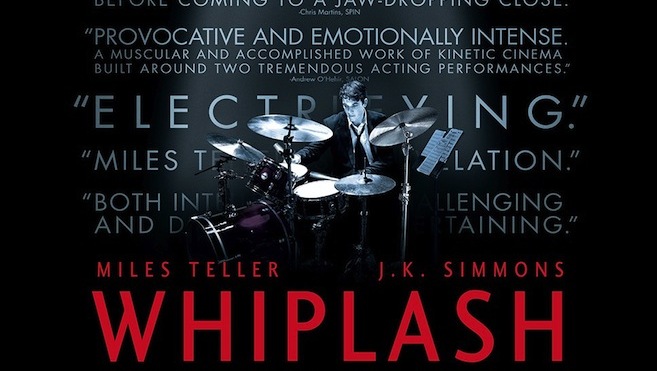
Whiplash

As a teenage “rock musician” who spent a lot of time in his high school band room, I think I always had a bit of a chip on my shoulder when it came to those who I’d describe as “real musicians”.  And even more so, I think I felt a little inferior to any musician my age who could play jazz, since it’s always been a style of music I’ve admired and still come back to when a certain mood or feeling calls for it.  But most of all, I think my relationship with jazz and jazz musicians has always been somewhere along the lines of “I could never do what those guys do and shouldn’t even try”.  Which I’m sure almost singularly has to do with the fact that to be respectable jazz musician, you not only need to be able to improvise and collaborate with others, but most of all you have to have chops.  Now, I’m sure most people would agree that chops can’t be taught.  Chops can be practiced and honed, and in most cases are informed by some sort of innate talent, but to truly have chops, you have to push yourself as far as your body, mind, and spirit will take you.  And after seeing the exhausting, abusive lengths that one musician is pushed to in the sheer name of jazz greatness in Whiplash, I think I can safely say that I’m perfectly fine with the fact that I’ve never had chops and never will have chops.

Andrew (Miles Teller), the jazz musician in question’s instrument of choice happens to be the drums, an instrument that seems perfectly suited to the film’s kinetic, unrelentingly rhythmic nature, as it follows his first year at the fictional Shaffer Music Academy.  After being quickly picked out by Fletcher, the school’s resident hardass jazz conducter (J.K. Simmons), Andrew finds himself constantly fighting to be part of the band’s core, as Fletcher seems to be intent on playing mind games with Andrew in order mold him into a better drummer.  And in spite of the insurmountable standards that Fletcher has set for his band, Andrew consistently rises to the occasion while shedding the literal blood, sweat, and tears that consume his desire to please this unflappable teacher.

First off, you’d probably make the connection that casting J.K. Simmons as a disapproving hardass is maybe not the most inspired casting decision, but sometimes it’s just fun to see a great character actor sink his teeth in to a role he was meant to play, and really get to stretch out and lay into the character.  Also, unlike a lot of Simmons’ admittedly gruff characters, writer/director Damien Chazelle never really softens up in letting the audience know that the vitriolic Fletcher might just be a bit misunderstood.  Instead, we see the character in a more human light just in small glimpses, yet it never overrides the hateful, homophobia-laden insults that come out of Fletcher’s mouth — many of which would come off as pretty funny if he wasn’t so god damn hard to like.

I’d say the movie makes a wise choice by setting the film in a fictional music academy instead of Juilliard or something, because it sets up the idea that this movie exists in a slightly heightened version of reality.  Because sure, I and pretty much anyone who has studied any sort of creative endeavor can tell you, there are those teachers out there who push their students hard — probably harder than they deserve to be pushed.  But rather than being a year in the life of a young jazz musician in 2014, the extremities of this movie I think push it more in to a sort of allegory.  The kind that asks what it means to be truly great at something when being judged against the cold realities of what a jaded, bitter mentor’s idea of greatness is.  And maybe this slight disconnect from reality makes for a couple cliched “giving up the dream” moments later on in the film, but I think it’s ultimately what makes Whiplash feel almost like this primal force of nature.

And there are a lot of factors to thank for the unrelenting intensity of this movie.  The cinematography and editing for one, seem to be working in perfect unison with the music here, as Chazelle clearly has a handle on what makes jazz such a potentially thrilling art form, even if jazz purists will probably shit on this movie because jazz purists are unpleasable douchebags much like J.K. Simmons’ character.  But most importantly, it’s a movie that makes you feel.  It makes you feel the intensity of the music, and it makes you feel all the high’s and low’s that come with being young and ambitious and wanting to be great at that one thing you’re convinced you’re great at, even if it means getting a chair thrown at your head by J. Jonah Jameson.

Shocktober Day 31: The Halloween that Almost Wasn’t

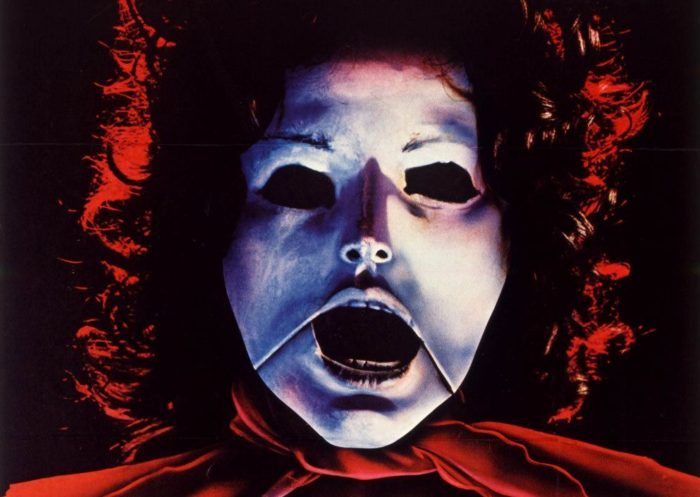
The Halloween that Almost Wasn’t (1979)

Like every year I try to end Shocktober on a high note, yet it never seems to happen. This year I had The Amityville Horror grudgingly marked on my calendar for All Hallow’s Eve. Sure, the “based on true events” story of Amityville was probably the biggest horror film of 1979 but it’s a big heaping pile of shit. Instead, I rolled them bones on the obscure 1979 made-for-TV-movie Halloween special “The Halloween that Almost Wasn’t” aka, “The Night Dracula Saved the World”. Was it worth it? Yeah, it kind of was. Not because The Halloween that Almost Wasn’t was good but because it was so shockingly bad that I couldn’t help but enjoy it.

Continue reading

Stream Police Ep 11: The Twilight Zone

Picture it if you will, two men with the unique obsession to let a machine designate their very fates. Why? All for their own sense of amusement, a chuckle or too, but it’s only a matter of time before Michael and John discover there’s more than fun and games waiting for them on Stream Police. In this special Halloween edition, Michael and John each list their five favorite underrated Twilight Zone episodes and talk about the history of the show. There’s no going back now.

Check out our lists below if you want to know our pics but don’t want the twists spoiled! Happy haunting!

John’s List
5. The After Hours (6/10/1960)
Dir: Douglas Heyes
Writer: Rod Serling
Cast: Anne Francis, Elizabeth Allen, James Millhollin, John Conwell
Plot: A woman is treated badly by some odd salespeople on an otherwise empty department store floor.

4. Number 12 Looks Just Like You (01/24/1964)
Dir: Abner Biberman
Writer: John Tomerlin, adapted from the short story “The Beautiful People” by Charles Beaumont.
Cast: Collin Wilcox, Suzy Parker, Richard Long, Pam Austin
Plot: In a future society everyone must undergo an operation at age 19 to become beautiful and conform to society. One young woman desperately wants to hold onto her own identity.

3. And When the Sky Was Opened (12/11/1959)
Dir: Douglas Heyes
Writer: Rod Serling, based on the short story by Richard Matheson
Cast: Rod Taylor, Charles Aidman, Jim Hutton
Plot: Three U.S. astronauts blast off from Earth on an initial test flight in an experimental rocket-ship, but during the flight into space the ship disappears from radar, upon return the astronauts find themselves slowly vanishing from existence, one by one.

2. The Hunt (01/26/1962
Dir: Harold Schuster
Writer: Earl Hamner, Jr.
Cast: Arthur Hunnicutt, Jeanette Nolan, Titus Moede, Orville Sherman, Charles Seel, Robert Foulk, Dexter Dupont
Plot: Upon returning from a coon hunt, Hyder Simpson discovers that no one can see or hear him because he has passed on.

1. The Rip Van Winkle Caper (04/21/1961)
Dir: Justus Addiss
Writer: Rod Serling
Cast: Simon Oakland, Oscar Beregi, Jr., Lew Gallo, John Mitchum
Plot: After successfully stealing a gold shipment, a group of criminals and their scientist accomplice put themselves in suspended animation in a remote desert cave. When they awaken decades later, complications ensue when their truck is destroyed.

Michael’s List
5. The Invaders (01/27/1961
Dir: Douglas Heyes
Writer: Richard Matheson
Cast: Agnes Moorehead
Plot: When a woman investigates a clamor on the roof of her rural house, she discovers a small UFO and little aliens emerging from it. Or so it seems.

4. Five Characters in Search of an Exit (12/11/1961)
Dir:
Lamont Johnson
Writer: Rod Serling from the short story “The Depository” by Marvin Petal
Cast: William Windom, Murray Matheson, Susan Harrison, Kelton Garwood, Clark Allen
Plot: An army major awakens in a small room with no idea of who he is or how he got there. He finds four other people in the same room, and they all begin to question how they each arrived there, and more importantly, how to escape.

3. An Occurrence at Owl Creek Bridge (02/28/1964)
Dir: Robert Enrico
Writer: Robert Enrico, based on a short story by Ambrose Bierce.
Cast: Roger Jacquet, Anne Cornaly, Anker Larsen
Plot: It is the end of the Civil War and Union troops have occupied the South. They are going to execute a Southern resistance fighter.

2. Deaths-Head Revisited (11/10/1961)
Dir: Don Medford
Writer: Rod Serling
Cast: Oscar Beregi. Jr., Joseph Schildkraut, Karen Verne, Robert Boon, Ben Wright
Plot: A former German SS captain returns to Dachau concentration camp and begins reminiscing on the power he enjoyed there, until he finds himself on trial by those who died at his hands.

1. Once Upon a Time (12/15/1961)
Dir: Norman Z. McLeod and Les Goodwins
Writer: Richard Matheson
Cast: Buster Keaton, Stanley Adams
Plot: Janitor Woodrow Mulligan gets a trip from 1890 to 1962 courtesy of his employer’s time helmet.

Shocktober Day 30: Tourist Trap

Tourist Trap (1979)

Well hello there, all you ghosts and gabaghouls.  It appears we’ve almost reached the conclusion of this year’s Shocktober, and this will in fact be the final slice of ’70s horror that I personally will be talking about.  However, I kind of wish I’d planned to go out on something at least a little more interesting, because 1979’s Tourist Trap might be the most ordinary horror movie I’ve ever seen.  Which doesn’t necessarily mean it’s bad, it’s just that apart from it’s relatively unique premise (a guy kills people with his personal museum of mannequins), this is basically the movie you’d conjure up if someone told you to think of the most stereotypical teen slasher flick you could imagine.  Granted, this movie did come out before a lot of subsequent movies about teens getting attacked at cabins in the woods surfaced (including Cabin In The Woods), but I’m not sure any of those movies were influenced by this film, and thus makes Tourist Trap feel even staler than it probably deserves. Continue reading

Shocktober Day 29: Patrick

Patrick (1978)

Though I did purposely group my two Shocktober Ozploitation selections together, the fact they were both written by the same person was a complete coincidence. I had no idea that Everett De Roche was apparently the only guy in Australia allowed to write horror films. Not only did De Roche write Patrick and Long Weekend but he was also responsible for the Ozploitation cult classics Road Games and Razorback. What’s crazy to me is that if you were to ask me what I’d consider the top four most notable Ozploitation films, I probably would have gone with the four I just mentioned. What was De Roche’s secret to success? Let’s see if we can find the answer through telekinesis in my brief review of Patrick.

Continue reading