T3 41: Top 10 Doomsday Scenarios

It’s a bleak and well-known reality that all of life on earth will be wiped out in a little more than a week. After all, that’s when the Mayan calendar runs out. And we all know how well the Mayans could predict the future. That’s why there are so many Mayans today, and our society is so Mayan-centric. There’s absolutely no way it’s just a weird coincidence. So if it’s not a question of when, let us ponder the how. Cause if we’re going to ride this thing to oblivion, we need to know our options first. Another podcast were we badly try to explain scientific ideas! It was the best of times, it was the end times.

Top Ways to Listen:
[iTunes] Subscribe to T3 on iTunes
[RSS] Subscribe to the T3 RSS feed
[MP3] Download the MP3

Continue reading

The Vault: Crazy Christmas

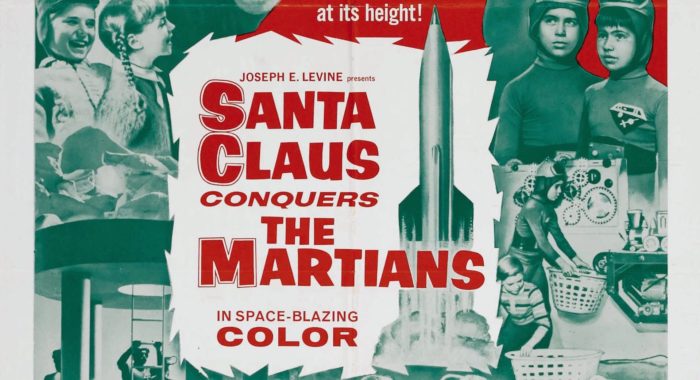
Santa Claus Conquers the Martians (1964)

Watching Santa Claus Conquers the Martians was a miserable experience. It doesn’t matter how many bad B-movies you see, it never gets any easier. Additionally, some of the worst B-movies I’ve ever seen are from the 60s. Perhaps you can blame it in on the rise of independent cinema in the late 50s and early 60s. Suddenly, every Tom, Dick, and Harry thought they could be Cecil B. DeMille. Santa Claus Conquers the Martians can be squarely blamed on former Howdy Doody unit manager Paul Jacobsen who produced and co-wrote the film with $200,000 dollars from private investors. The film was made by an inexperienced cast and crew and shot in a former airplane hangar and it sure looks like it. Santa Claus Conquers the Martians is often considered one of the “Worst Movies Ever Made”.

Santa Claus Conquers the Martians is set in an alternate reality where not only is Santa real, he’s a national celebrity. The story begins with Santa being interviewed live at the North Pole. Unbeknownst to anyone on Earth this television signal is picked up on Mars. The children of the Martian king: Bomar and Girmar become infatuated with the idea of toys, Christmas, and ‘Ol St. Nick and soon grow tired of their strict and tedious life on Mars. Afraid of a Martian child rebellion, Kimar (King of the Martians) seeks advice from the wise Martian Chochem who says Mars needs a Santa Claus of their own to make the children happy. How do you get a Santa Claus? You steal the real one.

Continue reading

The Vault: Crazy Christmas

Good tidings to you and your kin! It’s Christmastime at Mildly Pleased! This year I present you with a very special gift, make that four gifts. For every week in December I’m going to review a Crazy Christmas-themed movie. Cult classics, B-Movies, and just plain bad movies will make up this years haul. So let’s open the vault and see what treasures lie inside. Will there be silver? Gold? Or just steaming hunks of coal? Either way it’s going to one helluva ride.

Super PlayStation Bros.

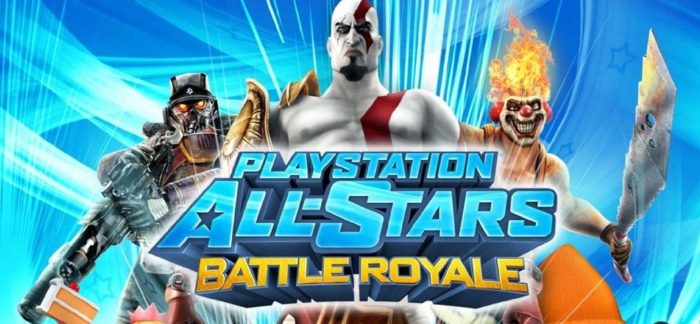
PlayStation All-Stars Battle Royale

Imitation is the sincerest form of flattery. Truly innovated games are going to be imitated, it comes with the territory. When a game does something new and fun, it’s going to catch on. If it’s truly great, it can even grow into its own genre. That’s why we have first person shooters today, not “Doom clones.” That’s why tower defense games became on of the first really popular genres of smartphone games. That’s why there are so many MOBA games coming out, or as they used to be called “DOTA style.” Which is all a whole lot of words to say that Sony tried to make their own Smash Bros. There, I said it. Let’s move on.

Real talk: what’s the first thing everyone asked about each Super Smash Bros. game? “Who’s in it?” Nintendo has done a really good job bringing together a solid cast of characters – a nice mix of the super stars and a few cult favorites. The biggest problem with PlayStation All-Stars Battle Royale is that it feels like Sony really struggled to assemble its roster. It seems inherent to the game: Sony has always relied on third party franchises, they don’t have a first party stable anything like Nintendo. Crash Bandicoot, Cloud, Spyro, Lara Croft – these are characters deeply connected to the PlayStation legacy, and I’m sure Sony tried to get them, but they’re not here. It’s disappointing. What we do have is a cast of 20 characters… Which includes Cole from InFamous twice.

Some of the choices are good – Nathan Drake, Ratchet and Clank, Jak and Daxter. Some of them are quirky – Fat Princess, PaRappa the Rapper, Sir Daniel from MediEvil. Some are weird – Big Daddy from BioShock, a game that came out a year later than 360 and PC on the PS3. In fact, BioShock Infinite is repping pretty hard in this game, which feels strange since A: it’s not out yet and B: it’s not in any way a Sony-exclusive. Similarly, the Dante included in this game is from the new DmC game, also not yet out, and I certainly wouldn’t call this version an “all-star.” In fact, if this game simply aspired to be a collection of the great characters of PlayStation’s history, I think I’d have to call it somewhat of a failure.

Of course, this isn’t simply a Pokemon-esque, gotta catch ’em all scenario. You can have all the characters in the world and it wouldn’t matter if your game wasn’t fun. PlayStation All-Stars wants to be more of a fighter than Smash Bros, it’s fighting system feels deeper than that game. Instead of health bars, like most fighters, or ring-outs, like Smash Bros, this game relies entirely on a supers mechanic. Hitting other characters doesn’t damage them, it raises your meter. When it’s full, you can unleash a devastating attack that gives you two points for every kill and takes a point away from your victims. You can fill your meter up three levels, each one unlocking a more powerful attack. A level one might be a simple one-hit attack, while a level-three could blow up the entire screen. It sounds like a crazy idea, but it works pretty well, and at the very least, PlayStation All-Stars is very fun in a four player setting.

What isn’t very fun is the game’s UI. I don’t usually bring up my chosen profession in these game reviews, but shit man, this is not good. During gameplay, everyone’s score is hidden. You literally have no idea how close a match is until it’s over. The menus waste enormous amounts of screen real estate and many features are weird and hard to discern. Come on guys, get it together.

Outside of multiplayer, there are a couple single player modes. There’s training and a challenge mode for you to hone your skills. There’s an arcade mode that can’t hold a candle to the single player story in Brawl. There is a cinematic that plays before the first match, and another after the final boss. These are all still frames with voice over. More interesting, there’s a rival battle before the boss fight, where your character and another yell at each other a little bit before the fighting begins. I liked this idea, and wished it was played up more in the game.

But Sony isn’t trying to make the ultimate fan service game, like Nintendo does. Sony is trying to make a fun fighting game, starring familiar characters. And they’ve succeeded. The problem is, if you’re going to make a game that so obviously draws inspiration from one other game, you’ve got to live up to it. And right now, this doesn’t. At least, this being a Sony game, DLC is a viable option here. Already there are rumors of Crash and Spyro showing up in the future. I’d love to see PlayStation All-Stars Battle Royale grow into the game it is in my head.

T3 40: Top 10 Movie Trailers

This week’s episode is such a tease. But don’t worry, we didn’t edit it down to just the best parts. No, no, we still don’t edit these things. But we did talk about our favorite movie trailers of all time. Or at least now. Since movie trailers keep getting better, we could probably do this again in a few years and have a totally different list. Except for one. You’ll know it when you hear it.

Top Ways to Listen:
[iTunes] Subscribe to T3 on iTunes
[RSS] Subscribe to the T3 RSS feed
[MP3] Download the MP3

Continue reading

We Finally Got a Piece of the Pi

Life of Pi

I didn’t get to see Life of Pi in 3D. The theater/church I went to simply didn’t have that kind of technology/divine intervention. When I read a review by TIME Magazine on the poster outside that read: “The Next Avatar” I almost didn’t go in. Some movies use 3D as a quick cash-in, but Ang Lee’s Life of Pi struck me as a film that genuinely wanted to showcase the capabilities of 3D as an artform. Maybe I didn’t get to experience the full visual force of Pi, but I still walked away with a great appreciation for it’s thematic force and striking sense of whimsy.

Based off of Yann Martel’s 2001 novel of the same name, Life of Pi is the story of Pi Patel (Irrfan Khan) sharing his larger-than-life story of survival with a Canadian novelist (Rafe Spall). Pi (played by Suraj Sharma in the past) speaks of his upbringing in Pondicherry, India where his family owned a local zoo. It was there that Pi gained a great appreciation for animals, particularly a tiger named Richard Parker (named from a clerical error). It was also in these years that Pi discovered faith, three faiths in fact. As a boy Pi embraces Hinduism, Christianity, and Islam. Despite clashing ideals in these religions, Pi finds ways to make each faith play an integral part in his life and later his survival. Eventually, Pi’s family must sell their zoo and start a new life in Canada. Pi’s family boards a Japanese ship across the pacific, but through some unexplained twist of fate the ship sinks. Pi ends up on a lifeboat with a group of animal’s including; a zebra, a hyena, an orangutan, and Richard Parker, though it’s eventually dwindled down to just Pi and Richard Parker.

Most of Life of Pi plays off of Pi’s attempt to form some kind of understanding with the vicious Richard Parker. Trying to care for Richard Parker gives Pi some sense of purpose, even if the relationship isn’t reciprocal. This unlikely pairing is accomplished through an inspired performance from newcomer Suraj Sharma and landmark visual effects. I assumed the animal effects in Life of Pi were a careful balance of CGI and live action. What I didn’t know until after seeing the film is that there were only in fact one or two scenes where a real Bengal tiger was used. I can’t believe it. We’ve finally reached the point where I’m not even sure what I’m seeing onscreen is real or fake.

I’m not even going to attempt to describe the visuals Life of Pi. The film finds a good balance of making fantasy and reality look equally believable. My only complaint is that Life of Pi does go overboard from time to time. The fanciful visual transitions between Pi’s story and Pi telling the story didn’t add much to the narrative. Additionally, it’s not until you see a 3D movie not in 3D that you realize some shots aren’t necessary. “Hey, look! That hummingbird flew right up to the screen.” While some of these shots progress the visual flow others feel distracting. Of course these shots don’t hurt the film, they’re just unnecessary.

Faith is the strongest theme in Life of Pi. As the elder Pi initially tells the novelist “I will tell you a story that will make you believe in god.” Faith is present in Pi’s ability to trust Richard Parker and whether or not he wants to believe animals truly have souls. But faith is most crucial in how the audience decides to interpret the film’s open-ended final question. It’s a question that makes you examine everything you’ve just seen. “Are you the kind of person who believes in things that always make sense? Or are you the kind or person who is willing to take the occasional leap of faith?” I love when films let the audience come to their own conclusion instead of everything being spelled out.

Live Creed or Die

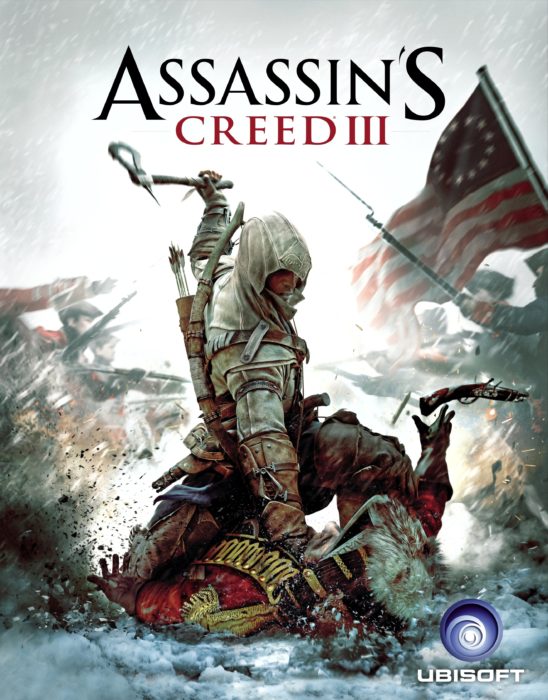
Assassin’s Creed III

When the first Assassin’s Creed came out, I was a freshman in college. I remember the day my copy showed up from GameFly, because I was playing it in my dorm room with the door open and two guys came by and where all, “Woah, is that the Assassin’s Creed game?” And I was like, “Yes.” And later, to myself, “I should close that door.” That first game seemed so cool and cutting edge, with its unique controls and neat features like the ability to bump into people. I really wish Ubisoft hadn’t made this an annual franchise, because I really liked that game. And the second one. And the third one, too. The fourth one was OK, I guess. Wait, why is this called Assassin’s Creed III?

Despite the last game being called Revelations, not too much has changed since the second game. Desmond and the Assassins are still trying to use ancient technology to save the world and defeat their centuries-old enemy, the Templars. This storyline, which was once so mysterious and cool, does finally move toward a bit of a climax, but it all feels pretty tired. Honestly, this game should have been set entirely in the modern day if they wanted me to care anymore. Everything since the end of Assassin’s Creed II has been a disappointment in the present. But that’s OK, since once again, the real game takes place entirely in the Animus, that amazing device that lets people relive their ancestors’ lives.

This game’s ancestor is Connor, the son of a British man and a Native American woman, in Colonial America. His childhood is ruined by a tragedy caused by the Templars, so Connor sets off on a bloody journey of revenge that takes him right through the Revolutionary War. Along the way he becomes an assassin and plays a key role in most of the major events of the war, such as the Boston Tea Party, the Boston Massacre, and the Battle of Bunker Hill. But the revolution is secondary in Connor’s mind, his main focus is the Templars. He’s an angry man, not nearly as charming as Ezio, but a solid enough protagonist.

The heart of the gameplay is much as it always was. You can expect many free running chases, escapes, and many vs. one battles. Connor has some neat new weapons, such as a tomahawk and snares, but don’t expect much to be different. This game set it sights on the little tweaks that come from iteration, and so it does feel like the best running and fighting in the series so far, but the newness is gone. It’s lost its luster, or at least is lost it for me over the course of the story. Like all Assassin’s Creed games, this story is fun to watch unravel, but the game is simply too long.

Of course, Assassin’s Creed III is an open world, and you can spend your time between New York, Boston, a Homestead you establish, and the frontier inbetween – which includes locations such as Lexington and Concord. In the two big cities you can spend your time reducing the Templar’s influence and recruiting new members for the brotherhood, a nice evolution of the recruiting mechanics from the last couple games. Instead of simply upgrading your house, like in Assassin’s Creed II, you turn your homestead into a bustling village by helping out people who in turn decide to set up shop on your land. This enables the game’s crafting system, which has a terrible interface and is hardly necessary to your journey. But both of these pursuits do flesh out Connor a little better and make the game better.

Connor also has a ship, which marks the biggest addition to the franchise: naval warfare. It sounds like a terrible idea, but it turns out the game’s extremely arcadey approach to boat-on-boat combat is really fun. Plus, the stuff at sea is easily the best looking in the game. If you’re still looking for side missions to do, there are tons more on the land: hunting quests, assassination contracts, mail delivery, there’s a lot to do. Plus the game includes a bunch of different kinds of collectibles, from the familiar synchronization points to pages from Benjamin Franklin’s almanac, which can be turned into craftable recipes. If you like spending time in this world, there’s plenty of reason to stick around.

But I don’t really want to anymore. I’ve done this whole song and dance routine four times already. Yes, it’s a different time and place, and yes, I can jump in trees and kill animals now, but it feels basically the same. Five years of doing the same thing. Call of Duty gets away with it, so why shouldn’t Assassin’s Creed, right? After all, this game has a robust multiplayer mode too.

I’m terrible at Assassin’s Creed multiplayer, but I respect it for being different. This time around they’ve added a new mode, Wolf Pack, I assume as a move to cash in on the success of both Gears of War‘s Horde Mode, and The Hangover. It’s a cooperative take on the deathmatch mode from multiplayer, you and friends try to stealthily kill a bunch of targets in an arena. It’s not for me, but I still think it’s cool that this works and is out there for the people who dig it.

I’m not sure I dig it. It took me over a month to beat this game. In the time since release, two patches have been released, and yet still I saw many bugs. Most notably, Desmond seems to have a weird hump in his back that clips through his backpack the entire game. There’s a lack of polish that shouldn’t be there, that makes it feel like the game was rushed out. And when you’re getting as long in the tooth as the Assassin’s Creed series, the last thing you want to do is rush it.