Sean Lemme

I started blogging as a way to lazily pass my high school senior project and somehow I've kept doing it for more than half my life

Pitching Tents 01: Isolation

Here’s something a bit different. You know how sometimes they make movies? Do you ever wonder how executives and screenwriters come up with the ideas for those movies? Well, here’s our best approximation of what it’s like. It’s a new show for a growing network of podcasts for the smallest audience possible, Pitching Tents. It’s all about us trying to pitch (to each other) movies that would be the big tentpole films of the future. Yes, despite the title this has nothing to do with camping or boners.

Top Ways to Listen:
[iTunes] Subscribe to T3 on iTunes
[RSS] Subscribe to the T3 RSS feed
[MP3] Download the MP3

This is My Ship

Captain Phillips

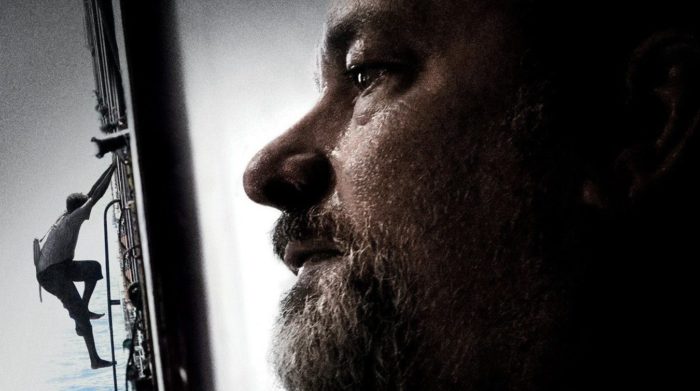
Captain Phillips is not an easy movie to make. Taking a recent news story that most of America remembers (at least to the level of “oh yeah, the Somali pirate thing”) and making it into a thriller is no easy task. Zero Dark Thirty made it work by focusing on the people behind the story, but Captain Phillips doesn’t have a Maya. We’ve just a captain, his crew, some pirates, a squad of Navy SEALS, and what happened between them. And so the challenge is turning the images in our heads into something we’d want to watch for over two hours. Fortunately, visually exciting movies are kind of director Paul Greengrass’ specialty.

In that way, it was weird watching Gravity and Captain Phillips back-to-back. Both movies thrive by putting you into horrific situations that, although totally improbable, make you ask, “what would I do in this situation?” Neither movie is particularly strongly written, but is elevated by the skill behind the production and great performances by the lead actors. Gravity is really, really the superior film, but it was nice to see a couple movies I could actually give a damn about after this forgettable summer.

So: Tom Hanks plays Richard Phillips, a family man and the captain of the American container ship Maersk Alabama. While sailing a shipment around the Horn of Africa, the Maersk Alabama is boarded by armed pirates led by Muse (Barkhad Abdi), a skinny young man who is as desperate as he is dangerous. Phillips is taken hostage and a battle of wits and guts between the two captains begins. How accurate it is doesn’t really matter, even if Captain Phillips is actually an arrogant jerk, this is still a riveting set-up.

Of course we’re going to like Tom Hanks in the role, and of course he’s going to seem like a great guy. The real story is Barkhad Abdi, I guess, who many say turns in a masterful performance. He’s good, but I found the character of Muse confusing: I never quite understood where he was coming from. While get a Catherine Keener-inclusive look at Phillips’ home life, what we see of Muse in Somalia left me scratching my head. Does he want to prove himself because everyone looks down at him? Is he uniquely greedy or arrogant? What is life really like in that village? Does he really have no other options – it’s be a pirate or die? I’m not sure.

Like I said, Captain Phillips doesn’t really worry about the greater narrative in favor of submerging you in the tension of the hijacking. And it’s pretty thrilling to watch. Needless to say, it’s not easy for four guys in a dingy to capture a freighter, nor is it easy to stand up to dudes with machine guns when you’re a civilian sailor. Really, I only fault the movie for being a bit confusing with the timeline: Some events are really drawn out, other times it cuts between scenes without making it clear just how long we’ve been gone. 134 minutes is a long time to be on the edge of your seat, and by the end I wasn’t even sure if asking myself “is this when it happens” was coming from a place of terror or boredom. As John theorized, maybe both.

Captain Phillips is fun. Greengrass’ trademark shaky cam pairs really nicely with an intense hostage situation and the great performances on display here. Once you’ve checked out Gravity, you should probably go see this movie. And then, I dunno, Before Midnight. Gotta simmer down a little before your heart pounds right out of your chest.

T3: The Breaking Bad Special

As implied by my Dexter finale review, “Felina,” Breaking Bad‘s final episode, was actually not disappointing somehow. And while sure, you could argue the merits of focusing criticism on one episode of a serialized story like this, we felt it was meaty enough to talk about for 45 minutes or so. After all, something like 10 million people watched this episode, more than any before it. Which makes me wonder, how many marathoned the whole series? Isn’t it weird this show became a big deal in it’s last few weeks?

Top Ways to Listen:
[iTunes] Subscribe to T3 on iTunes
[RSS] Subscribe to the T3 RSS feed
[MP3] Download the MP3

And on the Other Side of the Spectrum…

Dexter – “Remember the Monsters?”

It’s hard not to think an era of television came to an end with Breaking Bad‘s finale last night. Sure, Mad Men and Parks and Recreation are still going, but with many of the biggest shows of the last decade relegated to sweet box sets, it feels like a new age has begun. Before we say goodbye and pass the torch onto new hopes, like, uh, Masters of Sex, I guess, it’s worth reveling in the greatness that was Breaking Bad. And, before we do that, let’s talk about another surprising juggernaut, Dexter.

Dexter had two really promising seasons, then a bad one, then another great one. I still prefer the intensity of Doake’s hunt in season two than the titanic work of John Lithgow as the Trinity Killer in season four, but regardless, for about four years, Dexter was a show worth watching. “The Getaway,” the episode that saw Dexter finally kill Trinity only to find Rita dead, aired December 13, 2009. It was the last episode of the show anyone should care about. It was episode 48, out of a total of 96.

Half of Dexter was bad. It’s been many years and episodes since it was good. Say what you will about The Office going on too long, it wasn’t bad for half its run. This presents a dilema: could I ever recommend this series to someone? Could you? Could you tell someone to invest in a show that at least half of is practically unwatchable? It was good in the beginning, right? Or maybe it was always terrible… This is the kind of doubt such a string of badness can instill.

I stopped watching at the beginning of season seven, somehow longer than most everyone I know, despite turning on the series before most. What did it for me was the idea that Debra, Dexter’s by-the-numbers police captain sister, could allow Dexter to get away with murder. And then not just get away with it, but see Dexter’s murderous ways as a societal good. It’s one thing for a deluded sociopath to believe murder is justified, it’s quite another for the show’s moral compass to hop onboard the crazy train.

The core tension of Dexter, at least in the beginning, was that he was a wolf in sheep’s clothing. All his friends and coworkers were unknowingly hunting him, and he had to stay a step ahead or risk destroying the lives of the people he cared about. At least, that’s why I was watching. Naturally, I thought the ending would revolve around Dexter’s murderous ways finally being discovered. That tension was what the show did best, and I thought that was intentionally the focus of the show.

I was wrong, Dexter was about a misunderstood super hero learning to come out of his shell and get everything he wants. By the finale, “Remember the Monsters?”, Dexter not only has a son and girlfriend who love him unconditionally, but Deb is completely on his side, his therapist surrogate mother approves of what he does, and everyone at Miami Metro thinks he’s just about the greatest guy of all time. Let me explain.

You know about Harrison, he doesn’t matter. Dexter’s girlfriend, who we’ll call Miranda from Mass Effect because I don’t know her name, I guess was a serial killer in her own right before. But she quit, and now Dexter is learning to let go if his dark passenger too. God, doesn’t the whole dark passenger thing seem dumb now? Dexter wants to go to Argentina with Harrison and Miranda, because she’s on the run, presumably because of the murdering. And Deb’s ex-boss is on the case.

You see, after basically deciding murder was cool, Deb had something of a mental breakdown. She ended up leaving Miami Metro and becoming a drunk-ass PI… But I guess she’s good now, because in the finale she’s sober and loves Dexter and back at Miami Metro somehow. Isn’t that nice. Not only is she protecting Miranda, but she actually leads her former boss and Lem from The Shield off the case, giving Dexter and his new family a chance to escape.

Charlotte Rampling plays a therapist who worked with Harry when he found out about Dexter’s craziness. She was a presence in this season as she helped Dexter feel great about himself and Deb feel bad for thinking murder is wrong. Anyway, she gets killed by her son, who’s also a serial killer, because OK, which means Dexter has one last kill to do before he can head off to his perfect life in Argentina.

So Dexter and Deb double team the son guy, and Dexter takes him off to a murder room. And Dexter’s all, “you shouldn’t’ve done that.” And the murderer guys all, “you’re a dick.” And then Dexter realizes killing people is a shitty thing to do, so he calls Deb to pick up murder son while he heads off to the airport to join Miranda. What he doesn’t know is that Deb’s boss is following Miranda and Lem is following Deb.

So Deb shows up to arrest murder guy but Lem gets there first and Lem’s all confused and angry and shit. He lets murder guy go just as Deb walks in the room, and murder guy stabs Lem to death and shoots Deb. Oh no! It would be dramatic if it wasn’t oddly shot terribly. Dexter helps Miranda escape Deb’s boss by creating a bomb scare at the airport, but don’t worry, it’s not like it’s hard to commit crimes at the airport, they don’t have cameras or anything. Then he gets the call and rushes to the hospital, while Miranda and Harrison go to another airport.

Deb’s in the hospital, dying of being shot, when Dexter shows up. And instead of Dexter perhaps learning a meaningful lesson here, Deb basically says, “you’re the best fucking guy ever, sorry I fucked up the one fucking job I had” (she swears a lot). And then falls into a coma. Meanwhile, Miami Metro, in a shocking display of competence, arrest murder guy. So Dexter goes to question him.

Obviously in reality Dexter, a blood splatter analyst, wouldn’t be allowed to interrogate a murder suspect, but whatever. Dexter basically goads the guy into stabbing him with a pen, so that Dexter can then remove said pen from his chest and stick it in murder guy’s carotid artery, killing him. Despite being stabbed in the chest, Dexter seems to be fine.

Quinn and Batista question Dexter, watching the tape of him killing murder guy with dumbfounded expressions. At this point, I’d like to remind you that a couple seasons ago, Quinn hired RoboCop to prove that Dexter was a serial killer. This time, after watching the tape, the two best detectives in Miami seem to realize that Dexter went in there to kill that guy, but say, essentially, well, it was self defense, get out of here, you silly goose. So officially everyone in this show is accepting of murder, except for maybe Masuka.

Dexter goes back to Deb in the hospital and unplugs her from life support, making her his last kill. He takes her body to his boat and drives off into a hurricane for some reason. The series’ ever-present narration and ghost Harry are nowhere to be seen. We just watch silently as Dexter throws his sister’s body into the ocean and apparently commits suicide, despite that not being Deb’s wish and him having a perfect life waiting for him in Argentina. He drives into the storm, fade to black.

We cut to Miranda and Harrison at a cafe in Argentina, they made it! Wait, is Dexter going to do The Dark Knight Rises ending? No, it’s not, Miranda and Harrison are just having a great time in Argentina. The show cuts to a lumberyard somewhere, where a Dexter has apparently become a lumberjack and grown a beard. He goes into a tiny house, sits down, and stares at us. The show ends.

What the fuck is this shit? The show was basically never ambiguous in its eight year run, but tries to get artsy in its final five minutes? Why would Dexter do this? What possible reason could he have for abandoning the love of his life and his child for? Is it some sort of penance for getting Deb killed? That seems dumb. Is it because he thinks they could never be safe with him there? Why would that possibly be? He’s killed everyone who could possibly be a threat to him, and says he’s lost the need to kill. This is ludicrous.

What an utter betrayal. This show needed to end with Dexter exposed… He can’t just get away with it. He didn’t necessarily need to be arrested or killed, but someone at Miami Metro needed to find out the truth about Dexter. It needed to get out, otherwise what was the point of spending so much time having those detectives almost find him? How could this ending possibly be seen as acceptable?

Simply because the fans and writers Dexter still had at the end saw him as a real hero. Not an antihero like Walter White or Vic Mackey, even though he did worse things than either of them, but a real hero. Like Superman. And I’m tired of being disappointed by Superman stories.

In Case of Emergency, Neko

Neko Case – The Worse Things Get, The Harder I Fight, The Harder I Fight, The More I Love You

There’s something really freaky about Neko Case’s warped eye on the cover of her latest album, which has the lengthy title The Worse Things Get, The Harder I Fight, The Harder I Fight, The More I Love You. Fortunately, there’s a sweet alternative cover on the deluxe edition of this new album which has her wielding a sword and saves me from staring to long at whatever’s going on here. Plus the three extra tacks on the deluxe edition are pretty great and worth listening to anyway.

This album’s lead single, as far as I know without looking it up, was “Man,” a fucking kick-ass jam that seems cut from the same cloth as the best tracks off Middle Cyclone, Case’s last album. But The Worse Things Get… is actually a much more emotional, personal album. No song represents that better than “Nearly Midnight, Honolulu,” an a capella retelling of an uncomfortable event Case experienced in Hawaii.

This album didn’t knock my socks off like Middle Cyclone, but it’s often the case for me that I really like the first album I hear by an artist more than anything they follow it with… Maybe that’s a real problem of mine. But The Worse Things Get, The Harder I Fight, The Harder I Fight, The More I Love You has definitely grown on me over the past month or so, to the point that I felt I should actually write something about it, unlike so much of what I listen to.

Favorite Tracks: “Man,” “Calling Cards,” “Ragtime”

T3 66: Top 10 Things We Love About GTA

We end our late summer hiatus by spending this week talking about the thing everyone was talking about last week: Grand Theft Auto V. But can you blame us? It’s the biggest franchise in gaming, with massive appeal outside of core gamers. And it made like a billion dollars in three days. That’s Justin Timberlake money! So, you know… Yeah. Let’s talk about what makes this series so great.

Top Ways to Listen:
[iTunes] Subscribe to T3 on iTunes
[RSS] Subscribe to the T3 RSS feed
[MP3] Download the MP3

Continue reading

There is No Dildo Bat

Saints Row IV

How much does the world itself matter in an open world game? Saints Row 2‘s Stillwater was busier and more active than Saints Row The Third‘s Steelport, yet I enjoyed the third game more thanks to its focus on a goofy story and fun missions. That said, could Steelport really support two entire games? Is the appeal of an open world game really to explore this massive sandbox? Is that why we play Saints Row games?

It’s no secret that Saints Row IV started as DLC, you could even see the roots of it in The Trouble with Clones DLC, which brought Johnny Gat back and gave the boss of the 3rd Street Saints super powers, albeit temporarily. Given THQ’s financial difficulties and presumably the ambition of that final DLC pack, Enter the Dominatrix, everything was expanded out into a new, full game. And while the budget probably limited them to reusing Steelport and many of the assets from Saints Row The Third, they managed to blow everything else out.

Extremely early in Saints Row IV, you’ll be given super powers. Specifically, you’ll get super speed, jumping, and the ability to throw elemental blasts. As soon as I got those powers, I stopped needing cars, planes, and really anything that wasn’t my character (a surly Vin Diesel, using a pitched down Male Voice 1). It’s crazy that such an important part of the game is pretty much unnecessary, but that’s kind of this game’s M.O: throw in everything you could think of, let the player decide what’s fun. And getting around Steelport is fun. Clearly modeled after Crackdown and Prototype, traversal in Saints Row IV never got old in the 19 hours it took me to 100% the game. The way my character barreled down the street, blasting cars out of the way was always fun.

The powers used in combat, such as blasting enemies with ice or fire, replace grenades. They serve more as an augment for your guns than a replacement, which I was OK with because there are a lot of really fun guns in this game. There’s a gun that shoots mini black holes, one that inflates people’s heads until they pop, and even the conventional guns can be made awesome. You can reskin every weapon in the game, for example, turning conventional pistols into Han Solo’s blaster from Star Wars. It’s a really great new touch.

In this game you’re always collecting upgrades, based on two currencies: clusters and cache. Clusters are orbs scattered around the city that can be collected and spent on upgrading your super powers. It’s really addictive. Cache is money, earned by doing pretty much anything and spent on upgrading everything from abilities, to clothes, to weapons. This is the first Saints Row game were I’ve found every side mission type fun, especially because there’s a narrative wrapper around doing them now.

Oh, right, the story. Basically, through some awesome events, the boss of the Saints becomes president. But that’s largely irrelevant because Zinyak, an evil alien, comes, abducts the Saints, and blows up the earth. Yeah, this game is going for broke. Zinyak traps everybody in simulations of Steelport were they must face their worst nightmares ad infinitum, except the boss breaks out and starts freeing the others. It’s basically an excuse to make a lot of somehow enjoyable Matrix references, and of course to give the boss super powers. I laughed a lot at this game, and I don’t laugh at a lot of games. It’s really good.

Of course it’s buggy too, I experienced a couple crashes and a weird bug during my playthough that made some weapons unusable. And yeah, it doesn’t quite feel like a new game since so much is reused from Saints Row The Third. But you know what? I’ve still got a bunch of games in my summer backlog that I need to get to, but I’ve been in kind of a funk since finishing Saints Row IV. It was just such goofy fun I don’t want to move on.