



47th Academy Awards (1975)
Nominations: 3
Wins: 0
A few days ago I finished Mark Seal’s 2021 book Leave the Gun, Take the Cannoli, about the making of The Godfather. I imagine The Godfather is on a lot of people’s minds after the untimely passing of Robert Duvall.
Before reading this book, I always thought Coppola’s 1974 neo-noir thriller The Conversation was a style exercise for Coppola, a brief interlude between epics, a palate cleanser, if you will. It may have been those things, but I didn’t know until reading Mark Seal’s book that Coppola wanted to make The Conversation before The Godfather. The Conversation was his passion; The Godfather was just a gig, before it grew into something bigger than a cheap adaptation of a pulp crime novel.
Before The Godfather, Coppola was a student of the now-heralded “Corman Film School,” editing, producing, dubbing, and working as a dialogue director for famed B-movie legend Roger Corman. He made his directing debut for Corman with the solid horror/thriller Dementia 13. It was also on the set of that film that he met his long-term partner, Eleanor Neil.
Coppola went on to make You’re a Big Boy Now for his UCLA master’s degree. He directed the studio musical Finian’s Rainbow starring Fred Astaire, and the moody road drama The Rain People in 1969. This was also the year he finished writing The Conversation.
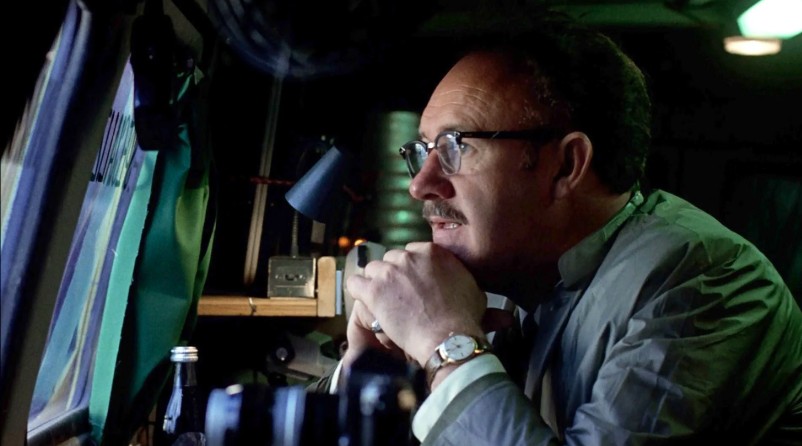
Blow-Up (1966), directed by Michelangelo Antonioni, was a big influence on Coppola. He liked the idea of a story being built around analyzing fragments of recorded reality. So he swapped visual photography for audio surveillance, which he researched in preparation, to create the story of an obsessed surveillance expert who tries to prevent a potential murder involving a couple.
The film was shot in San Francisco, which had been Coppola’s base of operations since the late ’60s. This is where he formed his production company, American Zoetrope, which was on the verge of going under until Coppola became one of the most powerful directors in Hollywood after The Godfather, and thus was able to film his passion project on his home turf.
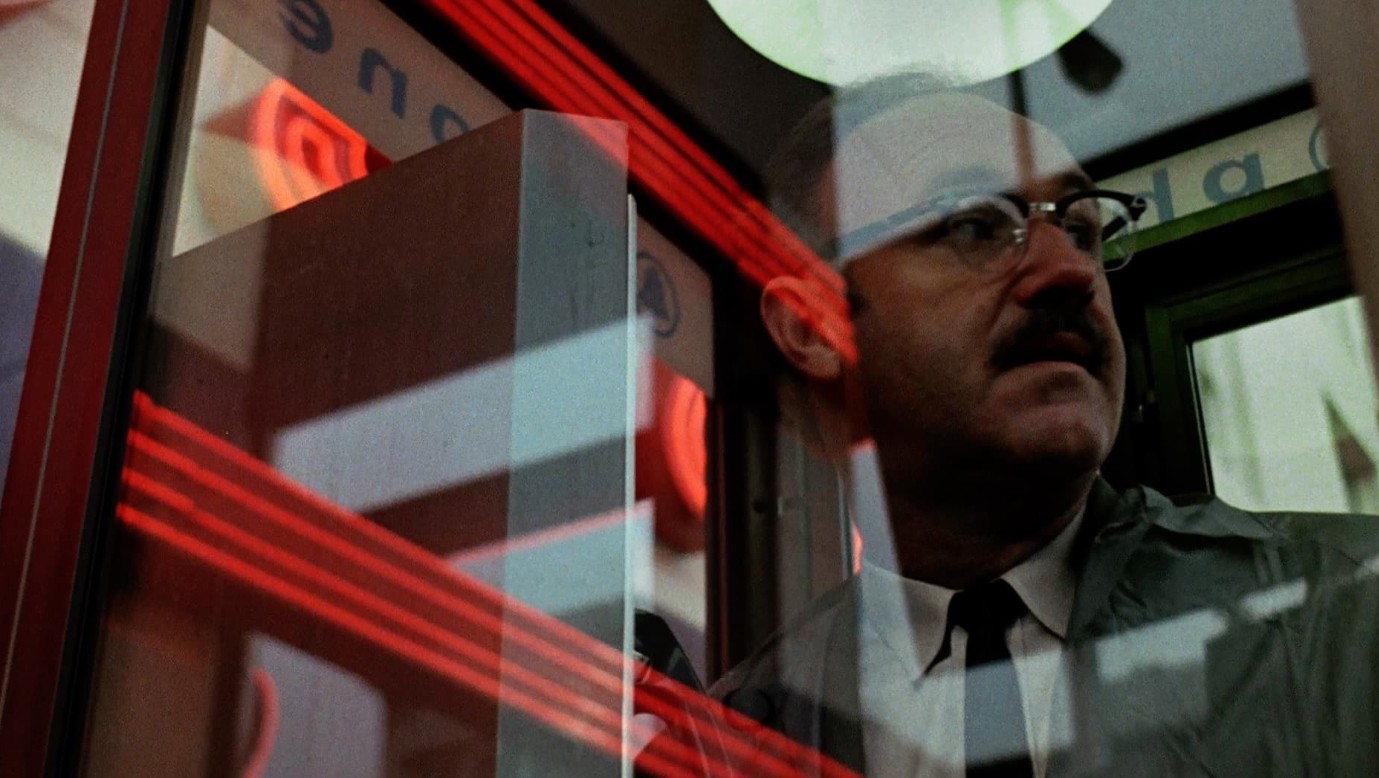
The Conversation is one of my favorite genres of film, the “guy who is really good at a very specific job” kind of movie. Harry Caul (Gene Hackman, RIP) is obsessed with providing quality recordings, but what happens when his job crosses his morals? Guilt-ridden for a job he did in the past that resulted in three deaths, Harry does everything he can to prevent his recordings from resulting in more bloodshed.
It’s interesting because you’re on board with Harry philosophically, but not with how he handles his clients. Harry is brash and overtly paranoid toward those who hired him. I get it. This is a guy who doesn’t own a telephone, a guy who tears into his landlady for having a second pair of keys to his apartment. But Harry, you gotta have some chill. This guy has no rizz. He has negative rizz.
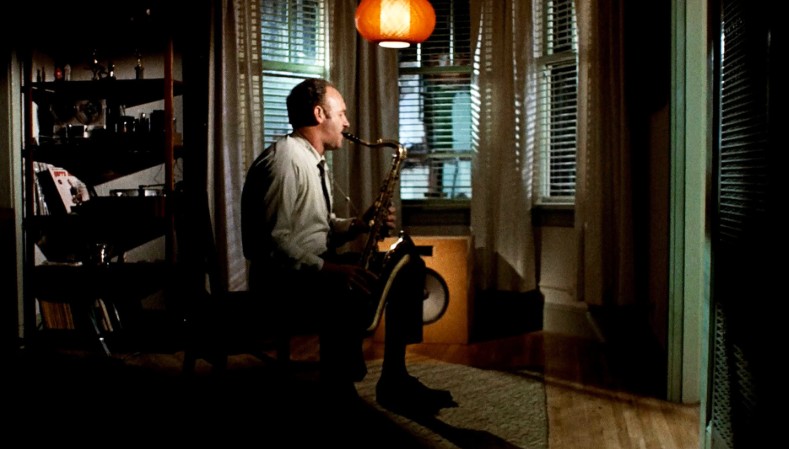
But Harry Caul is a fascinating character. Every time you learn a new fact, you reassess him. “Wait, Harry has an on-and-off-again girlfriend?” Or “Harry is a man of faith?” Or of course, “Wait, Harry can rip it on the saxophone?” This is anything but a one-dimensional character, but of course all these eccentricities are filtered through one overarching characteristic:
Paranoia…
Harry is paranoid of almost everyone and everything around him. It’s probably why he got into surveillance in the first place. He needs to know where everyone stands and what they’re after. It’s because Harry has a strong moral code and is suspicious of people who don’t, which, surprise, is most people in this movie.
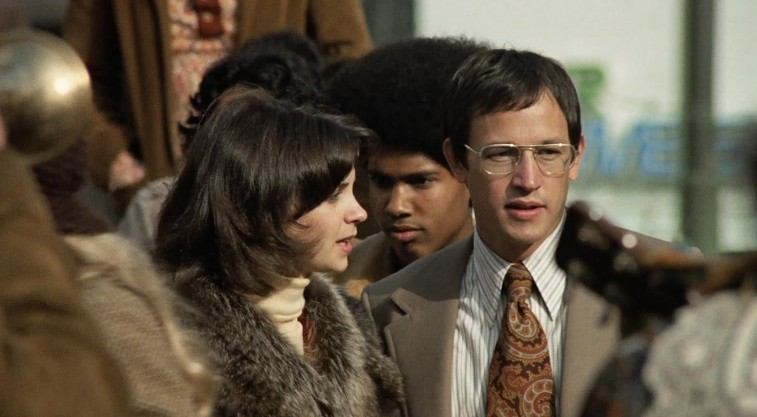
And man, what a murderer’s row of supporting character actors: Cindy Williams, Frederic Forrest, John Cazale, Harrison Ford, Terri Garr, and of course Robert Duvall as the mysterious “Director” who hires Harry Caul. But some of my favorite scenes are when Harry is interacting with all his fellow surveillance weirdos at a local convention. Allen Garfield as the sleazy Bernie Moran is a personal favorite of mine.
But where The Conversation comes to life is in its moments of suspense. I had taken an edible and was hanging out with my dogs when Harry discovered the “altercation” going on in the hotel room next to his, and I was freaking out. The music sting, the jump scare, and the fear shooting through Harry Caul feel so paralyzing. Gotta thank Walter Murch for his stellar sound design and editing.
After shooting had finished, Coppola was knee-deep in The Godfather Part II, which meant Murch had free rein in the editing process. His punchy, Hitchcockian style, along with David Shire’s jazzy piano soundtrack, solidify The Conversation as one of the great neo-noir films of the ’70s, along with Chinatown and Taxi Driver. Of course, then there’s Hackman.
Hackman said it was difficult to play Harry Caul, as the paranoid loner protagonist couldn’t be further from Hackman’s outgoing, casual manner. It’s quite the transformation, and it’s surprising it didn’t net Hackman a nomination. Then again, it was a stacked year.
The Conversation secured a Best Picture nomination, along with nominations for Original Screenplay and Best Sound. But of course it came out the same year not only as Roman Polanski’s Chinatown, but also Coppola’s follow-up, a little film called The Godfather Part II. The Conversationhad no chance, it’s just cool it was nominated at all.
I love when directors make a smaller film in between big franchise films. Christopher Nolan would do this in between Batman movies. I love it because these are often more personal, or even experimental, films that could only get made because they have a big name behind them. The ol’ “one for them, one for me” mantra. Though in the ’70s, all of Coppola’s movies were for him and for us.
I’m just glad he gave us something to talk about. 😉