



From Boyz N The Hood to Trainspotting to Fight Club to gangsta rap to grunge to nü metal, for whatever reason, the ’90s were a decade where angry young men were well-represented in pop culture. For this reason, the subject matter of La Haine did have a bit going against it for me, since it felt overexplored in this particular era. However, as I keep finding out throughout this Criterion Month, there are many different ways to tell a familiar story. La Haine manages to sidestep feeling overly familiar because it is so particular to its time (the 1990s) and place (the working-class suburbs of Paris), which combined with an arresting black and white-inflected visual style manages to do these angry young men justice.
The film begins with real footage of rioting in the banlieues (suburban areas filled with housing projects, typically populated by large immigrant populations) outside Paris, where the police and youths are seen clashing. We learn that a young man named Abdel was detained by the police after being beaten by them, and a policeman’s pistol was also stolen that night. We then follow three of Abdel’s friends, who all come from fairly different backgrounds and have pretty divergent personalities:
Vinz (played by Vincent Cassel) is a young Jewish kid and a bit of a livewire hothead, who we learn happens to be the person who stole the police gun. Then there’s Saïd (Saïd Taghmaoui), a North African Muslim who is a tiny bit more restrained than Vinz, but who also gets into his share of arguments with other tough guys in their neighborhood. Then there’s Hubert (Hubert Koundé), an Afro-French boxer who just wants to peacefully run his gym but keeps getting dragged into his friends’ shenanigans.
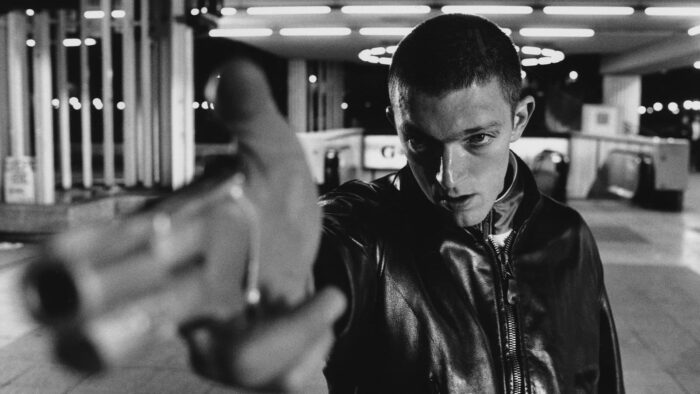
The film follows these three guys over the course of an almost 24-hour period in the wake of the riots that ended in Abdel being taken into custody, while Vinz swears he’ll shoot a cop if Abdel dies, for no other reason than petty revenge. Besides that, the film covers a pretty loose and episodic series of events, as we see these guys encountering different gangs, drug dealers, and eccentric characters in their corner of the world. They eventually take a train to central Paris to collect some money from a friend, but eventually end up in jail after some plainclothes officers arrest them and violently interrogate them before finally letting them free. Missing their train back home, they then spend the rest of the night in Paris, contemplating their future and whether their friend will make it out of the hospital alive.
As I mentioned earlier, one big part of La Haine‘s gritty appeal is how true it feels to the types of people it depicts and their tenuous relationship with the police. Director Mathieu Kassovitz was inspired to write the film after a couple of incidents in France where immigrants or protestors were either killed or badly beaten by local police while in custody. Kassovitz also had his actors live in Chanteloup-les-Vignes, the area that the film was shot in, for several months before and during filming, soaking up the type of atmosphere that these troubled characters were living in. It gives the film this ripped-from-the-headlines feel, depicting the changing populations of France during the ’90s and the implications of their treatment by the rest of society.
Yet the nice thing about the film is that it never feels like it has an agenda or is beating you over the head about the less-than-ideal circumstances that these lads have found themselves in. Instead, it’s merely trying to bring us into their world, showing us what types of hard-headed personalities have been forged by living in constant poverty and agitation. But at the same time, I was charmed by the fact that these guys aren’t nearly as badass as they want to be. They get into inane arguments over nothing and aren’t even terribly good at committing crimes, as when they try to hotwire a car, they realize that none of them are experienced drivers, so end up bickering over who should drive.
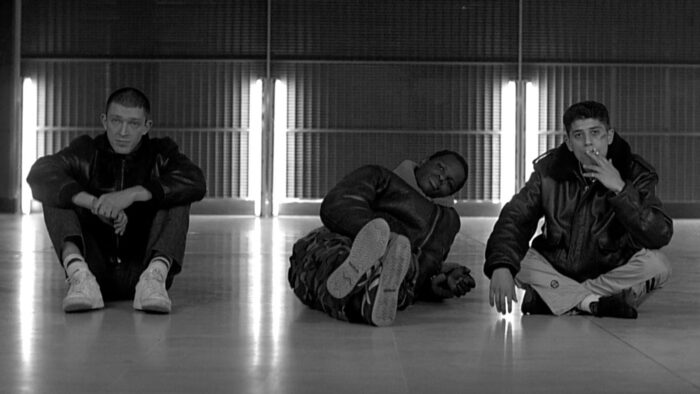
Another thing I appreciated about the film is that it is stylish, but also not overtly stylized, if that makes sense. There are a lot of intricate tracking shots, and a lot of care is put into making its black and white cinematography something beautiful to gaze upon. But at the same time, none of the editing or music choices are terribly in-your-face, letting the intensity of the situations and the performances do more of the talking. And as green as they are, all three of the lead performances are excellent, even if the more showy performance of Vincent Cassell makes it obvious why he was the one of these actors to have the most international success (though Saïd Taghmaoui also shows up here and there in things).
Speaking of international success, you sometimes get those directors who do great work outside of the U.S. and then find themselves just as adept at Hollywood filmmaking. Mathieu Kassovitz is not really one of those directors, as after having success in France, he tried his hand at Hollywood with critical punching bags like Gothika and Babylon A.D. This was probably less a product of Kassovitz’s directing prowess, and more of him just not being given the right project in the States. Because for how tough the material in La Haine is, he has a knack for making this story palatable with just the right amount of scope and cinematic panache, even if it does feel contained to this very small, specific world. But hey, that’s the beauty of a great film courtesy of Criterion – bringing a world that’s completely foreign to you into your living room. Au revoir!