



I love doing Criterion Month here at the blog. I get to watch so many different movies from so many different time periods and regions. I get to look cultured on Letterboxd and at parties (yeah, right, what parties?). But Criterion Month isn’t without its caveats.
Some Criterion movies are long, some are boring, some are depressing, and Betty Blue is a little of all three. So although I had moments where I thought, “Wow, this is beautiful! Look at this thing!” I also had moments where I thought, “God, will this ever end? Is this going to be forever?!?”
I first heard about Jean-Jacques Beineix in my French Cinema class in college when we watched his feature-length debut Diva (1981). I don’t remember much about the film other than it had murder and motorcycles. Still, my memory of Diva was that it was visually stunning with lots of color and beautiful people. Betty Blue is also visually stunning, has a color in the title, and stars Béatrice Dalle, a captivating French ingénue I couldn’t take my eyes off of.
Betty Blue is the story of a sweaty, impulsive love affair between a handyman/aspiring novelist named Zorg (Jean-Hugues Anglade) and the titular Betty (Béatrice Dalle), a bright-eyed, free-spirited young woman who moves into his shack in the middle of nowhere and proceeds to turn his life upside down.
Sure, it’s all steamy “adult situations” at first, but it doesn’t take long to realize Betty’s passionate outbursts are less “manic pixie dream girl” and more “maniac pixie dream girl.” The movie tracks their relationship’s descent from romantic to chaotic, and straight into the blue abyss.
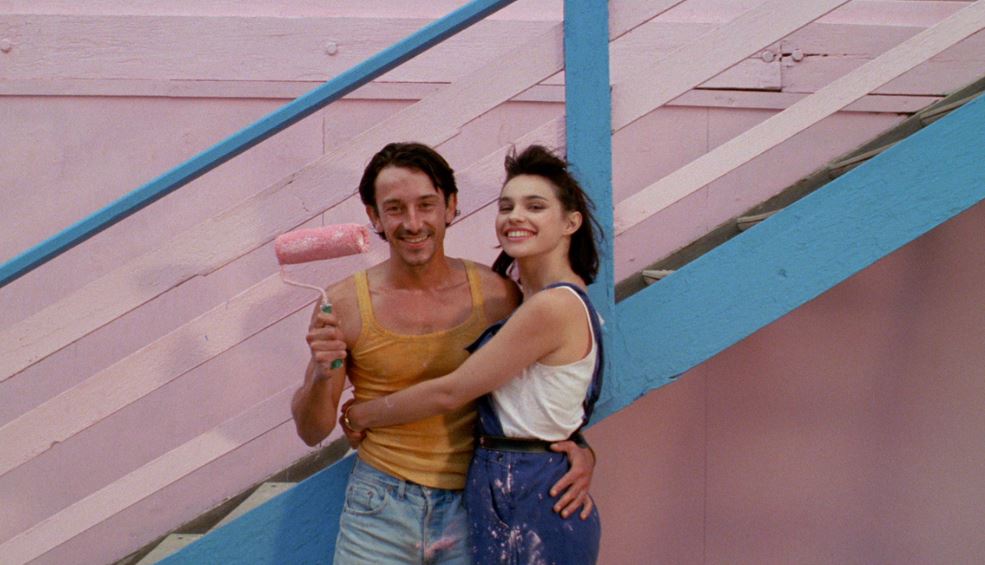
I had some serious concerns, more so than most Letterboxd reviewers, with Betty Blue’s portrayal of mental health. Though it’s never disclosed why Betty has sudden freak-outs (like stabbing a woman in the shoulder with a fork or slashing a publisher after he turns down her boyfriend’s manuscript), the film’s perspective on her illness leaves a LOT to be desired.
No matter what Betty is going through, we always witness it through the lens of Zorg, how her “episodes” are ruining his life, and how much he “tries” to make it work despite their setbacks. The film has all the sympathy in the world for Zorg, but none for Betty. It’s almost as if the film fetishizes her illness, turning her suffering into a quirky, romantic trait rather than addressing it with any empathy. Betty isn’t a woman in crisis so much as she is a muse on fire, her pain exists to fuel Zorg’s artistic angst.
And what does Zorg do to ease her pain? He tells her to ignore it or move on. They never see a doctor or a mental health professional. LOOK, I get it, part of Zorg’s response is intentional. The film wants you to see that Zorg doesn’t know how to deal with the issue. But I mean… if he’s not even going to try to understand her, why should we care about him at all?
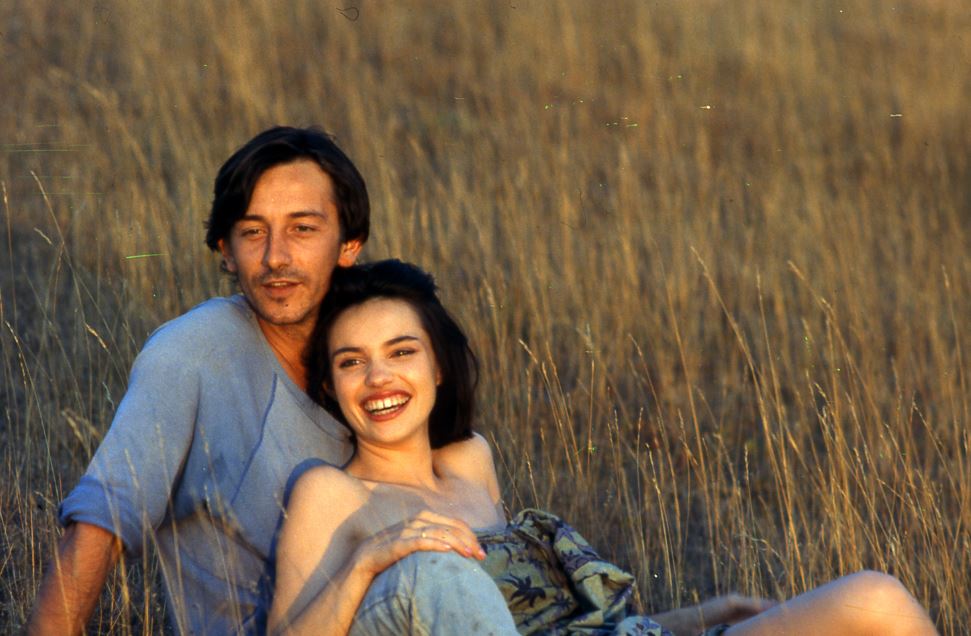
Remember, this movie is three hours long. Three hours of watching Zorg and Betty have sex, then watching Betty “flip out” as they move from job to job and home to home across what feels like all of France. At this point you might be asking, “What did you like about it?”
Betty Blue is a sumptuous film. The colors of the scenic French Mediterranean coast pop like nobody’s business. The locations are interesting, and the characters inhabiting them are, too. May I introduce Béatrice Dalle.
I’m obsessed with Béatrice Dalle. She’s equal parts innocent and funny, with a wild, rebellious streak and an unforgettable look: a gap-toothed smirk framed by pouty lips and a dark, tousled bob. She’s everything you dream of in the first half of the film, and everything you fear in the second.
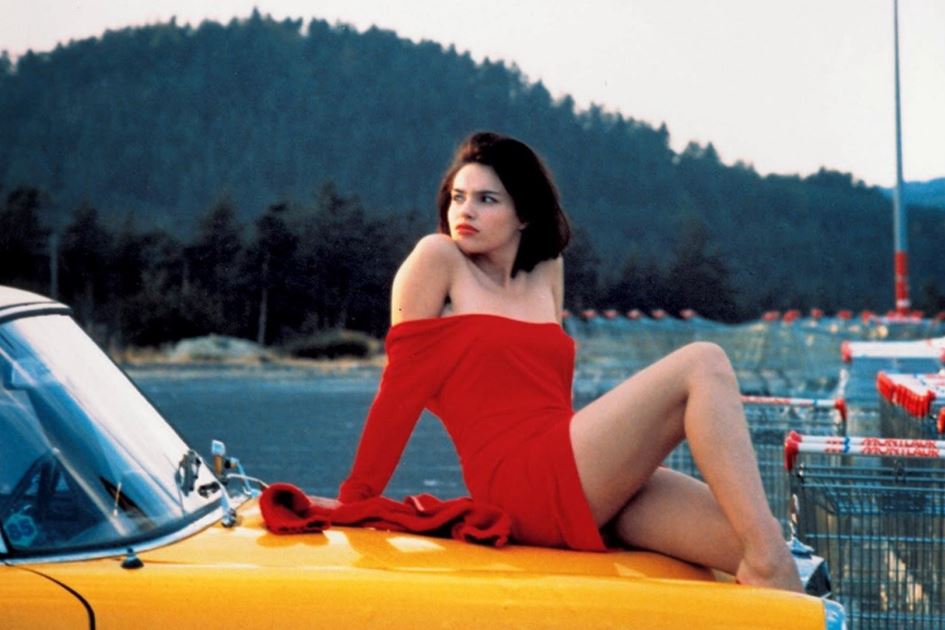
What’s irritating is you can see the “tragic end” coming from a mile away. It’s not if it’s going to happen, it’s when and how. I won’t spoil it, but it’s violent, depressing, and not kind to Betty at all. By the end of the film, she feels less like a character and more like an extension of Zorg. Which… Hey, I get it. It was written by a straight, white French guy. What the hell is he gonna know about women and their struggles? That’s why we have Emilia Pérez.
Even in good conscience, though, I can’t bring myself to give this film a low rating. It’s ambitious, and I do believe Beineix was well-intentioned in telling a tragic love story. Also, it’s worth noting this is an adaptation of Philippe Djian’s 1985 novel 37°2 le matin, so maybe he’s to blame for the shallow portrayal of both women and mental health.
I love doing Criterion Month at the blog because even when a movie leaves me bored, frustrated, or confused, I still walk away with something of value. I’ve been challenged to think and engage with art. It may not always feel good, but in the grand scheme of things, it shapes me as a cinephile. Art doesn’t always soothe, sometimes it stabs you right in the shoulder with a fork.