



In my neck of the woods, we have a little thing called the “Seattle Freeze.” What this means is that when reacting to out-of-towners, Seattleites are often perceived as cold, detached, and emotionally distant. This phenomenon, if you choose to believe it, is said to have been inherited from Scandinavian settlers, who prefer small, close-knit circles as opposed to 200 friends.
I preface my review with this observation because Ingmar Bergman’s The Silence is categorized as an “erotic film”, despite everyone being too closed-off to express themselves. Bergman characters are never upfront with their feelings. Or if they are, it’s in bursts of willful intensity. They have to be pushed to the edge to express anything other than detachment. What pushes Anna and Ester to the limit in this film? Silence.
Ester (Ingrid Thulin) is a literary translator suffering from a debilitating respiratory illness, traveling with her young son, Johan (Jörgen Lindström), and her restless sister, Anna (Gunnel Lindblom). They travel to a fictional Central European city called Timoka, which is said to be on the brink of war for vague reasons (that’s Bergman for you), and take up residence in a cavernous old hotel.
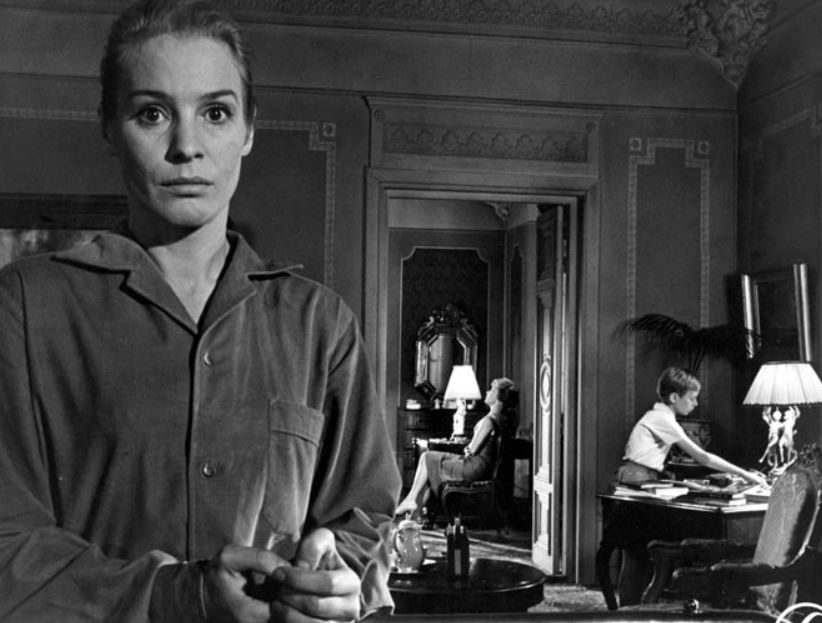
The only other company in the hotel is an aging waiter (Håkan Jahnberg) and a troupe of dwarves who perform a surreal on-stage singing and dancing act–because this is a Euro arthouse movie. What does it all mean? Exactly.
The Silence is a lot of people wandering around crumbling buildings looking sad. Dialogue is sparse, mostly because, despite being a translator, Ester does not speak the language of Timoka. So not only do our characters struggle to communicate with each other, they can’t talk to anyone else either.
Ester attempts to continue her vague (there’s that word again) work as a translator in between bouts of coughing and sleeping, while Anna wanders the city looking for any kind of release. Her first encounter with something sexual happens at about the 38-minute mark when she sees a couple explicitly having sex in a theater. Yes, I was tracking the time, but only because we were over a half hour in and I’d yet to see anything “erotic.”
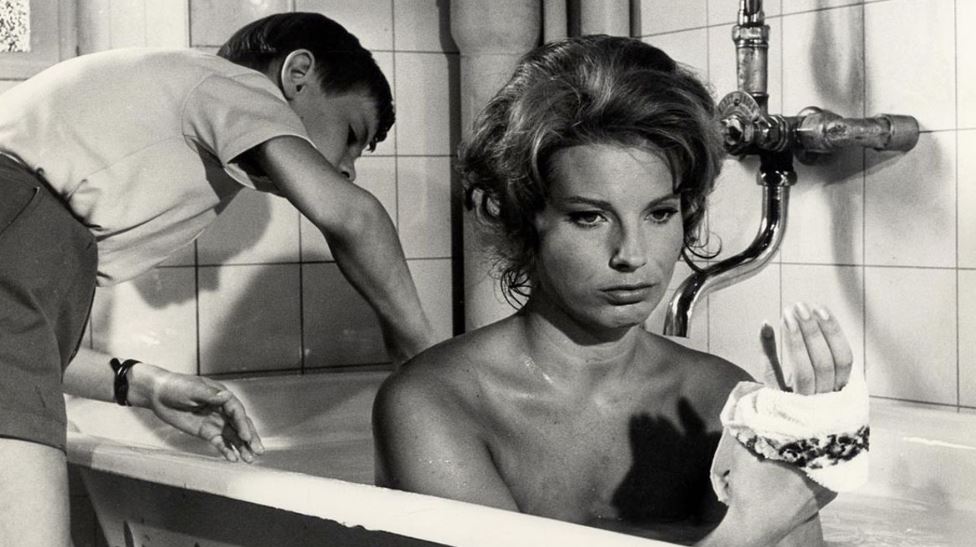
But Anna’s encounter with the horny theatergoers IS hot, and it’s only another 20 minutes before Anna hooks up herself with an anonymous stranger. Twenty minutes after that, we see Ester stumble across Anna and her gentleman caller in the throes of passion. But even then, all she can do is watch. Is she angry? Jealous? I like to think it’s a little bit of both. Here she is, watching her sister live her life, while she’s shuttered away, waiting for death to come knocking any day now.
There’s a lingering uneasiness, as it never feels like Ester is going to make a full recovery. Can her unbridled sister care for Johan? Not that anyone is watching him most of the time anyway. In fact, all I can remember him doing is having a snack with the old waiter and then being fascinated by the troupe of performing Spanish dwarves. Otherwise he’s wandering the halls and looking at stuff.
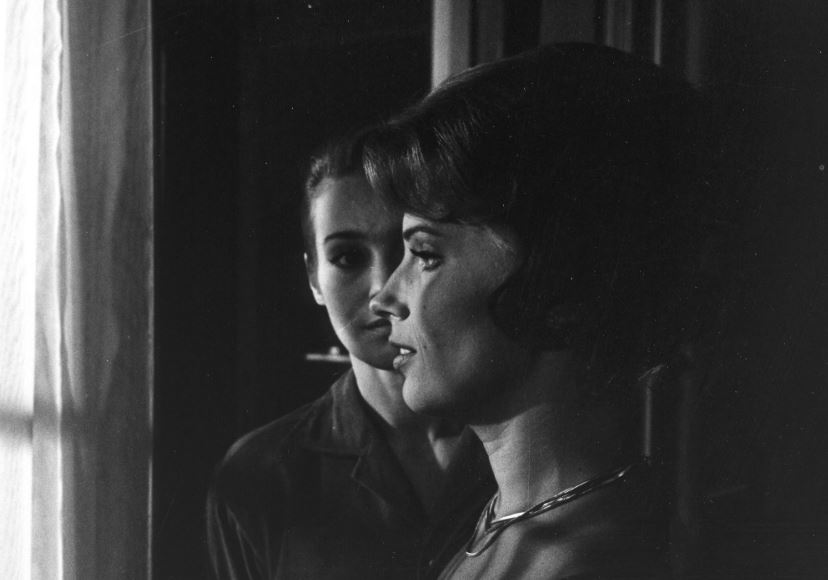
The Silence isn’t what I expect an erotic film to be, but it’s what I expect an erotic Ingmar Bergman film to be. I mean, when you think of Bergman, what’s the first kind of image you conjure? I’m gonna bet it’s one woman looking straight ahead and another off to the side. Their faces close but their gazes miles apart. An erotic Bergman film is bottled eroticism. It will pop eventually but who’s to say when or how. You may never know. They might just freeze you out.