



60th Academy Awards (1988)
Nominations: 9
Wins: 9
A month ago, I posted a list of my “Top Ten Horny Movies” where I crowned Bernardo Bertolucci’s The Dreamers as my number one. The film has become such a favorite of mine I had to see what else Bertolucci had to offer. Which is tough, because his two biggest movies are 1) A movie no one likes to talk about anymore because of a a sex scene that traumatized its female star and 2) A film about the life of China’s last monarch of the Qing Dynasty, which sounds like a movie I’d watch stretched over a week in school.
Not to mention The Last Emperor is an ’80s Oscar movie. I wrote in my review of Ordinary People last year that I believe the 1980s weren’t just a boring decade for the Oscars, but a boring decade for cinema in general. Now hold on, there’s no need to run me down in your DeLorean just yet. Yes, of course there were good movies in the ’80s, lots of them, but the center of gravity in Hollywood had shifted.
The risky, director-driven “New Hollywood” of the ’70s had been replaced by a more corporate, risk-averse system. Studios had learned the lesson of the blockbuster and weren’t eager to bankroll messy, morally ambiguous adult dramas anymore. Instead, they gravitated toward high-concept hits, sequels, and polished prestige pictures, the kind of films that looked expensive, respectable, and safe chillin’ on an awards ballot.
The Last Emperor is interesting because on one hand it does feel like your typical award-season pabulum. It’s a biopic, it’s long, it’s expensive, but it also did something no Western film had done since 1949. It was shot entirely in China, including extensive scenes inside Beijing’s Forbidden City. That alone was a gamble. The production depended entirely on the cooperation of the Chinese government, which meant the film could have collapsed at any moment if political winds shifted. For a massive international epic, building the entire production around that uncertainty was a risk in itself.
But is it any good?
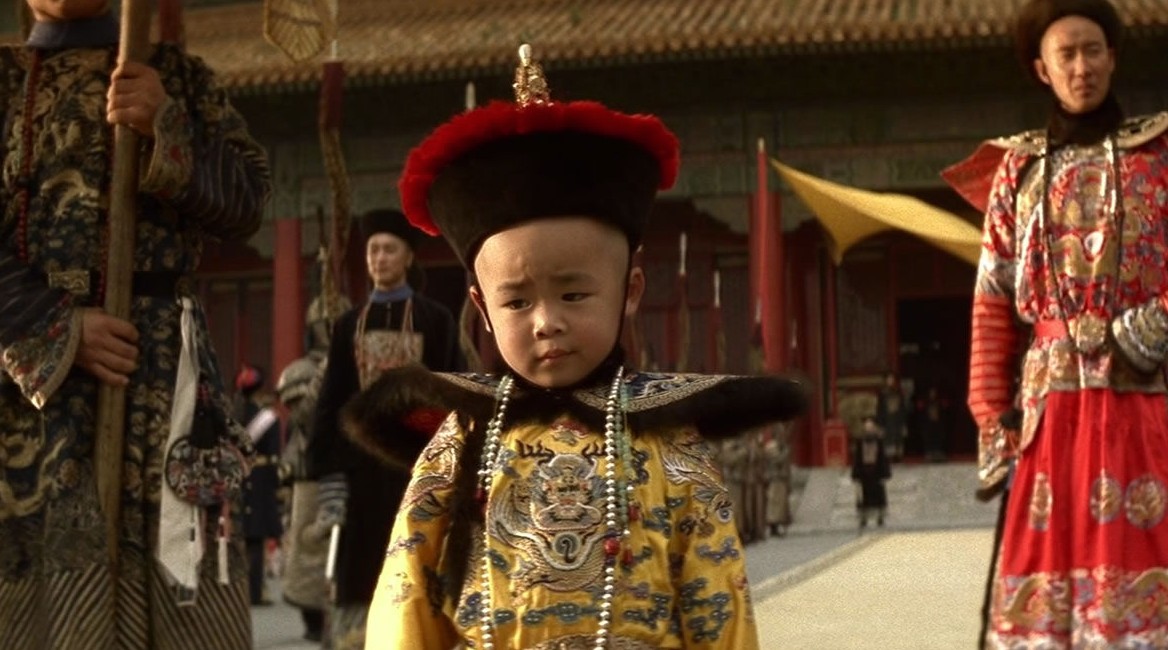
Oh sure, it’s fine. Well actually, the first hour or so is great. The story loses a bit of the magic once it leaves the Forbidden City but there’s still a lot here to enjoy and a lot to learn if, like me, you had no idea what was going on politically in China at the beginning of the 20th century. Or ever.
The Last Emperor is the story of Puyi, who, after the death of his uncle, Emperor Dezong of Qing, became the eleventh monarch of the Qing Dynasty in 1908 at the age of 2. Yup, 2. Monarchies are crazy, am I right? The film follows Puyi as he is taken from his parents to live in the opulent yet isolated Forbidden City, which he is forbidden to leave.
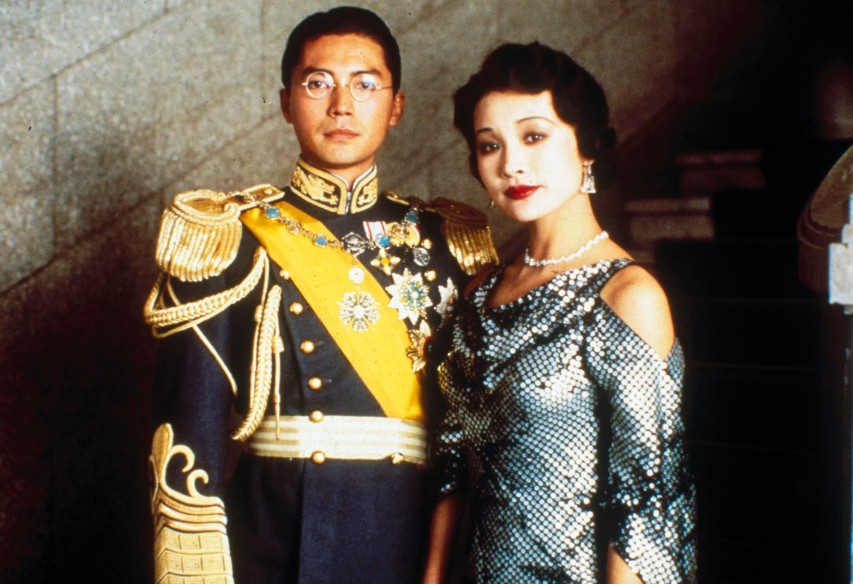
From the transition of China from empire to republic, to Puyi’s time as the puppet ruler of the Japanese-controlled state of Manchukuo, to his political imprisonment after Japan’s defeat in World War II, we follow Puyi as he goes from believing he is a god to searching for humility after discovering the downfalls of greed and power.
But real talk, Puyi’s childhood is way more compelling, despite John Lone giving a strong performance as the adult emperor. The early years of Puyi’s life are fascinating because we experience this extravagant new world through the eyes of a child. The strange customs, elaborate costumes, and the illusion of unlimited power, so long as it remains within the walls of the Forbidden City, make it feel like watching a boy grow up in a magical fantasy land. All the more surreal when you remember this was happening during a time when cars and telephones already existed in the outside world.
This is also the portion of the film featuring Puyi’s longtime tutor and advisor Sir. Reginald Johnston, played by the endlessly charismatic Peter O’Toole. Looking at the field for Best Supporting Actor that year, I’m shocked O’Toole didn’t even land a nomination. Sean Connery won that year for The Untouchables btw, which I guess I’m okay with.
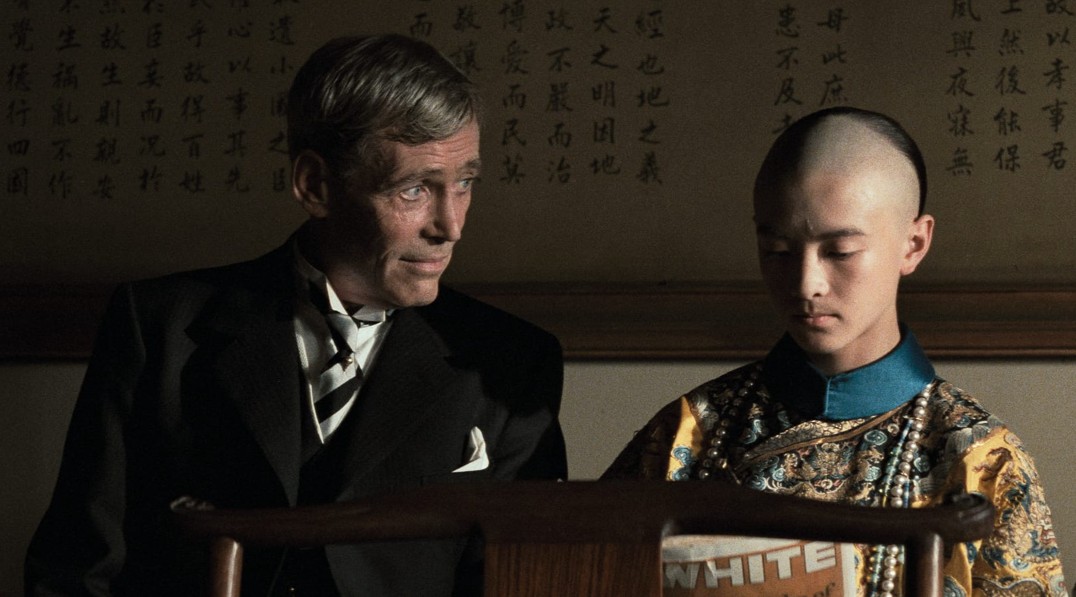
This let’s say, “unorthodox” upbringing molds Puyi into a bright although spoiled and unusual man. He takes two wives as a teen and even after the Chinese empire falls, is always looking for a path to reclaim his title as Emperor.
Puyi’s quest for power is what leads him to siding with the Japanese during WWII, being given his own territory to run, at least one he believes he runs. You can’t entirely fault the guy as being Emperor is all he’s ever known. This leads to his capture and imprisonment by the Red Army, which I should mention is where the film starts before flashing back to Puyi’s youth.
Similar to fellow Best Picture Winner Slumdog Millionaire, the bulk of Puyi’s story is told by Puyi to an interrogator. Except here it’s at a prison camp in the 1950s, after he unsuccessfully tries to kill himself and they discover he was once the emperor. Puyi eventually gives up his quest for power and sides with the Communist Party. Whether that’s a good or bad thing politically, I don’t know, but the more important aspect is Puyi throwing away his ego and coming to terms with being a humble citizen.
So how did the film fare at the Oscars? Good. Very good.
The Last Emperor won all nine Oscars it was nominated for, including Sound, Score (a memorable collaboration between David Byrne, Ryuichi Sakamoto, and Cong Su), Editing, Costume Design, Cinematography, Art Direction, Adapted Screenplay (based on Puyi’s own autobiography), Director, and Best Picture.
Looking at the competition, it’s hard to make an argument for any other film nominated that year deserving the top prize over The Last Emperor. Broadcast News probably comes closest, but no film matches the ambition of The Last Emperor. We’re talking about a film that had 19,000 extras on set. Holy shit.
Going into The Last Emperor, I wanted to see what made Bertolucci distinct as a filmmaker. After two films, I can tell he loves lush, sensual visuals, and characters who rebel against social conformity. He’s the intersection of beautiful images and a dude who likes to talk politics. He also likes to talk about character’s stool samples. At least in this film. If I could change the stars in this review to poop emojis I would. I imagine most people read these reviews on the toilet anyways.
Thanks for reading!