



31st Academy Awards (1959)
Nominations: 9
Wins: 9
When getting into classic movies, the films that really got me hooked on the musical were the ones put out by MGM in the ’40s and ’50s, and particularly the ones produced by Arthur Freed. These encompassed films like Meet Me In St. Louis, On The Town, The Band Wagon, Singin’ In The Rain, and Best Picture Winner An American In Paris, among many others. The other Best Picture to come out of Freed’s mini-empire was 1958’s Gigi, a film I’d never felt all that compelled to see since it’s never been talked about in the same category of classic musicals the way the other films I just named are.
However, it became apparent why this was when I was talking to a friend who’d stumbled onto it in a bar and watched it in its entirety later out of curiosity for its creepy overtones and extravagant production value. Well, I can now say that the plot is indeed pretty uncomfortable to wrestle with, though its milquetoast Hayes Code-era treatment explains why it went down so easy with audiences at the time, in addition to its very accomplished pedigree behind the camera.
I feel like one bit of confusion with the plot of Gigi is that it has a hard time explaining its historical context in a watered-down 1950s setting, taking place in the Belle Époque era of France in the early 1900s. Based on the novella by Collete, the movie starts with a brief introduction by our sort-of narrator, Honoré Lachaille (played by Maurice Chevalier), explaining that marriage is not the only option for young men in Paris at the time, since it’s not uncommon for men to have mistresses. He then proceeds to sing a catchy, but somewhat predatory song about how little girls will eventually grow up to be beautiful women worth courting, called “Thank Heaven For Little Girls”. Thank heaven that none of the other numbers in the film reach this level of creepiness, but it certainly doesn’t help that it’s the song that bookends the film.
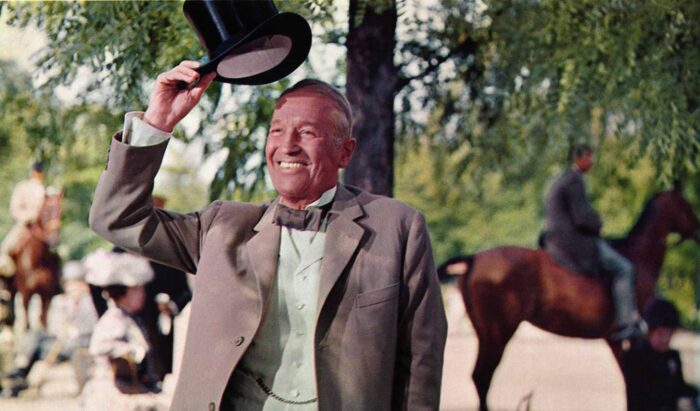
Anyways, we’re then introduced to Honoré’s nephew Gaston (Louis Jourdan), who is bored with the same bon vivante lifestyle as his uncle, though he does enjoy spending time with his uncle’s old friend (and former mistress) Madame Alvarez (Hermione Gringold) and her teenage granddaughter Gilberte, who’s nicknamed Gigi (Leslie Caron). Madame Alvarez is about to send Gigi off to her Great Aunt Alicia (Isabel Jeans) to be molded into a courtesan, with the simple goal of becoming a kept mistress for wealthy men. Being a little too carefree, Gigi struggles with the prim and proper-ness expected of being a kept woman, and finds that she enjoys spending time with Gaston, regardless of her title.
Gaston finds that he also enjoys spending time with Gigi, and after his latest mistress fakes a suicide, he decides to get away with Gigi and Madame Alvarez to a beachside resort. Madame Alvarez and Great Aunt Alicia then scheme to make Gigi Gaston’s mistress, which Gaston is skeptical of, but then starts to humor her and begins to have romantic feelings for her. This then leads to Gaston finally taking her up as his mistress, but then starts to feel like she might be more suited for marriage.
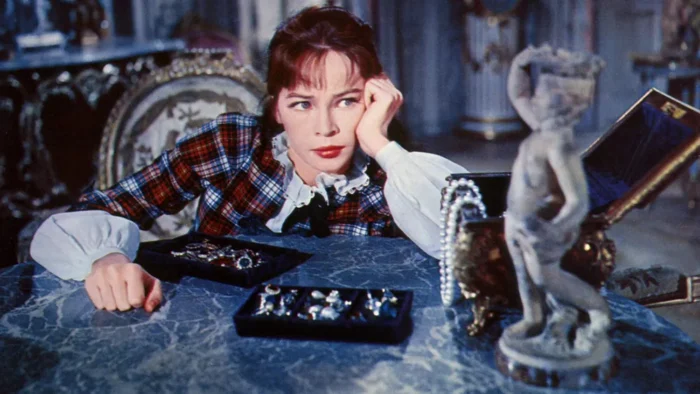
Anyways, yeah, on paper that all sounds not great in the context of today, or quite frankly, 1958 when the movie was made. Yet, somehow this movie is so sanded-down content-wise, that the plot only feels occasionally creepy, unless of course you stop and think about it or have to explain the plot on your blog. They never state Gigi’s exact age, but from the Madeline-esque schoolgirl outfits she’s seen wearing at the beginning of the film, you have to assume that she’s definitely not of age to be having sex by our modern ages of consent. They also never use the phrase “mistress”, but vaguely mention that men in this strata of French society have other relationships with women than mere marriage. Also, I think it weirdly helps that Leslie Caron (who was 26 at the time) is not a very convincing teenager, which may or may not have been an intentional decision on the filmmaker’s part.
That all said, if you can miraculously get past the plot of this thing, there is plenty to enjoy here from a production standpoint. Directed by MGM veteran Vincente Minnelli and with a script and music by Broadway legends Lerner and Loewe, this is a film made by people who know how to hit all the right beats of a musical. That said, I do wish there were a few more songs here, since most of the ones in the film are decent, and also make the questionable plot easier to engage with. Also, what the film really nails is a certain kind of opulence embodied by this period in France, with some great costumes and wonderfully colorful set design courtesy of Cecil Beaton.
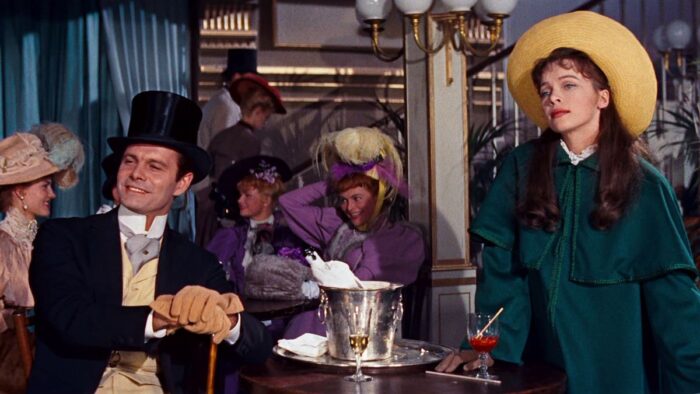
So it’s understandable that Gigi would rack up a bunch of Oscars in the costumes, set design, and music categories, though Alan Jay Lerner winning a Best Screenplay Oscar is a little strange. Though maybe there is something impressive about him turning this subject matter into something digestible for a 1950s audience. The fact that it won every single one of the categories it was nominated in, including Best Picture, is a little strange, considering it’s just so darn inconsequential. But then again, 1958 didn’t seem to be that great a year for the Oscars. I’ve seen three of the other four Best Picture nominees that year (Cat on a Hot Tin Roof, The Defiant Ones, and camp classic Auntie Mame), and I can’t say that those films are stone-cold classics necessarily, but they’ve certainly aged better than Gigi.
That said, it is interesting to look at Gigi as this sort of transitional film in the development of the movie musical, as there was this turn from leaner, more dance-oriented musicals of the ’40s and ’50s to more lavish, widescreen epics in the ’60s that sought to offer the kind of big screen extravagance that television couldn’t offer. While I like the fact that Gigi isn’t horrendously long like other musicals I’ve reviewed for Oscars Fortnight, and I do appreciate its mix of immaculate set design and filming on location in Paris, I also miss the dance sequences that make MGM musicals so kinetic. It’s just not all that compelling to watch these characters sit around pouting over the most trivial of matters. But if nothing else, this film laid the groundwork for other “scrappy girl gets a makeover” musicals like My Fair Lady (Audrey Hepburn was even approached to play Gigi) and Funny Girl, even if those movies would spin this dynamic in ways that hold up much better.