


2025 was a pretty good year at the movies for me, even if it didn’t seem like that great of a year for the industry as a whole. It probably speaks to that fact that I saw like 3 movies that I would’ve considered mainstream blockbusters over the course of the year. But as far as the types of smaller, more thoughtful films I like to seek out, there was plenty of good stuff to go around. I truly don’t know what to think of the increasingly bleak state of the theater industry, because this year I saw probably 75% of the movies I saw last year in theaters, and I’m not really sure what the point of movies are if not for the theatrical experience. Well, here are the movies that made me happy to go get lost in the dark of a half-empty theater.
Honorable Mentions:
SLY LIVES! (or the Burden of Black Genius)
Marty Supreme
Sinners
Blue Moon
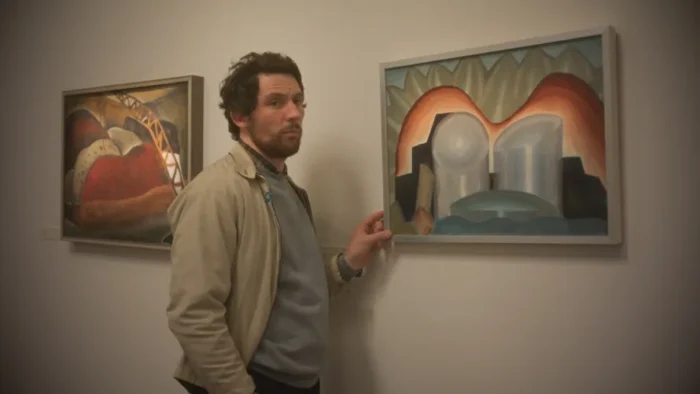
I did not need much convincing to be sold on a movie directed by Kelly Reichardt centered on art museum mischief by way of that scruffy rascal Josh O’Connor. You might expect a Reichardt heist movie to come with its own spare sense of impenetrability, and The Mastermind does not disappoint. We don’t ever really get the sense of what is driving this small-time crook and why he decided to turn his entire life upside down for a few pieces of stolen art, but there’s something fascinating about watching his small, sweater-clad world unravel. I have a hard time deciding whether this or Wake Up Dead Man was the definitive O’Connor performance of the year, but this one certainly leans more into O’Connor’s knack for playing characters who are a mess, as he exhibits a kind of compulsion that’s all too familiar in men of a certain tragic trajectory.
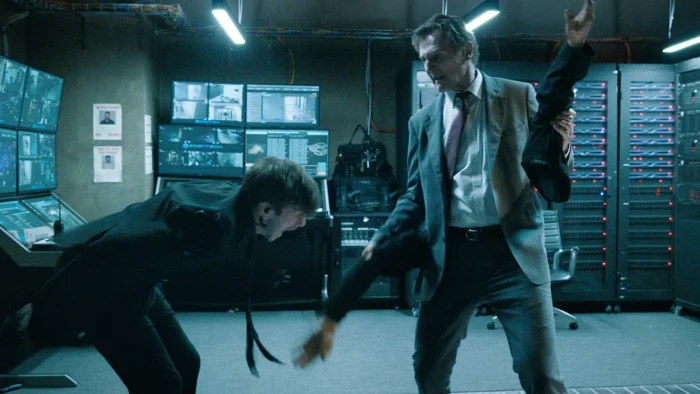
I was always a little skeptical that Akiva Schaffer’s reboot of The Naked Gun franchise was ever going to resuscitate the dying theatrical comedy, since that series hasn’t really had the kind of staying power with modern comedy fans that it deserves. However, it did succeed in just being really fucking funny. The Zucker Brothers’ brand of silliness is perhaps my gold standard for big-screen silliness, and the way this Naked Gun channelled that energy while moving it into a more modern, pop culture-obsessed era of comedy was just a delight to watch. The types of comedies with lines and moments that you want to quote to your friends are far and few between these days, and this movie was filled with plenty of them. I’ll never look at a chili dog the same way again.
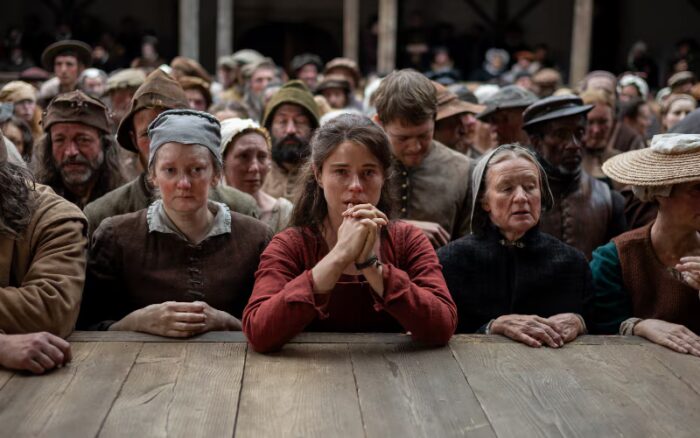
This movie could certainly be defined as what the poet laureate Matt Carstens describes as “a white bummer”, but I think focusing on the film’s more depressing qualities misses the point. One, because it’s good to feel things sometimes, dammit. And two, because this isn’t one of those movies that’s about misery just for the sake of misery. It’s about how someone can take a tragedy and turn it into art, as well as the fact that for someone who doesn’t have that kind of outlet, the grief can be really hard to grapple with.
I’ll also say that even though this is far from a pure Shakespeare biography, I did enjoy its ability to help me connect with Shakespeare, since I often struggle with getting terribly invested in anything Bard-related. Also, despite her leaning a bit into becoming an Awards-season favorite and an industry insider, I think this movie does remind you what makes Chloé Zhao a special director, as the way she infuses the story with the etherealness of nature makes Jessie Buckley’s raw performance feel even more elemental. Buckley’s performance is undeniably great, and she’s been doing great work for years, but I also wanted to shout out the young Jacobi Jupi as the titular Hamnet, who really embodies the type of kid with a good heart without being too plucky or child actor-y, which makes the movie all the more heartbreaking.
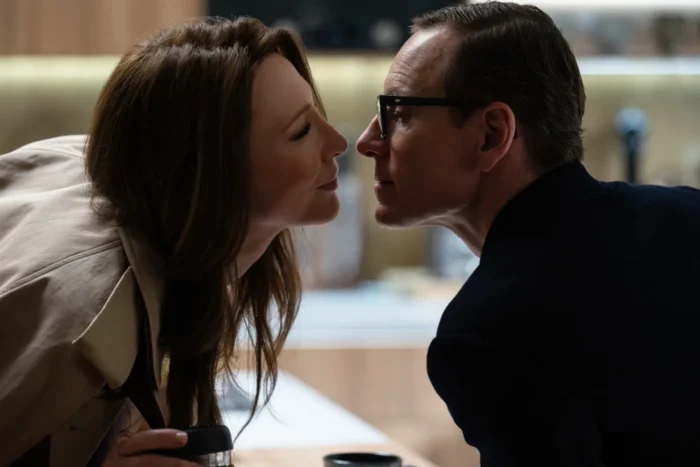
Good god, movies are truly broken if a smart, sexy, star-driven film like this can’t make much of a splash. Black Bag is basically a movie about what if your bitchy friends were intelligence officers who let their personal drama bleed into their high-stakes work in a way that had huge consequences. It’s the type of film that Steven Soderbergh can do exceptionally well when heeding the call, as it brings to mind former triumphs like Out of Sight and Ocean’s Eleven, with a really sharp script from David Koepp. With Michael Fassbinder and Cate Blanchett playing a cold and calculated couple in the kind of spellbinding way only actors of their caliber can, the film feels like the work of a bunch of professionals at the top of their game (props also to a slick score by David Holmes) that happens to be about how uber professionals also fuck up sometimes.
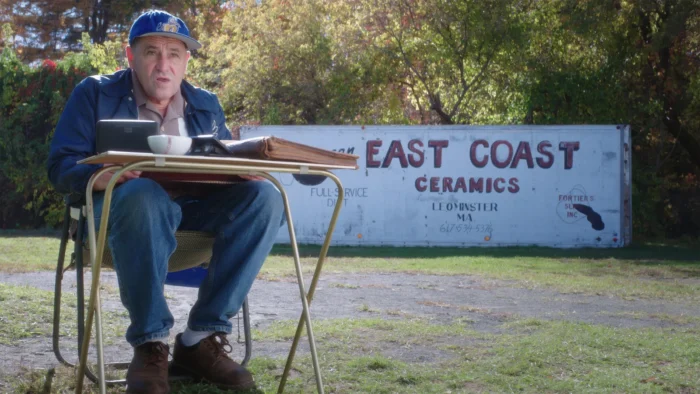
2025 was a great year for following baseball if you happened to be a Seattle Mariners fan like myself, and seeing Eephus right at the start of baseball season was a nice way to kick off one of my favorite baseball years in a long time. Eephus perhaps more than any baseball movie I’ve seen really gets the simple pleasures of the game, and how a lot of its appeal comes down to its smaller moments, the game between the game, and the male bonding that comes with this most hallowed of pastimes. It’s one of those movies that somehow manages to be quiet and not contain a lot of action, and yet it’s never boring. There’s always something interesting going on on this ballfield filled with New England ham-and-eggers in what will be their last game together before their beloved ballfield is paved over in the name of progress, and the movie’s almost documentary-esque depiction of the passage of time is as haunting as it is quietly funny.
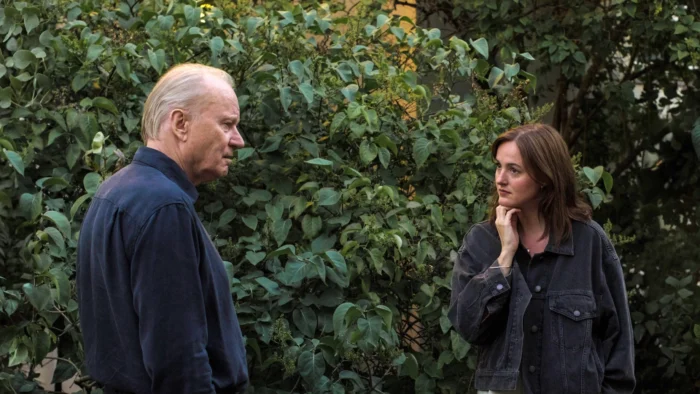
With 2021’s The Worst Person In The World, director Joachim Trier seemed to unlock some new level of modern alienation and existentialism on film. Sentimental Value sees Trier returning to work with Renate Reinsve, and the film has a bit more pensive, inward-looking tone that’s more focused on the effects of having an absentee father and how that’s the result of childhood trauma and how that trauma begets more trauma. It’s once again a very heady film from Trier, but one that’s very watchable due to a certain kind of filmmaking playfulness, constantly jumping around in time and with different tonal qualities. It’s a messy film for sure that never quite resolves all of the dangling threads at heart of it. And yet for a film about family, this feels true to the way that you’re never really going to get closure from the types of relationships that are as knotty and prickly as a ball of barbed wire.
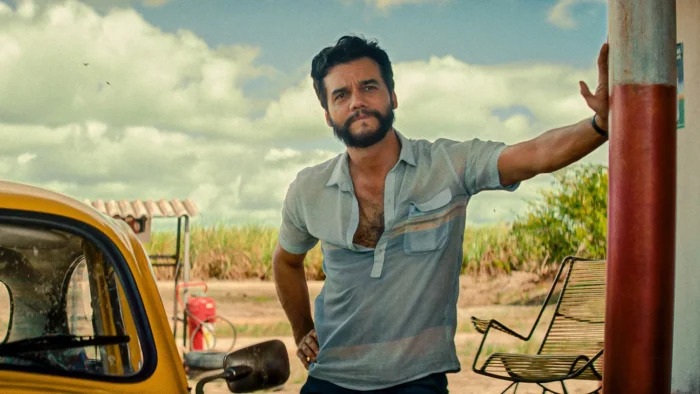
As we get further up my list, it becomes apparent that 2025 was a good year for political cinema, which as you can imagine, was a vital salve on the weird hellscape we found ourselves in. Of course, The Secret Agent depicts the political turmoil of a different era, that of Brazil in the late ’70s, with a kind of wildness that feels emblematic of the times it depicts, but also just makes for thrilling storytelling. We follow this character that has appeared in the smaller city of Recife, and over the course of the film, we slowly find out why he’s hiding in exile and why his past has made him an enemy of the state. The film often feels like it could go careening off the rails with its various side plots, excursions, and tonal shifts, and yet something about it all hangs together. This ultimately leads to a bold and surprisingly poignant ending, which leaves you wondering what the point was of living through exciting times when they’ve all been reduced to nothing but half-forgotten memories.
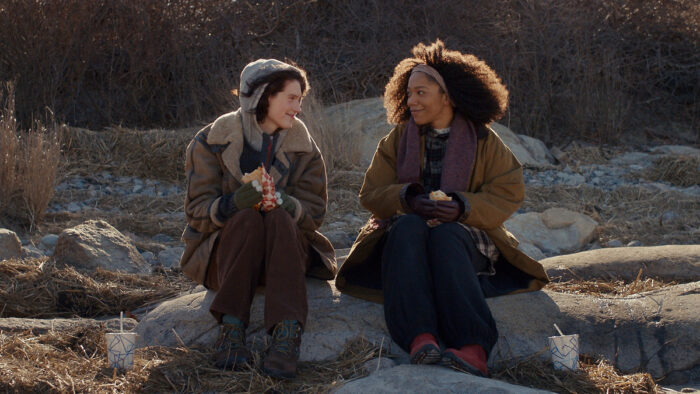
This one kinda just came out of nowhere and charmed the pants off me. Writer/director/star Eva Victor’s debut film about a grad student who’s been sexually assaulted by one of her professors sounds like a deeply uncomfortable watch, and yet she somehow manages to infuse the material with a kind of lightness and warmth without ever making the story feel trivial. We follow Victor’s Agnes as she grapples with the assault against the backdrop of her best friend’s pregnancy, and the film really shows how different people can be at completely different stages of their lives and still complement each other perfectly. There are a lot of memorable little scenes and performances throughout, with the film exuding a kind of bracing humanity while wringing humor out of the type of situation that should leave little to laugh at.
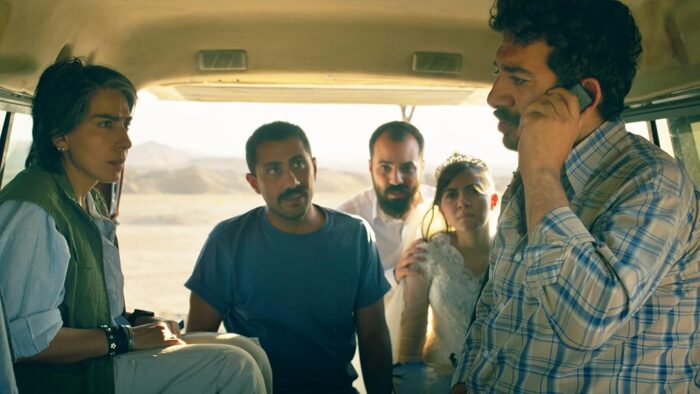
As much as I love movies, I would never call filmmaking a noble profession. However, It Was Just An Accident is one of the first times I can recall seeing filmmaking as an act of true courage, as bizarre as it may feel to say. I’ve been putting off seeing the films of Jafar Panahi for years, despite being somewhat aware of them as well as the persecution he’s endured at the hands of Iran’s current regime, which may be currently in the midst of crumbling if the images we’ve recently seen of widespread protests in the country are any indication.
It Was Just An Accident sees Panahi in many ways exorcising all of the strife he’s endured through the past few years, as it tells the story of what happens when a group of strangers come together to figure out what to do when they encounter the man who tormented all of them when they were political prisoners. The first half of the film has an almost farcical bent to it, showing how absurd it actually is to kidnap someone and exact revenge on them after they’ve induced intense psychological torture. But as the film progresses, it becomes more raw and filled with resentment, yet always seems to concede that there are no easy answers when it comes to finding justice when trying to preserve your own morals and humanity.
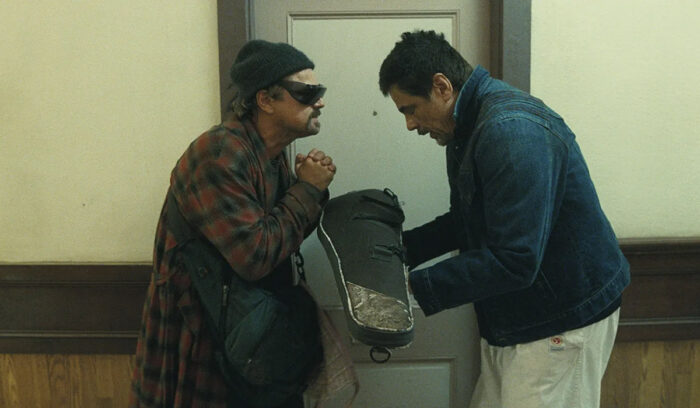
Being that last year was as politically charged as it was, for a long time I was grappling with whether I was going to put It Was Just An Accident or One Battle After Another as my number 1 film of the year. While I will say that It Was Just An Accident is probably a more important film and probably a braver film to make, considering Jafar Panahi was sentenced to a year in prison in the wake of its release, it was just a little too heavy for me to put at number 1. Not that there’s anything wrong with heavy movies. It’s just that I tend to make my number 1 movie each year a film that I can see myself returning to again and again, and One Battle After Another had that potent mix of feeling like an urgent commentary on the times we’re living in, but also was a riveting piece of filmmaking that feels well worth revisiting.
I have always gone back and forth on how much of a Paul Thomas Anderson fan I really I am, since even though I’ve liked pretty much all of his movies, it has felt a little lately like he’s been leaning pretty hard into this cinema of moral discomfort. One Battle After Another feels like something else entirely — sometimes an action movie, sometimes a Pynchonian paranoid thriller, sometimes a stoner comedy, and always feeling like a reflection on what happens when the revolution is dead. There’s something about the way this movie reflects the ways different generations think they can change the world and how every generation ends up blowing it. And yet in that disappointing push and pull, there’s still some better future that can be salvaged. If that’s not the 2025 version of hope, I don’t know what is.