


Buhhh… Bummm… BUHHHHH!… Buhhh… Bummm… BUHHHHH!….
You know the song. Three notes. One tritone. The sound of evil itself. Yes, it’s Halloween and what better way to honor the spirit of Samhain and our recently departed Prince of Darkness than to share my journey listening to all nineteen Black Sabbath albums.
I have a tier list with images if you want a quick ranking, but if you want to descend further into the fire… Abandon hope all ye who scroll.

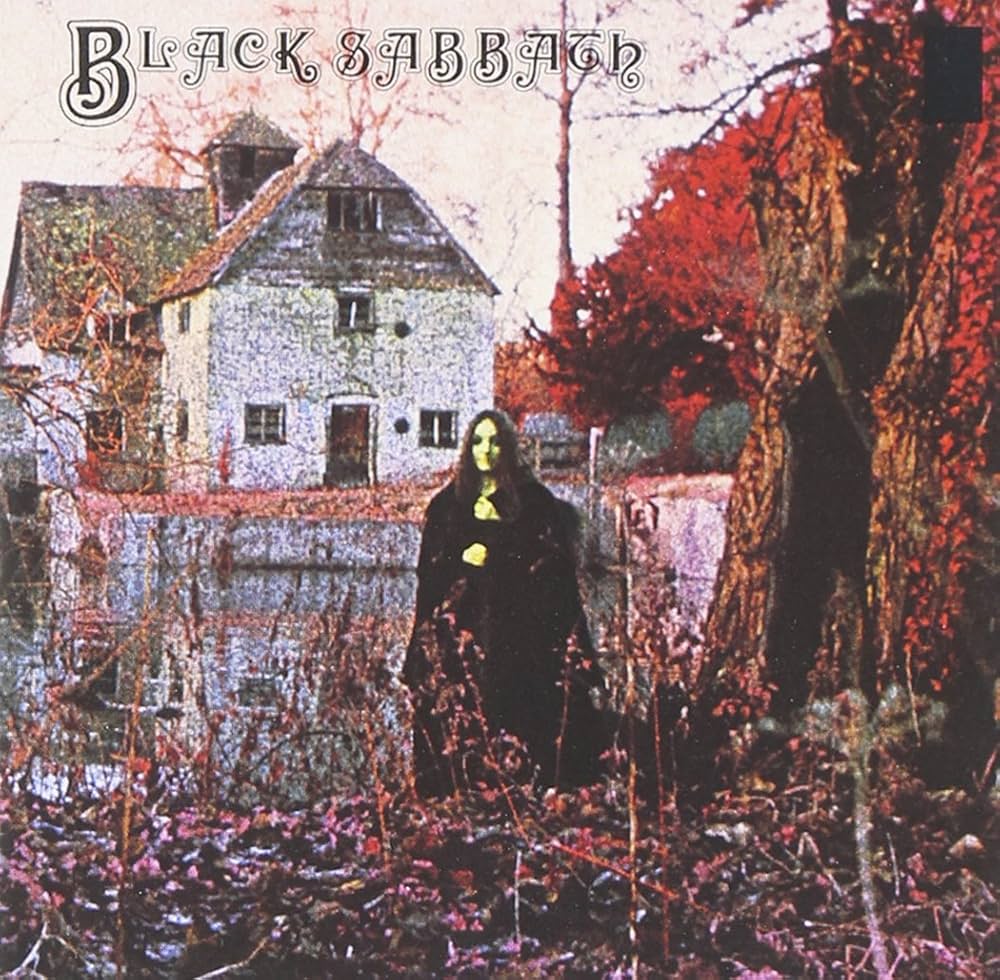
Black Sabbath (1970)
I listen to this album every spooky season and I still get chills when I hear the band’s unsettling tritone riff on the album’s opener. Did you know the tritone was historically referred to as iabolus in musica (“the devil in music”) and was rarely used in classical compositions because of its jarring, dissonant sound, i.e., “it was too evil”?
Geezer Butler stumbled across the riff while trying to play “Mars” from Gustav Holst’s The Planets suite and, what do you know, accidentally invented heavy metal music. There is no greater encapsulation of the genre than the opening song of Black Sabbath’s 1970 debut.
As far as I’m concerned, every other track on the band’s debut is icing on the cake. There’s the bluesy bite of “The Wizard,” “Behind the Wall of Sleep”, a tribute to H.P. Lovecraft, and the mysteriously named “N.I.B.”, which sounds like Cream writing a song about Satan. To this day, no one’s entirely sure what “N.I.B.” stands for: “Nativity in Black?” or “Name in Blood?” or is it a reference to how Satan’s beard looks like a pen nib?
The second side features the moody “Sleeping Village,” sandwiched between covers of “Evil Woman” originally recorded by Crow and “Warning” by the Aynsley Dunbar Retaliation. I’m more accustomed to the U.S. version of the album, which scraps “Evil Woman” for “Wicked World” and combines several tracks into extended suites, but either version will get you where you’re going. If your destination is Hell.
Ranking: S Tier
 Paranoid (1970)
There’s a part of Black Sabbath’s 2010 episode of “Classic Albums” where Tony Iommi talks about pulling riff after riff out of the ether, not knowing where all these good songs were coming from. I have theories. A Deal with the deal mayhaps?
Or it was chemistry. Two albums in and Black Sabbath had become a well-oiled machine (this album came out a mere 7 months after their debut) with only two purposes: 1) Make great rock music and 2) Travel time for the future of mankind.
Paranoid is an album stacked with rock radio classics; “War Pigs,” “Paranoid,” and “Iron Man”. It delivers the hits while standing as Black Sabbath’s most adventurous record. The audacity to slip a moody space ballad like “Planet Caravan” between the three biggest songs in the band’s catalog, the swagger to write a song called “Fairies Wear Boots” after being mocked by skinheads, and the searing political fury of “War Pigs” all make for a heavy metal feast fit for a Prince of Darkness.
The greatest Heavy Metal Album of All Time. Period.
Ranking: S Tier
 Master of Reality (1972)
This one’s for the stoners. Come on, it opens with Tony Iommi coughing after hitting a joint before launching into a sludgy stoner jam called “Sweet Leaf”. The band was high when they recorded the song. Talk about metal as fuck.
Reteaming for the third time with producer Rodger Bain, Master of Reality saw the band exploring the studio and collaborating on the production side of the album. Tony Iommi experimented with tuning his guitar a half-step down, (1) to reduce tension on the strings and ease his playing after a factory accident severed the tips of two fingers early in his career, and (2) to give the album a more menacing feel.
Master of Reality has one of my all-time favorite Sabbath cuts: “Children of the Grave.” I love Bill Ward’s primal, tom-heavy gallop of a drum part and the chugging guitar riff playing alongside it. Tony Iommi performs two instrumental guitar interludes with a virtuoso classical flair, and we get a moody ballad, “Solitude”, which also features flute and piano from Iommi.
This is an album you listen to blitzed out of your mind in the back of a smoke-filled van. Do me a favor, mark listening to this album on your calendar for next 4/20. You’re gonna like the way it sounds. I guarantee it.
Ranking: S Tier
 Vol. 4 (1972)
The band came a long way from being clueless in the studio on their first album to taking over the bulk of production by Vol. 4. Under Tony Iommi’s guidance, Vol. 4. can be defined by one word: “heavy”. The band was always always heavy but Vol. 4. sees Iommi’s guitars at their crunchiest and Ozzy at his angriest.
Bill Ward sounds like Bonham with his in-your-face fills and progressions. “Tomorrow’s Dream” is a favorite of mine with those opening clicks on what sounds like a mounted cowbell. Geezer Butler digs deeper lyrically with the piano ballad “Changes”, a song with zero guitar and Ozzy bemoaning: “I feel unhappy. I feel so sad. I’ve lost the best friend that I ever had.” The song is about Bill Ward’s breakup from his wife and was given a beautiful soul-flavored cover by Charles Bradley in 2016.
But Vol. 4. isn’t all heavy guitar and heartbreak, it’s also about cocaine. “Snowblind” reflects the band’s abuse of the drug and how it had gotten so bad by 1972 that the band would get speakerboxes full of coke delivered to the studio. Drugs aside the band expanded their sound and delivered another hit (to the charts and the head).
Ranking: A Tier
 Sabbath Bloody Sabbath (1973)
Burnt out after a hard tour and harder substance abuse, Black Sabbath spent a month dicking around in a Bel Air mansion before searching for inspiration for their new album at Clearwell Castle in Gloucestershire. Inspiration they found after Tony Iommi wrote the opening riff of the album’s title track in the castle dungeon, which might be the most metal way anyone has ever broken from the chains of writer’s block.
When I think of “Sabbath Bloody Sabbath” I think of synths, and not in a bad way. Ozzy had purchased a moog synthesizer and the band integrates synths in what I’d describe as a “spooky circus” sound on tracks like “Killing Yourself to Live” and “Who Are You?”. Synths along with mellotron, harpsichord, and flute, make Sabbath Bloody Sabbath a strikingly diverse record for Sabbath.
Geezer’s lyrics, “contemplate the mysteries of birth and DNA” and the band explores their lighter hippy-dippy side as opposed to the doom and gloom of previous records. “Fluff”, with a medieval flare, is my favorite Iommi instrumental composition and the title track might be Sabbath’s most underrated single.
P.S. The album cover was painted by legendary poster artist Drew Struzan (RIP). He even drew himself as the tortured victim on the cover!
Ranking: A Tier
 Sabotage (1975)
I used to see this album cover in music stores and thought it was so cool it HAD to be one of their best albums. “Does this one have Paranoid?” I’d ask myself. Oblivious to the fact “Paranoid” is on the album Paranoid. Little did I know it was not one of their best nor earliest (number six) nor was recording the album a good time for anyone.
Black Sabbath had been sued by former management after attempting to get out of bad contracts. Thus the title“Sabotage” because the record was being sabotaged by their legal woes. As Geezer Butler puts it:
“Around the time of Sabbath Bloody Sabbath we found out that we were being ripped off by our management and our record company. So, much of the time, when we weren’t onstage or in the studio, we were in lawyer’s offices trying to get out of all our contracts. We were literally in the studio, trying to record, and we’d be signing all these affidavits and everything. That’s why it’s called Sabotage – because we felt that the whole process was just being totally sabotaged by all these people ripping us off.”
As a result, Sabotage is arguably the most intense of Sabbath’s records. The album kicks off with the swaggering riffage of “Hole in the Sky”. Other tracks spell equal parts doom and gloom like “Megalomania” and “Symptom of the Universe” (the latter noted as a precursor to Thrash music). Even Ozzy gets in on the “Corporate Fuck!” attitude with “The Writ” a venomous track about betrayal with lyrics penned by the Prince of Darkness himself.
There are interludes from all this sludgy rage. “Supertzar” is an instrumental piece accompanied by a chanting choir that wouldn’t feel out of place in the opening credits of an epic fantasy flick. “Am I Going Insane” is backed by a bouncy carnival-style synth but still can’t lighten the mood. A good album for the fans. A bad one for the band.
Ranking: B Tier
 Technical Ecstasy (1976)
Road-weary and drug-addled, Sabbath took a lighter vibe on album number seven. A move that caused a sharp divide between Ozzy and Tony Iommi. Out with the slow, sludgy riffs about sorcerers and in with the polished soft-rock ballads about how life is, ya know, “It’s Alright”.
The band’s first big disappointment is still regarded as a tonal whiff today but personally, I find it inoffensive. I don’t mind the up-tempo bop of “Rock and Roll Doctor” or the weepy ballad “She’s Gone”, and I not-so secretly love “It’s Alright” written and sung by drummer Bill Ward. There aren’t any hard rock classics. “Dirty Woman” is close but never comes together in its 7-minute runtime.
The band had lost mojo but I appreciate they were experimenting in the studio instead of plugging away at the same old doom metal progressions of yesteryear. Not terrible. Ill-advised more than anything. Like what’s with the album cover? Are those two robots jizzing on each other?
Ranking: C Tier
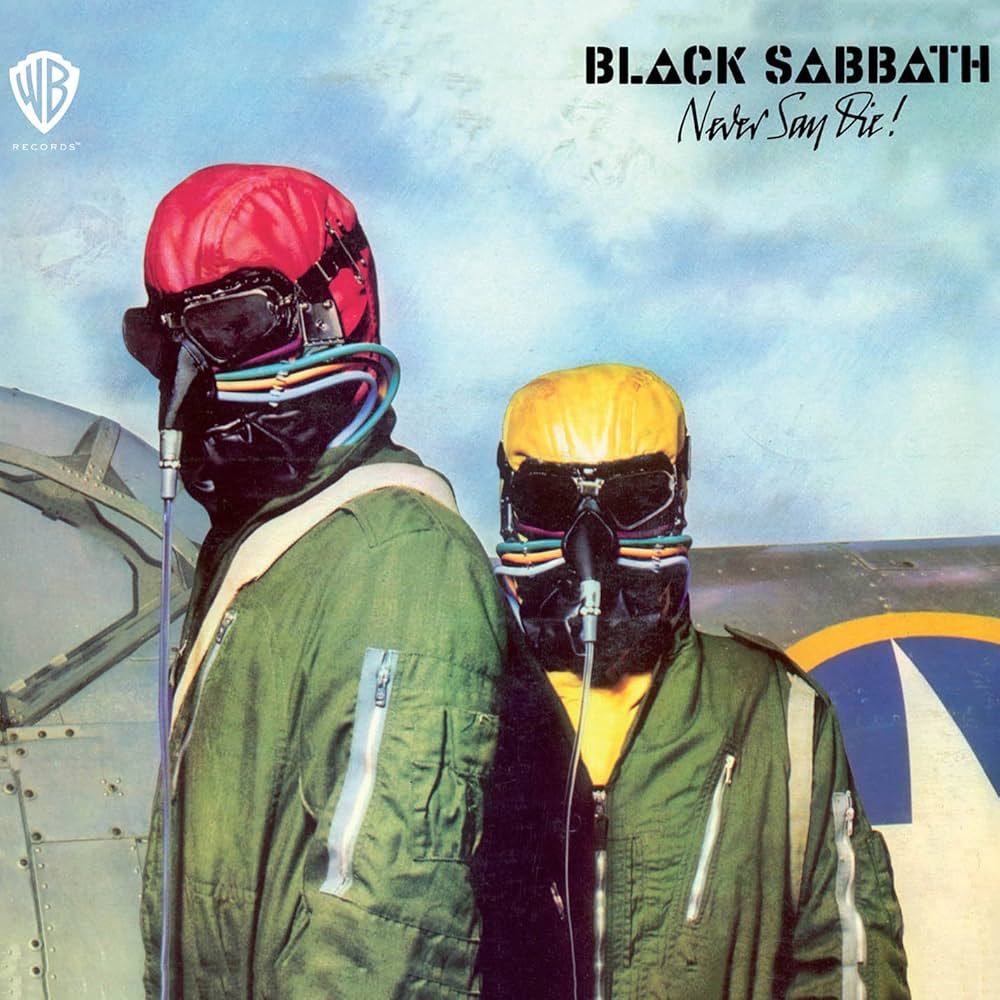 Never Say Die (1978)
At the time of writing this entry, the profile photo/artwork for Black Sabbath on Spotify is an illustration of a guy in a pilot’s helmet and flightmask. Which is odd considering Never Say Die is still considered a disappointment. Ozzy’s substance abuse had gotten out of hand and by April 1979 he had been kicked out of Sabbath.
Never Say Die got off to a rough start when Ozzy left the band before sessions even began. The band rehearsed material with singer Dave Walker, but the Savoy Truffle singer’s stint was short, and Ozzy soon returned. Though he refused to sing any of the material rehearsed with Walker.
The band recorded the album during nights in a freezing theater in Toronto, a surprising fact considering the album feels like a hot, summery record, almost to its detriment. Never Say Die is more bluesy up-tempo rock as opposed to death and destruction. The production is solid but honestly, I’ve listened to this album twice and can’t for the life of me recall any songs. The band feels tired and uninspired on Never Say Die. It’s because they were on life support.
Ranking: D Tier
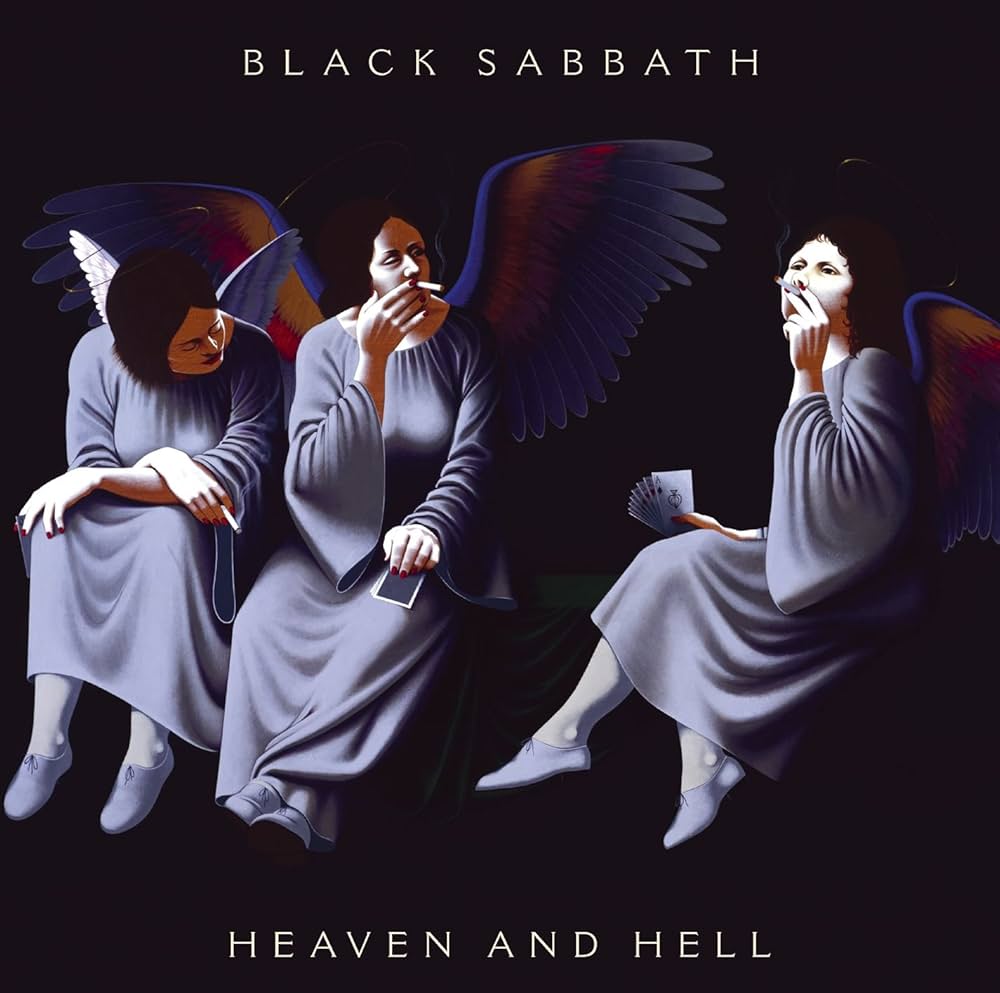 Heaven and Hell (1980)
A point I never thought I’d reach, the first Ozzy-less Sabbath album. I’ve always liked Dio, his strong and commanding voice, but he couldn’t be more different than the haunted howl of Ozzy. Dio is the archetype of a heavy metal singer with a chesty resonance he can project over mountains. Ozzy is an aberration, like a madman singing locked away in a dungeon. How could Sabbath sound like Sabbath without Ozzy?
Heaven and Hell doesn’t sound like Black Sabbath. The album sounds like every other popular heavy metal act of the ‘80s. Which isn’t a bad thing per se. Dio and Tony Iommi hadn’t planned for their collaboration to be a Sabbath record. I get it. You gotta make money and Sabbath is a name metalheads can trust.
The dynamic is different in this iteration of the band. Dio took over lyrical duty from Geezer Butler and crafted harmonies that floated over the riff instead of Ozzy’s melodies that were often rooted in the riff.
The album feels more D&D inspired with the opener, “Neon Knights,” a faster, tighter, more modern approach to metal. The title track, “Heaven and Hell,” is a classic, starting slow and brooding before shifting into a gallop. It sounds like the band doing an earlier version of Dio’s 1983 song “Holy Diver” but whatever, it’s fucking cool.
“Children of the Sea” is the band at their most melodic, with acoustic breaks and later crushing riffs, while “Die Young” layers synths and frantic riffs for an apocalyptic edge.
The album was a hit and well regarded. I find the album overrated as the title track is the only track I love, but the band sounds livelier and Iommi’s juices are in full flow. Gimme dat juice!
Ranking: B Tier
 Mob Rules (1981)
I remember having an issue of the horror magazine HorrorHound laying out all the best Halloween-time heavy metal albums and for whatever reason Mob Rules was on the list, but why?
It’s gotta be the artwork. Looks like a scene ripped from Hellraiser but it’s a 1974 painting titled “Dream 1: Crucifiers” by Greg Hildebrandt. The band altered the image to include the title, their name, and other grisly details but nonetheless it’s one of the band’s most striking covers. Spooky enough to make the pages of HorrorHound.
I was expecting a lesser version of Heaven and Hell when I hit play but was shocked to find Mob Rules flowed better. The riffs are better, the rhythm is better. The most noticeable difference is Vinnie Appice taking over for Bill Ward, who had left the band after his struggles with alcoholism and found it difficult to play under the band’s new disciplined approach.
Ward worked perfectly in the slow doom metal tempo of old Sabbath but Appice with his cymbal heavy, John Bonham-inspired blasts feels way more at home in the Sabbath sound of the ‘80s. The band feels tighter than ever.
Much like its gnarly cover, Mob Rules is grotesque, vivid, and larger than fuckin’ life, proof that Sabbath could still conjure up demons after Ozzy’s departure.
Ranking: B Tier
 Born Again (1980)
“Whoa dewd, the Deep Purple guy was in Black Sabbath?” On paper, it sounds promising. Ian Gillan, one of Heavy Metal’s founding fathers alongside the bad boys of Birmingham? What could go wrong? You have to remember Ian Gillan is a party-metal frontman. A lot of, “YEEEAAAAAHHHHS!” which clashed with Sabbath’s moodier sound
The album opens with “Trashed,” a speedy headbanger about Gillan wrecking a car while drunk. I feel like there are a lot of Deep Purple songs about this topic. “Disturbing the Priest” fares better, with an eerie riff and Gillan howling like a banshee in heat, but it sounds more like Deep Purple gone horror than Sabbath. The title track, “Born Again,” is atmospheric but weighed down by Gillan’s melodramatic delivery, while “Zero the Hero” has a chunky riff that inspired Guns N’ Roses’ “Paradise City”, even if Gillan’s campy vocals almost sink it.
The album has its defenders, but the production is murky, the songs uneven, and Gillan never sounds at home in Sabbath’s world of gloom and/or doom. Born Again is an oddity in the catalog, a drunken one-off experiment where two giants of British rock collided but never quite meshed.
P.S.This album has a track called “Stonehenge” before Spinal Tap recorded their iconic song of the same name. This one is an instrumental. Still funny though.
Ranking: F Tier
 Seventh Star (1986)
It’s funny how many times a Sabbath album seems like it was supposed to be a Tony Iommi solo album and at the last second, his label would be like, “Wait! No! Now it’s a Sabbath album!” Look at the cover: It’s Tony Iommi by himself and underneath the title it says, “Featuring Tony Iommi”. They want you to know the album has at least one original Sabbath member.
Okay, I’m now reading Seventh Star WAS supposed to be Tony Iommi’s first solo record. After Ian Gillan bailed post-Born Again, Iommi started writing bluesier material, but the label was like, “As if! Don’t even go there sister!” So it got stamped as a Sabbath record. Enter Glenn Hughes (another ex-Deep Purple alum) on vocals, who brought a soulful, funky edge that fit even less into Sabbath’s sinister vibe.
While it has a couple standouts, like the title track, most of its generic blues metal stylings feel out of place. The record struggled commercially and critically, resulting in a commercial misfire for Black Sabbath.
Seventh Star sits in the weird limbo of the band’s career: not quite a Sabbath album, nor an Iommi solo project. It gained a minor cult following among fans (as everything does) but if you ask me, it’s better left to rot in the bargain bin of your local record store.
Ranking: D Tier
 The Eternal Idol (1987)
Unlucky album number thirteen! This must be the reason this album murdered my momentum. I was averaging a Sabbath album a day over the summer until The Eternal Idol reared its ugly undying face. This or the fact I don’t even know who this band is at this point other than Tony Iommi.
The Eternal Idol (1987) was the start of the “Tony Martin Era”, a period fans tell me is underrated. I do prefer Martin’s confident Dio-esque bravado to Glenn Hughes on the previous album, but there’s a lack of charisma. Iommi tries a slicker production, it’s melodic too, but there’s no standout songs.
Tunes like “The Shining” and “Born to Lose” go for grandeur but feel generic. Critics were meh, sales were whatever, and the album barely got any attention outside of desperate Sabbath fans.
The Eternal Idol isn’t a “beginning of the end” album, but it cemented the band’s “Lost Years” in the mid 1980s. Iommi was struggling to keep the name alive and the spirit was fading away. Like Greg Kinnear.
Ranking: F Tier
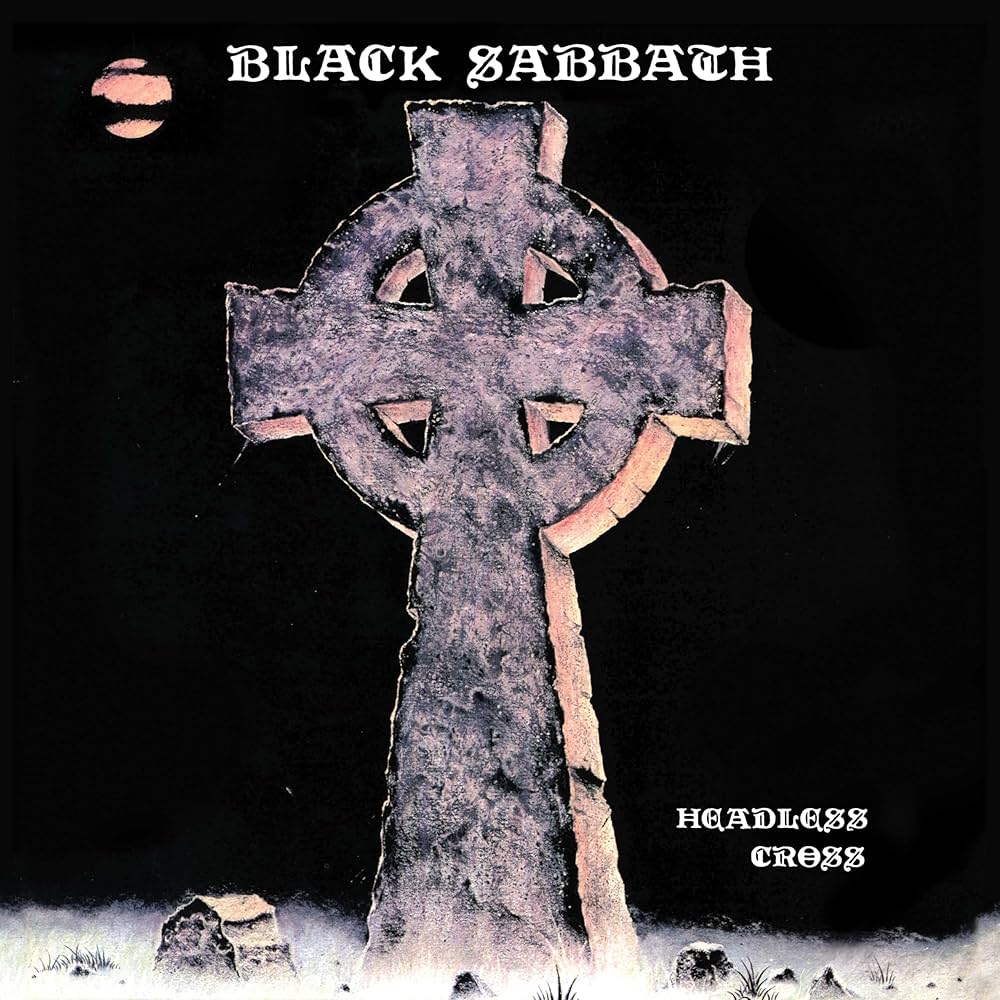 Headless Cross (1989)
Reading the room (the room being the vast interconnected series of tubes that is the internet) most fans like Headless Cross. Honestly, I couldn’t tell this one from the one before it or the one after it. Again, I have no issue with Tony Martin. He’s a better fit than Ian Gillian and Glenn Hughes but it still feels like, “We’ve got Dio at home”.
I do admire Tony Iommi and drummer Cozy Powell’s production. The sound is big, glossy, and drenched in reverb. The songs aren’t memorable but at least they have size, and you know when it comes to Sabbath I’m a size-queen.
Apart from Martin, Tony is accompanied by returning keyboardist Geoff Nichols, ex-Rainbow drummer Cozy Powell, and bassist Laurence Cottle. Songs like “Headless Cross” and “Devil & Daughter” go all-in on occult cheese. Also, “When Death Calls” has a Brian May guitar solo. Which is neat, right?
The album bombed in the US but found a cult following in the U.K. We’re far from the sound of the evil ‘ol days, but it’s a respectable call back to Dio’s Heaven and Hell period from earlier in the decade. Not the worst way to close out the 80s.
Ranking: D Tier
 Tyr (1990)
From its synth Styx-like opening, to its D&D imagery, Sabbath has finally crossed over from stoner doom metal band to nerdy high-fantasy. Tyr sees the return of the Headless Cross lineup in a melodramatic mode singing about Norse gods with a three-part mini-suite with the songs’ “The Battle of Tyr”, “Odin’s Count”, and “Valhalla”.
“Anno Mundi” and “Jerusalem” are FINE with a suitable melody. “The Law Maker” is an interesting dip into speed metal territory. The rest is a blur of keyboards and battle-cry lines like, “The winds of Odin guide my sword to the halls of the slain!” I miss Geezer Butler’s lyrics.
Critics were like, “Fuck this”, the label was like “Fuck this”, and fans (outside of the small but devoted Tony Martin contingent) were like, “Fuck this.” Tony needs to take a break.
Ranking: F Tier
 Dehumanizer (1992)
A great poet once said: “You don’t know what you got (’til it’s gone)”… or maybe it was the band Cinderella? Regardless, I didn’t know how much I missed Dio as Sabbath’s Master of SCARE-emonies until trudging through the muck and mire of ’80s Sabbath. He’s no Ozzy, but his theatrical command and dark-magic lyrics are a far better fit than the revolving-door frontmen who followed in his immense 5’4″ shadow.
Dio’s reintroduction came when Tony Iommi and Geezer Butler (returning for the first time since Born Again) decided to breathe life back into the band. Vinny Appice, with his Bonham-esque thunder, returned on drums (replacing Cozy Powell, sidelined by a broken hip), giving us a little Mob Rules reunion, which I like.
Dehumanizer isn’t the secret classic diehards on the internet swear by, but it’s consistent and the most Sabbath has sounded like the doom-and-gloom godfathers of old since Mob Rules. Tracks like “Computer God,” “Time Machine,” and “TV Crimes” are the metal cheese you love to sink your fangs into.
But the revival didn’t last. Dio refused to share the stage with Ozzy for a pair of 1992 shows in Costa Mesa, walked out, and Tony Martin returned for the following album. Dio wouldn’t perform with Sabbath again until 2006, when the reunited lineup toured and recorded under the name “Heaven & Hell”.
Ranking: C Tier
 Cross Purposes (1994)
After the Dio reunion went down like a B17 Flying Fortress overrun by skeleton zombies, Sabbath yet again brought back Tony Martin for, “Who gives a shit? Album #14”. The Sabbath of the 90s doesn’t sound too different from the Sabbath of the 80s. Forgettable butt rock (my apologies if this expression is now considered in poor taste) with songs with names like “Virtual Death” and “Immaculate Deception”.
Geezer sticks around (which is always welcomed) and filling in on drums is Rainbow drummer Bobby Rondinelli. A few fans like it, I find it boring. The production is less reverb soaked than the late ‘80s output but never stands above any of the dime-a-dozen metal acts of the time.
Critics ignored it. I mean, why would they want to waste their time reviewing the 14th album from what remains of Black Sabbath? At this point I’m counting down albums until the Prince of Darkness’ return.
Ranking: F Tier
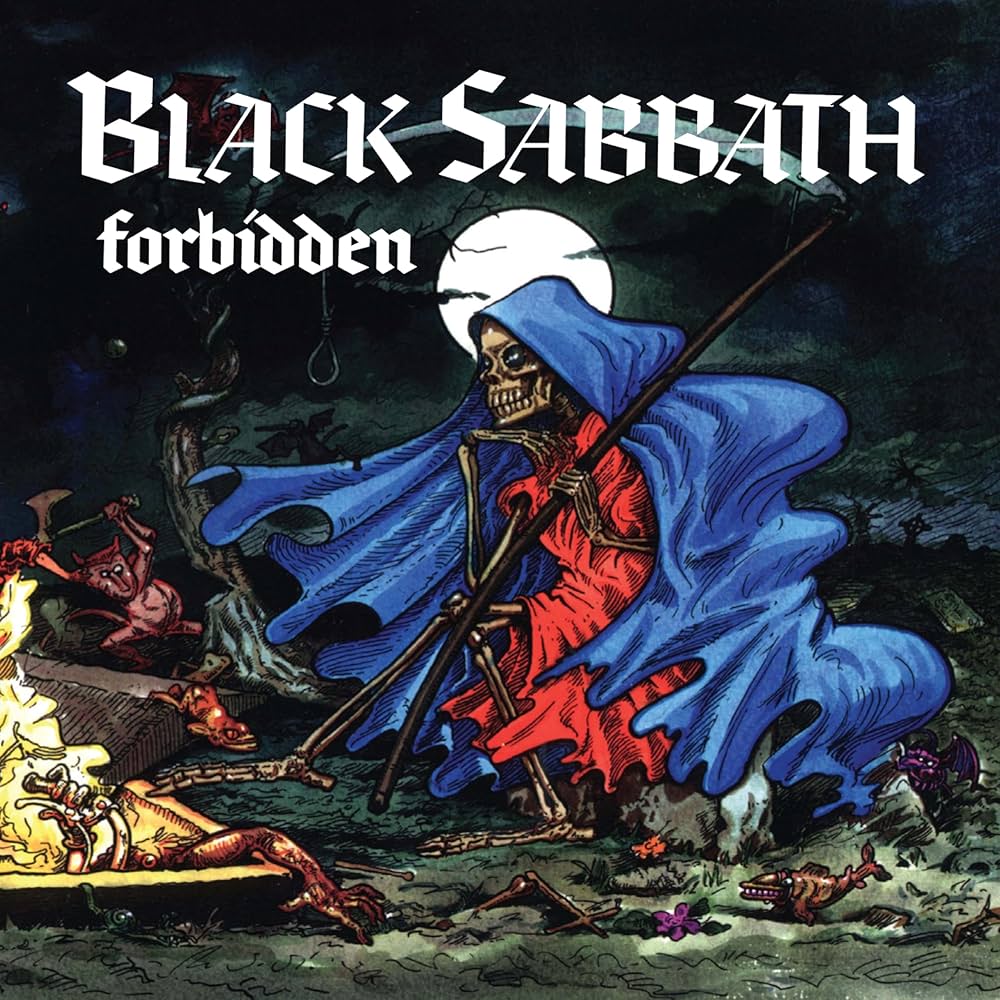 Forbidden (1995)
Despite Paul Sample’s fucking sweet cover art, Forbidden does indeed fucking suck. I knew this within less than a minute, thanks to the grimly self-serious opener “The Illusion of Power,” where the verses sound like tired boomers doing their worst impression of Led Zeppelin’s “Dazed and Confused.” The track seals its embarrassing fate with a rapped verse from rap-metal icon Ice-T.
Look, I have no issue with rappers and rockers collaborating. “Walk This Way” was trailblazing because Aerosmith and Run-DMC were breaking ground together, it made sense culturally and musically. When Michael Jackson had a rap verse on “Black or White,” it worked because he was the biggest star on the planet with a finger on the pulse of pop culture. But this feels like a desperate attempt to seem modern. It’s not bold. It’s not edgy. It’s sad.
I’ll give Iommi and his revolving cast of day players the benefit of the doubt, maybe they were pressured into working with Ice-T and letting his Body Count bandmate, Ernie C, handle production. But at the end of the day, you’re the musicians, man. You’ve got to make that shit work, or at least find a way to bridge the gap. Tony claimed Ernie C wanted Cozy Powell to play hip-hop-style beats, which they shot down. Fair enough, but if you’re going to bring Ice-T on board, you might as well go all in, not just dip your toe into the tea.
Forbidden bombed with critics and fans alike. Even diehards couldn’t defend it.The production is thin, the songwriting bland, and the sound dated. Forbidden killed the Tony Martin era, which left the band in limbo until 1998, when the cosmos aligned for a reunion with Ozzy.
Ranking: F Tier (More like F minus)
 13 (2013)
I remember being stoked for this when it came out. Ozzy was back, they had a song in the hit movie of the time “This is the End”, then I went over to MildlyPleased.com, said “Yeah whatever,” and gave it a three.
But that was a John who didn’t have to endure Born Again or Dehumanizer. Now I know this album is absolutely a return to form. So yeah baby, 2025 John gives this a… 3.5. Hell yeah!
Who would have thought it would ever happen? After 84 years of lineup changes (35 years), lawsuits, and lead singers, Black Sabbath got the old gang (mostly) back together for 13. Yes, Tony Iommi, Geezer Butler, and Ozzy Osbourne, three-fourths of the original horsemen of heavy metal, were back to ride once more.
Bill Ward, held out over contract disputes, claiming he wasn’t offered a “signable deal.” There is debate whether or not this was true or he was pushed out for health concerns. So Brad “Rage Against the Machine” Wilk stepped behind the kit to supply these aging rock vampires with young blood. Behind the dials is legendary producer Rick Rubin, who sought out with the sole mission to return Sabbath to their ‘70s sound. Does he succeed?
Nah. 13 doesn’t feel like the 70s but the songs are still Sabbath’s best since the mid ‘70s. How did they tap into the doom and gloom of yesteryear? By re-listening to their debut album before recording. Thus we return to the sludgy riffs and shifting tempos of Sabbath’s heyday. Cuts like “End of the Beginning” and “God Is Dead?” channel doom-laden grandeur, while “Loner” and “Age of Reason” lean on Iommi’s gift for riffs. Ozzy’s vocals have an autotune quality I could do without, but he still sells the apocalypse like nobody else.
Critics were kind and fans treated it like the second coming. The album debuted at number one in the U.S. 13, which was named after how many tracks it was supposed to have (it has 9, ha), isn’t about reinvention; it’s about closure. It’s the tombstone on one of rock’s darkest, loudest legacies. For a band whose first album opened the gates of hell, 13 felt like finally sealing them shut.
Ranking: C Tier
Back to the Beginning

The original band reunited again on July 5th, 2025 in Birmingham for Ozzy’s last show. The band played; “War Pigs”, “N.I.B”, “Iron Man”, and “Paranoid” and even though the set was short, it couldn’t have been more sweet. The band left this mortal plane on the highest of highs before descending back into Hell.
Thanks for reading and of course, Happy Halloween to all and to all a GHOUL-night!