



What is Canadian cinema? I mean, outside of “the King of Venereal Horror” David Cronenberg (who’s been covered on this site 11 times). James Cameron is a Canuck, though he’s spent his whole career making flicks in the U.S. of A. Denis Villeneuve, though now more associated with Hollywood, started his career directing films in his native Quebec. Then there are people I sort of, kind of, don’t actually know, like Guy Maddin and François Girard (both with films in the Criterion Collection), and of course today’s filmmaker, “the King of Emotional Alienation” (my newly coined nickname for him), Atom Egoyan.
Egoyan was well established in the Canadian indie arthouse scene before Exotica. He’d directed five films starting in 1984 and had already made a splash critically with his 1991 film The Adjuster, starring Elias Koteas, which was Canada’s official submission to the “Best Foreign Film” category that year. The film wasn’t selected, but people started talking.
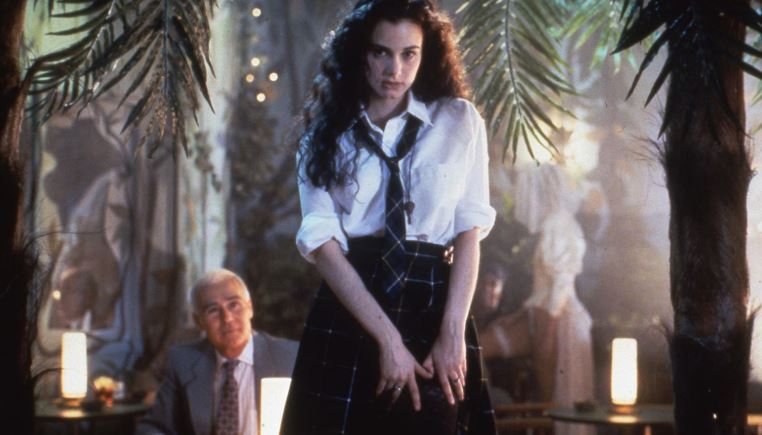
Egoyan took this momentum into today’s film, Exotica, which not only gave him widespread international acclaim but also won him the International Critics Prize at Cannes. It was even selected as one of the “1000 Best Movies Ever Made” by The New York Times in 2004. Just checked, and I’ve seen a mere 362. Damn. I’ve got my work cut out for me.
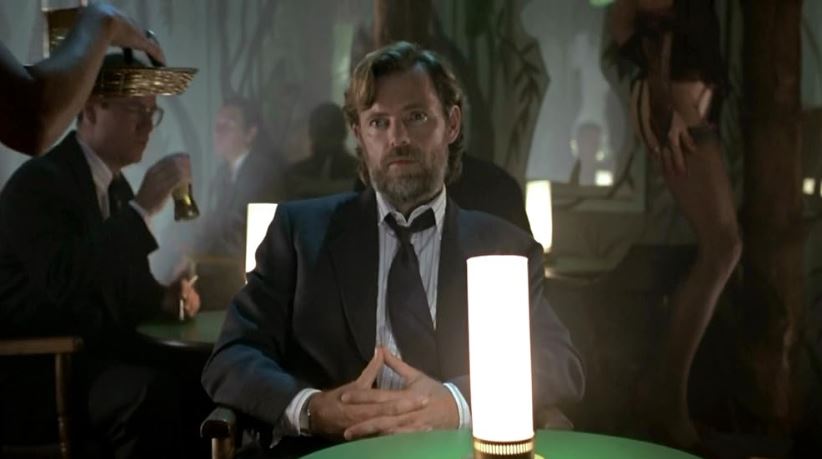
Set in and around a Toronto strip club named “Exotica,” Egoyan’s film weaves together the intersecting lives of several damaged individuals dealing with grief, loneliness, and obsession. Francis (Bruce Greenwood) is a haunted tax auditor who visits Exotica to watch Christina (Mia Kirshner), a young dancer who performs in a provocative schoolgirl outfit. Her signature song is Canadian music legend Leonard Cohen’s “Everybody Knows,” which is, surprisingly, a great stripper song. What’s Francis’s obsession with Christina? It’s not sexual per se. I won’t unravel too much, but I will say it’s tied to the tragic death of his daughter. This movie is heavy.
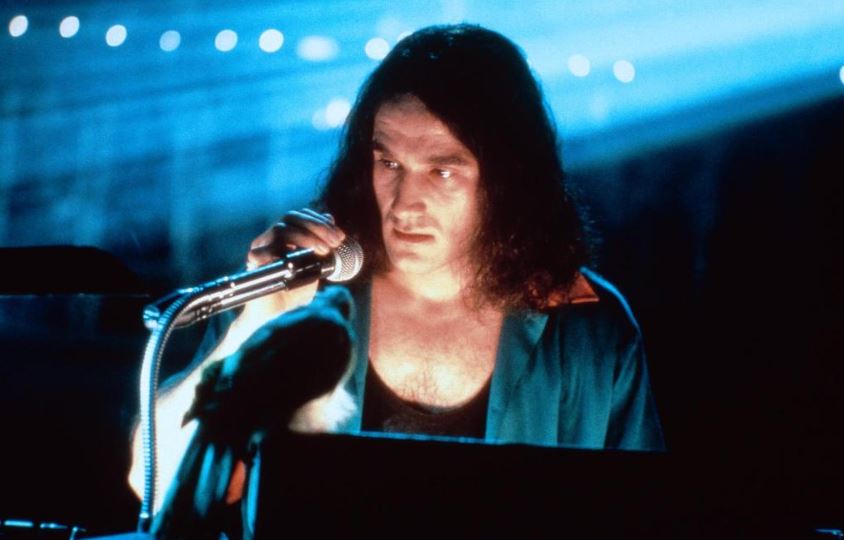
The club is owned by Zoë (Arsinée Khanjian, Egoyan’s wife, who was pregnant at the time), who is also the lover of Eric (Elias Koteas), the club’s DJ who provides creepy, director’s-commentary-like narration to the crowd as each dancer takes the stage. Eric also used to be Christina’s boyfriend, which fuels his jealousy toward her connection with Francis.
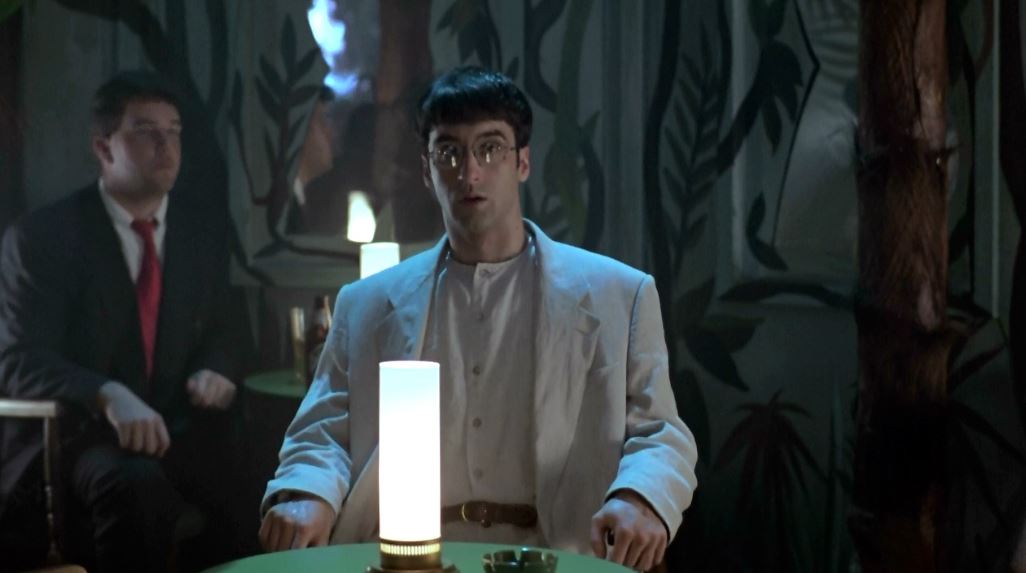
We also have Thomas (Don McKellar), a pet shop owner who moonlights by smuggling exotic birds into the country, which leads to him being investigated by Francis. It’s all connected! By the end of the film, all these plotlines converge, and boy, is it messy.
What I love about Exotica is that character relationships and plot threads are often introduced but not explained until much later in the film. It’s the distinction between good drama and bad drama. In a bad drama, characters announce, through shoddy exposition, who they are, their relationships, or their past. Which isn’t how real life works.
In an Egoyan drama, we are introduced to characters but don’t learn their motives or backgrounds right away. Information is parceled out in subtle ways. We see Francis dropping off a young girl, Tracey (Sarah Polley), at her wheelchair-bound father Harold’s (Victor Garber) house, but we don’t immediately know why, who they are, or why Victor Garber is in a wheelchair. The more you watch, the more that’s uncovered.
The tone is restrained but not devoid of humor. Don McKellar is a standout as the awkward pet store owner trying to score dates with other men by selling them opera tickets, then trying to gain sympathy by offering their money back. These scenes are awkward, but McKellar brings a nervous energy that’s fun to watch. Probably the only aspect of the movie I’d categorize as “fun.”
I love all the performances in Exotica. Mia Kirshner, who I know best as Chris Evans’ horny sister in Not Another Teen Movie, is hypnotic as the vulnerable Christina. Elias Koteas is doing his usual “low-talky, creepy guy voice thing,” Bruce Greenwood is intense and radiates discomfort, and even Arsinée Khanjian, who I was skeptical of (considering I only knew her as Egoyan’s partner), has an alluring, Isabella Rossellini-like quality. Everybody’s great.
The film is moody with a cool, blue tone to its visuals, and although it moves at a gradual pace, it never stops being compelling. It never veers too far into melodrama, and I never knew where it was going. I’m excited to check out more Egoyan films, particularly his 1997 follow-up The Sweet Hereafter, which nabbed Egoyan Oscar nominations for Best Adapted Screenplay and Best Director.
So what is Canadian cinema? Well, if we’re using Exotica as the embodiment, it’s less flashy than even American indie films of the time. It doesn’t strive to be commercial; it’s more emotionally complex and narratively bold. Which is surprising when you consider Canadians are often seen as our friendly neighbors to the north (at least they used to be, we fucked that up). Nice to know there’s just as much trauma in the Great White North as anywhere else, eh?