



After reviewing 2000’s Yi Yi and 1991’s A Brighter Summer Day, I seem to be working my way backward through Edward Yang’s brief filmography in leaps and bounds. He’s the type of filmmaker who I’ve had a hard time wanting to seek out outside of Criterion Month, just because they’re not exactly joyous affairs, but also are relatively watchable as far as observant character-driven films go. Anyways, I’m glad that Criterion Month has given me a vehicle to discover more of Yang’s films, as the way they reveal the layers of melancholy beneath modern urban life really gels with me, and this one in particular felt relatable in its story of childless adults in their 30s drifting through middle-class life.
This might blow your mind, but this story is set in Taipei, and follows a couple who have been dating since they were teenagers but now find themselves dissatisfied with their lives and their relationship. Ah-Chen (played by Tsai Chin) works as a senior assistant at a construction company that is going through a merger. When her boss leaves the company, this leaves Ah-Chen without a clear position at this new version of the company, and because all they can offer her is a mere secretary position, she resigns. Then there’s her boyfriend, Ah-lung (Hou Hsiao-Hsen), who owns a cloth shop and is thinking about emigrating to the U.S. to become a business partner with his brother-in-law, but he’s a little wishy-washy about making the move, which frustrates Ah-Chen.
While Chen is focused on the future and a better life for herself in this backdrop of a quickly modernizing Taiwan, Lung is a bit more focused on the past, still thinking about his days as a young hotshot baseball player, which never really came to anything. Lung ends up lending money to Chen’s father and trying to help out an old friend who’s working as a cab driver, but he just ends up frustrated with his situation despite trying to do the right thing. Meanwhile, Chen keeps finding herself romantically drawn to a co-worker, but they never end up doing anything. So she then turns to partying with her sister’s friends and ends up meeting a young man who has a crush on her, though that compels her to try and figure things out with Lung. However, it becomes obvious to them that things like marriage or moving to the States aren’t ever going to heal the rift between them.
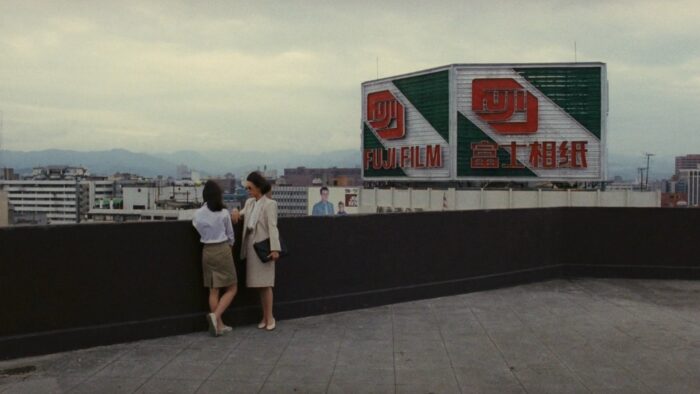
One thing that struck me about Yi Yi that I also see a lot of in Taipei Story is the way Edward Yang shoots his characters in an urban setting. This dude just absolutely loves liminal spaces, and in particular loves to shoot his characters in these striking wide shots that bring out the emptiness in the places they inhabit. It creates this unique sense that these characters may be in a bustling, overcrowded city, but at the same time are very alone. There’s a couple of these types of shots set against the background of a giant glowing Fuji Film sign, which also creates this visual representation of these characters living in a commercialized Taiwan, but being a little too caught up in their own personal problems to notice the cultural shifts happening around them.
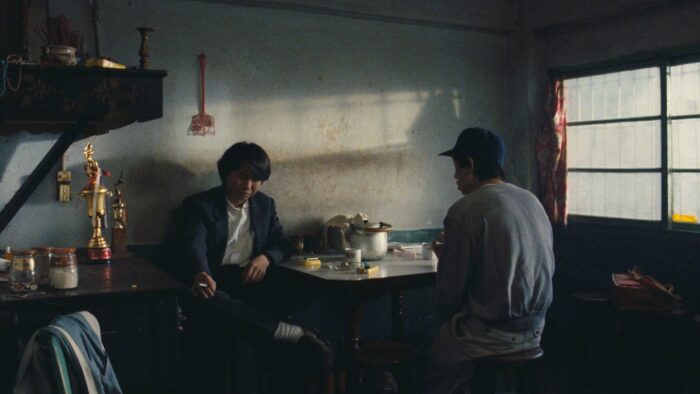
I suppose the thing that really resonated with me about this film, other than its thoughts on urban life, was the way it depicts a certain kind of aimlessness that comes in adulthood if you don’t have kids and your career isn’t what you want it to be. I’ve had two distinct periods in my life that were similar to Chen’s, where joblessness caused me to feel kind of uncertain and useless but also helped me reprioritize things. The film made me realize how this idea of “stability” is so central to middle-class life, since you go throughout your childhood and early adulthood feeling like you have it, but once you don’t, it becomes apparent that you’re not blessed with a consequence-free life of the super-rich, so everything feels like it’s in freefall.
In Taipei Story, we see how these two characters react differently to this freefall. Chen becomes cool and detached, looking for some kind of answers while sporting a consistent veneer of sunglasses. Meanwhile, Lung lashes out more, getting into both verbal and physical fights with those around him while pining for his baseball glory days. Both of the actors playing these characters were big parts of Edward Yang’s personal life, as the famed director Hou Hsaio-Hsen was one of his contemporaries in the New Taiwan Cinema movement and was such a good pal that he fronted a bunch of money for Taipei Story to get made. Meanwhile, Tsai Chin and Yang fell in love while making the movie and would eventually get married. So, at least there was something romantic to come out of this movie about a relationship falling apart.