



15th Academy Awards (1943)
Nominations: 12
Wins: 6
I’m writing about Mrs. Miniver today because this Sunday Adrien Brody broke Greer Garson’s Guinness World Record for longest Oscars acceptance speech, which had stood for more than 80 years. How’s that for a state of affairs for the Academy Awards? Here’s the thing… as much shit as Hollywood gets, I’m rooting for it. I think that, more than most of the world, Hollywood has genuinely tried to be a better, more inclusive place year over year, even if that effort is most often merely superficial. Hey, you know, with so many people decrying the increasingly vague term “woke,” I’m inclined at this point to give props for anyone seeming to sincerely try to be better. More than that, I know that the real people who make movies, the vast majority of these people, are hardworking, passionate dreamers and that’s cool as hell. And yet, every year more and more people seem to care less and less about cinema in general and this ceremony in particular.
As the veil gets pulled back further and also farther, it’s become impossible to deny that the Academy Awards (and all of awards season) is a sport. A game played by some of the worst people in the world who spend ungodly amounts of money in the hopes of earning… clout, I guess? These days, the movies that get Oscars are the movies that are made by studios who hired awards consultant firms when they greenlit the picture. These awards, like so much of our reality now, are defined by billionaires trying to fill holes in their hearts. Oscar prestige, if there ever really was such a thing, is almost totally meaningless in 2025. It’s not really the case anymore that an Oscar will change career trajectories or shine a light on a diamond in the rough. Best case scenario, an Oscar is a trophy that says you played the game best. More often than not, it’s just a piece of bar trivia.
Does it have to be this way? Was it always this way? And what the hell does this have to do with Mrs. Miniver?
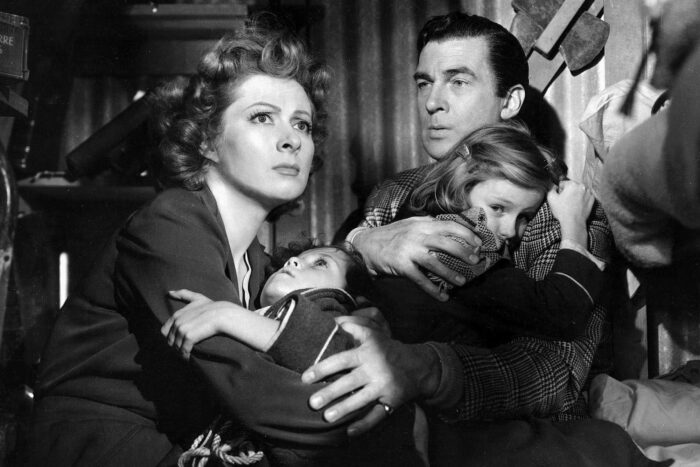
Inspired by the novel by English author Jan Struther, Mrs. Miniver is the story of Kay Miniver (Greer Garson), a housewife living in Belham, a fictional (and conveniently very America-coded) village just outside London, in the days before the outbreak of WWII. We meet her waffling over whether to splurge on buying an extravagant hat, a first world problem echoed by her adoring husband Clem’s (Walter Pidgeon, with a very this-side-of-the-Atlantic accent) similar impulsive purchase of a luxurious new car. That night they laugh about their privilege while being taken care-of by their household staff and ignoring their youngest two children. Soon enough, their third, eldest son, Vin (Richard Ney), returns from Oxford filled with lofty ideas about social change that are challenged by the girl next door, Carol (Teresa Wright), someone who actually does volunteer to help people. Of course, to the Minivers’ amusement, Vin and Carol can’t help but fall in love.
Soon enough, Great Britain enters the war and the Minivers spring into action. Clem volunteers in the village patrol while Vin enlists in the RAF and proposes to Carol. Mrs. Miniver has no choice but to try to keep a stiff upper lip as the war comes increasingly closer to her home – Vin soon enough becomes a fighter pilot, Clem ends up taking his motorboat to help in the Dunkirk evacuation, and more tragedy is thrust upon this family than you ever would have thought given the movie’s decidedly frivolous opening scenes. Somewhat surprising to me for a movie from 1942, Mrs. Miniver doesn’t shy away from showing the thankless work our titular matriarch does to keep her family going and help her country while her husband and son are off being heroes. It’s a pretty cool movie, especially given it was made during the war so all it can do at the end is go “we can win” and ask audiences to buy war bonds.
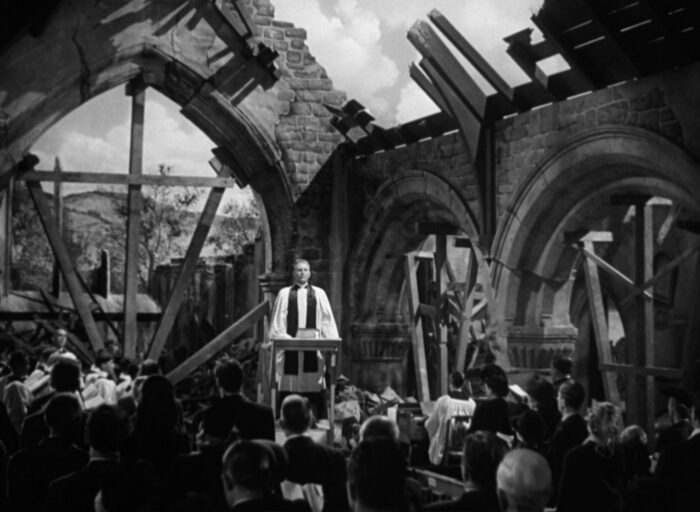
Production for Mrs. Miniver began while the United States was still neutral but the film wasn’t finished until after the attack on Pearl Harbor, so, like Marvel movies today, it was rewritten several times during production to better fit audiences’ views. Upon release, it was considered a masterpiece of propaganda by everyone from FDR to Winston Churchill to pigfucker Joseph Goebbels, since it so effectively captured the tragic effects of war on the home front. Mrs. Miniver was also a box office success, becoming the highest-grossing film of the year in the US and the UK, which is crazy since Casablanca also came out that year and Mrs. Miniver exists in relative obscurity today. On top of Greer Garson’s best actress win, Mrs. Miniver also won best cinematography, best adapted screenplay, best supporting actress (Teresa Wright), best director (William Wyler, but more on him later this fortnight), and best picture. A sequel, The Miniver Story, was released in 1950 with Garson and Walter Pidgeon reprising their roles but notably not Richard Ney, who had in the intervening years married and divorced Garson so probably everyone thought it was best not to bring him back as her son, the vibes might have been wack.
I think the lesson we can still learn from Mrs. Miniver‘s Oscars success that the awards should try to reflect the tastes of moviegoers more. The Academy tries to convey itself as the ultimate arbiter of the medium, but we all know now that really what it does is host a bloated TV event that ostensibly exists to promote cinema but really just lets people post snarky observations on social media. How come no exciting new movie trailers debut during the Oscars? Why is it the San Diego Comic Con feels like a more consequential event? Sean Baker, in his best picture acceptance speech, begged studios to try to get people to go back to theaters. I went to the theater a bunch last year Sean! I even follow you on Letterboxd! Is it too much to ask that instead of an awards ceremony that’s for the industry or trying to convince people to go see movies they’d otherwise ignore, the Oscars try to court the only audience they consistently ignore: cinephiles?