



Before Fe-Burt-uary, I had been dismissive of Burt Reynolds’ film career. I even went so far on a recent podcast as to unfavorably compare Burt to Dwayne Johnson, as two actors who care more about their celebrity than being artists. I was wrong. As a Millennial, the only Burt performances I was familiar with for most of my life were Deliverance, which is celebrated more as an ensemble piece than a Burt vehicle, and Boogie Nights, where Burt is great, but his performance is overshadowed by being another notch in film auteur Paul Thomas Anderson’s belt.
This month, I’ve learned that Burt did care about being an artist. He was never one to turn down a big paycheck for a dumb action flick, but he was also interested in telling good stories and broadening himself as a performer. Just this month, I’ve learned about Burt the action star, Burt the comedian, Burt the dramatist, and now, Burt the director. Where do we start? What better place than with The End?
The End was written in the early 70s by veteran TV writer Jerry Belson (The Dick Van Dyke Show, I Spy, The Odd Couple), but it floated around Hollywood for years because nobody wanted to make a movie about suicide. Yes, The End is a comedy about suicide. Eventually, it landed in Burt Reynolds’ lap, and he loved it. Why? Because the character reminded him of himself.
Wendell “Sonny” Lawson, the character Reynolds plays, is a ball of emotions: quick to tears, loud, insecure and according to Burt, he’s like that too. The material spoke to him because it felt real. “What’s really funny is what’s real. When I was very sick, if I told you what I did, it was funny,” Burt said in a 1978 interview.
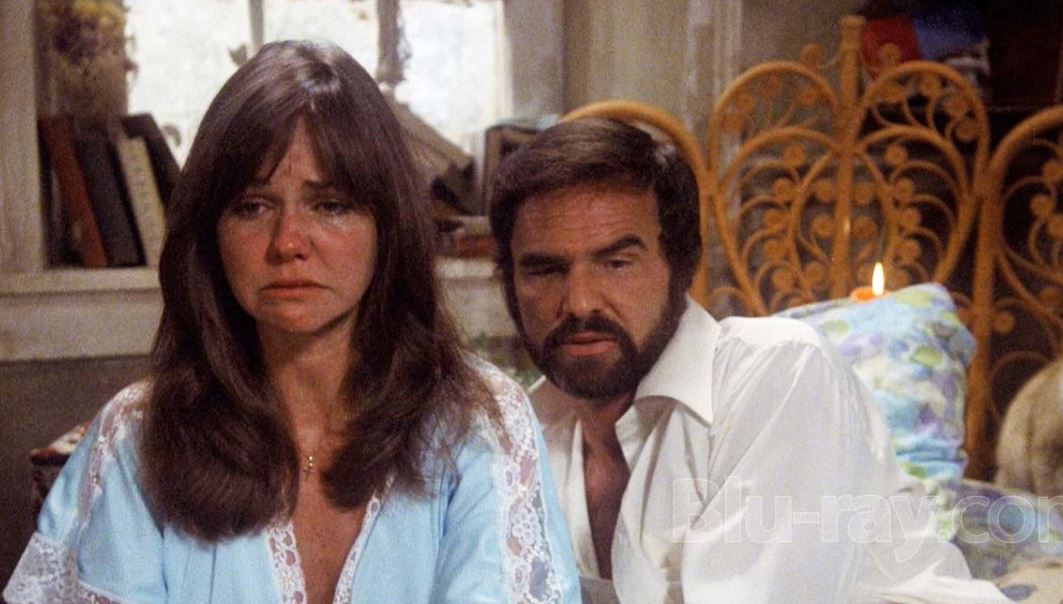
I haven’t confirmed this, but it seems that Burt directed The End because, if he didn’t, no one would. The studio didn’t like that the film was about a man who wants to commit suicide, they didn’t like that Burt was playing a sleazy real estate promoter, and they didn’t like that Burt wanted to do the role with a full beard instead of his trademark mustache. Most would have to yield to a few of these concessions, but not when you’re the biggest star in Hollywood.
And Burt’s sensibilities were right. All those “issues” the studio had are strengths when you watch the film. This is Burt in a light we hadn’t seen before: pathetic. A mode he plays for both sympathy and humor in arguably one of his best roles as an actor and a director.
The film opens with Sonny (Reynolds) discovering from his doctor (Norman Fell) that he has a toxic blood disease that will kill him in a year or less. Right off the bat, I loved this film, from the darkly humorous tone to the way it’s shot.
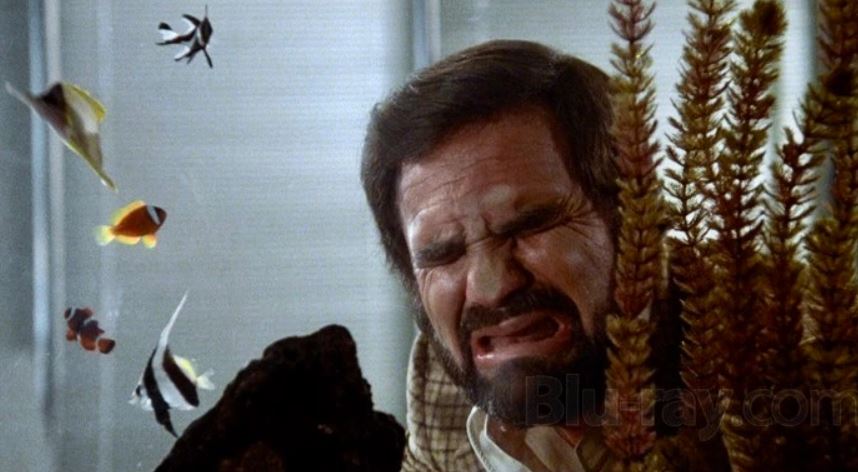
We get shots of Sonny pressing his face against a fish tank in anguish, with the camera holding on this moment in a way that makes the conversation feel that much more dynamic. Burt himself noted Italian filmmaker Lina Wertmüller as his inspiration for using close-up shots like the masters. Who knew Burt was such a cinephile?
Afraid of the worsening pain he will experience as his disease advances, Sonny decides he’s going to get his affairs in order and take his own life. He meets with his lawyer (David Steinberg), his crazy cat-lady girlfriend, Mary (Sally Field), his bitter ex-wife (Joanne Woodward), and his typical teen daughter (Kristy McNichol). He reveals the truth to some, hides it from others, but none of the interactions go well. This guy is an asshole, remember.
My favorite interaction is when Sonny goes to a church for confession, only to be met by an inexperienced 22-year-old priest (Robby Benson). The priest struggles to open the door of the confessional, makes popping noises by fiddling with his clerical collar in his mouth, and treats all of Sonny’s sins like hot gossip.
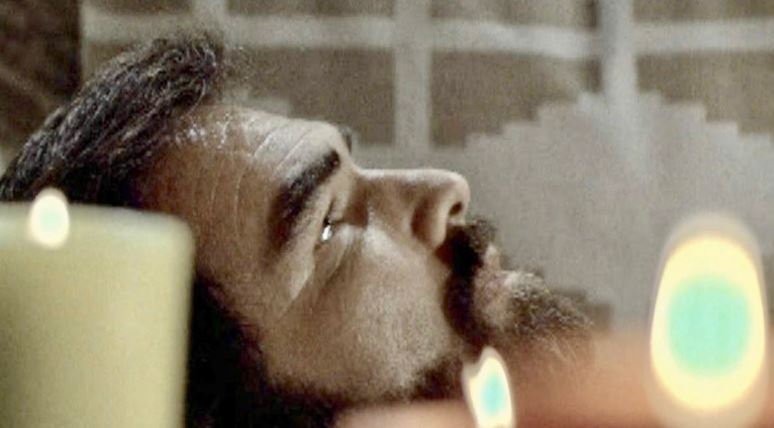
Every character, no matter how small, is played for complete comedic effect. The film wastes no time in every character interaction but also isn’t in a hurry to get to the finish line. What happens is that Sonny is admitted to a mental institution after he fails to kill himself with sleeping pills. In most movies, all those character moments I described would be 10–15 minutes, and the rest of the film would be set in the institution. In The End, we get almost an hour before we even get to the institution. The End keeps you on your toes in the best way.
Once Sonny ends up in the institution we are introduced to Marlon (Dom DeLuise) a patient who despite his friendly demeanor has been committed for being a paranoid schizophrenic that killed his own father in a fit of rage. I said this was a DARK comedy, right? Marlon is sympathetic towards Sonny’s illness and wants to help him kill himself as a favor.
What follows is a series of over-the-top sequences of Sonny, accompanied by Marlon, failing to kill himself. Sonny tries to crush his head in an automated hospital bed before he’s interrupted. Sonny struggles to jump off a tower that he keeps arguing, “Isn’t high enough!” Only for Marlon to accidentally fall off the tower and confirm this when he survives. Marlon even gifts Sonny a brand new noose they use when they fail to hang Sonny from a tree.
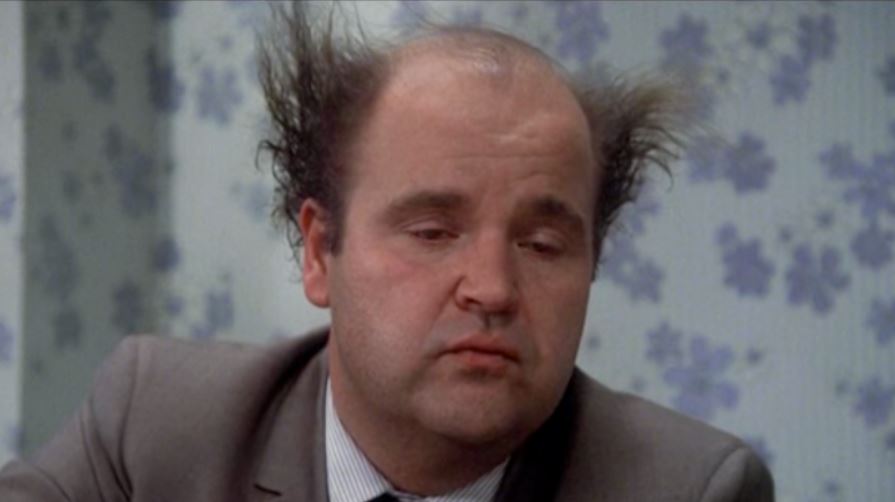
The tone of The End is madcap, but I think that’s the best approach when dealing with such a serious issue. Even when Sonny is convinced by a doctor, played by Carl Reiner, to enjoy the time he has left, the doctor drops dead from a heart attack right after their conversation. Nothing is off-limits in The End.
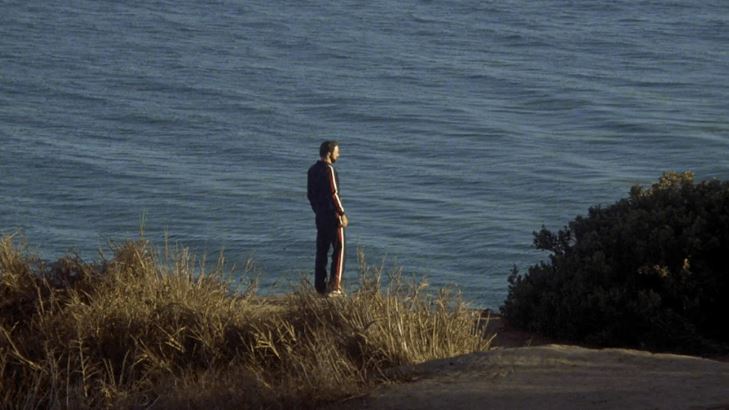
I don’t usually like to spoil the endings of films I review, but I’m going to now, so SPOILERS AHEAD! Sonny decides to swim out into the ocean to drown himself, but as he’s sinking, he starts thinking about what his loved ones will say when they discover he’s taken his life. The camera hesitates underwater for a moment, and then Sonny emerges. Even if he’s going to die, he wants to spend the time he has left with his family.
Sonny swims back to shore, only to be met by Marlon with a gun, and the two run down the beach in a comical fashion. The footage is sped up to a jaunty Paul Williams tune as the credits roll.
A lesser movie would have found a cure for Sonny’s illness, or revealed that there was an error in his X-rays or tests. But not in The End. Here, we’re left with the possibility that maybe a cure will be found, but more likely, Sonny will die. What he wants is to make every moment he has left count. It’s a beautiful way to explore a terminal illness, and a bold choice for Burt as both an actor and filmmaker.
So how did the film do? Actually, it did fine. That’s the power of Burt’s star appeal. It didn’t matter what the film was about, whether it was racing muscle cars or contemplating suicide, he could turn it into box office gold. Or at least box office silver.
And so, we say farewell to Fe-Burt-uary. What have I learned about Burt? Despite his success, he was always looking for ways to broaden his horizons, reinvent himself, and have a few laughs along the way. And so, I end this theme month in the best way I can, with The End.
Wild that all these movies came out within 2 years of each other